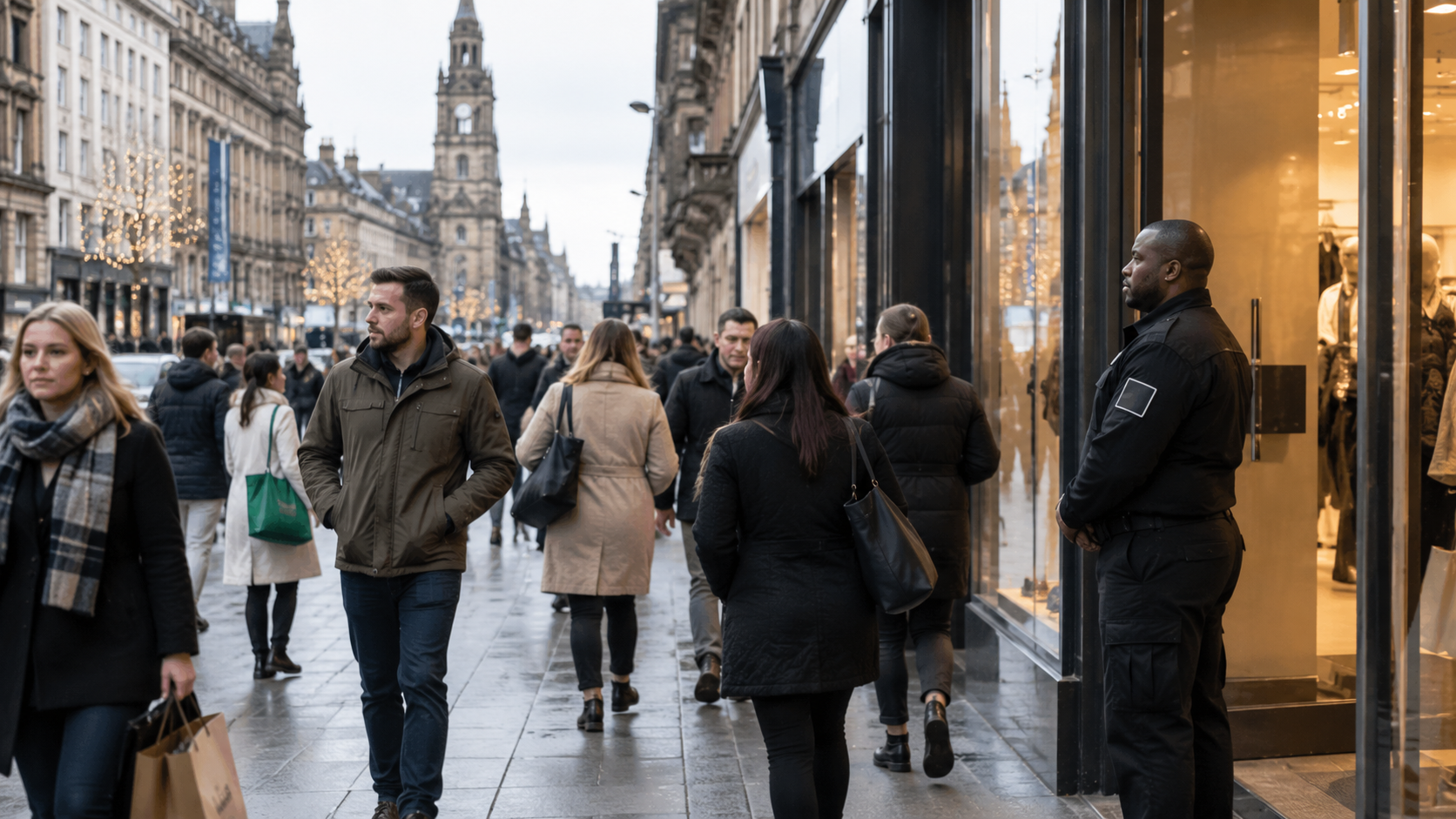
Running a business in Merseyside today comes with pressures that did not exist a decade ago. Shops open longer hours. Footfall is unpredictable. Staffing levels are tight. At the same time, retail crime has become more organised and harder to manage.
Retail security is no longer about stopping theft. It plays a role in protecting staff, legal duties, and preventing minor incidents. For many Merseyside businesses, one incident can disrupt trading for days.
Merseyside has a mixed commercial landscape. It includes industrial estates, docklands, neighbourhood high streets, and late-night hospitality zones. Each area faces different risks. What stays the same is the need for visible control and fast response.
This is why Merseyside businesses need retail security. They offer presence, structure, and accountability. Retail security reduces losses while supporting compliance and insurance expectations.
Retail Security Basics in Merseyside
Retail security refers to trained guards working on active business premises. These guards do more than watch cameras or lock doors. They engage with people, observe behaviour, record incidents, and step in when needed.
In Merseyside, retail security is often used instead of relying only on alarms or remote CCTV. Technology helps, but it cannot speak to customers, calm situations, or act as a barrier. Another important point is local knowledge. Merseyside retail security works best when guards understand the area. A guard who knows the neighbourhood spots unusual behaviour faster. They know when something feels off. This comes from experience, not manuals.
Some retail sites sit close to transport hubs. Others sit near schools or nightlife areas. Each brings different risks at different times. Generic security plans fail here. Local change is what makes security effective.
Retail security is also about routine. Criminals look for gaps. They notice patterns. Good retail security changes those patterns often. Patrol routes shift. Observation points move. This keeps offenders unsure and cautious.
Retail security is different from static guarding at empty sites. It involves:
- Customer-facing work
- Loss prevention strategies
- Conflict management
- Lawful detention and reporting
- Daily communication with store teams
Many local businesses underestimate risk because problems do not happen every day. But retail crime tends to come in waves. When one site looks easy, word spreads quickly.
High-risk sectors in Merseyside include:
- Convenience stores
- Supermarkets
- Pharmacies
- Clothing retailers
- Construction supply outlets
- Warehouses near ports
- Bars and late-night venues
Retail security best practices focus on prevention first. The goal is to stop incidents before they start, not respond after loss occurs.
What Are the Peak Crime Hours for Businesses Needing Retail Security in Merseyside?
Retail crime in Merseyside follows daily patterns. It is not random. Peak hours also change with the seasons. During winter, darkness arrives earlier. Risk rises sooner in the day. In summer, long evenings keep areas busy later, which can delay some risks but increase others.
Special events also affect timing. Football matches, concerts, and festivals change movement patterns across Merseyside. Retail security teams often adjust cover on these days. A quiet afternoon can turn busy in minutes.
Retailers who review incident times monthly tend to use security more efficiently. They pay for coverage when it matters most.
Most businesses see higher risk during:
- Late mornings when stores are busy, but the staff are stretched thin
- After school hours, when groups gather
- Early evenings during commuter traffic
- Late nights for shops trading past normal hours
These times create a distraction. Offenders rely on this. Retail security placed during peak windows reduces opportunity.
Some Merseyside retailers choose split shifts rather than full-day cover. This approach controls cost while covering the highest risk periods.
How Has Rising Retail Theft in Merseyside Increased Demand for Daytime Retail Security?
Retail theft in Merseyside has changed shape. It is no longer only about hidden items or quick exits. Many thefts now involve confrontation, abuse, or repeat visits by the same people.
Staff are often told not to challenge offenders. This protects staff, but it leaves stores exposed. Over time, losses grow. Retail theft also affects staff behaviour. When theft feels constant, staff stop noticing small details. This creates blind spots. Retail security restores balance by allowing staff to focus on service again.
Many Merseyside stores report that staff retention improves once security is added. People feel protected. Stress levels drop. This saves money in recruitment and training over time.
Retail security also helps with evidence. Clear reports, statements, and footage support police action when needed. Without this, many incidents go nowhere.
Daytime retail security helps by:
- Acting as a visible deterrent
- Watching known patterns
- Recording repeat behaviour
- Supporting staff without risk
Many stores that added daytime guards saw theft fall within weeks. The change is not subtle. Offenders move on when resistance appears.
What Are the Differences Between Day and Night Retail Security Risks?
Daytime risks involve people. Night-time risks involve property. Night-time retail security also protects reputation. Vandalism, graffiti, and damage make premises look neglected. This attracts more trouble. Visible night security keeps sites looking cared for and active.
Some Merseyside businesses use mobile patrols at night rather than static guards. This suits lower-risk sites while still offering presence. The key is matching cover to risk, not guessing.
During the day, retail security deals with:
- Shoplifting
- Aggressive behaviour
- Disorderly conduct
- Safety concerns
At night, the focus shifts to:
- Break-ins
- Vandalism
- Arson risk
- Trespassing
In Merseyside, night-time risks rise around transport routes, waterfront areas, and construction zones. Empty streets attract attention.
Many businesses use different guards or patrol styles depending on the time of day. This improves effectiveness.
How Do Economic Factors in Merseyside Influence Retail Security Demand?
Economic pressure affects retail crime. When living costs rise, theft often follows.
Merseyside has seen this link clearly. Businesses report more low-value but frequent thefts during economic downturns. These small losses add up fast. Economic pressure also increases fraud and abuse. Refund scams, distraction thefts, and aggressive demands become more common. Retail security is trained to spot these early signs.
Security presence also supports lone workers. Many Merseyside shops operate with minimal staff. Retail security gives lone workers backup without adding full staff costs.
Retail security demand increases when:
- Staff numbers fall
- Trading hours extend
- Regeneration projects open new sites
- Temporary closures leave gaps
Retail security becomes a stabiliser during uncertain periods. It keeps standards in place when internal teams are under strain.
Legal and Compliance Requirements
Legal measures in Merseyside help to tackle retail crime by including stricter penalties for assaults. This highlights the importance of professional retail security in Merseyside.
All guards must hold valid SIA licences. This confirms training and background checks. Using unlicensed staff can lead to fines and reputational damage.
Security companies should also follow BS 7858 vetting. This ensures guards are properly screened before deployment.
For Merseyside businesses, compliance is not optional. Insurers, landlords, and local authorities often request proof of security arrangements.
Compliance is not only about avoiding fines. It protects business owners personally. Directors can be held responsible if unsafe practices lead to harm. Retail security helps show that reasonable steps were taken.
Documentation matters here. Clear records show planning, not neglect. This is vital if incidents are reviewed later by insurers or authorities.
Retail security providers also help sites prepare for inspections. Fire officers, licensing teams, and insurers ask questions that guards can answer.
Retail security compliance covers:
- Licensing
- Insurance
- Training
- Right-to-work checks
- Incident recording
Failure in one area can affect all others.
Event Licensing and Martyn’s Law Impact for Venues in Merseyside
Martyn’s Law will change how public spaces manage safety. Retail environments that host events or large crowds will face new duties.
This law focuses on preparedness. Retail security will support:
- Visible safety measures
- Staff awareness
- Emergency response plans
Merseyside venues with mixed retail and hospitality uses will feel the impact first. Smaller venues sometimes assume Martyn’s Law will not affect them. This is risky. Retail spaces that host promotions, seasonal events may still fall under its scope.
Retail security helps interpret these duties. Guards are often the first to receive training updates. They bring this knowledge directly to site operations.
How Do VAT Rules Apply to Retail Security in the UK?
Retail security services are subject to VAT. Most providers charge VAT on top of hourly rates.
For VAT-registered businesses, this can be reclaimed. For others, it becomes a direct cost. Finance teams should factor VAT into comparisons. A lower rate is not always cheaper once compliance and risk are factored in. Some businesses try to avoid VAT by hiring guards directly. This often creates more problems than it solves. Employment law, training costs, and liability shift back to the business.
Outsourced retail security simplifies budgeting. Costs are predictable. Compliance sits with the provider. Finance teams value this clarity.
What Documentation Proves a Security Firm’s Compliance History?
Professional firms provide documents without hesitation. Reliable security companies in Merseyside provide site-specific risk assessments. These documents show that security decisions were based on real analysis, not habit.
For multi-site operators in Merseyside, consistent documentation across locations makes audits much easier.
These include:
- SIA licence lists
- Insurance certificates
- Training records
- Incident report examples
- ACS accreditation
Procurement teams in Merseyside increasingly request this upfront. It protects both sides.
How Do Labour Laws Affect Retail Security Overtime Payments?
Labour laws in the UK set clear limits on how long security guards can work and how they must be paid. These rules exist to protect both workers and the businesses that hire them. For retail security in Merseyside, overtime planning needs careful control.
The Working Time Regulations restrict weekly hours unless a worker has opted out. Guards must also receive proper rest breaks between shifts. When these rules are ignored, fatigue increases. Tired guards miss details. This raises risk rather than reducing it.
Overtime payments must be fair and transparent. If a guard works beyond their contracted hours, pay rates often increase. Businesses that use unplanned overtime may face higher costs without better coverage.
Professional retail security providers closely manage rotas. They spread hours across teams instead of relying on the same staff. This keeps performance steady and protects compliance.
From a business view, labour law compliance reduces liability. Claims linked to unpaid overtime or unsafe hours can be costly. Following the rules supports safer sites, stable staffing, and predictable security budgets.
How Do Greater Manchester Police Collaborate with Private Retail Security Firms?
While Merseyside Police lead, cross-region crime means security firms. This often shares intelligence across the North West.
Retail security teams report patterns, share offender descriptions, and support police investigations. This cooperation reduces repeat offences across borders.
Costs, Contracts, and Deployment in Merseyside
Security guard costs in and around Merseyside vary. Location matters. Risk matters. Time matters.
City-centre sites cost more due to higher incident rates. Suburban locations may pay less, but still need cover. Costs should always be viewed against losses. A single serious incident can cost more than months of security cover. This includes repairs, lost trading time, and insurance excess.
Retail security also reduces hidden costs. These include staff sick days, turnover, and time spent dealing with incidents.
Many Merseyside businesses start with limited cover. They then expand once they see results. This staged approach controls risk without a large upfront commitment.
Cost drivers include:
- Licence level
- Experience required
- Shift length
- Night or weekend cover
- Supervision
Inflation and wage increases have raised prices. Businesses now focus on value rather than the lowest quote.
How Long Does It Take to Hire and Deploy a Retail Security Team in Merseyside?
Deployment speed depends on readiness. Fast deployment depends on preparation. Businesses that provide clear site information move faster. Delays often come from missing induction details or unclear access rules. Retail security works best when sites are ready to receive guards properly.
Emergency cover can happen within days. Full contracts take longer due to:
- Vetting
- Site induction
- Risk assessment
Most businesses near Merseyside allow one to two weeks for full deployment.
What Are Common Contract Lengths for Retail Security in Merseyside?
Contracts vary. Flexible agreements are becoming more popular. These allow adjustments as risk changes. This suits Merseyside’s shifting commercial environment. Security should change as the business changes.
Short contracts suit:
- Seasonal risk
- Refurbishments
- Temporary sites
Longer contracts suit:
- High-risk stores
- Multi-site operators
- Budget planning
Longer terms often reduce hourly costs and improve guard consistency.
How Does Retail Security Support Business Insurance Premium Reductions?
Insurers assess risk carefully. Retail security lowers risk. Guards reduce theft, vandalism, and claims. Insurers respond with better terms.
Some insurers request:
- Guard schedules
- Incident logs
- Patrol records
Retail security strengthens insurance negotiations.
How Does the Procurement Act 2023 Affect Public Sector Retail Security Contracts in Merseyside?
The Procurement Act 2023 changes how contracts are awarded. Transparency and value matter more. Public-sector linked retail sites must show:
- Fair supplier selection
- Compliance
- Social value
Retail security firms now need stronger documentation and governance to compete.
Training, Daily Operations, and Guard Duties
Retail security works best with structure. Guards follow routines that maintain consistent standards. Retail security is also about communication. Guards talk to staff. They share observations. This builds trust. Good guards know when to step back. Not every situation needs action, but judgment matters.
Training also includes cultural awareness. Merseyside has diverse communities. Respectful engagement reduces conflict and builds cooperation.
Training covers:
- Customer interaction
- Conflict management
- Legal limits
- Emergency response
Cities near Merseyside have different needs. Good providers adapt training accordingly.
What Does a Retail Security Guard Do Immediately Upon Starting a Shift in Merseyside?
The first minutes matter. Guards also check for recent changes. New displays, blocked sightlines, or temporary barriers can create new risks. These small details often lead to incidents if ignored.
Guards review:
- Incident logs
- Store updates
- Known risks
They then walk the site. This sets awareness early.
What Is the First Thing a Security Guard Checks When Arriving at a Merseyside Site?
Guards check access points first. Open doors or damaged locks signal risk. They also observe behaviour outside the site before entering.
What Fire Safety Checks Are Priority for Retail Security on Duty?
Fire risk is constant. Fire risk changes during the day. Deliveries, waste build-up, and displays can block exits. Guards notice these shifts faster than managers who are busy.
Guards check:
- Clear exits
- Alarm panels
- Obstructions
Retail security supports staff but does not replace fire officers.
How Frequently Do Guards Report to Supervisors During Merseyside Night Shifts?
Night shifts rely on communication.
Guards report:
- Hourly check-ins
- Incident alerts
- Patrol confirmations
This keeps lone workers safe.
What Post-Patrol Documentation Does Retail Security Complete Hourly?
Documentation includes:
- Patrol times
- Observations
- Issues found
This data supports audits and claims.
How Do Shift Patterns Work for 24/7 Retail Security Coverage?
Most 24/7 sites use rotating shifts. This avoids burnout. Handover notes keep continuity between teams.
Performance, Risks, and Staffing Challenges
Retail security must be measured. Presence alone is not enough. Security performance is also emotional. Guards who feel valued perform better. Businesses that engage with their security teams see stronger results. Clear feedback loops improve standards. Silence does not.
What KPIs Should Businesses Track for Retail Security Performance?
Useful KPIs include:
- Theft reduction
- Incident response times
- Staff feedback
- Report quality
Clear metrics improve accountability. KPIs should be reviewed monthly, not yearly. Retail risk changes too fast for slow reviews. Short review cycles catch problems early.
How Does Weather in Merseyside Affect Retail Security Effectiveness?
Weather changes behaviour. Rain drives people indoors. Wind reduces visibility. Guards adjust patrol patterns to match conditions.
What Health Impacts of Long Shifts on Retail Security Performance?
Long shifts affect focus. Tired guards miss details.
Good providers manage shift length and rest.
What Strategies Are Merseyside Firms Using to Retain Retail Security Amid Labour Shortages?
Retention matters.
Firms use:
- Fair pay
- Local placements
- Training paths
Stable teams perform better.
Technology and Future Trends in Merseyside Retail Security
Technology supports guards, not replaces them. Technology should reduce pressure, not replace people. Systems fail. Power drops. Human presence remains reliable. Merseyside retailers who balance tech and guards see the best outcomes.
How Do Remote Monitoring Systems Complement Traditional Retail Security in Urban Merseyside?
Remote monitoring adds support without removing human control. Cameras and sensors watch areas that guards cannot always see. This is useful in busy urban Merseyside locations where space is tight and foot traffic changes fast.
When a system flags unusual movement, on-site retail security can respond at once. This saves time. It also reduces false alarms, which waste staff hours. Remote operators can verify issues before action is taken.
Remote monitoring also helps during quiet periods. Early mornings and late nights often feel calm but still carry risk. Technology keeps watch while guards focus on patrols and customer safety. Together, they create balance rather than reliance on one method.
How Are Drone Patrols Integrating with Ground-Level Retail Security in Merseyside?
Drone patrols are mainly used on larger sites. Retail parks, warehouses, and edge-of-city stores benefit the most. Drones provide quick views of roofs, yards, and dark corners that guards cannot easily reach.
In cities near Merseyside, drones are not used alone. They support ground-level retail security by giving fast visual checks. Guards remain responsible for action and judgment.
Drones help confirm risks without confrontation. This lowers danger and improves response planning. When used correctly, they save time and increase awareness without replacing human presence.
What Predictive Analytics Tools Help Merseyside Businesses Assess Retail Security Needs?
Analytics track patterns. They predict risk windows. This allows smarter scheduling. Predictive tools are only useful when acted upon. Data without response is wasted. Retail security turns insight into action.
What Impact Will Martyn’s Law Have on Retail Security Requirements for Merseyside Venues?
Martyn’s Law will formalise safety planning. Retail security will play a bigger role. Training, visibility, and response will matter more than ever.
Conclusion: Why Merseyside Businesses Need Retail Security
Retail security has become a core part of doing business in Merseyside. It protects people, property, and profits. It supports compliance and strengthens insurance positions.
Retail security is not a cost without return. It covers business owners, managers, and finance leaders. As Merseyside continues to grow and change, retail security will remain essential. Retail security is not about fear. It is about control. It allows businesses to trade with confidence.
This is the reason why Merseyside businesses need retail security. Those who adopt it early stay ahead. Those who delay often pay more later. The choice is no longer whether retail security is needed, but how well it is done.
Frequently Asked Questions
1. What is the minimum evidence a buyer should demand from a Merseyside security supplier?
Ask for SIA licence verification for staff on site, BS 7858 screening records, a data protection statement for CCTV and remote monitoring, relevant insurance certificates, and references from other local businesses.
2. Will adding daytime guards reduce my insurance premium?
Yes, Insurers look for documented, proportionate controls. Daytime guards that demonstrably reduce repeat incidents and improve evidence capture are persuasive.
3. Are CCTV systems automatically compliant with data protection law?
No. CCTV must be operated in accordance with UK GDPR and ICO principles: purpose limitation, signage, data retention limits, and secure storage.
4. How should retail leaders assess whether to prioritise guards, technology or both?
Assess by expected value at risk, peak hours, and the capacity of staff to act as a deterrent. In many Merseyside settings, a blended approach wins.
5. Can retailers rely on police response instead of private security?
Police resources are finite, and policing priorities vary. Private security provides immediate, consistent coverage and supports police action through evidence and intelligence sharing.
6. What should a procurement lead include in a security tender to meet the Procurement Act 2023 expectations?
Include clear compliance requirements, measurable KPIs, social value considerations, and a transparent mobilisation plan.
7. Do guards need DBS checks to work in retail?
DBS checks are role-dependent. Where staff will have close, unsupervised contact with vulnerable people or handle sensitive roles, stronger checks may be required.
8. How should retailers handle evidence after an incident?
Use an accredited digital evidence management process, maintain chain-of-custody records, and liaise with police using accepted portals.