Retail risk in Lancaster rarely announces itself. It builds quietly, through routine. A busy lunchtime that stretches staff thinner than expected. A late afternoon lull when the shop floor feels calm but less observed. A closing shift run by one or two people who know the routine well enough to stop questioning it.
This is the practical backdrop behind why Lancaster businesses need retail security. It belongs in daily operations, not brought in only after something goes wrong.
Lancaster’s retail landscape creates a specific kind of exposure. The city centre is compact, walkable, and busy in bursts rather than consistently crowded. Tourism brings unfamiliar faces into small retail spaces. The student population shifts footfall sharply between term time and holidays. Independent shops trade alongside national retailers, while edge-of-town retail parks operate with wide layouts and limited natural oversight once trading slows.
In these conditions, risk is rarely constant. It shows up in small gaps, timing issues, and broken predictability. When retail security is planned properly, it supports staff safety and sets clear behavioural boundaries. It also protects the trading environment and creates the records insurers and auditors expect if something goes wrong later. It is less about stopping a single incident and more about keeping everyday retail predictable.
Retail Security Basics in Lancaster: How Risk Behaves Day to Day
What Retail Security Actually Means in Practice
Retail security in Lancaster is often misunderstood because it is compared to static guarding or remote monitoring systems. In practice, it serves a different purpose. Retailers in Salford face comparable exposure where shared access points and predictable routines quietly shape opportunity.
Retail security is about managing live environments. It combines visible presence, observation, and judgement to influence behaviour as it happens. Unlike static security, which tends to fix a guard in one place, retail security is designed to move with the space. It responds to how customers circulate, where staff work under pressure, and how routines change throughout the day.
Remote systems play a role, but they observe rather than act. Cameras record. Alarms notify. Neither can they read intent nor step into a situation before it escalates. In Lancaster’s compact retail spaces, that difference matters more than many businesses expect.
Why On-Site Presence Matters in Lancaster Retail Settings
Lancaster’s retail layout creates exposure that is easy to underestimate. The city centre is walkable and busy in short bursts rather than consistently crowded. That rhythm creates moments where attention drops, even though footfall remains high.
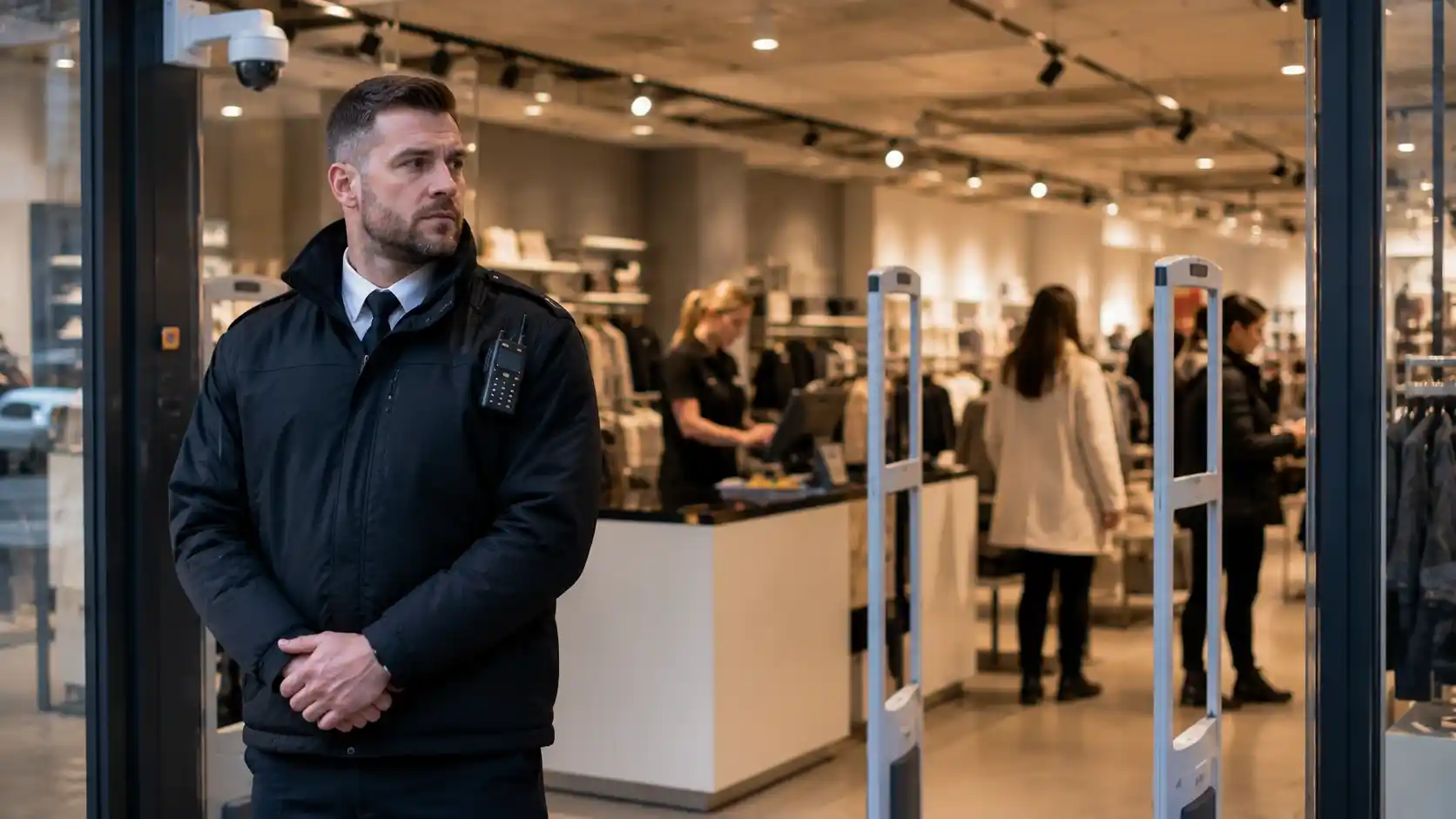
An on-site security presence changes those moments. It introduces visibility where distraction would otherwise dominate. It also reassures staff, particularly during periods when they are covering multiple roles at once. In smaller retail environments, confidence and awareness are closely linked. When staff feel supported, issues are noticed earlier.
Retail security services in Lancaster work best when they sit inside everyday trading. They lose value when treated as something only used at night or during busy periods.
Lancaster-Specific Vulnerabilities Retailers Need to Recognise
Many retail risks in Lancaster stem from how sites are used, not from crime levels alone.
Shared access points between neighbouring units reduce control. Predictable opening and closing routines make timing easier to test. Retail parks use wide layouts and open vehicle access. Once natural oversight fades, quick exit theft and loitering become easier.
These vulnerabilities are not failures. They are characteristics of the local retail environment. Retail security works by recognising where those characteristics create opportunity and adjusting presence accordingly.
Daytime Versus Night-Time Retail Risk in Lancaster
Retail risk does not behave the same way throughout the day.
During trading hours, incidents are discreet. Theft relies on concealment and distraction. Anti-social behaviour often starts as low-level disruption rather than confrontation. Staff are busiest when visibility matters most.
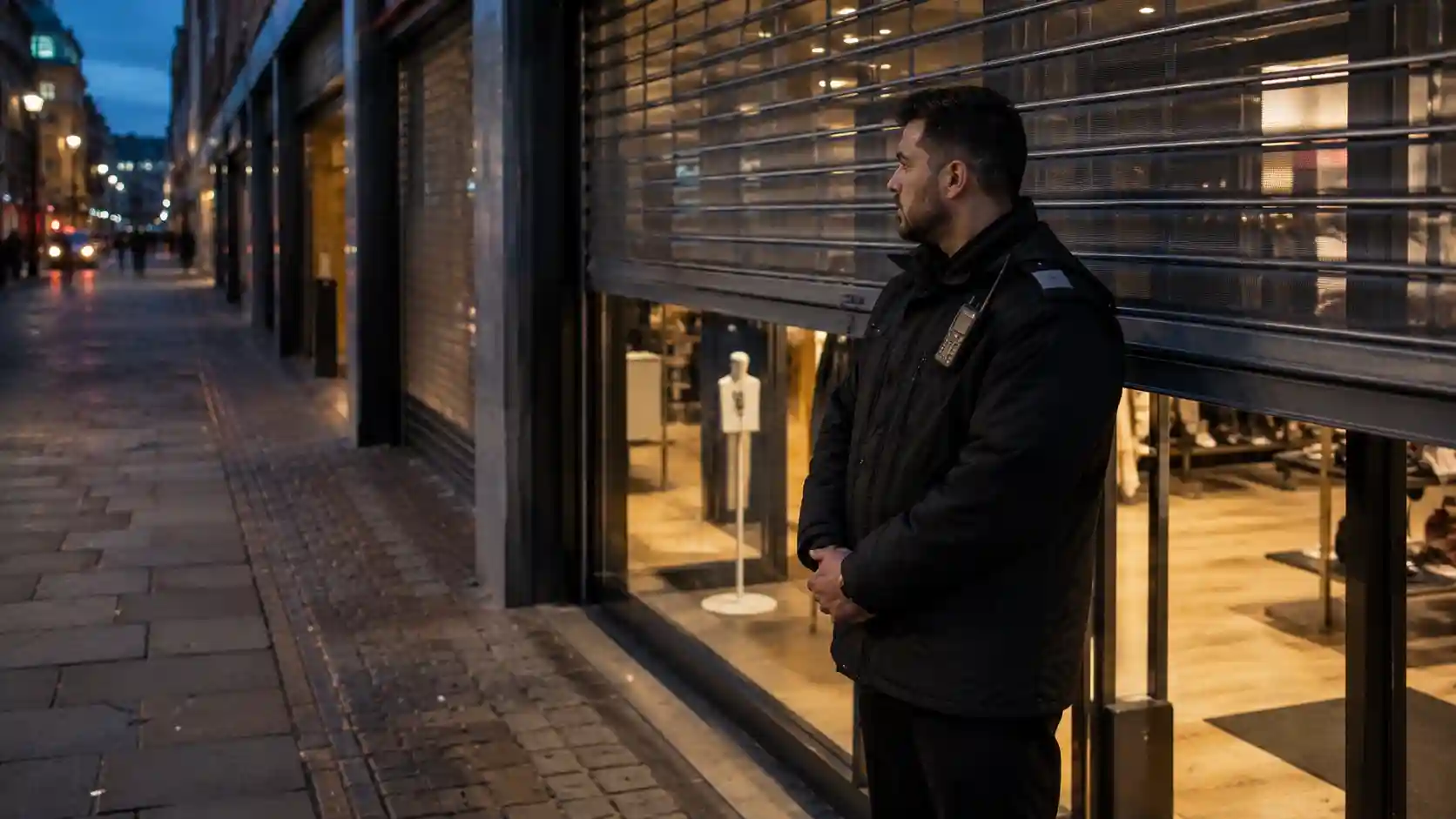
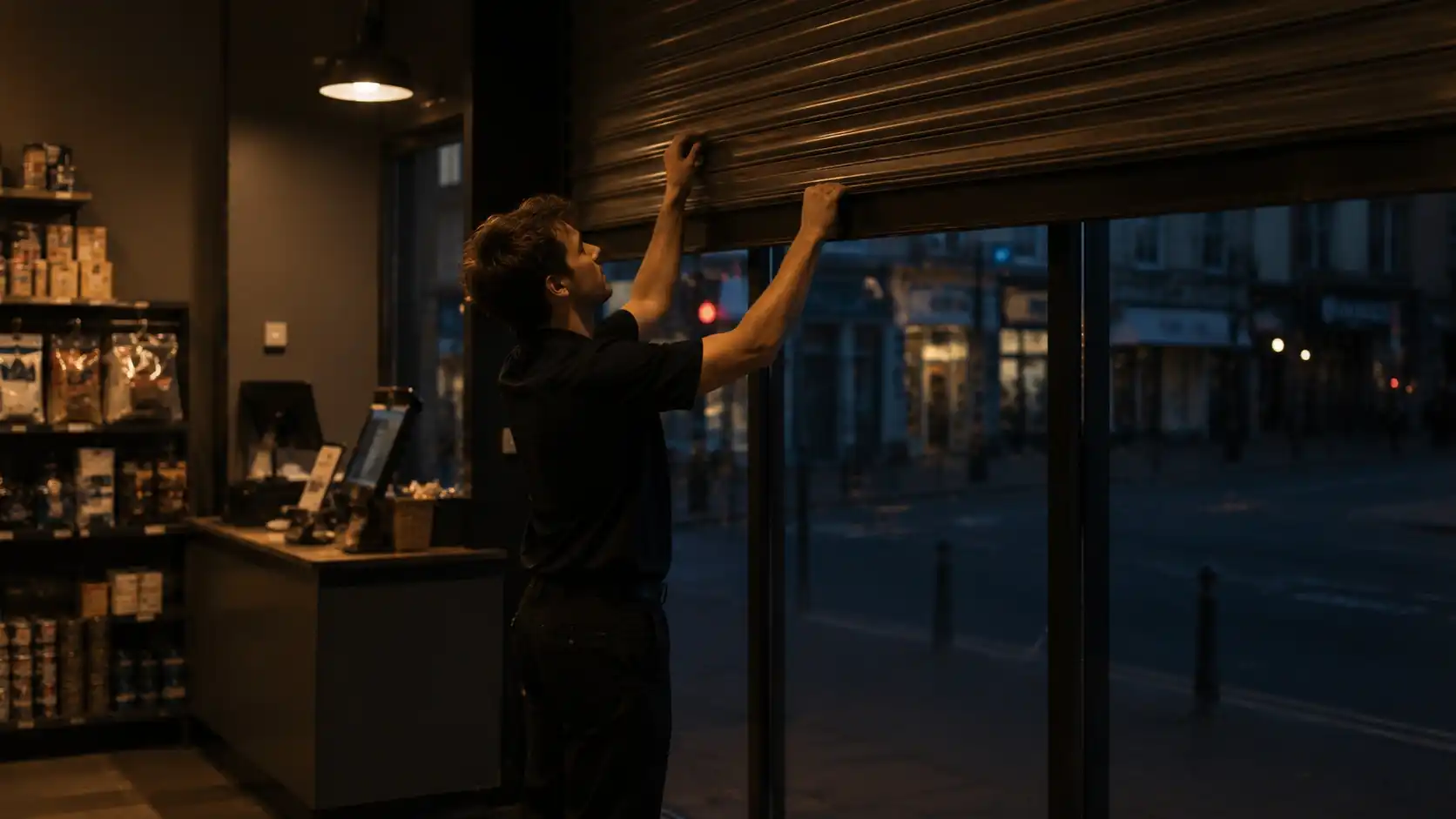
After closing, the risk profile changes. Attention shifts to shutters, rear doors, fire exits, and service areas. Lone-worker exposure increases. Vandalism and damage become more likely than theft itself.
Treating retail security as a single, uniform role across all hours ignores how these risks differ.
Anti-Social Behaviour in Lancaster Retail Areas
Anti-social behaviour in Lancaster’s retail areas rarely begins with overt aggression. It builds through testing boundaries. Raised voices, purposeless lingering, and refusal to move on when asked.
Early, calm intervention makes a measurable difference. A visible presence sets expectations before situations escalate. Without that presence, staff are often left to manage behaviour they are not trained or supported to handle.
Retail security supports staff not by confrontation, but by consistency. When boundaries are clear, escalation becomes less likely.
Seasonal and Event-Driven Pressure on Lancaster Retailers
Lancaster’s retail environment changes sharply with the calendar. Tourism brings unfamiliar patterns. University term dates alter footfall density almost overnight. Local events compress large numbers of people into already busy areas.
These periods increase opportunity rather than intent. Temporary staff, extended hours, and heavier workloads all create gaps. Retail security responds best when coverage adjusts to these shifts, rather than assuming the same approach works year-round. Retail environments in Oldham see similar seasonal footfall changes.
What This Means for Retail Security Planning
Retail security in Lancaster responds to timing, behaviour, and visibility. It is not just about preventing theft. It is about keeping everyday retail predictable.
When those factors are understood and managed, escalation becomes less likely. Staff feel supported, and control of the trading environment is retained before problems surface.
Legal & Compliance Requirements for Retail Security in Lancaster
Where Legal Responsibility Actually Sits for Lancaster Retailers
Retail security is tightly regulated. Many Lancaster businesses only come across those rules after something has gone wrong.
- A theft claim is disputed.
- An incident escalates.
- Footage is requested.
At that point, the question is no longer whether security was present, but whether it was lawful, suitable, and properly documented. This is a clear example of why Lancaster businesses need structured retail security. Informal or reactive measures are not enough.
Responsibility does not sit only with the guard or the provider. Retailers carry legal exposure for who they allow to operate on their premises and how security activity is managed day to day.
SIA Licensing and Licensable Retail Security Activities
Any individual carrying out licensable security activities in a retail environment must hold a valid SIA licence. This includes patrolling premises, controlling access, monitoring behaviour, and responding to incidents.
There are no local variations to this requirement. Lancaster retailers are subject to the same rules as anywhere else in the UK.
Using an unlicensed guard is not a technical oversight. It is a criminal offence. In practical terms, this can invalidate insurance claims and expose a business to enforcement action. Reputational damage often follows and lasts far longer than the original incident.
Retailers should not assume compliance. Licence verification should form part of routine due diligence, not a one-time check.
BS 7858 Vetting and DBS: Legality Versus Suitability
An SIA licence confirms that someone is legally allowed to work in security. It does not confirm whether they are suitable for a retail environment. That distinction matters.
BS 7858 vetting looks beyond licensing. It covers the following factors:
- Identity checks,
- Employment history gaps,
- Right-to-work verification, and
- Criminal record screening through DBS processes.
Retailers will not receive DBS certificates themselves. Data protection rules prevent that. They should receive written confirmation that all deployed personnel meet BS 7858 and DBS requirements.
When evaluating a security company in Lancaster, hesitation matters. A reluctance to confirm details is a risk sign, not a paperwork delay.
Insurance Expectations and Evidential Standards
Insurance is often where weak security arrangements are exposed.
Insurers do not simply ask whether retail security was in place. They look at how it operated.
- Patrol records,
- Incident reports,
- Proof-of-presence systems,
- Access logs.
These records are not paperwork for their own sake. They form the evidential backbone of claims and liability assessments. Inconsistent or missing documentation creates uncertainty, and uncertainty rarely favours the retailer.
CCTV, Guards, and Data Protection Obligations
When retail security operates alongside CCTV, data protection law applies immediately.
Guards interacting with footage must understand why it is recorded, who can access it, how long it is retained, and how it is stored. Informal sharing, unclear access, and poor retention are common compliance failures in retail.
These failures are rarely intentional. They occur when procedures exist on paper but are not consistently followed in practice.
VAT Treatment Of Retail Security Services
Retail security services are standard-rated for VAT across the UK. There are no Lancaster-specific exemptions and no retail carve-outs.
This matters for budgeting and contract comparisons. Apparent cost savings that rely on unclear VAT treatment often unravel under scrutiny.
Local Authority Conditions and Planning-Related Obligations
Retail sites under change can still have security obligations. These often come from planning conditions rather than clear security clauses.
These may include overnight supervision, controlled access points, or lighting requirements. They apply whether or not the word “security” appears in the paperwork. Many retailers only become aware of these obligations during inspections or complaints.
Police Collaboration and Partnership Working
Retail security increasingly operates alongside local policing and business crime partnerships. Sharing information on repeat offenders and behaviour helps prevent incidents.
For Lancaster retailers, this kind of collaboration enables earlier intervention. It also creates clear escalation paths, especially in shared retail spaces.
What This Means in Practice
Legal and compliance failures in retail security rarely surface immediately. They emerge during claims, audits, or investigations, when there is little room to correct mistakes.
Retailers who build compliance into operational planning tend to make better decisions. Staff feel protected because roles and responses are clear. Secondary consequences are also easier to avoid once an incident has passed.
Costs, Contracts & Deployment of Retail Security in Lancaster
What Actually Drives Retail Security Costs in Lancaster
A single hourly rate rarely determines retail security costs in Lancaster. They are shaped by how risk behaves on a site and how predictable that risk is.
The layout of a site shapes how it behaves. A small high-street unit is not exposed in the same way as a retail park with open vehicle access. Trading hours matter too. Longer opening times increase the risk during quiet periods with fewer staff. Retailers in Tameside face similar cost pressures. Layout and behaviour often matter more than store size.
Behavioural complexity is often the most significant driver. Sites with repeated low-level incidents behave differently. Anti-social behaviour and boundary testing tend to be ongoing. These locations usually need a more visible and adaptable presence.
City-Centre Locations Versus Retail Parks
City-centre retail in Lancaster tends to experience higher footfall compressed into shorter periods. This creates pressure during peak trading hours, when staff are busiest, and distraction is most likely. Security here often focuses on visibility, early intervention, and staff reassurance.
Retail parks present a different challenge.
- Footfall is more dispersed.
- Natural oversight drops quickly after dark.
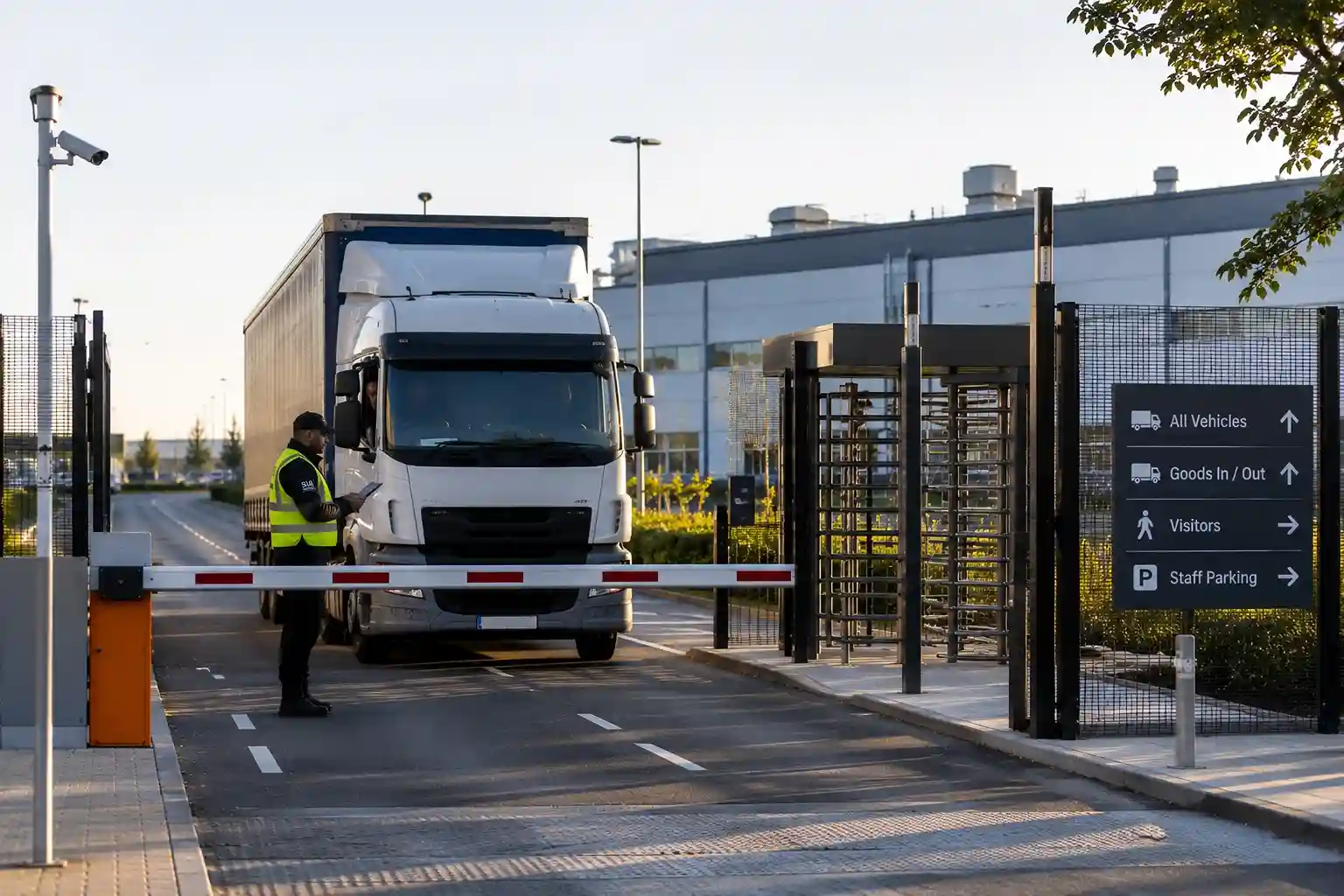
- Vehicle access increases the speed at which incidents can occur and be concluded.
- Effective coverage here often relies on movement rather than fixed positions, which changes how time and cost are allocated.
The difference in pricing reflects these risk profiles, not the postcode alone.
Deployment Timelines: Urgent Versus Planned Cover
Retail security can be deployed quickly in Lancaster, but speed depends on preparation.
Short-term or urgent cover can often be arranged within days when requirements are clear. Planned deployments take more time but allow proper site setup and checks. Good preparation reduces confusion during the first weeks of service.
Rushed deployments tend to fail quietly, through inconsistency rather than visible error.
Contract Lengths and How They Align With Trading Cycles
Retail security contracts usually follow how a business trades.
- Short-term contracts are common for seasonal peaks, store openings, or periods of increased risk.
- Medium-term arrangements often suit retail parks and higher-risk locations where stability matters.
- Longer contracts tend to provide continuity, which reduces the operational friction that comes with frequent guard changes.
Consistency often delivers more value than marginal hourly savings.
Notice Periods and Continuity Risk
Notice periods exist to protect service continuity. Abrupt termination of security cover creates gaps, and gaps are when patterns re-emerge. Retailers in Bootle have seen coverage gaps after sudden termination. Seasonal transitions make this worse.
Short-term arrangements typically carry shorter notice periods. Longer or multi-site contracts require more time to unwind safely. Retailers should view notice periods as part of risk management, not as an inconvenience.
Inflation, Pricing Stability, and Forward Planning
Retail security is a service delivered over time. Pricing that appears fixed indefinitely rarely is.
Many contracts now include review mechanisms linked to broader economic measures. This allows better planning without last-minute changes. Headline rates are not the priority. Stability matters more in insurance and compliance planning.
How Retail Security Influences Insurance Outcomes
Insurers assess risk based on evidence, not intent.
Retailers with structured security arrangements often benefit from clearer claims processes. Patrol verification, incident reports, and documented routines provide context when incidents occur. Without records, insurers must guess what happened. Those guesses rarely help the business.
Security supports insurance outcomes by reducing uncertainty, not by guaranteeing prevention.
Procurement Act 2023 Considerations
Publicly linked retail environments face higher scrutiny. This includes council-owned sites and transport-adjacent premises under the Procurement Act 2023.
This affects private retailers indirectly as well. As public-sector standards rise, expectations across the market follow. Compliance, documentation, and past performance now carry more weight than price alone.
What This Means for Cost Decisions
Retail security cost in Lancaster reflects how risk behaves on a site, how stable that risk is, and how defensible decisions need to be later.
The most effective arrangements are rarely the cheapest. They align coverage with real exposure. This makes it easier for businesses to explain security decisions clearly and with confidence.
Training, Daily Operations & Guard Duties in Lancaster Retail Environments
Training Standards and Why They Matter to Retailers
Every retail security guard in Lancaster must meet baseline SIA training requirements. That establishes legality. It does not, on its own, determine effectiveness.
What matters to retailers is readiness for live retail environments. Shops are not static spaces. Guards need to understand customer flow and staff pressure points. Conflict training matters because many retail issues start with frustration.
Well-prepared guards reduce risk quietly. Poorly prepared ones create uncertainty, which is where incidents begin to drift.
Start-of-Shift Routines and Early Risk Detection
Most retail security issues are identified early in a shift, not later. That is why start-of-shift routines matter.
Initial checks help guards understand whether the site matches expectations. A fire exit was left open. A shutter is not fully secured. An unfamiliar vehicle near a service yard. These are small details, but they often explain incidents hours later.
When early checks are rushed or skipped, problems surface at the worst possible time.
Shift Handovers and Continuity Across Trading Hours
Retail security often runs across long trading days or extended opening periods. That makes handovers critical.
Effective handovers pass on context, not just information.
- Patterns matter.
- Repeat visitors.
- Unresolved issues.
- Temporary changes to access or layout.
Without continuity, each shift starts blind. Small issues are found again instead of being managed.
Patrol Logic and the Value of Unpredictability
Patrols are not about coverage alone. They are about deterrence.
Predictable routines are easy to test and easier to exploit. Effective retail security varies in timing and routes in response to activity, not habit. During busy periods, presence is often more visible. During quieter moments, movement matters more than position.
Unpredictability discourages boundary testing before it becomes behaviour.
External Areas: Where Incidents Often Begin
Retail security does not stop at the shop floor.
Car parks, service yards, rear access points, and shared walkways are common starting points for incidents. Poor lighting, low visibility, and reduced footfall create opportunities long before anything reaches the entrance.
Regular external checks help limit theft risk. They also protect against liability where people move through these spaces at night.
Reporting As Protection, Not Paperwork
Documentation is one of the least visible aspects of retail security and one of the most important.
Patrol logs, incident reports, and access records provide evidence of decision-making. They explain what was seen, what was done, and why. This matters during insurance claims, audits, or disputes, when memories fade, and assumptions fill the gaps.
Clear reporting protects retailers by removing ambiguity.
Alarm Response and Early-Hours Incidents
Alarm activations, especially outside trading hours, require structured responses. Guards assess cause, secure the area, escalate when necessary, and record actions taken.
False alarms are still logged. Patterns matter. Repeated activations often signal underlying issues that need addressing before they escalate.
Fire Safety Checks and Duty of Care
Fire safety forms part of routine security checks, not as enforcement, but as observation. Obstructed exits and fire equipment increase both danger and liability. Trained guards support safe evacuation without getting in the way.
End-of-Shift Secure-Down Procedures
Security does not end when a shift finishes.
Final checks close the loop. Doors, shutters, access points, and unresolved issues are reviewed before responsibility passes on. Where this step is rushed or informal, overnight exposure increases.
Retail security works best when every shift hands over a stable environment, not unfinished business.
What This Means for Lancaster Retailers
Daily operations are where retail security either succeeds quietly or fails slowly.
Routine patrols, clear handovers, and good reports reduce risk more than reacting later. For Lancaster retailers, this discipline keeps trading predictable when pressure changes
Performance, Risks & Operational Challenges in Lancaster Retail Security
How to Tell Whether Retail Security is Actually Working
Retail security performance is rarely judged by dramatic moments. On most sites, success looks quiet.
- No escalation.
- No staff complaints.
- No patterns forming.
The difficulty for Lancaster retailers is knowing whether that calm reflects effective control or simply a lack of testing.
The most useful indicators are practical. Patrol verification shows whether presence is consistent rather than assumed. Response times reveal whether issues are addressed promptly, particularly during quieter periods when supervision is thinner. The quality of incident reports often matters more than the number of incidents recorded. Clear, factual reporting shows judgment. Vague entries usually point to uncertainty.
Escalation decisions matter too. Effective security intervenes early enough to prevent issues, but not so early that normal trading is disrupted. That balance is difficult to achieve and easy to misjudge without experience.
Weather and Environmental Conditions in Lancaster
Weather has a real, often underestimated, impact on retail security performance in Lancaster.
Rain reduces visibility and footfall simultaneously, changing how spaces are used. Fog and early winter darkness affect external patrols, car parks, and service areas. Slippery surfaces and poor drainage increase liability exposure as well as theft risk.
Guards routinely note weather conditions in reports because they provide context. After an incident, insurers and auditors look beyond what happened. They also want to know why patrol patterns or response times differed from the norm.
Fatigue, Long Shifts, and Performance Risk
Performance decline in retail security rarely looks dramatic. It appears gradually.
- Reaction times are slow.
- Details are missed.
- Judgment becomes inconsistent.
In Lancaster’s quieter retail environments, these changes are less obvious. Overnight or during low-activity periods, they are often missed until something is overlooked.
For retailers, this is not a welfare discussion. It is a risk discussion. Fatigue affects observation, decision-making, and response. Where security is treated as a passive presence rather than an active control, these risks are amplified.
Mental Alertness During Night-Time Coverage
Night-time retail security in Lancaster often involves long periods of low activity punctuated by short, high-risk moments. This makes alertness critical.
Regular supervisor check-ins, clear escalation pathways, and defined responsibilities support consistency during these shifts. Where guards feel isolated or unclear about expectations, hesitation increases. Hesitation is often the difference between early intervention and late response.
The impact remains operational, with alertness driving reliability and reliability reinforcing control.
Environmental and Site-Related Constraints
Retail security operates within wider site conditions that influence effectiveness.
Poor lighting increases blind spots and personal injury risk. Noise restrictions during night hours limit certain deterrence approaches. Obstructed walkways and poorly maintained service areas create hazards that may not be obvious during trading hours.
Guards are often the first to notice these issues. Reporting them early helps retailers address risks before they surface as incidents or claims.
The Risk of Under-Priced Retail Security
One of the most common operational challenges for retailers is security that appears cost-effective but fails quietly.
Under-priced arrangements often show the same signs.
- Inconsistent patrols.
- Minimal reporting.
- Unclear escalation.
- Little continuity between shifts.
These weaknesses rarely cause immediate incidents. When patterns go unseen, problems rarely appear immediately. They surface later through disruption, claims, and loss of staff confidence.
What Performance Really Tells You
Retail security performance in Lancaster is best judged through patterns, not incidents.
Consistent presence, reliable reporting, and appropriate escalation create stability. Where those elements are missing, risk does not disappear. It waits.
For retailers, understanding this distinction matters. It helps determine whether security is protecting the business or simply taking up space.
Technology & Future Trends in Lancaster Retail Security
Technology has changed how retail security operates, but it has not changed what it is responsible for. In Lancaster’s retail environments, technology works best when it sharpens attention rather than replacing judgment.
The most effective setups treat systems as support layers. They extend awareness, improve accountability, and reduce uncertainty. They do not make decisions on behalf of the people on site.
CCTV and On-Site Security Working Together
CCTV records events on its own. Combined with an on-site presence, it becomes far more useful.
Footage provides context. Guards provide interpretation. When both are aligned, incidents are understood rather than guessed at. This matters when behaviour escalates gradually, which is often the case in Lancaster’s smaller retail spaces.
Integration also improves accountability. Actions are timestamped. Decisions are traceable. That clarity supports internal reviews, insurance discussions, and post-incident learning without turning routine situations into formal investigations.
AI Analytics as a Focus Tool, Not a Decision-Maker
AI-assisted surveillance is increasingly common in retail settings, particularly in shared environments and retail parks.
Its value is narrow but important. AI can flag unusual movement patterns, repeated loitering, or activity at unexpected times. What it cannot do is understand intent or context.
Used correctly, AI cuts down the time guards spend watching empty screens and increases the time spent on real alerts. It focuses attention without replacing judgment.
Remote Monitoring and Hybrid Security Models
Remote monitoring centres now support many retail sites. They verify alarms, guide on-site responses, and provide oversight during lone-working periods.
In Lancaster, this hybrid approach works well for edge-of-town retail parks and long trading hours. It improves resilience without adding staff and supports quicker escalation.
Drones in Limited Retail Use Cases
Drones are not a standard retail security tool, and they should not be treated as one.
They are most often used in large, open retail sites. Their role is to confirm alarms and inspect hard-to-see areas. They supplement ground-level presence rather than replacing it.
Their value lies in speed and reach, not routine patrol.
Predictive Analytics and Evidence-Led Deployment
Retail security is becoming less reactive. Past incidents, time patterns, seasons, and weather now shape coverage planning.
For Lancaster retailers, this supports practical decisions.
- When is presence most valuable?
- Which areas need attention during quieter periods?
- Are current routines aligned with real risk, or simply habit?
Evidence-led planning reduces guesswork and helps budgets follow exposure rather than assumptions.
Training Evolution and Preparedness
As systems become more integrated, guards increasingly benefit from broader awareness training. This includes digital reporting systems, CCTV interaction, and counter-terror awareness for public-facing venues.
Preparedness is not about anticipating worst-case scenarios. It is about knowing what to do when the unexpected happens, without hesitation or confusion.
Sustainability and Green Security Practices
Environmental considerations now influence how retail security is delivered.
Energy-efficient lighting and paperless reporting are now common. Low-emission patrol vehicles and solar CCTV are also being used more. These steps cut environmental impact without reducing safety.
Martyn’s Law and Future Expectations
Martyn’s Law will raise expectations around preparedness for public-facing retail environments.
For Lancaster retailers, this means clearer records and better training. Awareness of behaviour and emergency response becomes more important. Security teams support this through visibility and consistency, not enforcement.
Conclusion: Making informed retail security decisions in Lancaster
Understanding why Lancaster businesses need Retail Security is not about preparing for worst-case scenarios. It is about recognising how retail environments actually operate.
Lancaster’s shops, retail parks, and mixed-use spaces follow changing rhythms. Footfall fluctuates. Staff numbers shift. Quiet periods create as much exposure as busy ones. In those conditions, risk rarely announces itself. It emerges through gaps in timing, routine, and visibility.
This is why retail security works best when it is planned, proportionate, and integrated into everyday operations. Trained people, clear procedures, and supporting technology each have a role. None of them succeeds in isolation.
Compliance matters just as much as presence. Licensing, vetting, data handling, insurance expectations, and future obligations do not sit in the background. They shape how security decisions hold up later, when they are reviewed under pressure.
For Lancaster retailers, the aim is not more security. It is clarity. Clear understanding of risk. Clear coverage where it matters. Clear reasoning that can be explained, defended, and adjusted as conditions change. When retail security is approached that way, it becomes a stabilising part of the business rather than a reactive expense.
Get in touch to talk through your requirements.
Frequently Asked Questions
1. Do all retail security guards in Lancaster need an SIA licence?
Yes. Guards doing patrols, access control, or incident response must have a valid SIA licence.
2. Is retail security only needed at night in Lancaster?
No. Theft and staff intimidation often occur while stores are open. Daytime presence is often just as important.
3. Can retail security help reduce insurance risk for Lancaster businesses?
Often, yes. Planned patrols, clear reports, and proof-of-presence give insurers the clarity they look for.
4. How quickly can retail security be deployed in Lancaster?
Urgent short-term cover can often be arranged within days. Planned deployments take longer to allow for site familiarisation and proper setup.
5. What legal risks do retailers face if guards are not properly vetted?
Using unlicensed or poorly vetted guards can void insurance cover and lead to enforcement action.
6. How does CCTV work alongside on-site retail security?
CCTV provides evidence and context. On-site security provides judgment and intervention. Together, they improve accountability and response quality.
7. Will Martyn’s Law affect smaller Lancaster retail premises?
Expectations will rise for public-facing, high-footfall venues. Awareness and preparation will still matter across all retail.
8. How should retailers assess whether their current security setup is adequate?
Look at patterns, not incidents. Consistency of presence, quality of reporting, and clarity of escalation often reveal more than headline figures.