Berkshire can fool you at first glance. A tidy county, tidy high streets. Weekenders drifting through Windsor with ice creams. Office staff stepping off the train at Reading, phones out, minds elsewhere. Everything looks normal in the shops, with nothing standing out as suspicious. But spend time behind the counter and a different picture takes shape, slower, quieter, closer to the bone.
Retailers now talk about problems that rarely make headlines. Shelf-sweepers who slip in at lunchtime when everyone’s distracted. A group that shows up three days running, scouting the blind spots. Late-shift staff stiffening when voices rise near the tills. And the delivery door someone forgot to close for twenty seconds.
Understanding why Berkshire businesses need retail security means recognising that harm rarely arrives with drama attached. It creeps, tests the edge, and pushes until someone stops it. CCTV helps. Alarms chirp and blink. But the moment someone needs calm words, firm direction, or a pair of eyes that know when to step forward, technology sits out.
This guide is written for people who run shops, not for those who write policies. The essentials are practical delivery and financial impact. Compliance underpins smooth retail life when things are calm as much as when they are stretched.
Table of Contents
Retail Security Basics in Berkshire
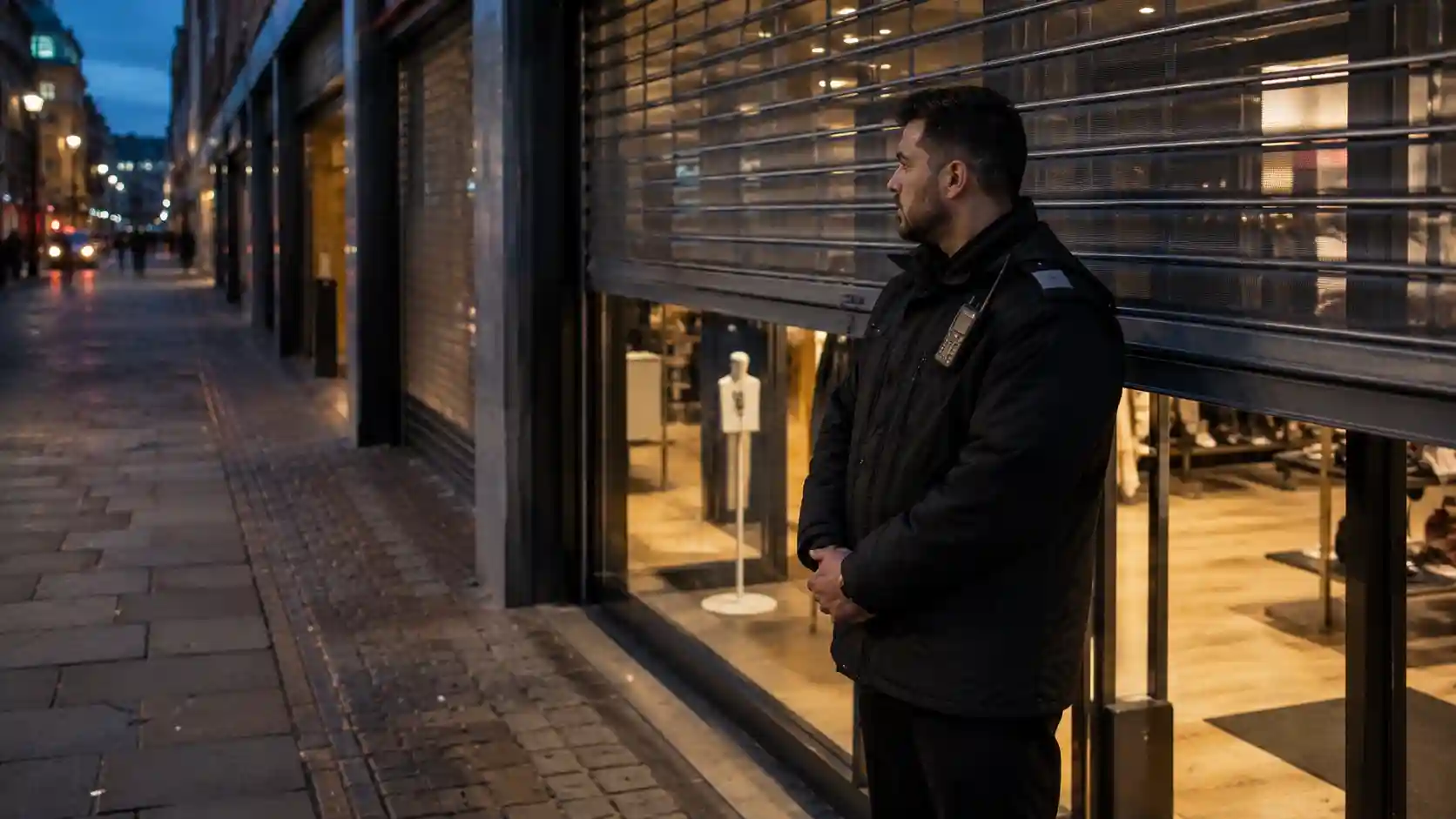
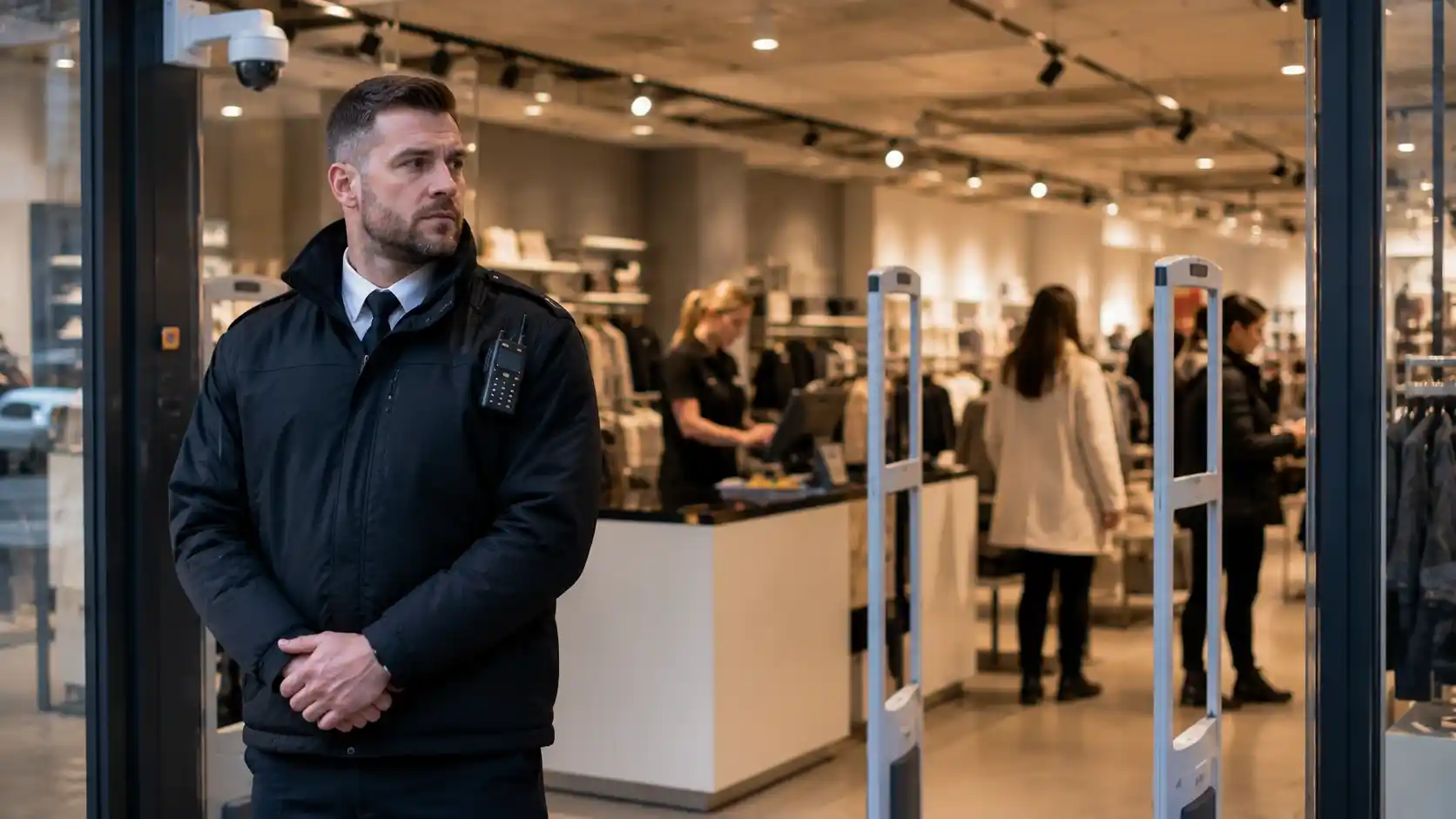
Walk into any store in Berkshire, and you’ll notice one thing first: nothing seems wrong. That’s the odd thing about retail crime. It hides inside ordinary days. A guard might stand near the entrance, half invisible, a steady figure watching traffic in and out. But if you could see what they see, the picture feels different. The trends seen in Kent, from grab-and-go thefts to organised distractions and repeat calls, are now visible in Berkshire shops. It’s proof the issues are travelling rather than isolated.
A Role That Goes Well Beyond “Guarding”
Retail security isn’t one thing anymore. The old image a guard pinned to the doorway like a coat hook, belongs to another era. Today, it means something closer to decision-making on the move. A jigsaw of:
- A visible presence to deter the half-serious
- Quiet intervention before someone crosses a line
- Recovery of calm during heated moments
- Awareness of what’s happening beyond the tills
Static guarding, remote CCTV monitoring, and manned retail security all share DNA, but their impact differs. Cameras watch, alarms shout, and guards absorb the moment, judge the intent, and respond in real time. That’s the part most shoppers never notice, and the part retailers depend on most.
Why Berkshire Shapes the Job Differently
Berkshire isn’t the capital, yet it mirrors London in compressed form. Each town moves to its own beat, but the security threat keeps shifting.
Reading
Trains tumble people in and out all day. Traffic never really settles. Footfall ebbs, swings, swells again. Offenders can dip into one store at 10:40, another two streets away by 11:10, and be halfway to Maidenhead before staff finish reporting the incident.
Slough
Rapid access to London and Heathrow keeps the area in motion. Retail clustered around key routes sees streams of people passing through with shifting identities and motives. A gift for opportunists.
Bracknell
Tidy, modern shopping zones with long sight lines and open layouts. Feels safe, but open space can be a blessing and a blind spot. A skilled team knows how to turn it into an advantage.
Newbury & Thatcham
Big retail parks. Wide perimeters. Cars are flowing in and out. Loads of merchandise are arriving through the back as quickly as stock leaves through the front. Harder to see everything at once.
Windsor
Tourists fill the streets, cash is changing hands quickly, and focus is stretched thin. A busy day can flip into confusion when one group decides the rules don’t apply.
Warehouse risk hiding behind the shopfront
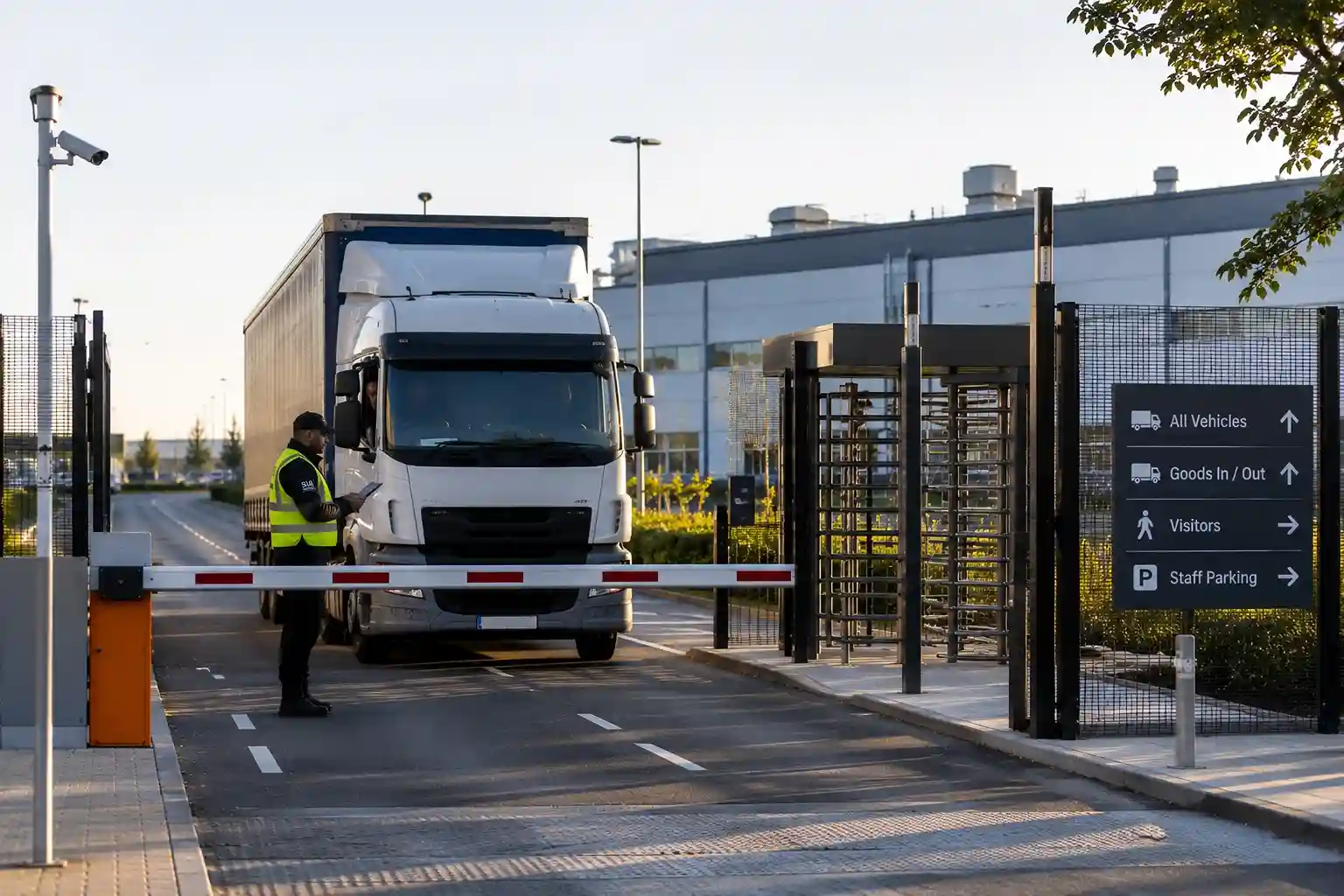
Here’s something people often forget: retail loss doesn’t only happen out front. It happens behind the curtain at the loading gate, inside temporary stores, in trailers parked ten minutes longer than planned.
Slough Trading Estate. The logistics belt between Newbury and Reading. Side units tucked behind supermarkets where pallets sit longer than they should. These aren’t glamorous crimes. They’re quite disappearances:
- One crate short
- A sealed door pried open after dark
- A delivery scanned as complete that never reaches the aisle
Across Berkshire and Buckinghamshire, retailers report identical signs. Stock slips out piece by piece long before the numbers catch up. A single pallet of consumer tech can be worth more than an afternoon’s takings. One breach becomes a pattern if nobody spots the first one.
Anti-Social Behaviour: The Slow Burn Problem
Most shop theft is quick. ASB, on the other hand, festers. It starts small:
- Loitering near an entrance
- Someone pacing aisles without intent to buy
- Rude comments aimed at staff
- Groups blocking the way out
- Loud behaviour tumbling into intimidation
Thames Valley Police track these incidents, but guards see them first. In places like Newbury Retail Park or around The Lexicon, behaviour that seems harmless in the moment can drain staff energy and chase away customers. Security steps into those cracks quietly, early, before it becomes a police call. Shops in Oxfordshire know the outcome now. When nobody steps in early, the small stuff grows into a real drain on time and stock.
Day and Night are Different Worlds
Retailers often assume the pressure lands after closing, but Berkshire’s daily rhythm flips that expectation.
Daylight brings:
- Fast thieves hidden in crowds
- Middle-of-day shelf sweeping
- Repeat offenders who know when staff fatigue hits
- Tense customer interactions when store rules meet short tempers
Staff often tell the same story: “We didn’t spot it until after the shift.”
Nightfall has its own script:
- Shutters nudged to see if they give
- Blind corners tested
- Perimeter cameras fogging up with damp
- Tools probing back gates or rooflines
What works at noon collapses at midnight if the plan doesn’t bend.
Seasonal, Cultural, and “One-Off” Surges
This is the part shop owners feel most keenly: nothing stays normal for long.
Around Windsor, events can triple footfall in an afternoon. Reading Festival doesn’t just swell crowds; it changes behaviour across the county right down to the retail parks. Bracknell stores breathe easier in early spring, then strain again come school holidays. Each spike distorts normal patterns. Security needs to stretch with them.
Transport Networks Routes In, Routes Out
Retail theft thrives near fast exits. Berkshire is full of them:
- The Elizabeth Line is cutting journey times sharply
- M4 on-ramps near retail estates
- Rail corridors linking commuter towns at commuter speed
A thief with a plan can cover three towns before security even finishes paperwork. Being close to London makes the issue bigger. Offenders slip into commuter patterns, hit stores outside the city, and disappear without a trace. Proper coverage flips the advantage, removing the opportunity early enough that no one tries to take it.
And Then There’s Consolidation
Retail footprints shrink, but stock levels rise. One store now holds the value of two. The spread has collapsed into a single hub, ripe for the taking. Reduce cover by even a fraction, and exposure appears instantly.
Most retailers eventually reach the same conclusion: they need a partner who understands Berkshire’s geography, not a generic contract. For that reason, firms often rely on a proven security company in Berkshire. It can spot where pressure builds on weekends and where cover thins during the week.
Legal & Compliance Requirements in Berkshire
The security world carries more paperwork than most expect. Rules pull in from every direction: licensing, vetting, liability protection, CCTV use, labour law, local councils, and even anti-terror legislation. None of it feels urgent until it does.
SIA Licensing: Non-Negotiable
Guards working retail sites in Berkshire are required to have an SIA licence. The rule covers everything from patrols and disputes to access control. This isn’t advisory. It’s criminal law. No licence, no guarding.
What Happens When That Rule Gets Ignored?
Two things, both bad:
- Insurance claims drag or fail outright.
- Retailers find themselves exposed at precisely the moment they need protection.
Cheap rates often hide non-compliance. The cost comes back with interest.
DBS + BS7858: The Second Layer Most Decision-Makers Never See
Licensing tells you someone is legally allowed to work. Vetting tells you whether you should trust them with keys, stock, or responsibility.
BS7858 covers:
- Identity verification
- Employment and character review
- Right-to-work proof (critical post-Brexit)
- Ongoing suitability checks
The requirement exists for a reason. A single officer affects customer safety, protects goods, and shapes both risk and accountability.
Insurance: Where Theory Meets The Real World
Retailers sometimes assume the provider’s insurance is their safety net. It is until it isn’t.
Carriers will check:
- Did guards follow assignment instructions?
- Are patrols logged?
- Are escalation decisions recorded?
- Are access lists maintained?
When an incident happens, logs can carry more weight than witness memory. A scribbled note can save thousands or make it clear that a contractor wasn’t doing the job.
GDPR + CCTV Invisible Risk Until Mishandled
CCTV is a powerful tool, but it drags compliance obligations behind it:
- Justifying retention periods
- Managing access restrictions
- Protecting handled evidence
- Deleting safely and legally
When a guard watches a live feed, they enter data governance territory. If a recording becomes evidence, the rules tighten again. Retailers who don’t prepare here find themselves scrambling later.
VAT No Shortcuts
It sounds minor. It isn’t. Retail security services sit firmly in the standard VAT bracket. Any quote that suggests otherwise should ring alarm bells. Financial clean lines matter when auditors arrive.
Local Councils Quietly Shaping Expectations
You won’t often read “security required” in council paperwork. More often you’ll see:
- Controlled access conditions
- Night-switch lighting provisions
- Late-trading approval conditions
- Requirements for safe temporary structures
Retail security becomes the mechanism for meeting those obligations.
Workforce Legality After Brexit
Right-to-work documentation is now a living process rather than a tick-box. Providers must evidence compliance. If they can’t, liability doesn’t stop at their door; it spills upstream.
Martyn’s Law: A Shadow Growing Into Shape
Not every Berkshire retailer sits near a stadium or concert venue. But many sit near places where crowds gather:
- Windsor’s visitor zones
- Reading town centre venues
- Retail strips near large events
As Martyn’s Law lands, baseline expectations rise:
- Guards trained to spot unusual behaviour
- Clear emergency communication plans
- Documented response frameworks
- Coordination with the centre management or the police
Retailers who prepare early avoid frantic retrofits later.
Thames Valley Police + BCRP Intelligence
Security doesn’t operate in a vacuum anymore. Information moves between:
- Guards
- Store managers
- Police
- Retail partnerships
- Neighbouring businesses
A person banned from one shop often tests another the next day. When guards plug into these networks, one store’s experience protects ten.
Costs, Contracts & Deployment in Berkshire Retail Security
Budgeting for retail security feels deceptively simple from the outside: cost per hour multiplied by shifts. But the real calculation is buried under layers of site exposure, staff reliance, customer flow and the psychology of risk. Most retailers in Berkshire start by thinking about price. It’s only later that they grasp the real issue is the vulnerability of going without protection.
Security pricing here is neither random nor uniform. It changes based on what’s going on at the front of the shop, at the back door, and in all the quiet gaps between.
Why Retail Guarding Costs Diverge Across Berkshire: The Real Variables
Retail isn’t evenly distributed across the county, and neither is vulnerability. Guards in Berkshire aren’t just covering territory, they’re absorbing complexity.
Below the surface, ten core drivers shape cost:
1. Footfall ≠ risk
Busy stores sometimes run more calmly than quiet ones. Small units with two staff are harder to protect than sprawling high street anchors with teams on the floor. Risk rises where oversight drops.
2. Store sightlines
In open stores, presence is everything, but in older spaces, scrutiny matters more, shifting security from being visible to chasing detail.
3. Product temptation
Items that slip into a pocket cosmetics, alcohol, batteries, and small tech, skew crime upward. Stock shape alters security intensity.
4. Staff independence
Where teams operate with skeleton cover, guarding fills situational blind spots created by legitimate business pressures.
5. Rhythm volatility
Footfall predictability settles behaviour. Random surges amplify conflict, confusion and opportunity.
6. Tenancy adjacency
Surrounding retailers matter; trouble magnet tenants tend to create ripple effects.
7. History
Once targeted, sites become part of an unspoken retail map shared between opportunists.
8. Perimeter conditions
Doors, bins, rear corridors and car parks multiply exposure.
9. Sharing vs standing alone
Security that protects a cluster brings economies of scale. Solitary stores carry costs personally.
10. Deterrence posture
Some areas need calm monitoring, while other sites need overt presence to interrupt confidence.
These variables don’t sit still. They shift morning to afternoon, payday to school break, summer dusk to winter darkness. Security pricing chases moving risk, not geographic labels.
The False Certainty Of Hourly Rate Comparison
Retailers sometimes compare guarding the way they compare utilities. But no two guards perform equally, or carry equivalent value.
Cheap rates often hide:
- Constant rotation of operatives
- Limited site familiarisation
- Minimal reporting
- Slow escalation habits
- Limited engagement with police/business partnerships
High-performing guards quietly:
- Notice faces customers forget
- Log events no one else saw
- Step in early when voices rise
- Intercept shelf-sweepers before stock leaves the aisle
- Support lone working
- Hold ground confidently during closing
The “cheapest” guard can quickly become the most expensive mistake, just not on day one.
Deployment Speed Urgent But Disciplined
When a retailer calls for security, urgency is almost always baked into the request:
- A theft rattled the team
- A staff member was verbally abused
- A gang of youths tested the rules repeatedly
- Police suggested more presence
- A social media call-out brought crowds in
Speed matters, but shortcuts undermine the purpose of guarding itself. A credible deployment requires:
- Licence checks
- Identity verification
- Right-to-work confirmation
- Assignment instructions tailored to the site
- Store rules and prohibited behaviours
- Lone-worker considerations
- Alarm codes and contact sequences
- Integration with centre management, where applicable
- Sign-on/sign-off tracking
- Escalation triggers
- Site walk-through before independent coverage
This isn’t formality, it’s how guards become effective from the first incident, not the third.
Emergency cover inside 24–48 hours is common in Berkshire. The nuance is whether the guard is prepared to act or merely physically present.
Contract Length Changes The Nature Of Protection
Retail risk isn’t static; it pulses across the calendar. Contract structure needs to match operational rhythm.
Short-term (4–12 weeks)
Most often triggered by:
- Periodic surge events
- Christmas trading
- Local festivals
- Tourism peaks
- A spike in theft
Short contracts buy breathing room. But as soon as they end, stores return to full exposure, and offenders often notice absence faster than presence.
Medium-term (6–12 months)
The steady state for supermarkets, discount chains and mid-sized retailers. This window allows guards time to:
- Learn the premises
- Build rapport with staff
- Track repeat behaviours
- Anticipate seasonal issues
- Develop early-intervention confidence
The biggest security gains emerge here, often quietly.
Long-term (2–3 years)
This is where guarding shifts from defensive purchase to operational infrastructure. Guards become part of the site identity:
- Staff recognise them
- Regulars know they’re there
- Offenders test elsewhere
- Patterns clarify
- Reports inform decision-making, not just record it
Revenue dips slightly, staff actions sharpen, and tension inside the store eases.
Why Reactive-Only Security Rarely Works in Practice
Retailers sometimes treat guarding like a rescue tool. Something to turn on when theft spikes, and off when things calm. Crime evolves rather than appearing in isolated bursts, and opportunists take advantage of the pattern:
- Test limits
- Learn responses
- Share knowledge
- Exploit gaps
- Return to soft targets
A retail park with security for three weeks sends the message:
“Now isn’t a good time, try again next month.”
Guards aren’t just responders. They are pattern interrupters. When removed, the pattern resumes like water filling a shape.
Businesses pay for guards when trouble hits, yet the smarter spend is on stopping that trouble before it appears.
The Insurer’s Quiet Influence Over Retail Decisions
Insurers don’t publicly set security expectations, but they shape them behind desks. Loss adjusters in Berkshire are increasingly asking:
- Did the store escalate security after repeated incidents?
- Was guarding present during high-risk hours?
- Are patrols logged?
- Did anyone document prior threats?
- Is CCTV linked to response, or just running?
In some cases, retailers learn the hard way that:
- Premiums increase when security is absent
- Excess rises after repeat events
- Claims are now without evidence
- Guarding becomes a condition of renewal
Retail security is slowly turning from optional spend into risk management currency.
Geography: The Silent Multiplier Of Threat And Cost
Berkshire’s location makes it attractive to customers and opportunists alike:
- London overspill pushes population west
- M4 offers fast transit in two directions
- Elizabeth Line compresses travel time
- Rail routes create hop-on/hop-off anonymity
- Retail clusters sit along commuter flows
Groups operating lightly across five towns can change tactics quickly:
- Target high-value, small items
- Move before bans settle
- Switch to outer-ring retail parks if town centres tighten
Security that exists in isolation, one store at a time, always lags behind coordinated movement. Inconsistent guarding schedules become part of the playbook.
Staff Confidence: The Unpriced Benefit
Risk cannot be measured only in lost goods. Shops without guarding often see:
- Lower staff willingness to challenge behaviour
- Higher tension at tills
- Increased sick leave or early shift exits
- Difficulty recruiting and retaining part-time workers
- Managers got absorbed into disputes instead of running the store
Shops with consistent guarding report:
- Smoother customer flow
- Clearer expectations
- More assertive staff
- Fewer “grey area” incidents
- Reduced escalation to police
Security buys psychological safety as much as physical protection. And it’s often the emotional climate, not the incident log, that convinces retailers that guarding is essential.
The Ultimate Cost Question: Not “How Much,” But “How Exposed?”
The cheapest guarding contract looks expensive if viewed in isolation. But the figures look very different when weighed against:
- Shrinkage across a quarter
- One injury claim
- One staff resignation is linked to a confrontation
- One premium hike
- One avoidable police call
- One viral video of an unmanaged incident
Retailers in Berkshire make progress when they shift from counting hourly cover to understanding daily risk. Security isn’t a switch. It’s a stabiliser.
Training, Daily Operations & Guard Duties in Berkshire Retail Sites
Most retailers describe their needs in plain terms. A skilled guard who shows up reliably and resolves issues early is all they ask for. Underneath the surface, there’s training, systems, and readiness, not merely a presence by the entrance.
Security inside Berkshire shops is a working rhythm. Not dramatic and not cinematic. Just steady, watchful and sometimes invisible. That steady routine, repeated every shift, is what puts off opportunists and reassures staff that small moments won’t escalate.
The Training Foundation Where Skill Meets Judgment
All legal security work starts with SIA licensing, but retail guarding asks for much more than the statutory minimum. Training that matters most in Berkshire’s shops includes:
- Conflict management that prefers a calm tone over a physical stance
- Customer-facing communication — because guards are part of the environment, not at war with it
- Early-stage behavioural reading: Is someone confused, distressed, or probing for opportunity?
- Recognising when to disengage and call for support rather than escalate
- Safeguarding awareness, especially where young staff serve late shifts
- Understanding local exclusion lists and how to apply them correctly
- Being comfortable logging information, not just witnessing it
- Knowing the difference between what’s unlawful and what’s simply unwise
Training is not a one-time qualification. Guards get better by reading the flow of people, noticing the weak spots, and recognising the subtle signs before trouble starts. Two guards with identical badges can perform worlds apart in a real shop.
Shift Start: Establishing Situational Control In Minutes
Long before a guard speaks to anyone, they run a mental checklist. The first ten minutes often decide how the next ten hours play out.
Typical first actions:
- Confirm arrival with the control room or supervisor
- Collect briefing notes from the previous shift
- Scan the store layout — what’s changed since yesterday?
- Walk the boundary — even twenty paces can reveal an issue
- Check rear exits are secured and only authorised doors are open
- Glance across CCTV screens if available
- Identify today’s vulnerabilities: staff shortages, delivery windows, and known events
- Clock who is on duty — strong teams behave differently from thin teams
A good guard starts observing before the first customer arrives. They are building a mental map of risk while the store warms up to trading.
Handover Culture: The Invisible Glue Between Shifts
Retail security often spans from early morning to late evening, sometimes beyond midnight. That means protection succeeds or fails at the handover.
A meaningful handover passes on:
- Repeat individuals seen earlier in the day
- Any attempted theft patterns
- Known high-risk windows (school exit time, last train arrival, sports fixture end)
- Faults with alarms, shutters, tag gates or lighting
- Staff concerns — nervous shift members can predict trouble before it happens
- Ongoing police or centre-management alerts
In Berkshire’s larger shopping environments, guards sometimes inherit intelligence from adjacent stores, not just their predecessors. One retailer’s trouble at 4 pm can become another’s at 4:20.
Handover done badly wastes collective experience. Handover done well compresses days of learning into minutes.
Patrol Routines: Not Aimless Walking, but Deliberate Presence
A guard’s movement through a store must look natural, not choreographed. But beneath that calm exterior, every patrol has purpose. Patrol timing changes with context:
- Quiet morning hours: slower sweeps, informal engagement with early browsers
- Lunchtime and after-school bursts: increased scanning, quicker routes, eyes at a distance
- Late afternoon slump: fatigue on both sides, security and staff demands sharper attention
- Closing window: focus shifts to stock protection, access control, and watching for lingering shoppers
Retail parks widen the job. Guards move through back lanes, rubbish holding areas, outside stairwells, the far sides of car parks where CCTV fades out, and the delivery bays that become blind spots once the shops close.
Patrols aren’t there to look busy. They are timed to:
- Break up patterns offenders rely on
- Reassure staff when tension builds
- Show visibility when deterrence matters
- Catch the tiny anomalies CCTV misses
Predictable security breeds boldness. A well-managed patrol rhythm removes that comfort.
Perimeter-First Thinking Where Most Trouble Begins
Inside the store is rarely where risk originates. Trouble often starts:
- In a service alley where someone waits for a delivery to finish
- Behind a shutter while staff finish cashing up
- Inside a bin cage, where packaging creates a cover to hide goods
- In cars parked deliberately beyond lighting reach
- At the edge of a crowd forming outside a popular takeaway at closing
Retailers often underestimate how porous retail environments are. Guards treat them like permeable boundaries, not walls. Perimeter checks during a guard’s shift often uncover:
- Doors not fully latched
- Broken motion lights
- Attempted tampering with locks
- Trip hazards that become injury risks in public areas
- People loitering for no obvious purpose
By the time something reaches the sales floor, it is usually the last step in a chain that began out of sight.
Alarm Response Fast, Careful, and Structured
Alarms don’t ring equally. Some come from stock tagging, others from fire panels, others from movement sensors or panic buttons. A trained guard differentiates between:
- Faulty sensor noise
- Genuine intrusion behaviour
- A distraction tactic (yes, offenders use them)
- A false trigger caused by staff leaving a back door ajar
Response follows a familiar curve:
- Attend physically, without rushing blindly
- Assess for obvious risk: people, property, and fire
- Check door integrity and tampering points
- Validate with CCTV if available
- Escalate to the manager or emergency services if grounds exist
- Log details even if nothing “happened”
The public sees alarms as noise. Security sees them as data point clusters, red flags that often precede theft.
Fire And Life-Safety Responsibility Rises With Public Access
Retail environments mix:
- Families
- Teenagers
- Tourists
- Elderly visitors
- Individuals who need assistance
- Large groups
A guard’s life-safety duties mirror this variety. Their checks cover:
- Obstructed fire exits
- Blocked aisles caused by rushed merchandising
- Dead emergency lights
- Locked panic-bar doors
- Inaccessible extinguishers
- Evacuation route signage
Fire safety rarely becomes headline news in retail until it does. Guards spot issues when no one else is looking because their mental bandwidth is on risk, not inventory.
The Night Shift Exposure Rises As Footfall Falls
After the shutters close, risk doesn’t leave. It changes shape. Night guarding demands:
- Broad perimeter awareness
- Confidence working alone
- Routine check-ins with supervisors to confirm welfare
- Familiarity with emergency call chains
- Comfort patrolling poorly lit areas
- Noise sensitivity — one bang can mean a blown bin, or a break-in
- A sense of time — night can stretch; boredom dulls judgement
Night guards are especially conscious of their own visibility. They need to be seen enough to deter, yet alert enough not to be predictable.
End-of-Shift Practices Leave The Site Safer Than It Began
Closing a shift means more than handing back keys. Tasks often include:
- Final internal sweep for hiding risks or remaining shoppers
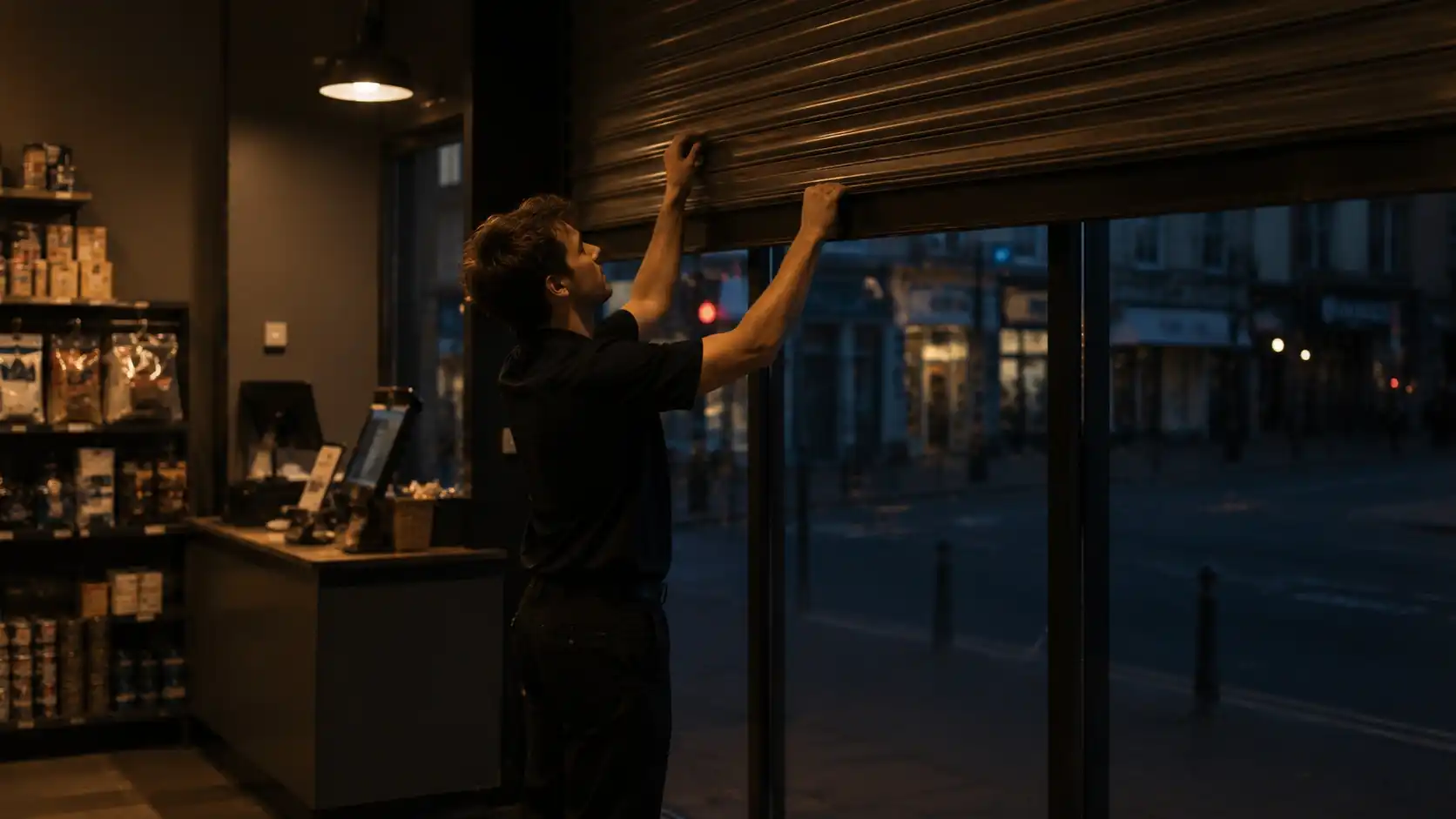
- Confirmation that all shutters are fully locked
- Back-door deadbolts checked, not assumed
- Stockroom entrance secured
- Fire doors confirmed closed
- Radios and cameras returned or logged off
- Last log entry summarising unresolved issues
- Passing intelligence to the next shift or management
Security ends only when the store’s vulnerabilities are reduced to their lowest overnight level.
Why These Small Routines Matter More Than Dramatic Interventions
Retail security is rarely about headline thefts or dramatic takedowns. It is built on:
- Repetition
- Discipline
- Familiarity
- Timing
- Calm communication
- Preventative observation
A guard who intervenes early prevents escalation. A guard who notices a behaviour pattern protects the shop long before anyone else realises the risk is rising. A guard who logs small details prevents disputes later. The work is quiet, but its impact is cumulative.
Performance, Risks & Operational Challenges in Berkshire Retail Security
Retail security works best when nobody notices it. Shops feel calm, customers browse freely, and staff stay focused. That quiet isn’t luck, it’s the product of disciplined routines, situational awareness and decisions made in passing moments.
Performance indicators in Berkshire stores aren’t dramatic numbers. They operate quietly, adjusting patrols to footfall, stepping in when staff feel pressure, and keeping logs that reveal trends. Retailers see the strongest return when early interventions stop problems before they harden into incidents.
Berkshire geography adds texture to risk. Reading’s shifting crowds demand guards stay switched on. In Slough, the mix of retail and industry draws officers into loading areas as often as customer zones. Bracknell’s town centres attract organised groups. Newbury’s retail parks pull security toward car parks, shutter lines, and service lanes instead of the checkout area.
Conditions change constantly. Dark winter evenings create blind spots in car parks. Wet Saturdays push groups beneath canopies. A staff member working alone late in the day requires more support than five colleagues during lunch.
More than anything, continuity matters. Guards learn the rhythms of a site, recognise familiar faces, and know when the atmosphere shifts. Rotation breaks that chain; consistency rewards vigilance.
Security performance becomes most visible when absent. Stores that remove cover after a quiet run often discover the “calm” was guarded, not organic.
In Berkshire’s retail environments, performance isn’t measured by arrests or confrontations. It proves itself in routine moments, with business moving calmly, staff staying confident, and issues never breaking the surface.
Technology & Future Trends Affecting Berkshire Retail Security
Technology now sits alongside guards rather than replacing them, and nowhere is that clearer than in Berkshire’s mixed retail landscape. CCTV is no longer just a recording device. It’s a second set of eyes that guards tap into when the floor pulls their attention elsewhere. A short camera check can explain what’s happening, back up staff instincts, or change a guard’s route.
Remote monitoring adds a safety margin when only one guard is on duty, common in late-night retail parks or mixed-use sites. A controller can warn a guard ahead of time and confirm when a noise or alert is serious.
AI now turns camera feeds into alerts, picking up loitering, repeat behaviour, and odd movement earlier than human eyes can. It supports judgment rather than making decisions.
Future-facing changes are already pressing in. Martyn’s Law will put new responsibilities on retailers linked to event areas, footfall spikes or public gatherings in Windsor and Reading, most obviously. Guards will need more awareness, not more force.
And sustainability is no longer a footnote. More businesses are switching to solar units, efficient LEDs, and digital reports. They do it because these tools lighten the work while keeping coverage tight.
Across Berkshire, technology doesn’t replace presence. It makes systems better and forces teams to react quickly, notice more, and think ahead.
Conclusion
Retailers in Berkshire no longer operate in tidy lanes where risk keeps its distance. Shopping rhythms shift by the hour; customers move with purpose one moment and unpredictability the next.
Across Reading, Slough, Bracknell, Newbury and Windsor, shops are discovering that the threats they face do not arrive as dramas; they creep in through routine, opportunity and moments when attention slips.
That’s why Berkshire businesses need retail security is not a rhetorical question anymore. It’s a practical reality shaped by staff safety, customer experience, insurance expectations and the simple need for stores to trade without tension.
Alarms and cameras help, but they can’t calm tempers, walk car parks at dusk, or catch the uneasy look that comes before a dispute. Retail security becomes part of the operating system of a business, not a purchase. When it is consistent, informed and documented, it turns risk into predictability and worry into routine.
In a place where demand spikes suddenly and risk changes with conditions, reliable security keeps businesses open and people at ease.
Contact us for more information.
Frequently Asked Questions
1. Do all retail security guards in Berkshire need an SIA licence?
Yes. Any guard on duty performing licensable tasks must hold a valid SIA licence.
2. Does retail security help reduce stock loss?
Yes. Visible presence disrupts theft attempts long before goods leave shelves.
3. Is retail security only needed at night?
No. The majority of theft and staff confrontation happens during trading hours.
4. What does retail crime look like in Berkshire towns?
Patterns include opportunistic shelf sweeps, distraction tactics, and repeat visits from the same individuals.
5. Can guards support lone staff?
Absolutely, closing shifts and evening periods often depend on security backup.
6. Does CCTV remove the need for guards?
No. Cameras record and inform; guards intervene and protect.
7. Will Martyn’s Law affect smaller retailers?
Yes, particularly those near transport hubs, event spaces or tourism clusters.
8. What proof should retailers request before hiring guards?
SIA licence checks, insurance confirmation, written vetting assurance and incident reporting procedures.