Northamptonshire sits at the heart of the country’s freight and factory routes. The M1, the A14 and the rail lines into DIRFT run past towns like Northampton, Corby, Kettering and Daventry. This makes the area a strong place to build and ship goods. It also brings risk.
It is fair to ask: Why Northamptonshire businesses need Factory Security? Because a factory today is not just a place to store parts. It holds machines that cost millions, stock that must move on time, controlled materials and live systems that run the line. One small break can stop everything.
A stolen part, a forced door or a changed control setting can shut down work for hours. Orders slip. Contracts suffer. Insurers start asking questions.
Good security does more than stop theft. It keeps production running. It supports safety rules. It helps sites pass audits without stress.
This article looks at where risks appear, how sites become exposed, what the law expects and which forms of guarding really help. The aim is simple. Protection should cut downtime, not slow the business down.
Table of Contents

Factory Security Basics In Northamptonshire
Principles Of Factory Security And How It Differs From Static Or Remote-Only Protection
Factory security is more than a guard standing at a gate. In a working factory, security helps keep the site running, not just keep people out. A camera room or a fixed post can scare off casual trespassers, but it cannot make quick choices.
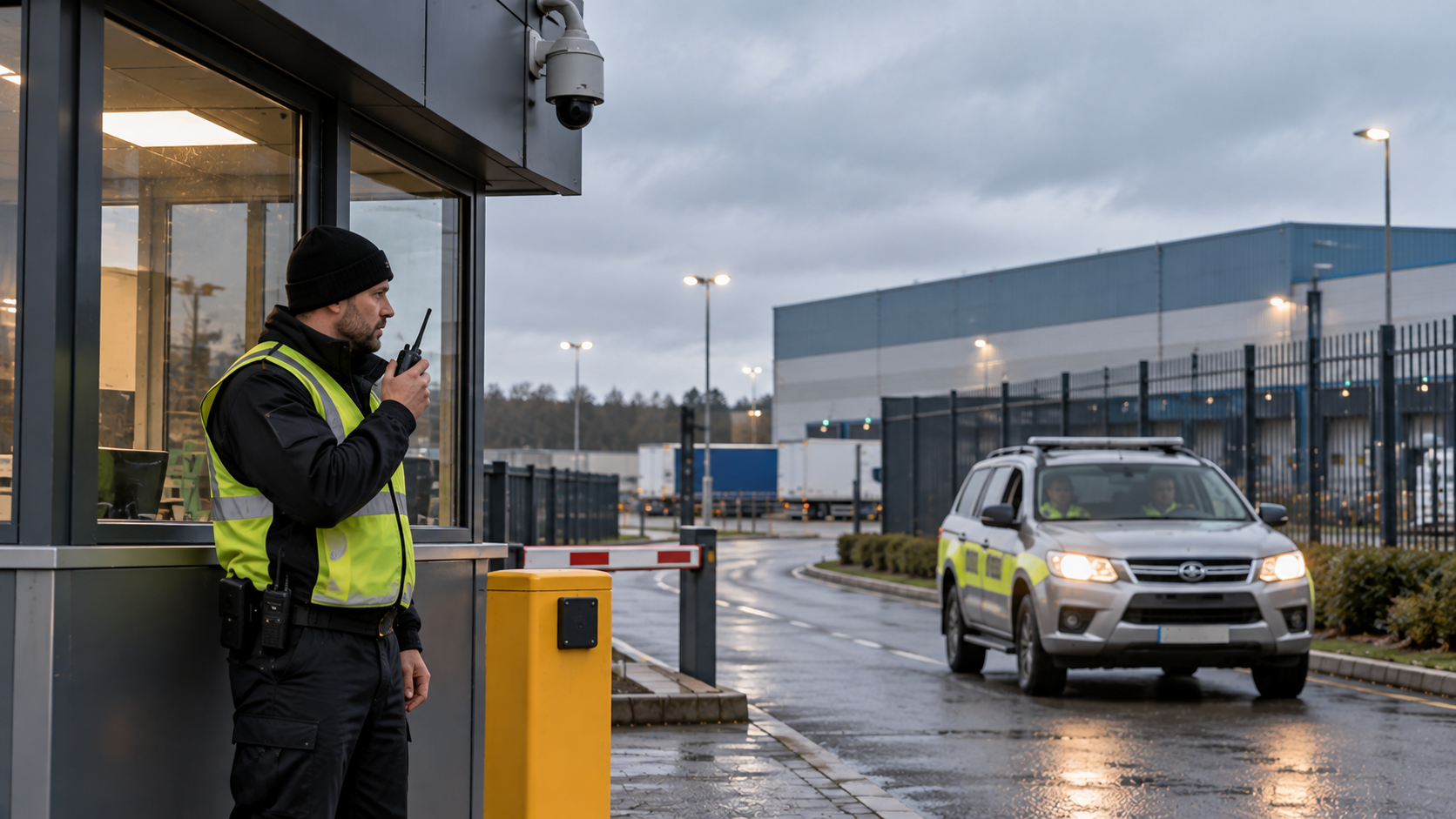
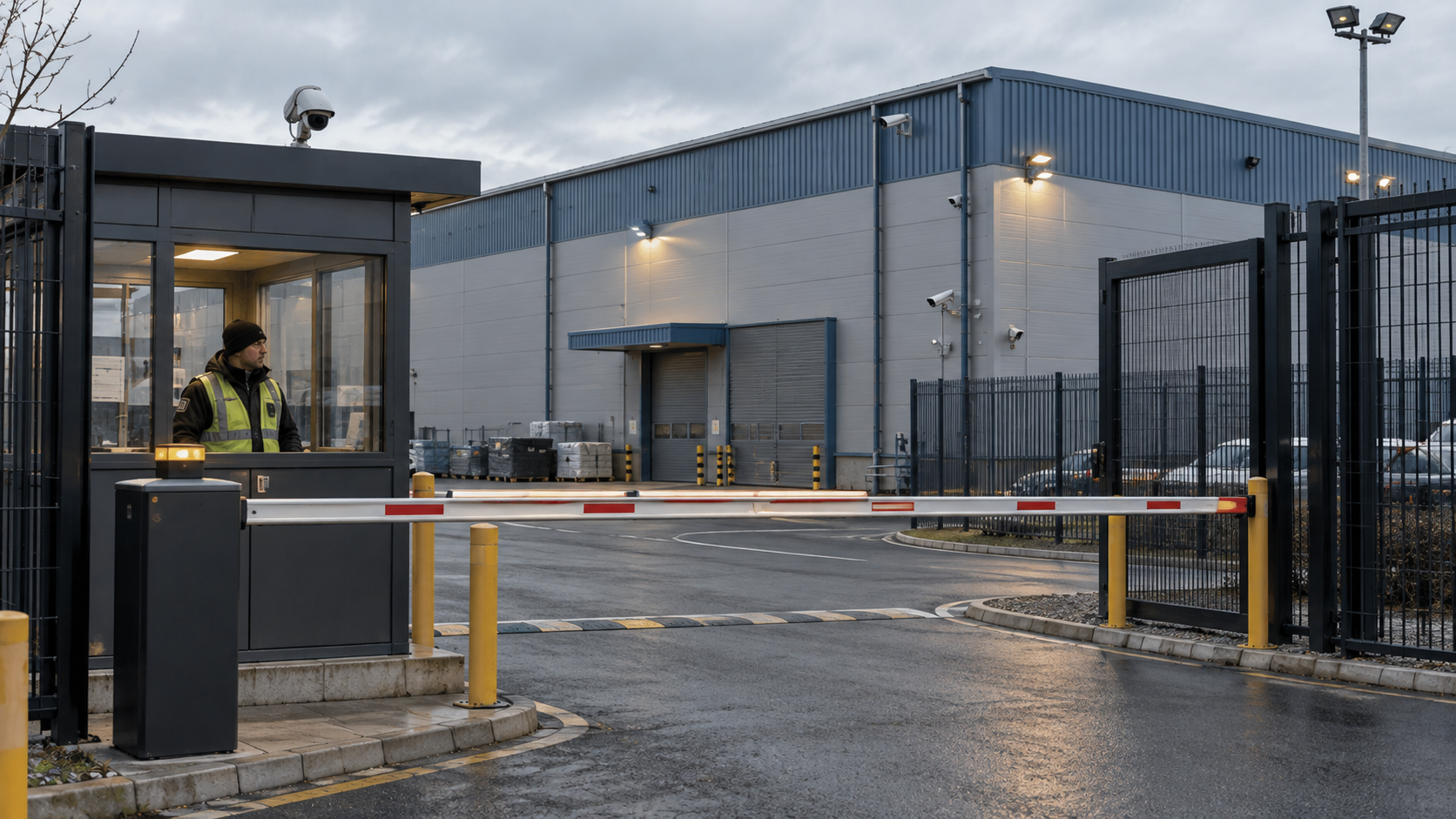
Manned guarding works because someone is there in person. A guard can spot a van in the wrong place, a worker using the wrong door, or a machine left open after repairs. Cameras record events. Guards often stop them before they grow.
Across Northamptonshire and the East Midlands, many factories share estates with shops, depots and small firms. More people mean more doubt. A visible guard still makes the key difference between watching a risk and controlling it.
Impact Of Northamptonshire’s Crime Profile On Factory Security Demand
Industrial crime here is rarely random. Theft tends to follow transport corridors and estate clusters, particularly around Northampton’s southern fringe, Corby’s logistics parks and the DIRFT zone. Organised groups look for predictable layouts, low overnight staffing and fast access back to trunk roads.
In quieter districts, risk often comes from opportunistic entry rather than planned raids. Either way, local patterns shape guarding decisions. Businesses near freight hubs usually invest earlier and more heavily, not because crime rates are extreme, but because exposure is concentrated.
The East Midlands Police forces now share more cross-border intelligence. That has quietly increased demand for guarding where insurers see repeat targeting.
Timing Risks And Peak Exposure Periods For Factory Operations
Factories are most vulnerable when routine breaks. Shift changes, late-evening dispatch runs, and early-morning maintenance windows are the hours when access control weakens.
Across Northamptonshire, incidents cluster between 10 pm and 4 am, when yards are quiet and supervision thins. Daytime risk is different.
Visitor traffic rises, subcontractors move between sites, and casual theft becomes harder to spot. Effective guarding adapts to those rhythms rather than applying the same coverage all day.
Structural Vulnerabilities In Northamptonshire Warehouse And Production Facilities
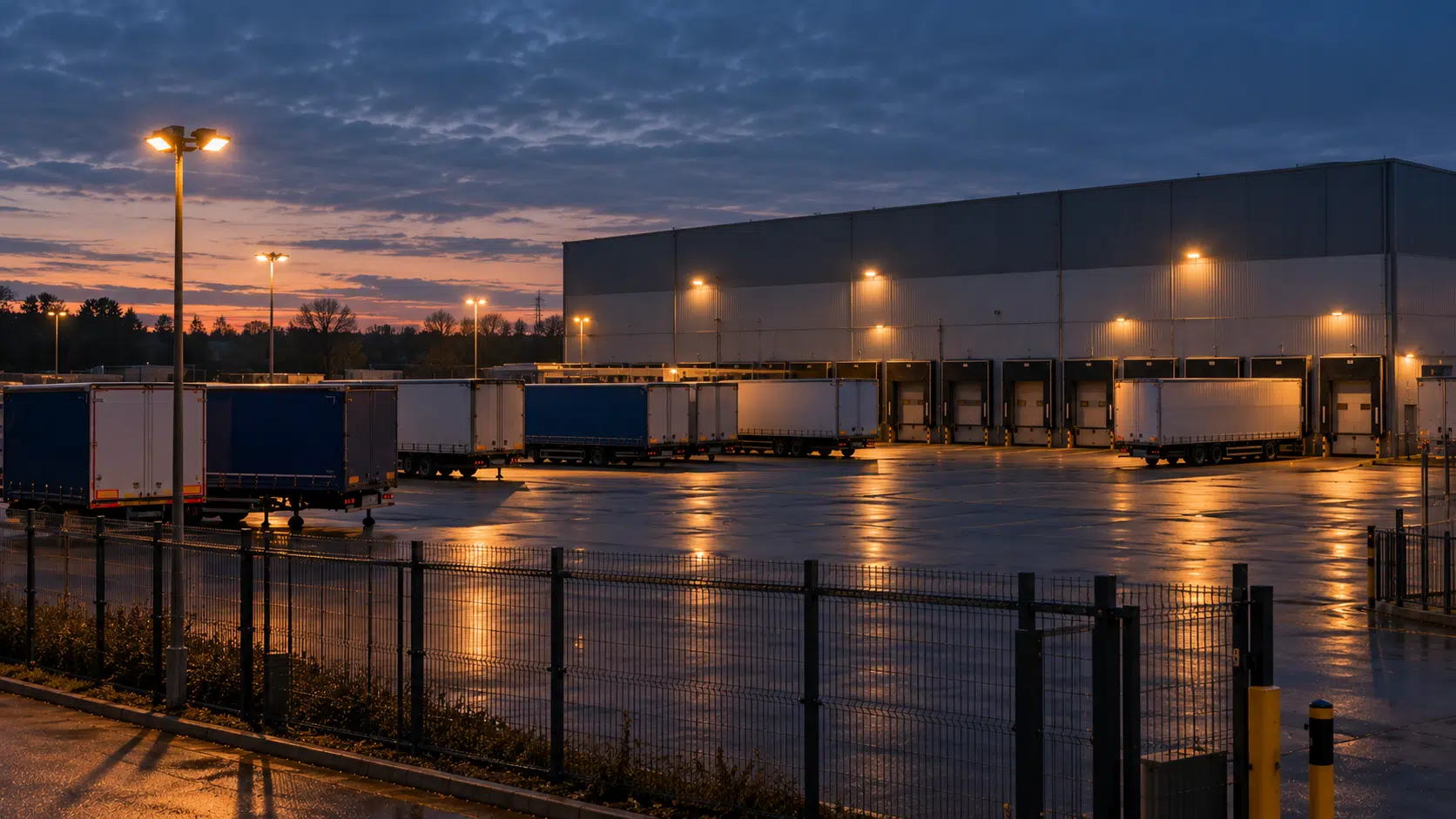
Many estates were designed for speed, not defence. Wide yards, multiple roller doors and shared service roads create blind spots. Inside, long production halls hide activity behind noise and movement.
Common weak points include:
- Loading bays are screened from the main gate
- Roof access near ventilation stacks
- Older perimeter fencing backing onto footpaths or farmland
- Temporary walls around expansion phases
Security planning here is architectural as much as procedural.
Managing Anti-Social Behaviour Around Industrial Estates And Retail-Linked Factories
Retail-adjacent factories face a different problem: people, rather than professionals. Loitering, vehicle dumping, casual trespass and nuisance damage erode control long before serious crime appears.
A visible guard presence changes behaviour. Not through confrontation, but through quiet authority. Regular patrols, consistent challenge routines and local familiarity reduce escalation. In mixed estates around Kettering and Wellingborough, this alone often justifies daytime cover.
Growth Of Daytime Patrol Demand Driven By Rising Industrial And Retail Theft
The sharp rise in shop theft across the Midlands has had a spill-over effect. Stolen goods move through industrial estates. Packaging, pallets, components and fuel go missing in daylight.
As a result, more factories now deploy roaming patrols between 7 am and 6 pm, a pattern rare five years ago. The aim is not constant guarding, but unpredictability. Thieves avoid places where someone might appear without warning.
Risk Differences Between Daytime And Overnight Factory Security Coverage
Day risk is about access. Night risk is about time. During the day, mistakes cause losses: propped doors, borrowed passes, unattended vans. At night, patience becomes the enemy. Thieves have hours to cut fencing, force shutters or strip copper.
Overnight guarding, therefore, focuses on perimeter discipline, lighting checks and early detection. Day coverage concentrates on people flow and asset movement. Treating both the same usually means failing at one.
Seasonal Production Cycles And Their Effect On Factory Security Planning
Manufacturing rarely runs evenly. Food processing peaks before Christmas. Automotive plants surge before model changeovers. Summer shutdowns leave skeleton crews on site.
These cycles matter. High-output periods raise stock values overnight. Shutdowns increase insider risk and equipment theft. Many Northamptonshire sites now adjust guarding seasonally rather than fixing contracts year-round.
Transport Infrastructure And Logistics Corridors As Factory Security Risk Multipliers
The M1, the A14 and the DIRFT rail terminal keep trade moving and link factories to the rest of the country. They are also fast exit routes. Sites within five minutes of these corridors face a higher organised theft risk. Stolen goods can be on a lorry and out of the county before alarms escalate.
That geography explains why factories near junctions 15 to 19 invest more heavily than similar sites deeper in rural Lincolnshire or Derbyshire.
Economic Conditions And Labour Market Pressures Shaping Factory Security Demand
When margins tighten, security is often reviewed first. Paradoxically, recessions increase theft and sabotage risk.
Labour shortages add complexity. Temporary staff, agency workers and short-term contractors widen the access pool. Many East Midlands manufacturers now tighten vetting and rely more on guarding during recruitment surges, simply to maintain control.
Manufacturing Growth And Expansion Driving Industrial Factory Security Requirements
The East Midlands continues to expand as a production belt. New battery plants, advanced packaging lines and pharmaceutical units bring higher-value assets and stricter regulation.
Growth changes everything: site layouts, traffic patterns, fire routes, access hierarchies. Security that worked for a 50-person plant often fails at 300. Forward-looking firms now design guarding into expansion plans, not after problems appear.
That shift, from reaction to planning, is the quiet reason factory security demand in Northamptonshire keeps rising.
Legal And Compliance Requirements For Factory Security In Northamptonshire
Licensing Obligations For Factory Security Officers Under SIA Regulation
In the UK, anyone carrying out licensable guarding activity must hold a valid SIA licence. That rule applies in Northamptonshire just as it does in Leicester, Nottingham, Derby and the wider East Midlands. The licence is personal, not transferable, and tied to the specific role being performed, such as guarding, door supervision, or CCTV operation.
For factory operators, this matters more than it first appears. If an officer is unlicensed, the breach sits with both parties. The supplier may face enforcement, but the client is exposed for allowing illegal deployment on site. Most insurers now check SIA compliance during audits, particularly where high-value machinery or regulated production is involved.
Client Liability And Penalties For Using Unlicensed Factory Security Staff
Using an unlicensed guard is not a technical error. It is a criminal offence. Directors can face fines, contract invalidation and, in serious cases, prosecution.
More quietly, insurers may refuse cover for any incident that occurred while an unlicensed officer was on duty. That refusal can invalidate theft, sabotage and business interruption claims in one stroke. In manufacturing environments, where downtime is often the highest cost, that risk alone justifies strict licence checking.
Vetting Standards And Background Screening For Factory Security Roles
Licensing is only the first filter. BS 7858 vetting remains the accepted standard across the UK. It requires identity checks, five-year employment history, criminal record screening and right-to-work verification.
Factories increasingly insist on enhanced DBS checks where guards operate near controlled materials, pharmaceuticals, food production or proprietary processes. This is less about criminality and more about trust. Access control only works when the people enforcing it are beyond question.
Insurance Requirements And Risk Transfer When Hiring Factory Security
Most professional guarding firms carry public liability, employer’s liability and professional indemnity insurance. But the client’s responsibility does not disappear.
Insurers expect:
- Evidence of SIA licensing and BS 7858 vetting
- Clear scope of duties in the contract
- Documented patrol and reporting procedures
Where these are missing, insurers may treat guarding as informal cover rather than risk mitigation. In parts of Northamptonshire and Lincolnshire where repeat targeting has occurred, underwriters now ask for proof of guarding quality before renewing terms.
Data Protection And Lawful CCTV Use Within Factory Environments
Factories often combine guarding with CCTV, access logs and vehicle tracking. That combination raises GDPR and Data Protection Act obligations.
Guards must be trained to handle footage lawfully, restrict access to recordings and avoid casual monitoring of staff without cause. Signage, retention schedules and incident disclosure procedures all fall back on the client.
A common mistake is assuming the security provider carries this burden alone. In law, the factory remains the data controller.
VAT Treatment And Taxation Rules For Factory Security Services
Security services attract standard-rate VAT. There are no general exemptions for manufacturing or logistics sites.
For procurement teams, this matters in budgeting and contract comparison. Low headline rates sometimes hide excluded VAT, which changes annual costs materially. Public sector or grant-supported factories must also ensure VAT treatment aligns with funding rules.
Local Authority And Council Rules Affecting Factory And Construction-Linked Sites
Planning permissions, environmental permits and temporary works licences often include security conditions. Northampton Borough, West Northamptonshire and North Northamptonshire councils regularly attach guarding requirements to large industrial builds and open-day permits.
These conditions may specify:
- Minimum overnight coverage
- Controlled vehicle access points
- Incident reporting to council officers
Ignoring them risks enforcement notices and delayed project sign-off.
Verifying Licensing History And Compliance Records Of Factory Security Providers
Responsible buyers now ask for more than a current licence list. Good practice includes checking:
- SIA Approved Contractor Scheme status
- Historic enforcement actions
- Audit reports and client references
- Staff turnover stability
In the East Midlands, procurement teams increasingly share intelligence across sites. A poor compliance history travels fast.
Protection Offered By Mandatory Security Company Licensing For Factory Operators
Since company licensing became compulsory, clients benefit indirectly. A security company in Northamptonshire must meet minimum standards on governance, training, complaints handling and financial stability.
This reduces the risk of sudden service collapse, a real problem in guarding a decade ago. For factories running 24-hour production, continuity is often more valuable than marginal cost savings.
Impact Of Recent SIA Licensing Reforms On Factory Guard Availability And Pricing
Recent licence renewals tightened English language checks and refresher training. The effect has been uneven.
In Leicester and Nottingham, availability tightened briefly. In rural Lincolnshire, pricing rose faster as compliant staff became scarce. Northamptonshire sits between the two. For buyers, the lesson is simple: underpriced guarding often signals future disruption.
Labour Law Controls On Overtime And Post-Brexit Workforce Rules
Working Time Regulations limit hours, mandate rest breaks and control night work. Breaches rarely attract headlines, but they undermine performance.
Fatigued guards miss details. Missed detail becomes incidents. Many insurers now expect evidence that guarding rotas comply with labour law, particularly on long overnight runs.
Right-to-work checks tightened after Brexit. EU nationals must now hold settled or pre-settled status or valid visas.
Clients share responsibility for ensuring compliance on their sites. Immigration breaches can invalidate contracts and trigger Home Office penalties, even where the provider made the original error.
Factory Security Obligations Linked To Industrial Event And Site Licensing
Open days, regulator inspections, equipment trials and community visits all change the legal status of a site.
Temporary licences often require:
- Controlled visitor registration
- Additional guarding at access points
- Formal incident escalation plans
These obligations are contractual as much as legal. Missing them delays certification and can void event permissions.
Operational Collaboration Between Northamptonshire Police And Factory Security Providers
Private guarding does not replace policing, but it increasingly works alongside it. Formal liaison channels now exist across Northamptonshire, Leicestershire and Derbyshire.
Guards share incident data, suspicious vehicle reports and timing intelligence. In return, police advise on emerging targeting patterns. This cooperation shortens response times and reduces repeat losses.
Use Of Police Crime Intelligence In Factory Security Deployment Planning
Modern deployment planning rarely relies on instinct alone. Police crime maps, freight theft bulletins and cross-county alerts shape patrol timing and staffing levels.
Factories near A14 junctions, rail sidings or bonded warehouses benefit most from this intelligence-led approach. It turns guarding from static cover into targeted risk control.
Formal Cooperation Frameworks With Business Crime Reduction Partnerships
Business Crime Reduction Partnerships now cover much of the East Midlands. Membership allows factories to:
- Share offender descriptions
- Coordinate estate-wide patrol timing
- Access joint training and briefings
It is not marketing. It is risk pooling. For manufacturers operating across Northamptonshire, Leicester and Nottingham, these frameworks quietly deliver one of the strongest compliance advantages available.
Costs, Contracts, And Deployment Of Factory Security In Northamptonshire
Regional Pricing Differences Between Urban And Rural Factory Security Coverage
Pricing in factory guarding rarely follows a single county-wide rate. Urban estates around Northampton, Corby and the M1 spine usually cost more than quieter sites near rural Lincolnshire or the Derbyshire border. Not because the work is harder, but because exposure is higher and response expectations are tighter.
Sites close to freight corridors, bonded warehouses or mixed retail zones attract a premium. Travel time matters too. A factory ten minutes from Leicester city centre is cheaper to staff than one forty minutes into farmland. Most buyers now budget on geography first, specification second.
Recruitment, Vetting, And Mobilisation Timelines For Factory Security Teams
Deployment speed depends less on headcount and more on compliance. A single licensed officer can be placed within days. A full team, properly vetted to BS 7858, often takes two to three weeks. Enhanced DBS checks for food, pharma or regulated lines add more time.
Factories expanding quickly in Nottingham or Kettering often underestimate this lag. The lesson is dull but important: security should be planned alongside commissioning, not after the first shipment leaves the gate.
Standard Contract Durations Used In Factory Security Services
Most factory guarding contracts run for twelve or twenty-four months. Shorter terms rarely deliver savings; providers price risk into brief commitments.
Longer agreements suit high-capital sites where continuity matters more than marginal hourly rates. Across the East Midlands, manufacturers increasingly choose rolling two-year terms with annual performance reviews. It gives stability without locking in outdated coverage as production patterns change.
Termination Rights And Notice Periods In Factory Security Contracts
Notice periods are the quiet risk most buyers overlook. Thirty days is common for mobile patrols. Manned guarding usually carries sixty or ninety. Immediate termination rights apply only for serious breaches, unlicensed staff, repeated failures, or insolvency.
For factories tied to insurance conditions or regulator deadlines, exit timing matters. Ending a contract too fast can leave a site uncovered. Ending it too slowly can mean paying for a service no longer fit for purpose.
Impact Of Wage Growth On Factory Security Pricing In 2025
Guarding is labour-heavy. When wages rise, invoices follow. Minimum wage uplifts, night premiums and holiday accruals now account for most annual increases. In Leicester and Nottingham, competition with logistics warehouses has already pushed rates upward. Northamptonshire sits close behind.
What matters is not the rise itself, but how transparently it is passed on. Contracts that hide labour adjustments in “service reviews” often become expensive surprises.
Inflation And Long-Term Contract Pricing Risks For Factory Operators
Inflation complicates long contracts. Fuel, uniforms, radios, training, and small items compound over time. Fixed-price agreements protect short-term budgets but expose providers to losses. Those losses usually return as renegotiations or service erosion.
Many East Midlands manufacturers now prefer indexed pricing with caps. It feels untidy on paper. In practice, it avoids sudden jumps and preserves service quality when costs move faster than forecasts.
Insurance Premium Reductions Supported By Effective Factory Guarding
Good guarding does more than deter theft. It changes how insurers rate the site. Underwriters look for documented patrols, access control logs and incident response records. Where these exist, premium loadings often soften.
Excesses fall. In repeat-target zones near the A14, some insurers now insist on overnight cover as a condition of renewal. The savings rarely match the guarding bill. But it reduces volatility, which finance directors value just as much.
Public Sector Procurement Rules Affecting Factory Security Contracts
Publicly owned or grant-funded factories must now follow the Procurement Act 2023. That means open tendering, documented scoring and clearer conflict controls. Framework use is rising across Derbyshire and Lincolnshire to shorten lead times, but compliance still governs award decisions.
For buyers, the practical effect is simple: security contracts now carry audit weight. Poor documentation can delay projects, stall payments, and reopen tenders long after deployment has begun.
Training, Daily Operations, And Factory Guard Duties
Mandatory Training Standards For Factory And Manufacturing Security Roles
Factory guarding begins long before the first patrol. SIA licensing sets the floor, not the ceiling. In manufacturing sites across Northamptonshire, Leicester, Nottingham and Derby, guards are now expected to understand production risks as much as perimeter control.
That usually means additional modules in health and safety, fire marshal awareness, hazardous materials handling and access control in regulated environments. Food and pharmaceutical plants often insist on hygiene and contamination training, too.
The point is not certification for its own sake. It is competence. A guard who understands how a line shuts down, where isolation points sit, and which alarms matter most can prevent an incident from becoming a stoppage.
Arrival Procedures And First-Duty Checks At Factory Sites
The first ten minutes of a shift set the tone for the next twelve hours. Experienced guards start by reading the handover log, not by walking the fence. They check for unresolved alarms, late deliveries, machinery faults and visitor appointments. Then comes a fast sweep of the obvious risks: gates, shutters, fire exits, and lighting.
In busy estates around Kettering or the Leicester fringe, that early scan often catches overnight damage or unauthorised vehicles before operations begin. It is quiet work. It saves a surprising number of call-outs.
Shift Handover Protocols And Continuity Controls In 24-Hour Factory Security
Handover is where security usually fails. Good sites treat it like a production changeover. The outgoing guard briefs incidents, unfinished checks, contractor movements and any “odd” behaviour. The incoming guard signs for keys, radios and responsibility.
Across large plants in Nottingham and Corby, some operators now require overlapping shifts. Ten minutes of shared time costs little. It prevents hours of confusion later.
Patrol Frequency And Perimeter Inspection Routines In Industrial Estates
There is no universal patrol schedule. Frequency depends on layout, risk and activity. High-value lines near freight corridors may need hourly perimeter sweeps. Smaller workshops on rural Lincolnshire estates may manage with fewer, irregular rounds. What matters is coverage, not clockwork.
First checks usually focus on:
- Vehicle gates and loading bays
- Fence lines backing onto public land
- Roof access ladders and fire exits
- Power and water compounds
Patrols that repeat the same route, at the same time, quickly become predictable. Good guarding avoids that trap.
Logbooks, Reporting Systems, And Audit-Ready Documentation
Paper logs are fading. Digital systems now dominate across the East Midlands. What remains constant is the standard. Every patrol, alarm, visitor and incident must be recorded in a way insurers and auditors can trust. Not essays. Clear, timed entries. Who. Where. What happened. What was done.
In regulated factories, these logs often become evidence months later. Poor reporting rarely causes incidents. It makes them expensive.
Equipment Verification And Alarm Response During Early Factory Shifts
Before production starts, guards test the tools they rely on. Radios. Body cams. Panic buttons. Perimeter sensors.
When alarms trigger, often during early maintenance windows, response is procedural. Verify first. Attend safely. Escalate only when needed.
In large Derby and Nottingham plants, false alarms still outnumber real ones ten to one. The value lies in judgement: knowing when to wake management, and when to reset quietly and move on.
Visitor Management And Internal Access-Point Verification Procedures
Factories are porous by design. Engineers, couriers, auditors, and agency staff come and go all day.
Guards control that flow through simple disciplines: verified ID, timed passes, vehicle registration checks, and escort rules. After arrival, they re-check internal doors, plant entrances and restricted zones.
Where this slips, insider theft rises quickly. Most serious losses start with someone who should not have been there.
Incident Briefing And Fire Safety Inspection Priorities
Fire remains the largest operational risk on most manufacturing sites. Guards review alarm panels, extinguisher seals, exit routes, and hot-work permits as part of routine duty. They brief on any overnight activations, even if resolved.
Across Northamptonshire’s older estates, where wiring and ducting predate modern standards, this quiet inspection work prevents more damage than any fence ever could.
Yard Lighting Inspections And Night-Shift Supervision Routines
Lighting is deterrence in its simplest form. Night guards walk yards looking not for intruders, but for darkness. Failed lamps, shadowed corners, temporary scaffolds that block floodlights. They log defects and chase repairs.
Supervision follows rhythm. Lone guards report in at agreed intervals. Not to monitor performance, but to confirm safety. In remote Lincolnshire and rural Derbyshire sites, that check-in is often the only human contact overnight.
Emergency Readiness And Tampering Detection At Production Sites
Emergency plans mean nothing if nobody remembers them. Guards refresh evacuation routes, spill responses and isolation procedures at the start of long runs. They also look for tampering: disturbed panels, cut ties, moved seals, and unexplained valve positions.
Most sabotage is subtle. The people who catch it early are rarely engineers. They are the ones walking the site slowly, every night.
Patrol Documentation And End-Of-Shift Secure-Down Procedures
Before leaving, guards close the loop. Final patrols confirm gates locked, alarms set, visitors signed out, and vehicles cleared. Logs are completed. Outstanding issues flagged.
In 24-hour plants, this “secure-down” is often the only formal checkpoint between shifts. Miss it once, and tomorrow starts with yesterday’s problem.
Shift Pattern Design And Emergency Response Benchmarks For Factory Estates
Shift design is risk management in disguise. Twelve-hour nights reduce handovers but increase fatigue. Eight-hour rotations improve alertness but cost more. Estates near the M1 and A14 are usually staffed more heavily overnight, lighter by day.
Response benchmarks vary. Five minutes on a compact site. Fifteen on sprawling yards. What matters is realism.
Across the East Midlands, the best operators no longer ask, “How many guards do we need?” They ask, “How fast must we react when something finally goes wrong?”
Performance, Risks, And Staffing Challenges In Factory Security
Performance Indicators Used To Assess Factory Security Effectiveness
Factory security is hard to measure because success often looks like nothing happening. Still, serious operators track a small set of indicators that reveal whether guarding is protecting continuity or merely filling hours.
Incident response time is one. Not how fast the call was logged, but how quickly someone reached the problem. Patrol completion rates matter too, especially on large estates where missed rounds create blind zones.
More telling are quieter signals:
- Repeated access breaches at the same door
- Alarms cleared without investigation notes
- Long gaps between supervisor audits
Across Northamptonshire and neighbouring Leicester and Nottingham, insurers increasingly ask for these metrics during renewal. They know patterns appear long before losses do.
Weather Exposure And Environmental Reporting In Outdoor Factory Patrols
Weather shapes risk in ways spreadsheets rarely capture. Heavy rain floods yards and hides cable theft. Fog reduces camera range. Ice turns stairways and gantries into accident sites. In Lincolnshire and Derbyshire, winter winds regularly bring down temporary fencing on expansion plots.
Good guards log conditions as part of every patrol. Not for drama, but for traceability. A note that lighting failed during a storm, or that a gate jammed in frost, becomes evidence later if an incident follows.
Environmental reporting also feeds maintenance. The fastest way to cut losses is often by fixing drainage, not adding staff.
Health, Fatigue, And Regulatory Safeguards For Long-Shift Factory Security
Fatigue is the unspoken risk in guarding. Twelve-hour nights blunt attention. Consecutive weekends erode judgement. The law tries to contain this through rest periods and night-work limits, but enforcement is uneven.
Factories that depend on alert guarding now watch patterns closely. High error rates at 4 am. Missed patrols near shift end. Slow alarm responses after long rotations.
Some sites in Nottingham and Corby quietly rotate guards between nights and days, not for fairness, but to reset concentration. Others insist on micro-breaks and supervisor check-ins.
Mental health matters too. Lone overnight work increases isolation. Several East Midlands operators now require welfare calls during night shifts. It costs minutes. It saves mistakes.
Environmental Compliance And Workforce Stability Risks In Factory Guarding
Outdoor guarding brings regulatory weight. Fuel spills, waste segregation breaches, noise complaints, water discharge errors, and guards often spot these first. When they miss them, the factory pays. Environmental fines travel faster than theft claims.
Stability adds another layer of risk. Rapid staff turnover disrupts routines, weakens local knowledge and raises incident rates. Buyers feel this indirectly through pricing. Providers with unstable teams charge more or fail more often.
Across Northamptonshire, Leicester and Derby, experienced manufacturers now ask one blunt question during reviews: “Who will be on my gate in six months?”
Not out of sentiment. Out of continuity. In factory security, performance is not about presence. It is about consistency, the same eyes, the same habits, the same quiet prevention, night after night, while the machines keep running.
Technology And Future Trends In Northamptonshire Factory Security
Urban Technology Adoption And Post-Pandemic Protocol Changes In Factory Security
Factory security in the East Midlands no longer looks like it did five years ago. Sites around Northampton, Leicester and Nottingham now rely on layered systems rather than single posts on gates. Post-pandemic rules accelerated that shift.
Contactless access, thermal screening, remote sign-in and zoned movement controls became routine almost overnight. Some of it faded. Much of it stayed. What remained was discipline.
Guards now verify digital permits, manage staggered handovers and track contractor movements through shared platforms. On busy estates near Derby or Corby, that visibility matters more than hardware. It reduces crowding, shortens audits and keeps production managers informed without constant radio calls. Technology did not replace presence. It sharpened it.
AI Surveillance And Remote Monitoring As Support Systems For Factory Guards
AI cameras are now common along the M1 and A14 corridors. They flag motion patterns, abandoned vehicles, and line-of-fence breaches. Useful tools, but limited ones.
AI sees movement. It does not see intent. That is where guards still earn their keep. Remote monitoring teams screen dozens of feeds. On-site officers decide whether a delivery is late, suspicious, or simply lost. In large Nottingham and Lincolnshire plants, this pairing has reduced false alarms by more than half.
Remote centres now handle:
- Out-of-hours alarm verification
- Night-shift camera sweeps
- Vehicle plate matching
The guard remains the decision point. The system just clears the noise.
Drone Patrols And Predictive Analytics For Theft Prevention In Manufacturing
Drones sound futuristic. In practice, they are used sparingly. Open yards, roof inspections, flood monitoring after storms, that is where they help. Around expansion plots in Northamptonshire and rural Derbyshire, short aerial sweeps now replace hours of foot patrol.
Predictive analytics has travelled further. Insurers and police share theft heat maps, freight-route targeting alerts and repeat-offender patterns. Guarding schedules quietly adjust around them.
It is not prophecy. It is a probability. Factories near rail sidings or bonded storage now patrol more heavily on nights when theft risk historically peaks. The aim is simple: be visible when the data says someone is watching.
Upskilling, Sustainability, And Martyn’s Law Implications For Factory Operators
Training is changing. Guards now learn more than basic licensing. Many take fire-warden refreshers, first-aid courses and simple safety training. Big sites near Leicester and Nottingham often ask for yearly checks on evacuation plans and emergency drills.
Sustainability matters more, too. Some patrols now use electric vehicles. Guards check lighting, watch for fuel spills and report waste problems. Fines for pollution can cost more than stolen goods.
Martyn’s Law will add new rules. Factories that hold open days or public visits may need written risk plans, clear access zones and simple crowd controls. Not everywhere. Not always.
But across the East Midlands, security planning is becoming less reactive, more architectural. Less about stopping intruders. More about proving resilience. And that, quietly, is the future of factory security.
Conclusion
Factory security in Northamptonshire rarely announces itself when it is working well. Production runs on. Deliveries leave on time. Audits pass without comment. That quiet outcome is the point.
Across the county, and across the wider East Midlands from Leicester to Nottingham, Derby and Lincolnshire, the same pressures repeat. Freight routes concentrate risk. Mixed industrial estates blur boundaries. Compliance expectations tighten. Insurers ask harder questions. A single incident now carries legal, financial and reputational weight far beyond the value of what was taken.
That is why Northamptonshire businesses need Factory Security. It is not a slogan but a planning question. The right answer sits somewhere between crime patterns, contract design, training discipline and how quickly a site can recover when something breaks the routine.
Good security does not promise perfection. It reduces downtime. It protects margins. It keeps regulators, customers and underwriters confident enough to let operations continue.
For many operators, that balance now defines Manufacturing site security Northamptonshire, not as a cost to control, but as part of the system that keeps modern factories functioning when pressure arrives, quietly and without warning.
Frequently Asked Questions
Do factories in Northamptonshire need security guards?
Often yes, where stock, machinery or production continuity matter. Many operators treat guarding as operational insurance, not just theft prevention.
How much does factory security cost in Northamptonshire?
It varies by site size, hours and risk. Rural sites can be cheaper; sites near major freight routes cost more. Get a scoped quote.
What are the legal requirements for factory security in the UK?
Guards doing licensable work must hold SIA licences; vets (BS 7858), data and health-and-safety rules also apply. Clients share responsibility.
What is the best factory security solution for manufacturing sites?
A layered approach, trained guards, plus access control, CCTV and targeted patrols. Match measures to the risks, not to marketing claims.
Can factory security reduce insurance premiums?
Yes. Documented guarding, patrol logs and verified controls can lower loadings or excesses, but insurers must see evidence consistently.
Is CCTV enough without on-site factory guards?
Rarely. Cameras record; guards act. Remote monitoring helps, but physical presence closes the decision loop when things get ambiguous.
What training should factory security officers have?
SIA licence plus site-relevant modules: fire awareness, first aid, hazard handling and GDPR/CCTV handling where footage is used.
How quickly can factory security be deployed in Northamptonshire?
Single officers sometimes within days; fully vetted teams usually take 2–3 weeks. Complex sites or DBS requirements add time.