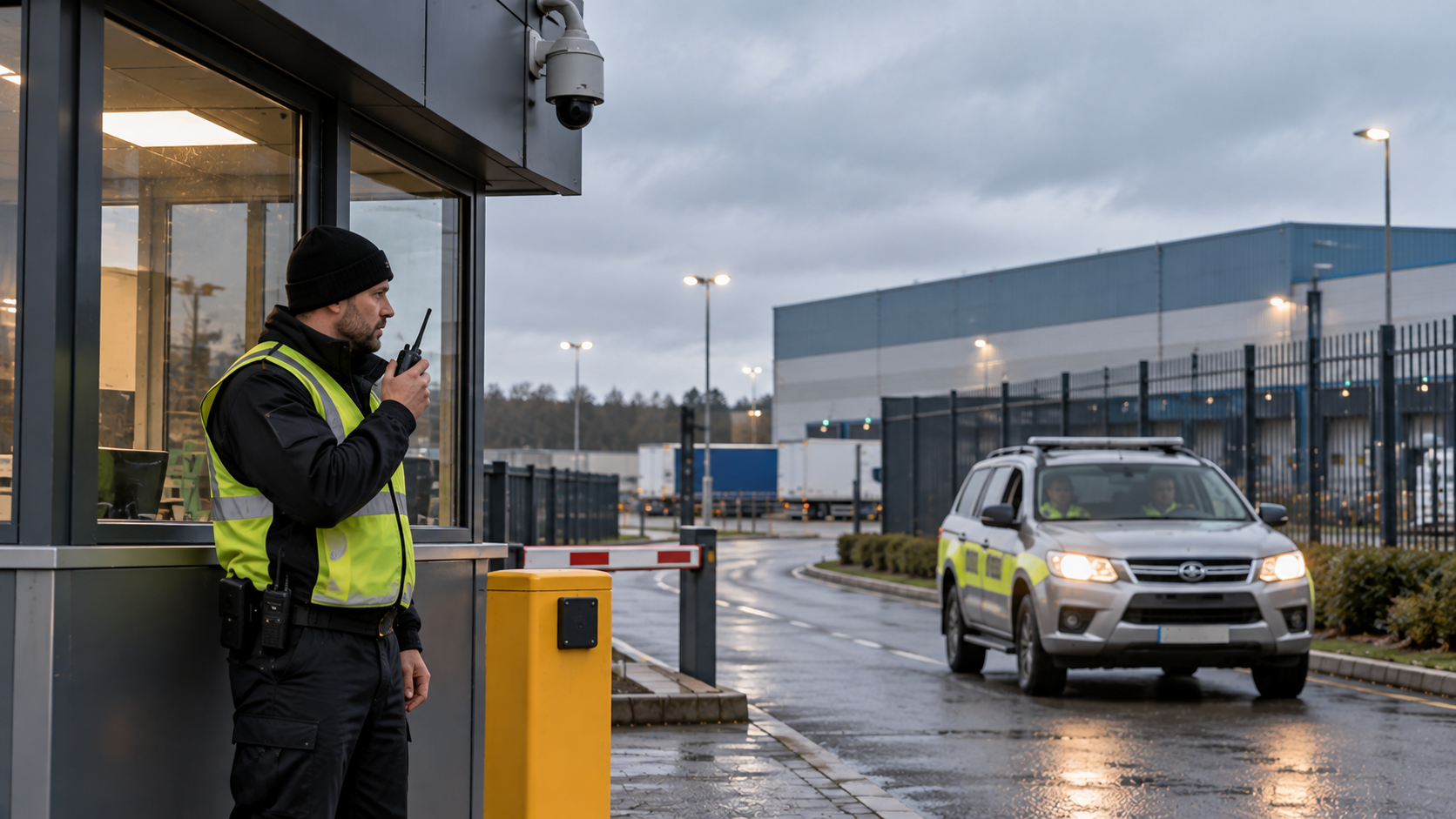
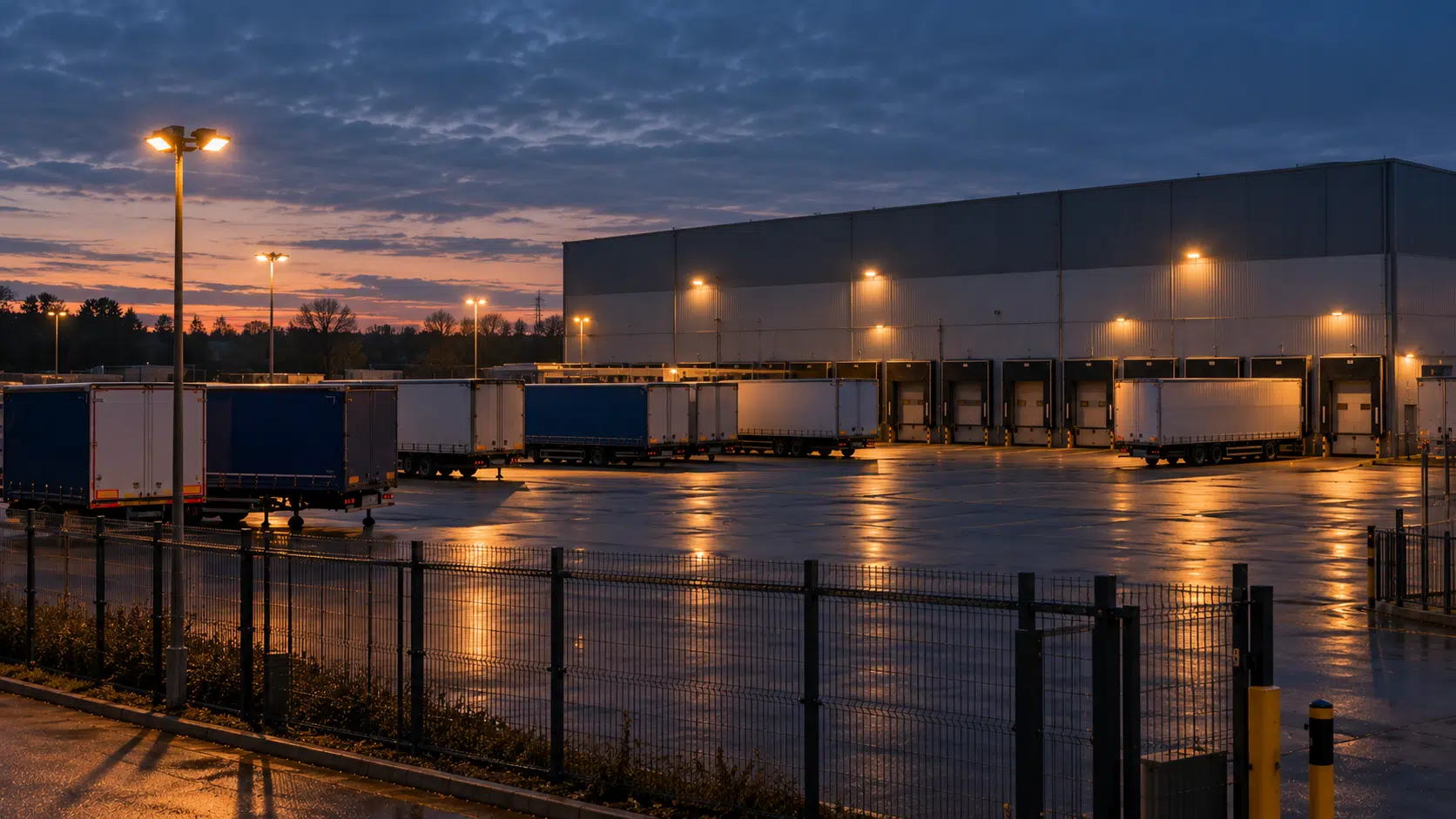
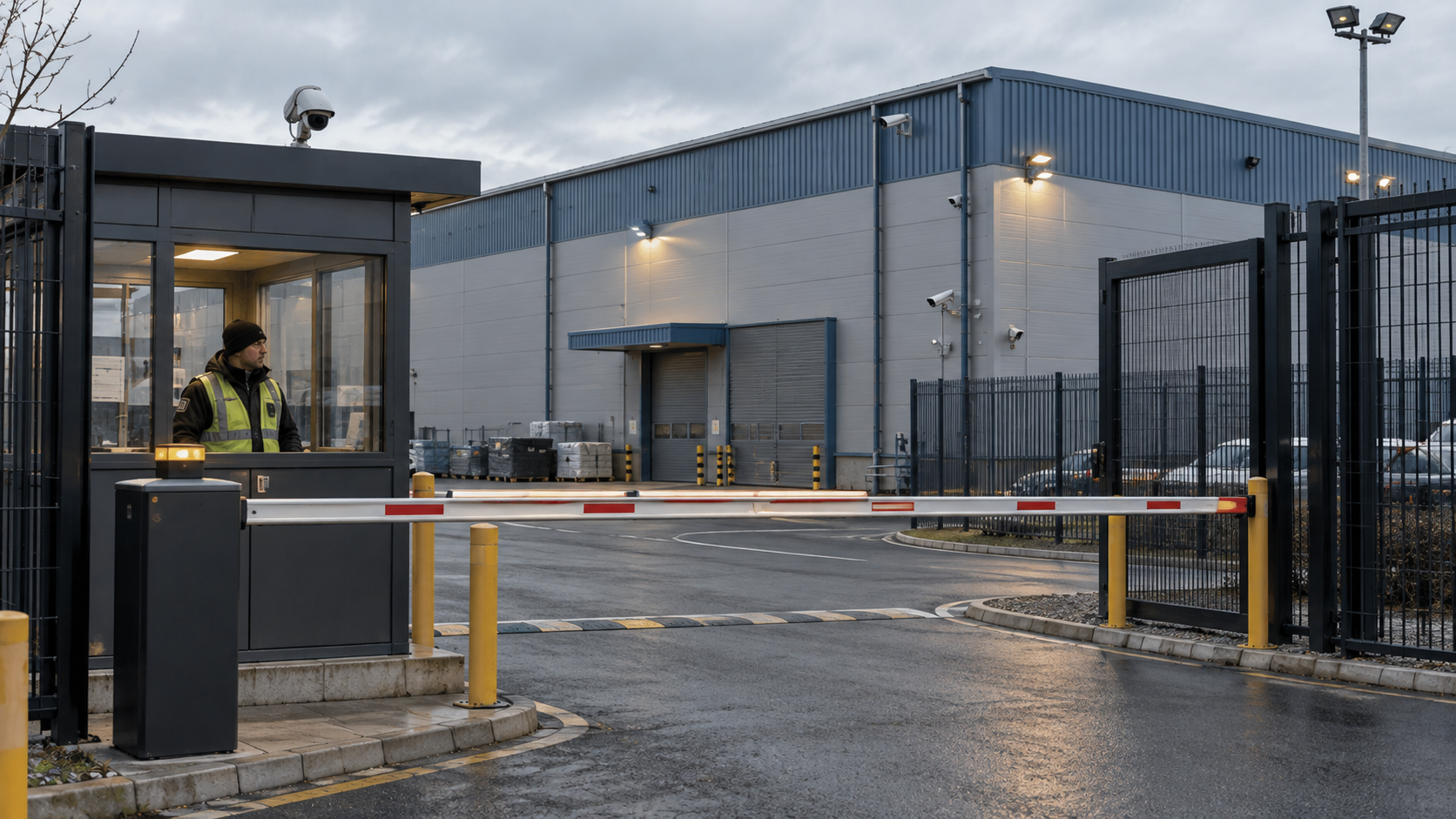
Bolton has a long industrial backbone. Engineering units, production floors, and logistics-linked factories still drive local business. That density brings opportunity, but it also brings exposure. This is why Bolton businesses need factory security.
Factories in Bolton often run long hours. Some operate overnight. Others rely on shared yards, older estates, or open delivery routes. High-value machinery, raw materials, and finished goods sit on site for long periods. That combination creates risk, especially during quiet hours and shift changes.
This guide will explore how factory security in Bolton works in practice. It looks at risk patterns, legal duties, costs, and best practices, helping local businesses plan protection that supports operations, insurance confidence, and long-term stability.
Table of Contents
Understanding Factory Security Basics in Bolton’s Industrial Environment
What is Factory Security?
Factory security in Bolton focuses on control, visibility, and timing. Production sites are busy places. People move. Vehicles arrive. Materials sit in yards. Machines run for long hours. Security has to work around this movement.
Unlike offices, factories do not slow down. Unlike warehouses, loss is not limited to stock. A single incident can stop production. That pause costs time, money, and trust. This is why security planning for factories starts with how the site actually runs.
Why Factory Security Is Not the Same as Warehouse or Office Cover
Factories face a wider mix of risk than most commercial sites.
Compared with warehouses
- Stock is only part of the exposure
- Tools, plants, and machinery are harder to replace
- Downtime often costs more than theft
Compared with offices
- Access is harder to control
- Safety risks sit alongside security risks
- Visitors are not limited to staff and clients
This is why many Bolton factories need a layered approach rather than a single solution.
How Bolton’s Local Risk Profile Shapes Security Planning
Bolton sits close to major road links across Greater Manchester. That helps logistics. It also creates opportunity. Industrial areas near main routes see higher movement from outside the local area.
Police data shows that industrial and commercial premises account for a meaningful share of non-residential theft locally. In the past year, around 75% of reported commercial theft incidents in Bolton involved industrial or manufacturing sites, with metals, tools, and fuel often targeted. This does not mean every factory is high risk. It does mean planning should reflect local patterns rather than national averages.
Security works best when it is shaped by where a site sits and how it connects to surrounding areas.
Times When Bolton Factories Face the Most Exposure
Risk is rarely constant. It rises and falls during the day. Common high-risk periods include:
- Late evenings after production slows
- Overnight shifts with fewer staff
- Weekends with limited supervision
- Shift changeovers
- Early morning or late delivery windows
Many incidents happen during routine moments. Doors are open. Attention is split. Responsibility is unclear. Good security planning focuses on these gaps rather than peak production hours.
Factory Types That Face Higher Risk in Bolton
Not all factory sites are equal. Layout and location matter.
Sites with higher exposure often include:
- Shared industrial estates with open yards
- Older premises with unclear boundaries
- Units near vacant or poorly lit buildings
- Sites storing metals, components, or fuel
Standalone factories face different issues. Long fences. Fewer neighbours. Wider perimeters. Each setting needs a different balance of control and visibility.
How Shift-Based Work Changes Security Needs
Many Bolton manufacturers run rotating shifts. Teams and supervisors change. Temporary workers appear during busy periods. Familiar faces disappear.
This creates simple problems:
- People are harder to recognise
- Access rules drift between shifts
- Responsibility becomes unclear
Security helps by keeping routines stable. Access checks stay the same. Reporting stays consistent. Managers are not forced to rely on memory or assumption.
Why Deliveries Are a Weak Point for Many Factories
Deliveries keep factories moving. They also create openings for intruders.
Common issues include:
- Gates left open longer than planned
- Vehicles waiting in shared yards
- Limited checks during busy intake periods
In Bolton, many factories accept deliveries early or late to avoid congestion. These quiet gaps are often targeted. Planning around delivery flow reduces risk without slowing work.
What Changes During Shutdowns and Holidays
Planned closures often increase risk. During shutdowns, factories usually need:
- Clear monitoring of unused areas
- Regular checks, not silence
- Records that support insurance cover
Reducing presence too far can backfire. Short-term savings often lead to longer disruptions later.
Why Basics Matter More Than Reaction
Factory security is not about chasing incidents. It is about reducing the chance they happen at all. Clear access rules. Predictable routines. Visible oversight. These basics limit opportunity.
When security reflects how Bolton factories actually operate, it supports continuity rather than interrupting it. The goal is to keep people safe, protect assets, and let production run without slowing down.
Legal and Compliance Requirements for Factory Security in Bolton
Legal compliance often gets less attention than patrols or cameras. That is a mistake. In Bolton, factory security is judged as much on paperwork and process as on physical presence.
When something goes wrong, the first question is rarely what happens. It is whether the site followed the rules.
Factories in Bolton sit within wider industrial networks across Greater Manchester and Merseyside. Expectations are similar. Enforcement standards are shared. Insurers look for the same evidence.
SIA Requirements for Factory Security Staff in Bolton
Anyone carrying out factory security work must hold a valid SIA licence. This applies to guarding, access control, and site patrols. Industrial sites are not exempt. What matters most is proof. If licences cannot be shown, compliance fails.
Key points to remember
- Licences must be current.
- Roles must match the licence type.
- Responsibility sits with the site operator.
This is a core part of factory security in Bolton, not an optional check.
Penalties for Using Unlicensed Security
Using unlicensed staff is a criminal offence. The risk does not stop at fines.
Common outcomes include:
- Invalidated insurance claims
- Delayed investigations
- Increased liability for managers
Cost savings disappear quickly when decisions are reviewed after an incident.
When DBS Checks Apply in Factory Settings
DBS checks are not required for every role. They become relevant when guards access:
- Sensitive staff areas
- Controlled goods
- Secure production zones
Many Bolton factories are mixed-use. A guard may move between yards, offices, and production floors. This is where judgement matters. Overuse creates delay. Underuse creates risk.
Insurance Conditions Tied to Factory Security
Insurers focus on consistency. They want to see that security is planned and monitored.
Factories are often asked to provide evidence:
- Licensed personnel
- Clear access rules
- Incident reports
- Defined escalation steps
For sites serving supply chains across Merseyside, disruption can affect more than one business. Insurers know this.
GDPR Duties for CCTV and Access Systems
Cameras are common. Compliance is not automatic. GDPR applies wherever people can be identified.
Factories must ensure:
- Cameras serve a clear purpose.
- Footage is stored securely.
- Access is limited.
- Retention periods are defined.
Poor handling creates legal exposure. Good practice supports claims and investigations.
VAT and Factory Security Services
Security services are subject to VAT at the standard rate. This applies to guarding, monitoring, and response.
Misunderstanding VAT can:
- Distort budgets
- Complicate audits
- Delay procurement decisions
Clear cost planning avoids later correction.
Planning and Council Considerations
Bolton does not issue specific licences for factory security. Planning conditions can still apply. These may affect:
- Lighting levels
- Camera placement
- Perimeter changes
Ignoring conditions risks complaints or enforcement action.
Documents that Show Compliance
When compliance is reviewed, documents matter more than explanation.
Common records include:
- SIA licence copies
- Risk assessments
- Assignment instructions
- Incident logs
- CCTV policies
Missing records weaken defence, even if security was present.
Martyn’s Law and Future Factory Obligations
Martyn’s Law is developing, but its direction is clear. Larger sites with high occupancy will face higher expectations.
This may include:
- Stronger access control
- Clearer risk assessments
- Better coordination between safety and security
For factories in Bolton linked to logistics hubs, preparation will matter.
Legal compliance is not separate from factory security. It supports it. When Bolton businesses understand their obligations early, they reduce risk, protect insurance cover, and avoid disruption. The goal is simple: be prepared and defensible.
Costs, Contracts, and Deployment for Factory Security in Bolton
Cost is often the first question Bolton businesses ask about factory security. It should not be the only one. Price makes sense only when it is linked to risk, coverage, and obligation. When those pieces are unclear, contracts fail. Coverage gaps appear. Insurance questions follow.
Factories across Bolton vary widely. Some sit on shared estates. Others operate as standalone sites with long boundaries. This is why security costs differ, even within the same postcode.
Typical Factory Security Costs in Bolton
There is no flat rate for factory security. Pricing reflects exposure, not just hours.
Key factors that shape the cost of factory security in Bolton include:
- Size of the site and length of the perimeter
- Number of access points and vehicle routes
- Operating hours, including nights and weekends
- Whether the site is shared or standalone
A small factory on a mixed estate may cost less to secure than a larger site running overnight. The difference is risk, not scale. Underestimating this often leads to undercoverage.
How Fast Can Factory Security Be Deployed
Deployment speed matters when risks change. New sites open, and short-term issues arise.
In Bolton, deployment timelines depend on:
- Site readiness
- Clarity of access rules
- Availability of vetted personnel
For urgent needs, coverage can sometimes begin within days. For complex sites, proper setup takes longer. Rushed deployment often leads to weak reporting and unclear responsibility. That causes problems later.
Common Contract Lengths for Bolton Factories
Most factory security contracts are not short-term fixes. Stability matters.
Typical arrangements include:
- 12-month rolling agreements
- Fixed terms of two or three years
- Short-term cover for shutdowns or refits
Longer contracts allow better planning. They also support consistency, which reduces risk. Frequent changes rarely improve security outcomes.
Notice Periods and Why They Matter
Notice periods protect both sides. They also reveal how well planning has been done.
Common notice periods range from:
- Four weeks for short-term cover
- Three months for longer agreements
Short notice may seem flexible. It often leads to rushed exits and poor handovers. That increases exposure during transition periods.
Inflation and Long-Term Security Planning
Inflation affects factory security in quiet ways. Costs rise. Budgets tighten. Coverage is trimmed.
The real risk is not price increases. It is unstable. When contracts are priced too tightly, service suffers. Coverage gaps appear, and reporting slips. This is often when incidents happen.
Planning for inflation means allowing for realistic costs, not chasing the lowest figure. Stability protects operations more than short-term savings.
How Factory Security Supports Insurance Discussions
Insurers do not ask whether security is cheap. They ask whether it is adequate.
Well-specified security supports:
- Lower dispute risk after incidents
- Faster claims handling
- Clear responsibility lines
Insurers often look for evidence that factory security guards in Bolton are properly deployed, supervised, and documented. Weak planning creates questions. Strong planning creates confidence.
Procurement Rules and Factory Security Contracts
The Procurement Act 2023 affects how public bodies buy services. Its influence reaches private contracts through supply chains and tender standards.
For Bolton factories working with public sector clients, expectations are rising. Transparency, value, and compliance matter more. Security contracts must be clear, fair, and defensible.
This does not mean complexity. It means clarity, clear scope, pricing, and responsibility.
Why Contract Detail Matters More Than Headline Cost
Security contracts fail when they are vague. Hours are listed, but duties are not. Strong contracts usually define:
- Coverage scope
- Risk periods
- Reporting standards
- Review points
This clarity supports operations and protects management decisions.
Deployment During Change and Disruption
Factories change over time. Expansion, refits, and shutdowns alter risk. Security must adapt.
Common trigger points include:
- New production lines
- Extended operating hours
- Temporary closures
- Increased delivery volume
Planning security around these changes avoids reactive decisions later.
Training, Operations, and Daily Duties for Factory Security in Bolton
Training Standards Used on Bolton Factory Sites
Training and daily routines shape how factory security works in real life. Factory environments demand more than basic guarding skills. Training focuses on awareness, safety, and judgement.
Common training areas include:
- Understanding industrial layouts
- Safe working near machinery
- Managing vehicle movement
- Recognising access risks
- Basic health and safety awareness
The goal is not to turn guards into engineers. It is to ensure they understand how factories work. This supports industrial site protection without creating new hazards.
What Happens at the Start of a Factory Security Shift
Shift starts are not casual. Early mistakes carry through the day.
A typical start includes:
- Reviewing site status
- Checking access points
- Confirming operating hours
- Noting planned deliveries
- Flagging maintenance work
This short preparation helps security teams align with supervisors before production peaks. It also reduces confusion during busy periods.
How Shift Handovers Work on 24/7 Bolton Sites
Many Bolton factories never fully shut down. Security handovers must be clean.
Effective handovers focus on:
- Outstanding issues
- Changes to access rules
- Temporary risks
- Equipment faults
Clear handovers prevent gaps. They also support factory security in Bolton by keeping oversight consistent across long operating cycles.
Checks Around Machinery, Yards, and Loading Bays
Factories are not uniform spaces. Risk shifts as work moves.
Security teams often prioritise:
- Perimeter edges near machinery
- Yards storing materials
- Loading bays during deliveries
- Quiet zones during breaks
These checks are visual and practical. The aim is to spot change and prevent incidents.
Daily Reporting and Why It Matters
Reporting is not paperwork for its own sake. It creates clarity.
Daily records usually cover:
- Access activity
- Incidents and near misses
- Safety observations
- Delivery issues
Good reporting supports insurance, audits, and internal review. It also shows that manufacturing security operations are controlled rather than reactive.
Handling Incidents Without Stopping Production
Most incidents are minor. The response still matters.
Factories need security teams who:
- Escalate calmly
- Avoid crowding work areas
- Follow agreed thresholds
- Communicate with supervisors
Stopping production is a last resort. Most issues can be contained without disruption when roles are clear.
Secure-Down Procedures During Shutdowns
Shutdowns change risk. Movement slows, and oversight drops.
Secure-down routines often include:
- Locking unused areas
- Monitoring empty zones
- Adjusting patrol focus
- Logging checks clearly
These steps protect assets without overstaffing. They also support industrial premises oversight during quiet periods.
Why Routine Matters More Than Reaction
Factories reward predictability. Security is no different.
Strong routines:
- Reduce opportunity
- Limit confusion
- Support safety
- Improve response quality
Reactive security often arrives too late. Routine presence works quietly in the background.
Working With Factory Staff and Supervisors
Security does not operate alone. It sits alongside operations.
Daily interaction usually includes:
- Confirming shift changes
- Coordinating deliveries
- Flagging site issues
- Supporting safety processes
This cooperation keeps security aligned with production goals.
Why Bolton Factories Benefit From Structured Operations
Bolton has a wide mix of factory types like older estates, modern units, shared yards, and standalone sites.
Structured operations help because:
- Layouts vary
- Staffing changes
- Risk shifts during the day
Clear routines adapt better than random responses.
Training as a Support Tool, Not a Checklist
Training only works when it matches the site. Generic instruction falls short.
Effective factory security training:
- Reflects local layout
- Supports safe movement
- Reinforces access rules
This approach strengthens factory risk control without slowing work.
Operations That Protect Continuity
Factory security is not about control for its own sake. It supports continuity.
When training, routines, and reporting align, security blends into daily operations. Production flows, risk drops, and issues are handled early.
For Bolton factories, this balance is what turns security from a cost into quiet support.
Performance, Risks, and Challenges for Factory Security in Bolton
Performance is where factory security proves its value. Coverage alone is not enough. What matters is how well security reduces risk without slowing work.
For factories based in Bolton, and those operating across nearby areas such as Oldham and Rochdale, measuring performance helps managers see what is working and where gaps begin to form.
KPIs That Matter to Bolton Factory Managers
Factory security KPIs should be simple. If they are hard to track, they are ignored.
Useful measures often include:
- Number of access breaches
- Frequency of security incidents
- Repeat issues in the same location
- Delays caused by security failures
- Time taken to report incidents
These indicators show patterns. A rise in minor breaches can point to weak access control. Repeated issues in one area may signal poor lighting or layout problems.
Why Performance Tracking Must Fit the Site
Bolton factories differ in size and function. A shared industrial estate does not face the same risk as a standalone plant. Performance measures must reflect this.
Effective tracking focuses on:
- Trends over time
- Changes after layout or schedule shifts
- Impact during nights and weekends
This approach supports the best factory security for manufacturers in Bolton, rather than generic benchmarks.
How Weather Affects Perimeter Security in Bolton
Weather is an underestimated risk factor. Bolton sees frequent rain, strong winds, and low winter light.
Weather-related issues often include:
- Flooded access routes
- Reduced visibility
- Damaged fencing
- Slippery surfaces near gates
Poor conditions reduce natural oversight. They also increase safety risk. Security teams must adjust focus during bad weather, especially around perimeters and yards. Ignoring the weather creates blind spots.
Overnight Coverage and Fatigue Risks
Many Bolton factories operate through the night. Fatigue becomes a real issue during long or repeated shifts.
Fatigue increases:
- Missed detail
- Slower response
- Poor judgement
This does not mean overnight cover is weak. It means planning must account for alertness. Clear routines, defined patrol areas, and predictable reporting reduce reliance on constant vigilance. Strong structure supports performance when energy dips.
Health and Safety Risks Linked to Factory Security
Security does not operate in isolation. It sits inside an active industrial setting.
Common overlap risks include:
- Vehicle movements in yards
- Proximity to machinery
- Contractor activity
- Emergency access routes
Security teams must be aware without interfering. Poor coordination increases accident risk. Good coordination supports both safety and protection. This balance matters during busy production periods.
Why Poorly Planned Security Increases Liability
Liability often rises quietly. It builds when planning is weak.
Poor planning may lead to:
- Unclear responsibility
- Inconsistent coverage
- Gaps during shift changes
- Missing records
When incidents occur, these gaps are exposed. Investigations focus on decisions made before the event, not reactions after it. This is where factory managers face pressure.
Performance During Change and Disruption
Factories are not static. Bolton sites expand, refit, and slow down.
Risk increases during:
- Layout changes
- New production lines
- Temporary shutdowns
- Increased delivery volume
Security performance often drops if plans are not adjusted. Clear reviews during change help maintain control.
Measuring Effectiveness Without Disruption
Security should not slow production. Performance measures must respect this.
Good practice includes:
- Reviewing reports off-site
- Tracking trends rather than single events
- Discussing issues with supervisors
This keeps oversight calm and focused.
The Cost of Poor Performance
Poor performance does not always show as theft. It appears as a disruption.
Common outcomes include:
- Delayed production
- Increased insurance scrutiny
- Higher liability exposure
These costs often exceed the visible spend on security.
Why Clarity Reduces Risk
Clear roles improve performance. Everyone knows what to expect.
Clarity supports:
- Faster response
- Better reporting
- Lower tension between teams
In Bolton factories, where operations are tight, this clarity matters.
Performance as a Planning Tool
Performance data should guide planning. It should shape coverage, not justify cuts.
When managers understand where risk rises, they can adjust early. This is how factory security supports continuity rather than reacting to loss.
Technology and Future Trends Shaping Factory Security in Bolton
Technology is changing how factory security works, but not in the way many expect. In Bolton, factories still rely on people, routines, and visibility. Technology supports those basics. It does not replace them. The real shift is not about new tools. It is about seeing risk earlier and acting with less disruption.
This is where a trusted security service in Bolton adds value, not by chasing trends, but by applying technology that fits how local sites actually operate.
How Technology Has Changed Factory Security in Urban-Industrial Areas
Factories in towns like Bolton sit close to housing, roads, and shared estates. That brings constant movement. Older security models focused on locking doors. Modern systems focus on awareness.
Technology now helps factories:
- Monitor wider areas with fewer blind spots
- Spot unusual movement early
- Review incidents without relying on memory
This supports factory risk management UK approaches that reduce loss before it escalates.
The Role of AI in Modern Factory Security
AI works quietly in the background. It does not replace judgement.
Common uses include:
- Identifying movement near boundaries
- Highlighting activity outside normal hours
- Filtering false alarms
AI flags patterns. People decide what to do next. That balance matters on active production sites.
Remote Monitoring as a Support Layer
Remote monitoring is now common across Bolton industrial sites. It adds oversight when sites are quiet.
It helps by:
- Watching empty zones
- Supporting shutdown periods
- Escalating issues quickly
The system only works when on-site teams and remote operators understand the same site risks.
How Technology Supports On-Site Presence
Technology works best when it strengthens routine, not replaces it.
Key benefits include:
- Faster awareness
- Clear incident records
- Less reliance on constant patrols
This reduces fatigue and keeps focus where it matters most.
Are Drone Patrols Useful on Bolton Estates?
Drones are not a daily tool for most Bolton factories. Estates are compact. Airspace rules apply.
They can help with:
- Large standalone sites
- Temporary surveys
- Post-storm perimeter checks
Their role is assessment, not routine coverage.
Predictive Tools and Forward Planning
Predictive tools use past data to highlight future risk.
They help factories:
- Spot repeat problem areas
- Identify high-risk times
- Plan shutdown coverage
This supports manufacturing site security in Bolton by guiding resources, not guessing.
Technology During Shutdowns and Low Activity
Shutdowns change risk. Technology supports:
- Monitoring unused areas
- Logging access during closure
- Remote verification
This maintains control without a heavy on-site presence.
Integrated Systems and Clearer Oversight
Modern factories link systems together. Cameras, access control, and alarms now share data.
Integration:
- Reduces gaps
- Improves response
- Creates clear records
This supports industrial premises security Bolton planning, where clarity matters more than volume.
Why Balance Still Matters
Technology helps. It also distracts when misused.
The best factory security in Bolton keeps the balance:
- People lead
- Routines stabilise
- Technology supports
When tools match the site, security works in the background. That is where it belongs.
Conclusion: Planning Factory Security Properly for Bolton Businesses
Factory security works best when it fits the site, not a template. Bolton factories deal with long hours, shared estates, older layouts, and steady movement. These factors shape risk quietly. When security is added without thought, gaps appear. When planned carefully, it supports day-to-day work.
This is why Bolton businesses need factory security. Costs differ because sites differ. Legal duties matter because responsibility follows decisions. Routine reduces risk by limiting opportunities. Technology helps only when it supports people on the ground.
Strong factory security does not interrupt production. It gives managers confidence when speaking with insurers, partners, and auditors. The aim is not perfection. It is control and clarity.
If you want to explore what this looks like for your site, Region Security Guarding can support a calm review of risk, coverage, and compliance. Contact us when you are ready to plan security that works with your operations, not against them.
Frequently Asked Questions
1. How much does factory security usually cost in Bolton?
Costs depend on site size, layout, hours, and risk exposure. There is no fixed rate.
2. Do all factory security staff need SIA licences?
Yes, if they carry out licensable guarding or access control duties.
3. Are CCTV-only systems enough for factories?
CCTV helps, but on its own, it rarely manages access or timing risks.
4. How quickly can factory security be set up?
Simple sites can be covered quickly. Complex sites need planning time.
5. Do insurers require factory security?
Many expect evidence of risk control, especially after previous losses.
6. Is factory security needed during shutdowns?
Yes. Shutdowns often increase risk due to low activity and oversight.
7. How does factory security affect health and safety?
Good coordination reduces accident risk around vehicles and machinery.
8. What security records should Bolton factories keep?
Up-to-date licences, risk assessments, incident logs, access rules, and CCTV policies are usually expected during reviews.