Cardiff’s industrial map has shifted. Old docks and small workshops now have mixed facilities. It includes light manufacturing, food processors and compact logistics hubs. These sites are near busy streets, retail parks, and new housing. That closeness brings benefits and risks.
Factory security is about protecting daytime operations. It guards stock during handovers, secures loading bays and keeps staff safe. An interrupted run can cost far more than a guard or a camera.
This article helps people under why Cardiff businesses need factory security. It supports business owners, facilities leads, procurement teams and finance directors. It explains local risk, legal duties, daily operation, and where technology adds value. The aim is to make decisions easier.

Factory Security Basics in Cardiff
Factory security covers the arrangements that stop unauthorised access. It covers theft, damage and disruption on industrial and manufacturing sites. The practical tools are familiar. It includes trained guards, perimeter checks, access control and CCTV integration routines. Industrial security Cardiff makes a security setup effective and fits the site. Cardiff warehouse and factory security, with HGV movements, requires different controls.
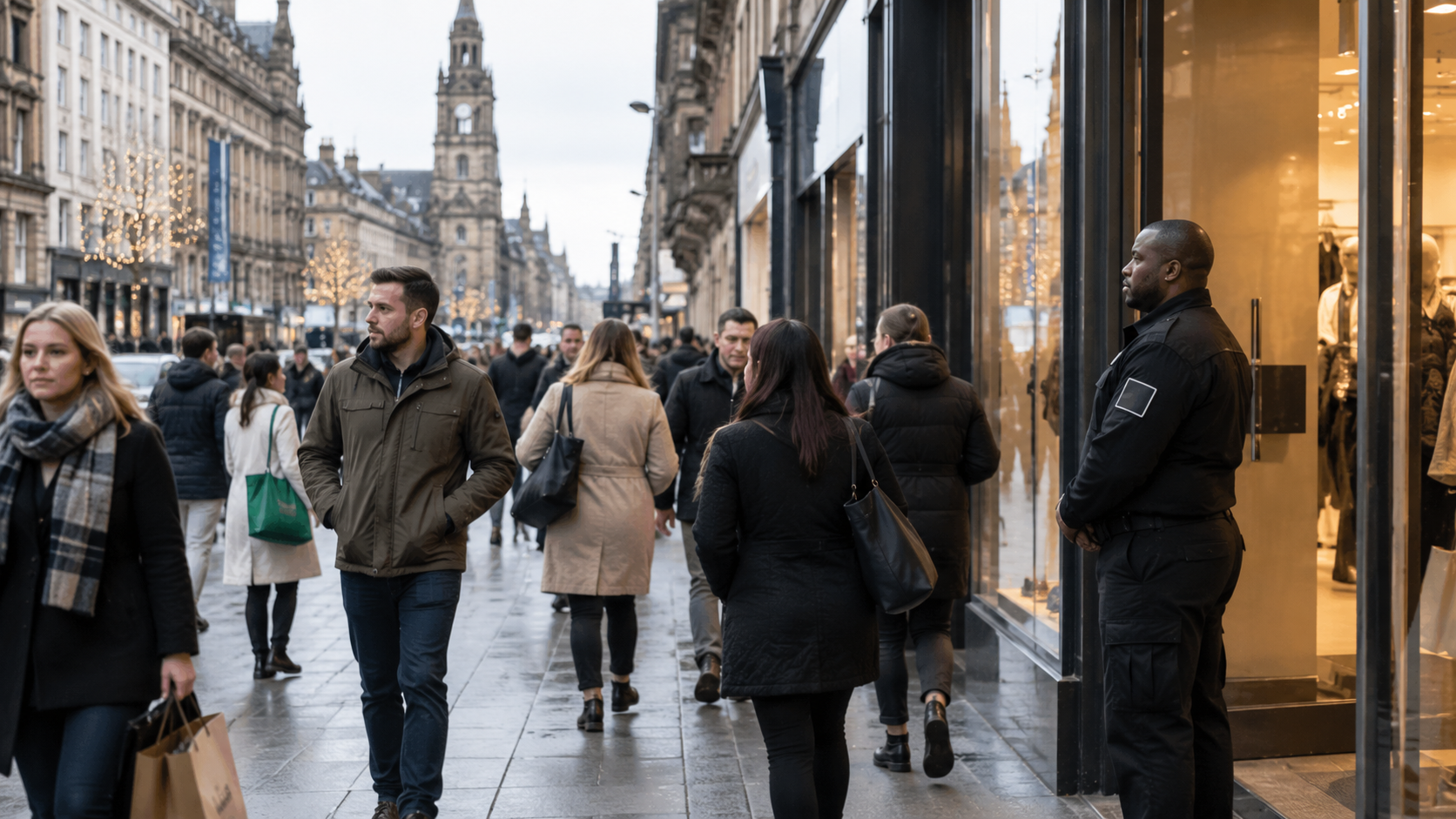
Cardiff’s layout matters. Industrial areas such as Tremorfa, Splott and Wentloog sit beside populated districts. That mixed use increases footfall and informal access. It also makes spotting suspicious activity harder. It is because there is more background noise, more deliveries and more people. In these settings, opportunity crimes happen. They take advantage of low attention or a gap in the process. These act as the common threat.
Local policing and prevention advice for businesses in South Wales highlights a point. Prevention works best when it is simple and consistent. Basic measures reduce incidents and make insurance-led security requirements smoother. It includes South Wales Police publish business crime guidance that reflects this approach.
What are the peak crime hours for businesses needing factory security in Cardiff?
Risk is not uniform over a 24-hour cycle. Cardiff sites see spikes at three moments:
- Early morning handovers, when incoming lorries arrive, and the gates open.
- Shift changes and lunch windows, when staff movement increases, and gates may be left ajar.
- Late evening and early morning, when fewer witnesses are present. And when perimeter checks matter most.
These windows are where a physical presence helps. A guard who controls access during a handover can prevent false sign-ins. A visible patrol during shift change helps prevent opportunistic theft. Treat these periods as active risk moments, not times to switch off.
How has rising retail theft in Cardiff increased demand for daytime factory security?
Retail theft has risen across England and Wales in recent years. This pressure has flowed upstream. Organised thieves and opportunists sometimes shift attention to warehouse and distribution centres. This happens when the town-centre retailers tighten controls. These sites hold bulk stock and often operate many vehicle movements during the day. This activity can disguise theft as a normal activity.
Nationally, shoplifting and retail theft rose in recent years. This is evident in recorded shoplifting offences in England and Wales. As a result, it increased year over year. That trend matters to Cardiff manufacturers and warehouse operators. This is because stolen retail goods often move through local supply chains. It happens before reaching the shop floor.
What are the differences between day and night factory security risks?
Daytime risks are often procedural. They include unauthorised access during delivery, internal theft, and errors. This allows materials or tools to be removed unnoticed. Nighttime risks are primarily external. They cover forced entry, vandalism and vehicle crime. In Cardiff, the close industrial and residential areas mean night intrusions are quick.
The right security response accepts both realities. Daytime measures focus on controlled access, verification and logs. Night measures focus on detection and immediate containment. Relying on one approach alone leaves gaps.
How does economic activity in Cardiff influence factory security demand?
Economic ups and downs change what goods are stored and how long they stay on site. A spike in seasonal stock increases on-site inventory, which will raise short-term risk. Cardiff businesses that plan flexibly can scale protection. It can be up or down around these cycles. That approach is cheaper in the long run. It acts as an oversized solution that sits unused between peaks.
Legal and compliance requirements
Security choices must align with legal duties and insurer expectations. Missing a compliance step can increase costs and risk.
SIA licences are required for licensable security roles. The licence confirms that an individual has the right training and has been screened. Beyond individual licences, many buyers check BS 7858 vetting processes. BS 7858 is the British Standard for vetting and screening security staff. It looks at identity, employment history and criminal records. Insurers and procurement teams often expect clear vetting.
DBS checks are common when staff operate around vulnerable people or sensitive materials. For many industries, the need for a DBS depends on whether workers will interact with the public. It also helps to enter schools, hospitals or care settings nearby.
Martyn’s Law introduces a new public-safety duty for certain premises and events. The Act applies mainly to venues with public access. But it is relevant for sites that host open days. The number of frequent visitors or staff exceeds certain thresholds. The Act is already law and has an implementation timeline for duty holders to prepare and comply. Businesses with public access should start including this duty in long-term security planning.
How do VAT rules apply to factory security in the UK?
Security services supplied to businesses are usually standard-rated for VAT. That affects the cash flow of any contract. When procurement compares in-house and outsourced options, VAT treatment can tilt the numbers. For public bodies or VAT-exempt entities, the position can differ. Always ask the supplier to itemise the VAT element. It makes budgeting and auditing easier.
What documentation proves a security firm’s compliance history?
Procurement teams should request and keep clear documents:
- Copies of SIA licences for staff who perform licensable roles.
- Evidence of BS 7858 vetting procedures and checks.
- Public liability and professional indemnity insurance certificates.
- Sample incident reports and escalation procedures.
- Training records and evidence of periodic refreshers.
A reliable security company in Cardiff will supply these without delay. If they do not, it raises a red flag during tender evaluation.
How do labour laws affect factory security overtime payments?
UK employment law sets rules on hours, rest periods and holiday pay. For guards, overtime often arises during peak seasonal demand or unexpected incidents. Contracts should be explicit about how overtime is charged and accounted for. A clear rate card avoids disputes and makes total cost forecasts reliable for finance teams.
What documentation should show a security firm’s compliance history to an insurer?
Insurers look for evidence that mitigates moral hazard. Useful documents include consistent incident logs, proof of staff vetting, and written procedures. It is suitable for out-of-hours site protection and CCTV maintenance logs. This gives clarity about who handles assets. These items make it simpler to justify reduced premiums or smaller excesses.
Costs, contracts, and deployment in Cardiff
Cost is a top question for finance directors. It is sensible to break cost into clear parts: people, tools, time and contingency.
People: wages, SIA licence-related admin, training and payroll taxes. Tools: access control systems, cameras, alarms, lighting and radios. Time: hours of cover per day, and the number of staff needed to avoid fatigue. Contingency: mobilisations, more patrols at short notice and seasonal adjustments.
City-centre and edge-of-city sites carry different price profiles. A secure urban estate with tight access uses different hours and checks to a suburban site. Transport access, parking and local services affect mobilisation costs and hourly rates.
Inflation and wage pressure remain cost pressures for security across the UK. While suppliers may appear to offer a low headline rate, ask what is included. Underpriced contracts often cut corners on vetting, training or reporting. That can raise insurance-led security requirements.
How long does it take to hire and deploy a factory security team in Cardiff?
For a straightforward deployment, clear access points can occur in two to four weeks. This also gives better mobilisation. That covers vetting, site-specific training, and establishing reporting lines.
For complex sites, allow six weeks or more. It covers many access gates, integration to existing CCTV systems, and health & safety. Early engagement speeds mobilisation. Late procurement leads to rushed induction and a higher risk of errors.
What are common contract lengths for factory security in Cardiff?
Common lengths are:
- Short term: 1–3 months (temporary cover for peaks).
- Medium term: 6–12 months (seasonal or project cover).
- Long term: 12–36 months (stability and site knowledge).
Longer contracts often lower the unit price and help with continuity. But procurement should include clear exit clauses and service level expectations.
How does factory security support business insurance premium reductions?
Insurers look for tangible steps that lower the chance or impact of a claim. Examples include verified access control, documented patrol logs, monitored alarms and robust CCTV. It comes with retention policies. A file of recent incident reports and corrective actions shows insurers manage risk. In some cases, insurers will offer reduced premiums or lowered excesses. This happens when risk mitigating measures are documented and consistent.
How does public procurement law affect contracts for factory security in Cardiff?
Public bodies and organisations that use public funds must follow transparency and values. The Procurement Act 2023 emphasises outcomes and value for money. For security contracts, that means clear KPIs, evidence of compliance and measurable reporting. Suppliers must show governance and the ability to deliver repeatable, auditable results.
Training, daily operations, and guard duties
Good factory security is routine-driven. Routines create predictable behaviours that staff and suppliers can rely on.
SIA licensed security guards are trained to observe, report and deter. They are not there to manage every internal process. Their work reduces risk by enforcing access rules, fire escapes and door seals. They also cover watching for delivery anomalies and logging unusual activity. That work supports operations and insurance proof-points.
Training should be regular but focused. Key cities near Cardiff sites include perimeter integrity, access control, and basic first-response. These elements are mandatory for fire or medical events. Practical drills build muscle memory. Theory alone does not.
What does a factory security do immediately upon starting a shift in Cardiff?
A guard’s start routine often follows these steps:
- Review the previous shift’s log and any open issues.
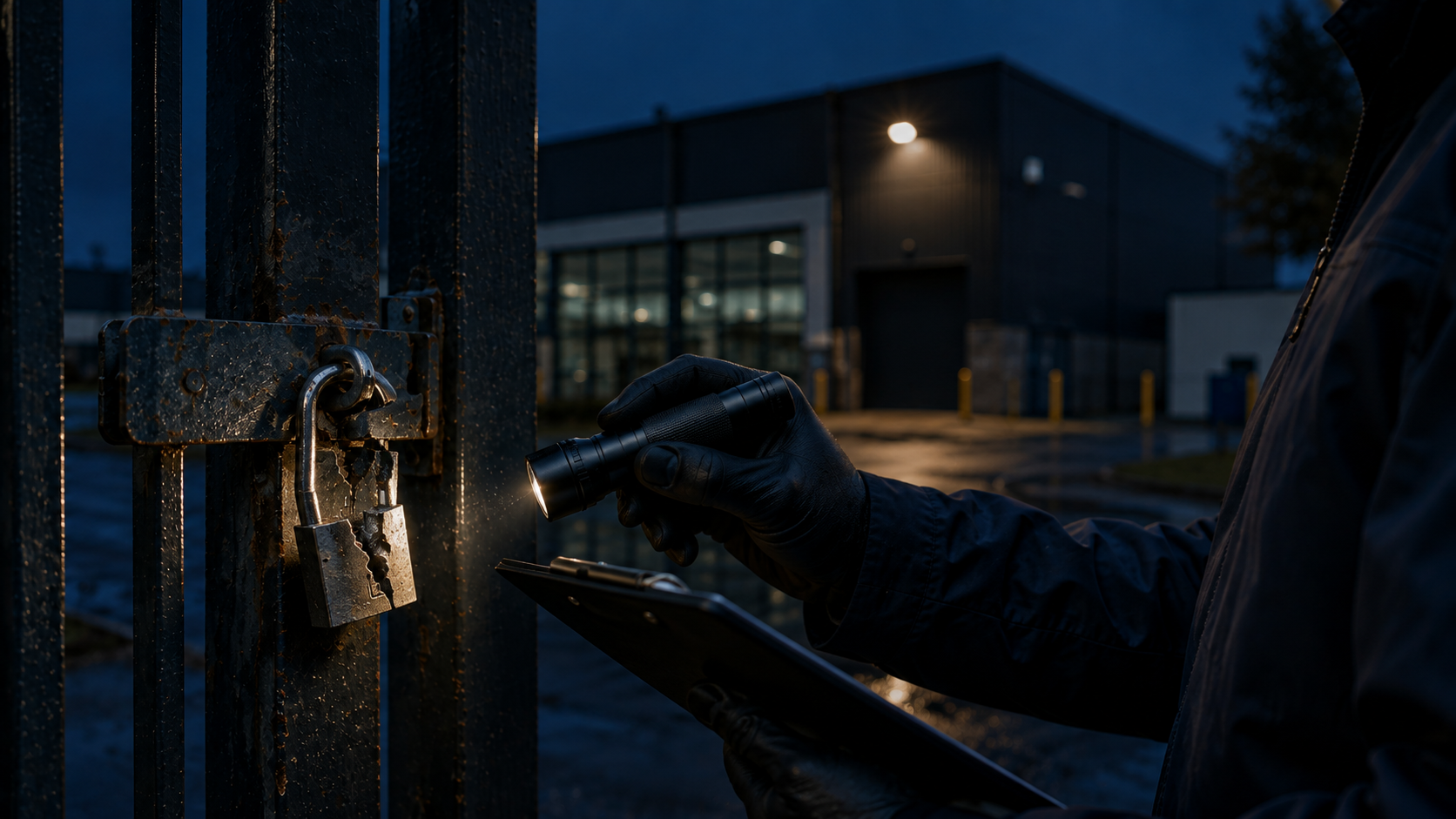
- Confirm gate and lock status and test alarms.
- Check CCTV feeds for any overnight anomalies.
- Liaise with site management about planned deliveries or visitors.
- Log the shift start and expected handover time.
This short start routine prevents handover gaps. It assures that any unresolved items are flagged early.
What is the first thing a security guard checks when arriving at a Cardiff site?
They typically check access points. It covers the gates, doors and loading bay seals. Those are the obvious weak points. They can also indicate if an issue occurred outside operational hours.
What fire safety checks are priority for retail security on duty?
For mixed operation sites, there are certain priority checks. It includes alarm panel integrity, emergency exits, escape routes and functioning fire doors. SIA licensed security guards
should report any faults immediately. They must also ensure temporary fixes are logged with facilities teams.
How frequently do guards report to supervisors during Cardiff night shifts?
Reporting frequency varies with risk. A common pattern is an hourly check and immediate escalation for incidents. For higher-risk nights, a 30-minute check can be justified. The goal is consistent, documented contact that auditors and insurers can verify.
What post-patrol documentation do factory security complete hourly?
Hourly documentation should be brief and factual. It must have patrol findings, access activity, vehicle registration details, and any anomalies. Short, precise logs are more useful than long, subjective notes.
How do shift patterns work for 24/7 factory security coverage?
Shift structures balance coverage and fatigue. Typical patterns include 12-hour shifts with overlapping handovers or 8-hour shifts. It must reduce fatigue but needs more staff. Whichever pattern is used, make sure rota rules follow working time regulations. And also, the handovers are structured and documented.
Performance, risks, and staffing challenges
Performance needs to be measured. But measures should be tailored to the site and easy to verify.
KPIs that matter to buyers include:
- Incident response and escalation times.
- Completion rate of scheduled patrols and checks.
- Accuracy and timeliness of incident reports.
- Compliance with site access procedures.
Avoid KPIs that reward ticking boxes rather than reducing risk. A KPI that simply counts patrols without quality checks will not help an insurer or a CEO.
The weather in the Cardiff regions affect outdoor operations. Heavy rain, coastal winds and cold spells reduce visibility. They can tend to force changes to patrol routes. Simple contingency planning keeps coverage predictable. It is done using temporary lighting or remote sensors during severe weather.
Long shifts can harm performance. Fatigue reduces vigilance. Buyers should ensure providers plan shifts that match the operations and rest breaks.
Staffing stability matters to client continuity, not recruitment tactics. A stable guard team knows the site, customers, and logs incidents in a consistent way. That continuity reduces investigation time after an event.
What KPIs should businesses track for factory security performance?
Track a small set of meaningful indicators:
- Number of verified incidents detected by security versus total incidents.
- Average time from detection to escalation.
- Percentage of handovers with completed briefings.
- Audit results for compliance checks.
These metrics show whether security operations reduce risk or merely produce reports.
How does weather in Cardiff affect factory security effectiveness?
Coastal weather affects sightlines and access. On wet or windy days, temporary covers on loading bays may be open longer, increasing exposure. Factory security services Cardiff
includes improved lighting, redundancy in sensors and flexible patrol routes.
What health impacts of long shifts on factory security performance?
Extended periods of wakefulness reduce attention and slow reaction times. Providers should design rosters to limit continuous duty lengths. This helps to avoid repeated night shifts without recovery time. From a buyer’s perspective, roster quality reduces the risk of missed incidents.
What strategies are Cardiff firms using to maintain consistent service amid labour shortages?
Clients near Cardiff area focus on continuity more than recruitment. They ask for named teams on-site, documented handover packs and quality assurance audits. Some use mixed models. A base level of on-site staff supplemented by remote monitoring during quiet hours. That approach keeps costs sensible while preserving site familiarity.
Technology and future trends in Cardiff factory security
Technology helps, but it is not a cure. The strongest setups combine people, process and tech.
CCTV and access control integration is standard on modern sites. Integrated systems reduce false alarms by correlating door events. It comes with footage and access logs. Remote monitoring systems can alert a guard to a real event. This makes the response faster and more focused.
AI analytics increasingly support this work. Analytics can flag loitering in loading areas. It helps to detect open doors at odd times or identify repeated vehicle movements to a single bay. These tools do not replace human judgement. They highlight patterns that humans then investigate.
Drones are selective tools. For large perimeters with difficult vehicle access, a drone can produce an overview. For most manufacturing site security Wales, they are an occasional aid.
Green security is emerging. Low-energy lighting, solar sensors and server rooms for video storage reduce running costs. It also helps to achieve corporate sustainability goals.
Remote monitoring and human patrols work best together. Remote teams near Cardiff can track and triage events. On-site guards provide immediate verification and response. That layered model reduces both cost and risk.
How do remote monitoring systems complement traditional factory security in urban Cardiff?
Remote monitoring adds eyes when on-site staff are limited. A remote operator can watch cameras and alert guards to suspicious movement. Factory security services in Cardiff reduces unnecessary patrols. It helps ensure the right response arrives at the right time.
How are drone patrols integrating with ground-level factory security in Cardiff?
Drones are used for site overviews. It is especially useful after boundary breaches or for hard-to-reach areas. They are not a replacement for ground response. They are an efficient supplement for visual checks.
What predictive analytics tools help Cardiff businesses assess factory security needs?
Predictive tools combine historical incident data, operational schedules and local crime trends. They suggest optimal patrol windows and coverage levels. These tools are planning aids. They do not remove the need for human judgment, but they help make decisions less guessy.
What impact will Martyn’s Law have on factory security requirements for Cardiff venues?
Martyn’s Law formalises a protective duty for certain publicly accessible premises. For factories and sites that host regular visitors, it adds a compliance dimension. The law also covers public-facing retail operations. They are prepared early by auditing public access. It creates a simple evacuation plan and improves public-area surveillance. Also, it reduces future implementation costs and shows insurers proactive risk management.
Conclusion
Why Cardiff businesses need Factory security?. It is because the city’s industrial footprint sits close to urban life. That closeness raises both opportunity and consequence. Security is not a single product. It is a set of choices that must align with local risk, contract rules and operational needs.
For those who buy security, the right questions are pragmatic. When do incidents most often happen? What documentation will insurers need? Which hours produce the highest exposure? How will a solution scale during peaks? Answering those questions helps procurement and finance teams justify spending. It also helps operations keep the place running.
Decisions should be proportionate. Not every site needs 24/7 manned guarding. But every site should have a clear risk assessment. It includes a plan for peak loads and documentation that proves the controls work. That evidence is what reduces loss and supports fair insurance terms.
Frequently Asked Questions
1. Do all Cardiff factories need 24/7 security?
Not every site requires round-the-clock coverage. Risk levels, operating hours, and stock value determine the need. Some factories may only need night-time or peak-hour monitoring.
2. Can CCTV replace on-site security guards?
CCTV alone cannot respond to incidents. It supports guards by providing evidence and monitoring. Human presence is still needed for immediate action and deterrence.
3. Are SIA licences mandatory for factory security staff?
Yes, guards performing licensable duties must hold SIA licences. It confirms proper training and background checks. Unlicensed staff may put the business at legal or insurance risk.
4. How often should risk assessments be updated?
Risk assessments should be reviewed annually or after any operational change. New stock, layout changes, or public access events can increase risks. Updating ensures controls remain effective.
5. Can having factory security lower insurance premiums?
Possibly, if controls are documented and consistent. Insurers value visible risk mitigation like patrol logs and CCTV integration. While not guaranteed, it can reduce excesses or premium costs.
6. How quickly can extra security be arranged for short-term needs?
Temporary coverage can often be mobilised within days or weeks. Complex sites with multiple access points may take longer. Early planning ensures smooth deployment and risk coverage.
7. How do weather conditions in Cardiff affect factory security?
Rain, wind, and poor visibility can impact patrol effectiveness. Temporary adjustments, like lighting or sensor monitoring, may be needed. Guards must adapt routines to maintain coverage.
8. What is the simplest way to start improving factory security on a budget?
Begin with a basic risk assessment of weak points. Secure gates, doors, and delivery areas. Keep short, accurate logs and implement simple access controls to reduce vulnerabilities.