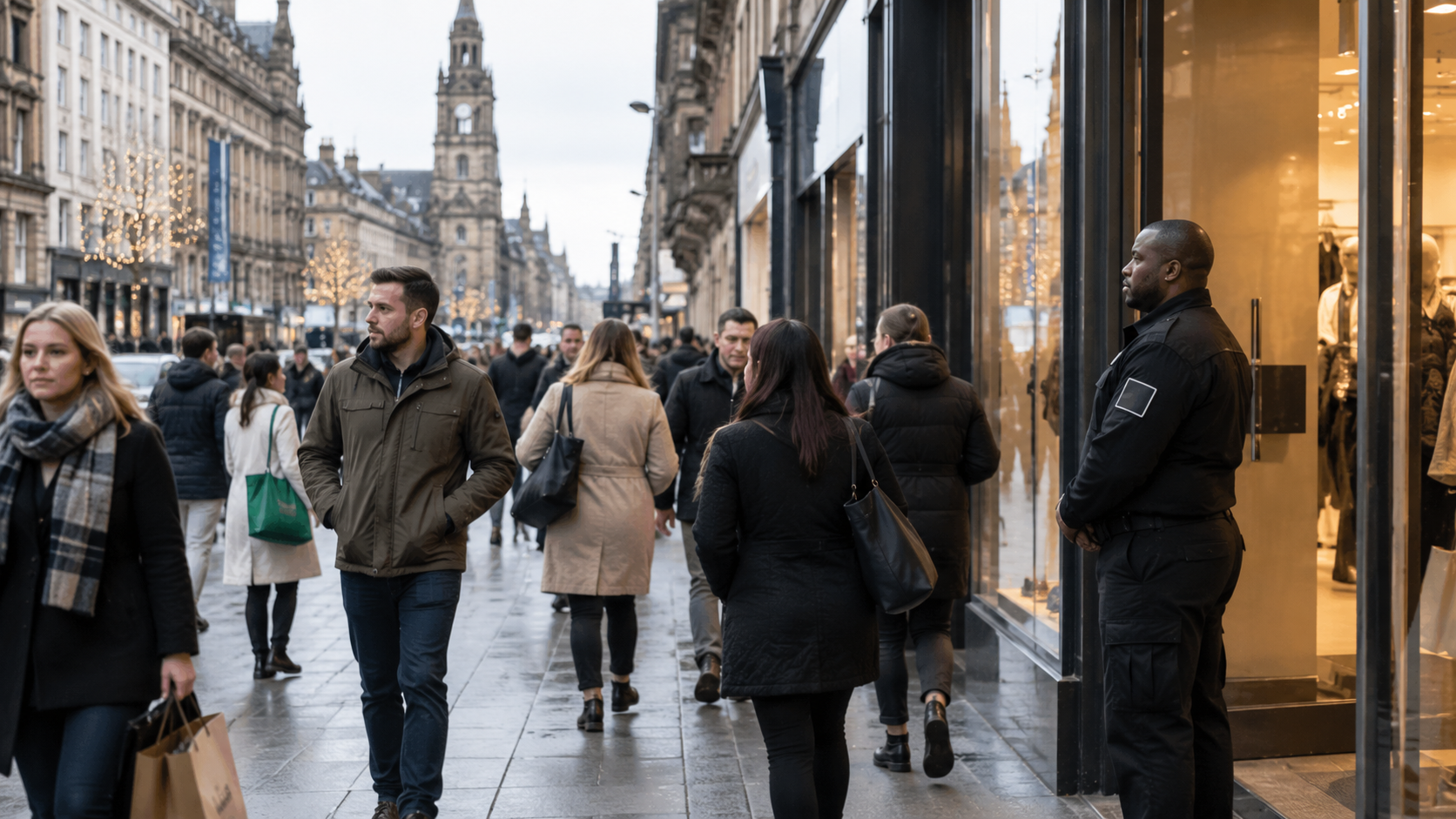
In 2026, CCTV is everywhere and watching every movement. They stay on ceilings, above doors, behind tills. Screens glow in back offices while lenses watch every aisle. Yet theft keeps climbing across the UK high street.
Without any change, the shelves get cleared, and the staff are exposed to an intruder. In the end, retailers review footage after the damage is done. This is exactly how criminals ignore cameras in retail stores in 2026, not by avoiding them, but by understanding their limits.
Recording crime is not the same as preventing it. A camera captures movement, stores time stamps and produces evidence. But it does not interrupt a hand sliding a stock into a bag. It does not greet someone who walks in, scanning for blind spots. It does not shift the mood on the shop floor.
Professional shoplifters know this. Many walk in already masked by a hood, a cap, or a face covering. They understand that footage can be blurry, partial, or delayed in review. Some have been arrested before and faced little consequence. That memory shapes their risk. The presence of a lens does not carry the same weight it once did.
Why Being Recorded No Longer Deters Professional Shoplifters In 2026
For years, retailers believed visibility was enough. Put cameras in clear view, add warning signs and let people know they are being watched. The idea was simple with fear of identification would stop theft.
That logic has weakened in recent days. Deterrence today depends less on silent monitoring and more on direct interruption. Offenders measure risk in real time. If no one approaches them, the risk feels low.
If a member of staff makes eye contact within seconds, the risk rises. The shift is subtle but powerful. Surveillance observes. Human presence disrupts.
The “Masking” Culture And The Limits Of Retrospective Facial Recognition
Face coverings remain common on UK high streets. What began as a health measure became normal daily wear. Hats, hoodies and large sunglasses. Nothing unusual about any of it. This behaviour explains how criminals ignore cameras in retail stores even when advanced systems are in place.
Retrospective Facial Recognition works best with clear images of a full face and good lighting. Even the minimal obstruction and partial occlusion break accuracy. A tilted cap or raised collar can reduce usable data. Some offenders understand this well. They adjust faster than system updates.
Understanding Prolific Offender Immunity In Practice
Certain repeat offenders move across towns and retail parks. They know store layouts and response times. In many cases, low-value theft does not lead to strong follow-up. When someone has been detained before and faced little impact, the camera loses authority.
Why The ‘Record And Report’ Model Creates False Confidence
Footage is captured, reports are filed, and evidence sits on a server. But in the moment, no one steps in. Staff assume the CCTV room is watching closely.
And the CCTV room assumes that the floor staff are alert. Minutes pass, and goods leave the store. The gap between recording and response is where loss happens.
The Blindspot Problem Most Retailers Don’t Map Properly
Most stores believe they have full coverage. Cameras are installed. Screens are active. Signs are visible. Yet blind spots still exist, as some are physical and others are human.
A physical blind spot is as simple as a camera cannot see through shelving. It cannot adjust when displays move and cannot react when stock levels change the line of sight.
A behavioural blind spot is quieter. Staff assume the system is watching closely. Responsibility shifts and attention gets to drop. No one feels fully accountable. That gap creates opportunity.
CCTV Blindspot Mapping: What It Actually Means
Blindspot mapping is more than placing lenses on a ceiling plan. It means walking the floor. Checking angles. Testing views at shelf height.
Tall displays block sightlines. Seasonal stacks change layouts. High-value goods often sit in corners that look covered but are not actively monitored.
There is also a difference between coverage and clarity. A camera may record an area, yet glare, shadows, or distance can make the footage weak.
Behavioural Blindspots When Staff Assume “The Camera Will Handle It”
When teams rely too heavily on screens, floor presence drops. Patrols become less frequent, and engagement slows. Passive monitoring replaces active awareness. Responsibility spreads thin, and everyone assumes someone else is watching.
The De-Escalation Deficit: Why Cameras Cannot Interrupt Crime
Most theft is stopped in the first few seconds. They did not do it by the footage but by presence. Prevention depends on interruption with a pause, a greeting or a small shift in atmosphere.
A lens records every action. It does not speak or step forward, and it does not change tone on the shop floor. So holding a reliable guard along with CCTV supports the site better.
The Met Police’s 3-To-5 Second Rule And Immediate Human Contact
Police guidance often stresses quick engagement. The idea is simple: acknowledge someone within three to five seconds of entry.
A calm morning, direct eye contact is a neutral offer of help. There is nothing aggressive and nothing dramatic. That brief contact signals awareness. The person knows they have been seen by someone present, not by a device mounted above.
Why Human Interaction Changes The Offender’s Risk Calculation
Risk is emotional as much as practical. When no one reacts, risk feels low. When a staff member engages, anonymity fades. The space feels smaller as attention sharpens. That friction can be enough to stop intent.
The Rising Risk Of Violence Against Shopworkers
Assaulting a shopworker now carries clear legal weight under Section 156. The law recognises the harm. Aggressive behaviour has risen in recent years. Verbal abuse is common, and physical threats are not rare.
De-escalation skills help reduce flashpoints. Calm words, controlled posture and clear boundaries. Because cameras cannot manage that tension.
CCTV Vs Guards: Prevention Versus Documentation
Retail security often splits into two models. One records what happens, and the other tries to stop it. Both have value as they do very different jobs.
CCTV is reactive by nature, and guards are proactive by design. One gathers the proof in silence, and the other shapes behaviour in real time. The gap between recording and interruption shows clearly how criminals ignore cameras in retail stores when no one steps forward.
What CCTV Does Well
Cameras capture events clearly when positioned well. Footage supports police reports. It helps with insurance claims.
Managers can review incidents later. Patterns emerge over time. Repeat visits, common routes, peak risk hours. That data has weight.
Where Static Cameras Fall Short
A fixed lens cannot move and cannot follow someone into another aisle. And it’s tough to issue a polite challenge as there is no posture or tone to shift intent.
Unlike the professional guard, a CCTV has no physical presence. This makes it easy for intruders and places no immediate pressure.
What Professional Guards Provide That Cameras Cannot
A uniform at the entrance changes the atmosphere completely. Also, the floor patrols disrupt planning with quick intervention and also limit the loss.
This makes customers feel safer, as much as staff feel supported. More than CCTV, trained guards can calm conflict before it escalates.
2026 Strategic Insight: Why The Record Is Not Enough
Retail risk has shifted as stores once focused on proof are now focused on interruption. Evidence still matters, but waiting for an incident to finish before acting costs more in the long run.
In 2026, a strong strategy blends technology with presence. Recording supports enforcement. It does not replace live awareness.
The NBCC Retail Crime Action Plan And Enforcement Realities
The NBCC Retail Crime Action Plan pushes national coordination. Forces share data; this makes identification quicker when images are clear.
There are still evidence thresholds. Cases need quality files. And yet, every case begins the same way, and someone sees something first. Human observation starts the chain.
Digital Evidence Management (DEMS): Powerful But Reactive
Digital Evidence Management speeds up case building. Clips are packaged fast, and files move securely to the police. It strengthens prosecution and improves tracking better. But it also acts after the loss occurs, as it cannot stop the first act.
BID Radios And Real-Time Retail Collaboration
Business Improvement District radio networks link nearby stores. Alerts travel quickly as known offenders are flagged in seconds. That shared awareness raises risk for repeat thieves. Collective vigilance works best when people respond, not just record.
The Hybrid Model: Why Smart Retailers Combine CCTV With Guarding
It is not a choice between cameras or guards. The strongest setups use both. One gathers insight, and the other applies pressure. Layered protection closes gaps that a single method leaves open. Retailers who treat security as a system, not a device, tend to see steadier results.
Cameras As Intelligence Tools, Guards As Intervention Tools
Cameras track movement and store patterns. They highlight repeat visits and problem zones. Guards step in when behaviour shifts. They greet, watch body language and act when needed. Technology tends to inform, while humans respond.
Integrating DEMS, CCTV, Guards And BID Networks
When systems connect, response improves. An incident is seen, logged and shared. DEMS supports the evidence chain. CCTV provides footage as BID radios warn nearby stores. Guards adjust their patrols, and the loop reduces repeat loss.
Designing Retail Security Around Human Visibility
A guard at the entrance sets the tone. High-risk areas need presence, not just coverage. Peak hours require more eyes on the floor. And CCTV supports the situation better.
Conclusion
Retail crime has changed. So must the response, but cameras still matter. They help build cases, show patterns, and protect claims. But they do not stand at the door. They do not speak. They do not sense tension rising near the tills.
Prevention now depends on presence. A visible guard gives a quick greeting, and a store team that feels confident enough to engage early. Retailers who understand how criminals ignore cameras in retail stores are already shifting towards visible, human-led deterrence.
The most resilient retailers understand this balance. Use technology for insight and use people for impact. In 2026, the edge belongs to those who interrupt risk before it turns into loss.
Frequently Asked Questions
1. Why do criminals seem comfortable stealing in front of cameras?
From what we have seen, some offenders no longer feel pressure from visible cameras. They weigh the chances of action, not just recording. If no one approaches them, they often assume the risk is manageable.
2. Does facial recognition not solve the masking problem?
In our experience, it helps in clear conditions, but it struggles when faces are partly covered. Hats, angles, and lighting can reduce accuracy.
3. Are security guards really more effective than CCTV?
We believe guards and cameras serve different roles. A guard can step in and change behaviour instantly, which a camera cannot do.
4. What is Prolific Offender Immunity in simple terms?
We do describe it as a mindset. Some repeat offenders feel consequences are unlikely or minor, so fear drops.
5. Should small independent retailers invest in guards or better cameras first?
We would assess risk first. If theft is frequent and visible, human presence often delivers a quicker impact.