In 2026, many UK retailers react to rising theft by buying better cameras. It holds higher resolution, wider angles and more data storage. It feels like action.
But cameras improve visibility, not prevention. They record what has already happened, and they also help to build a case after the loss. But cameras can’t stop the hand that lifts the stock.
This is where confusion creeps in. Documentation is mistaken for deterrence, but the evidence is treated as protection.
When reviewing your cost-benefit analysis of retail security guards vs CCTV, ask one blunt question: Are you investing in evidence or in prevention?
What CCTV Actually Delivers In Retail Environments
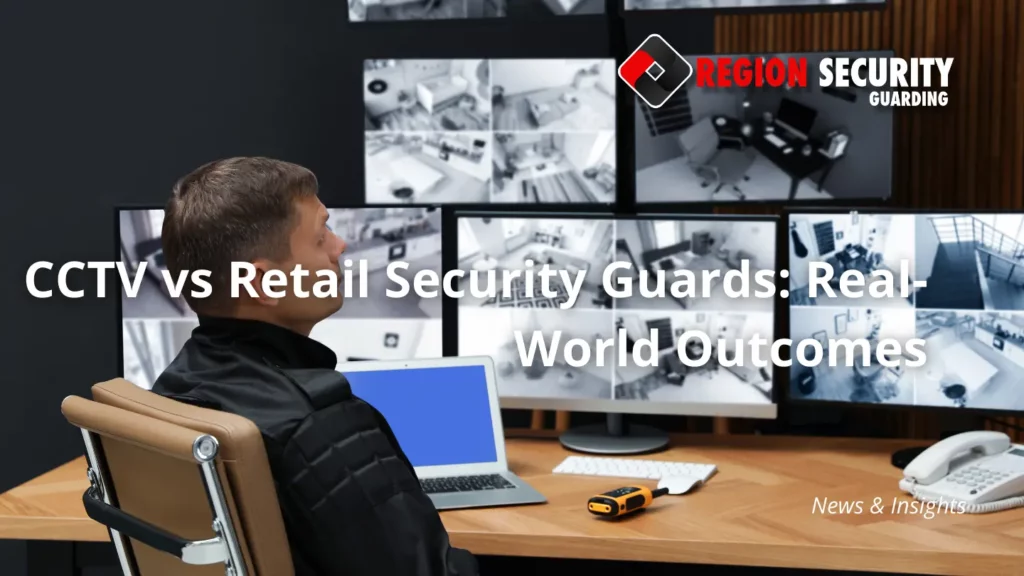
CCTV plays a clear role in modern retail. It gives oversight, creates a record and brings structure to investigations. For many stores, it is the first layer of security.
Documentation, Not Intervention
CCTV records incidents as they unfold. It captures faces, timelines, and movement. When theft occurs, footage can be shared with the police. It also helps with internal matters, such as staff misconduct or policy breaches.
But action comes later. The theft happens first. The review follows. Statements are taken. Files are built. This delay matters. This is what I would call a post-loss response. The system responds after damage is done.
Where CCTV Supports Retail Crime Action Plan Compliance
CCTV supports Retail Crime Action Plan Compliance in practical ways. It helps meet evidence submission standards. It strengthens prosecution files. It allows digital reporting through secure portals.
This has value as courts rely on clear footage, and police need structured evidence. Yet the system still reacts to events already completed. It documents the outcome. It does not prevent the moment.
What Retail Security Guards Deliver In Real-World Conditions
Guards shift the model from reaction to prevention. Their value shows up in what does not happen.
Visible Deterrence And Behavioural Disruption
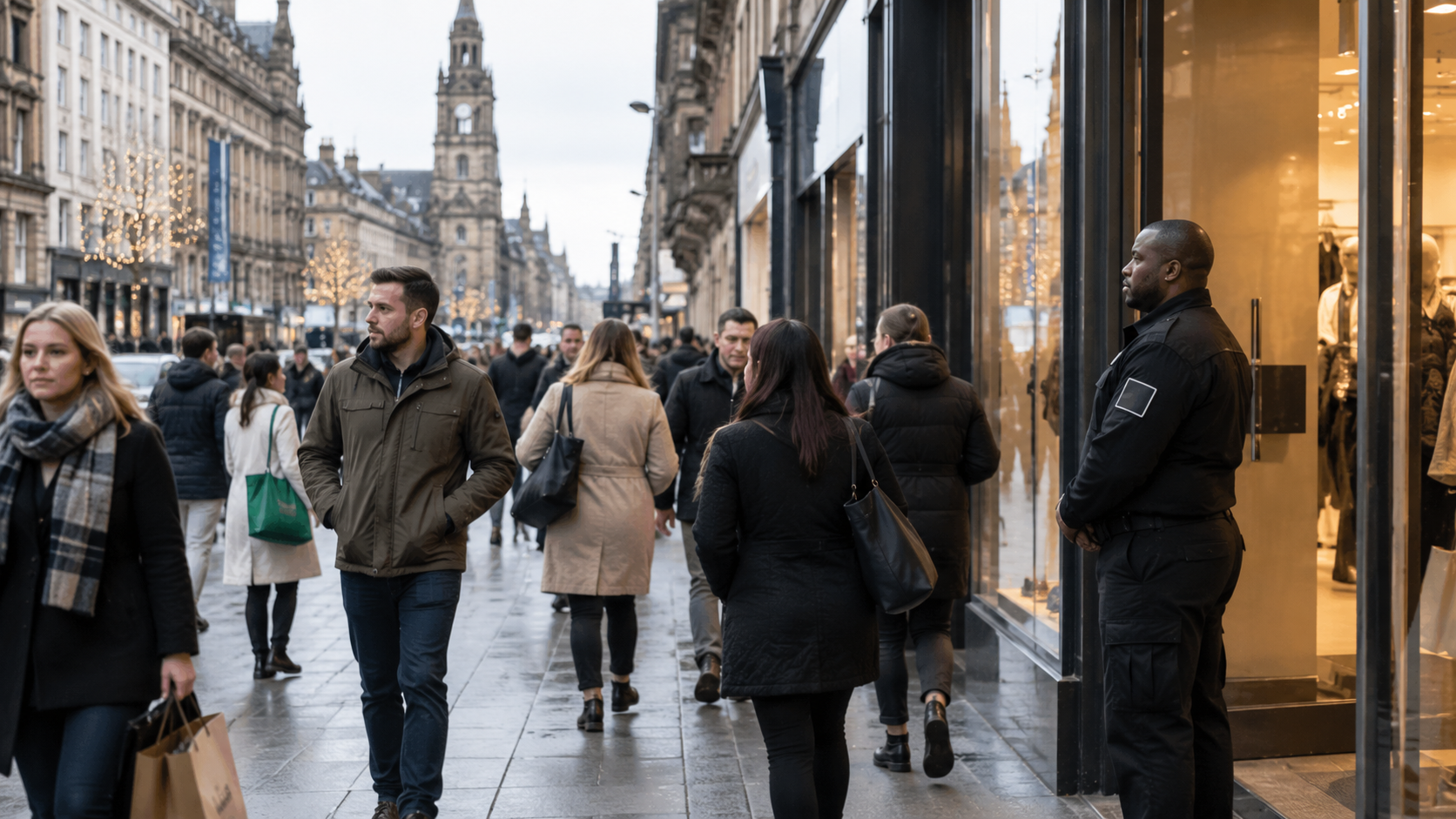
A uniform at the door changes the choices. People notice the security and choose whether to walk out or never enter. Opportunistic theft drops because the risk feels real.
Organised retail crime groups study patterns. They avoid guarded stores and move to softer targets.
This is where Shrinkage Control ROI becomes clear. Fewer incidents. Less stock loss. Lower write-offs. Staff feel safer, so absence falls. Internal loss reduces when oversight is active, not remote. The return is measured in stability.
SIA-Licensed Conflict De-escalation Under The Violence Against Shopworkers Act 2025
Aggression toward shop staff is rising. The Violence Against Shopworkers Act 2025 increases accountability. Duty of care is no longer vague.
SIA-Licensed Conflict De-escalation training equips guards to calm tension early. Tone, stance, timing. Small actions prevent larger harm.
Without trained personnel, the risk of escalation rises. So does liability. One incident can trigger claims, fines, or reputational damage. A guard is not just a presence. It is risk control.
Immediate Intervention Vs Delayed Evidence
CCTV waits. Police arrive later. Claims are filed. Reviews begin. A guard steps in. Stops the act. Recovers goods. Lowers escalation. Sometimes the incident ends before loss occurs. That difference drives profit.
The Cost-Benefit Analysis Of Retail Security Guards Vs CCTV
This is where finance meets risk. Price alone is not the answer for robust security. It is also one of the impacts to be held on.
Capital Expenditure Vs Operational Protection
Cameras sit under capital expenditure. You buy the hardware and install it. The cost feels contained as guards sit under operational spend and wages recur. The line item stays visible.
But ROI is not about the ticket price. It is about loss avoided. A cheaper system that allows repeated theft is not cheaper in practice. Operational protection can preserve the margin each week. Those protection compounds.
Shrinkage Control ROI: Visible Vs Hidden Costs
Stock loss is obvious. It shows up in reports. Other costs are quieter. Staff leave when they feel unsafe. Recruitment rises. Training hours expand. Legal claims follow violent incidents. Brand damage spreads fast online. Managers spend hours on statements and police files.
When measuring Shrinkage Control ROI, guard presence should be viewed as cumulative protection. Fewer events mean fewer secondary costs.
Insurance Premium Mitigation And Risk Rating
Insurers review exposure, history, and control measures. Physical guarding can improve risk scoring. Claims frequency drives premium increases. Repeated incidents weaken underwriting confidence.
Fewer losses create a stronger position at renewal. This is practical Insurance Premium Mitigation, not theory.
When CCTV Alone Fails: Real-World Retail Scenarios
Flash mob theft happens fast. Dozens enter. Stock disappears in minutes. CCTV records faces and timing. The loss still lands. A guard at the entrance can restrict numbers, call for support early, and disrupt coordination before shelves are cleared.
Repeat offenders often test small convenience stores. Cameras capture each visit. Footage builds a file. A guard changes the pattern. Recognition happens at the door. Entry can be challenged.
Aggressive refund fraud relies on pressure. CCTV shows the exchange later. A trained guard steps in when voices rise, reducing coercion on staff.
Youth group intimidation spreads through presence. While cameras observe, guards engage to set boundaries and prevent escalation. Along with it, they surely check the cost-benefit analysis of retail security guards vs CCTV for a better understanding.
High-value product sweeps are quick grabs. Video confirms the method. A guard positioned near target areas can intervene in real time.
The Commercial Bottom Line: Evidence Or Prevention
CCTV measures what already happened. It tells you how the loss occurred. It helps build a case. It explains the damage after the fact.
Guards work in a different space. They interrupt risk before it turns into cost. They reduce the chance of harm to staff. They narrow the gap between intent and action.
Prevention rarely makes headlines. There is no footage of a theft that never took place. No report for goods that stayed on the shelf. Yet that quiet absence protects the margin week after week.
When conducting a cost-benefit analysis of retail security guards vs CCTV, the key question is simple. Profitability, compliance, and staff safety sit on that decision. One approach explains events. The other limits them.
Conclusion
Retail security decisions shape more than loss figures. They shape working conditions, legal exposure, and long-term stability. Cameras provide clarity after events unfold. They are useful. They are necessary.
But clarity does not equal control. A physical presence shifts behaviour in the moment. It supports staff, reduces escalation and narrows financial leakage before it spreads.
In a tight margin environment, prevention carries weight. Cost-benefit analysis of retail security guards vs CCTV make you know better about it. Fewer incidents mean fewer claims, fewer disputes, fewer operational shocks.
Contact us for further details about the combined security of CCTV and guards. And ensure the safety of your site with our professional security.
Frequently Asked Questions
Is CCTV Enough To Meet Retail Crime Action Plan Compliance Requirements?
We see CCTV as a compliance tool, not a full solution. It helps me submit evidence and follow reporting standards. That supports the process. But it does not actively protect my staff or stop incidents in real time. For full coverage, we need documentation and visible control.
How Do Security Guards Improve Shrinkage Control ROI?
We measure ROI by what not to lose. A guard changes behaviour at the door. Some theft never starts. Some incidents end early. That steady reduction improves my margins over time.
Does The Violence Against Shopworkers Act 2025 Change Retail Security Planning?
Yes, we now think more about the duty of care. If risks are known, we must act. Trained guards reduce exposure and show that we take safety seriously.
Can Security Guards Reduce Insurance Premiums?
From my experience, fewer claims strengthen my position at renewal. Lower incident frequency improves how insurers view the store’s risk profile.
What Is The True Cost-Benefit Analysis Of Retail Security Guards Vs CCTV?
For us, the real comparison is simple. Cameras explain loss, and guards reduce it. The stronger long-term return comes from limiting damage before it grows.