Museums are custodians of valuable assets, including historical artifacts and priceless artwork, which makes them attractive targets for criminal activity. Threats such as pickpocketing, theft, and vandalism underscore the critical need for effective security measures.
But what is museum security? In this article, we’ll cover the concept of museum security, exploring the types of security measures museums implement, the roles and salaries of museum security guards, and the importance of safeguarding these cultural treasures.
Table of Contents

What is Museum Security?
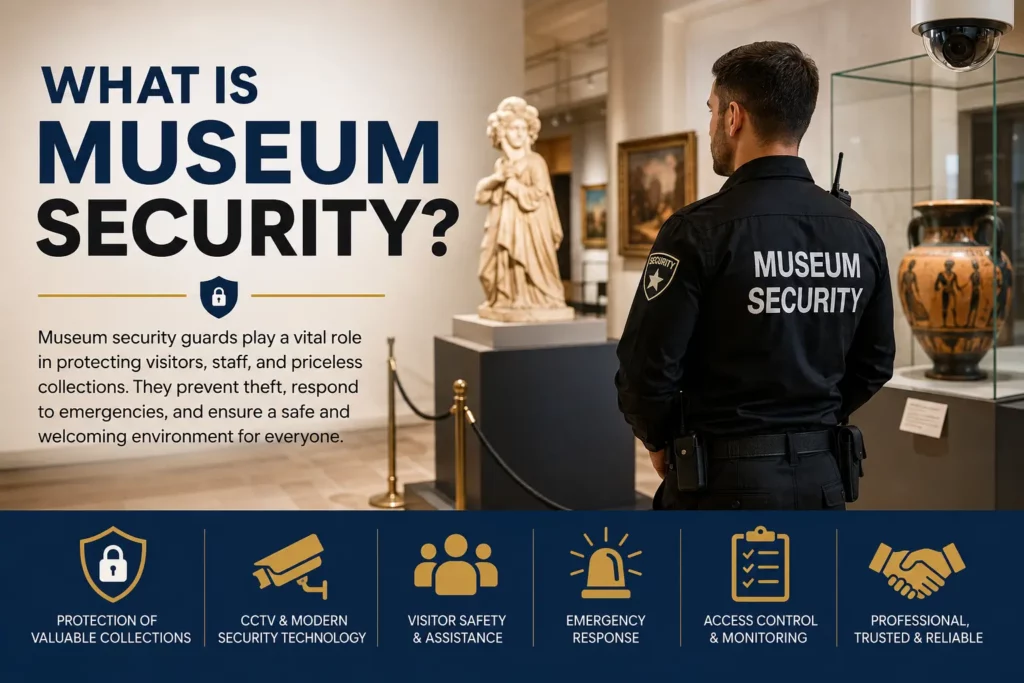
Museum security refers to the measures and strategies designed to protect a museum’s artefacts, property, and visitors. Museum owners typically employ specialised security teams, install surveillance systems like CCTV, secure display cases, and utilise advanced alarms and motion detectors. Primarily, this is to protect the building and its valuable collections.
Museums are vulnerable to various security threats, such as theft, vandalism, art fraud, burglaries, and break-ins. To address these risks, implementing strong security measures is crucial for safeguarding both the premises and the priceless artefacts within.
What Kind of Security Do Museums Have?
Museums utilise a range of security measures to protect their premises and valuable collections, including:
- Security Guards
- Security Cameras
- Security Alarms
- Motion Detection Systems
Of these measures, museum security officers are the most widely used. Their presence offers a reliable and proactive approach to safeguarding museum assets, combining vigilance with the ability to respond swiftly to potential threats.
How Much Do Museum Security Guards Make?
According to Glassdoor, museum security guards in the UK typically earn between £23,000 and £25,000 annually. However, this figure can vary based on factors such as the specific position and the location of the job.
How to Become a Museum Security Guard?
To become a museum security guard in the UK, you don’t need specific educational qualifications. However, you must meet the following requirements:
- Be at least 18 years old.
- Be a UK citizen or have the legal right to work in the UK.
- Complete security training courses.
- Hold a valid first aid qualification.
- Obtain an SIA (Security Industry Authority) security guard licence.
These criteria ensure that museum security guards are properly trained and qualified to protect valuable assets.
What Does Museum Security Do?
The main responsibility of museum security officers is to ensure the safety of the museum and its valuable collections. However, their role also involves a variety of other important tasks and duties. In the following sections, we will provide a detailed overview of these responsibilities.
Regular Patrols
One of the key duties of museum security guards is to carry out regular patrols throughout the museum. During these patrols, they ensure the safety of the artwork and other valuables, while staying alert for any suspicious activity or potential threats.
Use CCTV Monitoring Equipment to Monitor All Areas of the Museum
Another key responsibility of museum security officers is monitoring CCTV systems, including security cameras. They use these cameras to continuously assess the safety of all areas within the museum, ensuring that the entire space remains secure and free from potential threats.
Helping Customers
Security guards also play a key role in assisting visitors during their time at the museum. Their responsibilities may include:
- Providing directions to different exhibitions.
- Answering visitor inquiries and offering helpful information.
- Assisting lost children in finding their families.
Providing Crowd Control
As museums often experience high traffic, especially during peak times, security guards are responsible for managing the crowd to ensure a safe and enjoyable experience for all visitors. During busy periods, they help control the flow of people, maintaining order and safeguarding the museum environment.
Conduct Bag Searches
In larger museums, security guards may need to conduct bag searches. During these checks, they carefully inspect bags to ensure that prohibited items, such as weapons or unauthorised objects, are not brought into the museum. This helps maintain a secure environment for all visitors.
Respond to Security Incidents
Another key responsibility of museum security officers is responding to security incidents that could jeopardise the safety of the museum and its visitors. It’s crucial that guards handle these situations quickly and calmly. Some common security incidents they may be called to respond to include:
- Alarm activations
- Emergencies
- Stolen artefacts or artwork
- Violent or disruptive behaviour from visitors
Monitoring Everyone Who Enters and Exits the Museum
Museum security guards are also tasked with maintaining a detailed log of everyone who enters and exits the museum. This is an essential responsibility, as it helps ensure that only authorised individuals are allowed access. By tracking visitors, guards can confirm that each person has a legitimate reason for being there and can prevent unauthorised individuals, such as potential thieves, from gaining entry.
Acting as a Visual Deterrent Against Thieves
Another important responsibility of museum security officers is acting as a visible deterrent to potential thieves. Given that museums are frequent targets for crime, it’s essential for guards to quickly address any theft attempts. By maintaining a strong and visible security presence, guards can effectively discourage criminals from attempting to steal valuable items.

Why Museum Security Guards Are Essential for Protecting Cultural Heritage
Museums contain priceless collections that may be difficult to replace if damaged or stolen. Be it ancient artefacts, rare paintings, historical documents or sculptures, each exhibit needs constant care. By being visible throughout the building, crouching near the art or standing at the entrance to each gallery, museum security guards provide that protection by paying attention to visitors and proactively intervening if something is amiss.
When it comes to security, well-trained guards have the capacity to analyse what is going on in real time and decide on further action and response where automated systems are weak. The system guarantees safe visits without theft, vandalism, unauthorised access, or disruptive behaviour. This plays a vital role in defending exhibitions, but it also helps staff during emergencies and assists with evacuation when needed.
Professional museum security guards are even more important in museums where temporary exhibitions or high-profile collections are integral to the overall experience. From such experience, they can adapt to dynamic security threats while maintaining high levels of public safety.
Skills Every Museum Security Guard Should Have
Protecting museums demands more than presence. Experience matters every single day. Museum security guards need practical skills. They must stay alert always. Quick judgement makes a difference. Calm decisions prevent bigger problems.
The most valuable skills include:
- Strong observation and situational awareness
- Clear communication with visitors
- Conflict management and de-escalation
- Knowledge of emergency procedures
- CCTV monitoring experience
- Access control management
- Accurate incident reporting
- First aid awareness
- Professional customer service
Every museum welcomes different visitors. Every shift brings fresh challenges. Guards must stay approachable throughout. Confidence builds public reassurance naturally. Professionalism creates a welcoming atmosphere. Visitors feel safe without pressure. Staff also gain confidence daily. Good security feels almost invisible. That balance takes genuine experience. It’s never simply watching doors.
What Are the Challenges of Museum Security?
Museum security guards face a range of challenges, with the biggest threat often coming from criminals. Thieves frequently target museums to steal valuable historical artefacts, while vandals may attempt to damage priceless artwork.
Popular museums, such as the National Gallery in London, attract large numbers of tourists, making it more difficult for guards to effectively patrol and monitor all visitors. During busy periods, distractions from the crowd can create opportunities for criminals to slip past unnoticed. This makes it crucial for museum security guards to remain constantly alert and aware of their surroundings to protect both the museum’s collections and its visitors.
Do Museums Do Security Checks?
Yes, museums regularly carry out security checks to ensure the safety of visitors and protect their collections. Security personnel are tasked with performing checks, such as bag searches, to prevent the entry of restricted or dangerous items. These precautions are essential for maintaining a secure environment for both the museum’s valuable artefacts and its visitors.
How Do Museums Prevent Theft?
Museums can effectively prevent theft through the presence of security personnel. Security guards offer a strong, visible deterrent to potential criminals. Just seeing a guard signals that the museum has solid security measures in place, making thieves less likely to target the premises compared to an unprotected location.
In addition to security guards, museums also rely on security cameras to enhance protection. These cameras allow security teams to monitor areas that may be hard to patrol directly. If a theft occurs, the footage captured can be invaluable, helping to identify the thief and providing critical evidence for legal proceedings.
Why Do Museums Have Security?
Museums are popular destinations around the world, housing priceless artefacts and valuable artwork. Due to this, they are often prime targets for crimes such as art theft and break-ins. To protect these valuable items, it is essential for museums to have strong security measures in place, including security guards. Effective security not only safeguards the museum’s collections but also creates a safer environment for both visitors and staff.
How Do You Secure a Museum?
To enhance security and maximise protection, museums can adopt several additional measures alongside employing security guards. These strategies include:
- Installing security cameras throughout the museum to provide comprehensive surveillance.
- Securing display cases with high-quality locking systems to protect valuable artefacts.
- Implementing advanced security systems that include features such as alarms and motion detectors for immediate threat detection.
- Training museum staff in security awareness to ensure they can identify and respond to potential risks effectively.
- Reducing and monitoring access points to keep all entryways secure and under strict supervision.
So, What is Museum Security?
The most common security measure employed by museums is the use of security officers. These guards provide a strong, visible presence, acting as an effective deterrent to potential thieves and ensuring the safety of the museum and its exhibits.
For more insights and the latest updates on security topics, check out our news and insights page. You’ll find articles on a variety of subjects, including What is Reception Security? and How Much Do Security Guards Cost?
Common Risks Museum Security Guards Help Prevent
Museums face many security risks daily. Some threats appear without warning. Others develop over several hours. Museum security guards help minimise risks. Their presence discourages criminal activity naturally. Quick responses often prevent bigger incidents.
Some of the most common risks include:
Theft of Valuable Artefacts
Rare collections attract determined criminals daily. Valuable displays remain constant targets. Museum security guards maintain visible patrols. They watch visitor behaviour carefully. Early intervention prevents potential thefts. Visible patrols discourage suspicious activity.
Vandalism
Damage can happen within seconds. Historic collections deserve lasting protection. Small incidents create permanent consequences. Guards patrol galleries throughout shifts. They quickly address unacceptable behaviour. Fast action reduces unnecessary damage.
Unauthorised Access
Restricted areas require controlled access. Archives contain highly valuable collections. Storage rooms need constant protection. Museum security guards verify permissions. They prevent unauthorised entry immediately. Access procedures protect sensitive spaces.
Visitor Emergencies
Medical emergencies happen unexpectedly sometimes. Large crowds increase potential risks. Guards remain calm throughout incidents. They assist visitors immediately. Emergency services receive prompt support. Clear communication keeps everyone informed.
Suspicious Behaviour
Not every concern seems obvious. Experienced guards notice subtle changes. Unusual behaviour raises immediate attention. They investigate concerns professionally. Early action prevents larger incidents. Constant awareness strengthens museum security.
How Museum Security Guards Work Alongside Modern Security Technology
Modern museums depend on layered security measures. Technology certainly plays a valuable role. It helps identify potential security concerns. Yet people remain equally important. Museum security guards provide practical judgement. Experience still matters every single day.
Security teams commonly work alongside:
- CCTV surveillance
- Motion detection sensors
- Intruder alarms
- Access control systems
- Visitor management software
- Emergency communication systems
- Digital incident reporting
Technology captures information almost instantly. Guards interpret situations with experience. They investigate unexpected alarms carefully. They reassure worried visitors calmly. Sometimes a quick conversation prevents escalation. Sometimes immediate action becomes essential. Human judgement fills important security gaps. Together, people and technology create stronger protection. Museums benefit from both approaches.
Choosing Professional Museum Security Guards
Not every security provider has experience protecting cultural institutions. Museums require officers who understand both public-facing customer service and the unique risks associated with protecting historical collections.
When selecting museum security guards, look for providers that offer:
- Fully licensed SIA security officers
- Experience protecting museums and heritage sites
- CCTV monitoring expertise
- Emergency response procedures
- Visitor management experience
- Detailed incident reporting
- Flexible security coverage
- 24/7 security support
Choosing experienced museum security guards helps reduce security risks while creating a safe environment where visitors can enjoy exhibitions with confidence.
Conclusion
Museum security goes beyond protecting valuable artefacts. It helps preserve history, safeguards visitors, and creates a secure environment where cultural heritage can be enjoyed with confidence. While security technology plays an important role, trained museum security guards provide the awareness, judgement, and rapid response needed to manage situations that technology alone cannot handle.
Every museum has different security requirements, but the objective remains the same: protecting people, preventing incidents, and preserving collections for future generations. By combining experienced museum security guards with effective security measures, museums can reduce risks while continuing to educate, inspire, and welcome visitors every day.
Frequently Asked Questions About Museum Security Guards
What role does museum security play?
Museum collections are not easily repeated. Security guards assist in the guarding of those items while providing security from common safety issues and other emergency situations involving visitors, employees and exhibitions.
Are museum security guards monitoring CCTV?
Yes. Patrolling exhibition spaces, investigating suspicious activity, responding to alarms and making decisions that cameras simply cannot make are part of their job, in addition to CCTV.
Handling: What security protocols can a museum adopt?
As a result, most museums use a blend of asset protection measures, including security guards, CCTV, controlled access, alarm systems, visitor screening and patrols, as no one protective measure provides adequate protection.
Museum Security Staff: What to expect in an emergency
Yes. They are on hand to help in emergencies such as false evacuations, heart attacks, or injuries from accidents and minor incidents, whether this is a fire alarm or torching buses carrying tourists; the job of security guards is also to keep visitors calm until emergency services arrive.
Museum security guards are trained on how to prevent theft.
Theft prevention starts with awareness. They observe people, patrol galleries, lock gates to restricted areas and respond instantly when something catches their eye.
Do museum security officers do nothing but protect objects?
No. They assist museum staff, support visitors, control access to restricted areas, respond to emergencies, and help make the entire building safe.