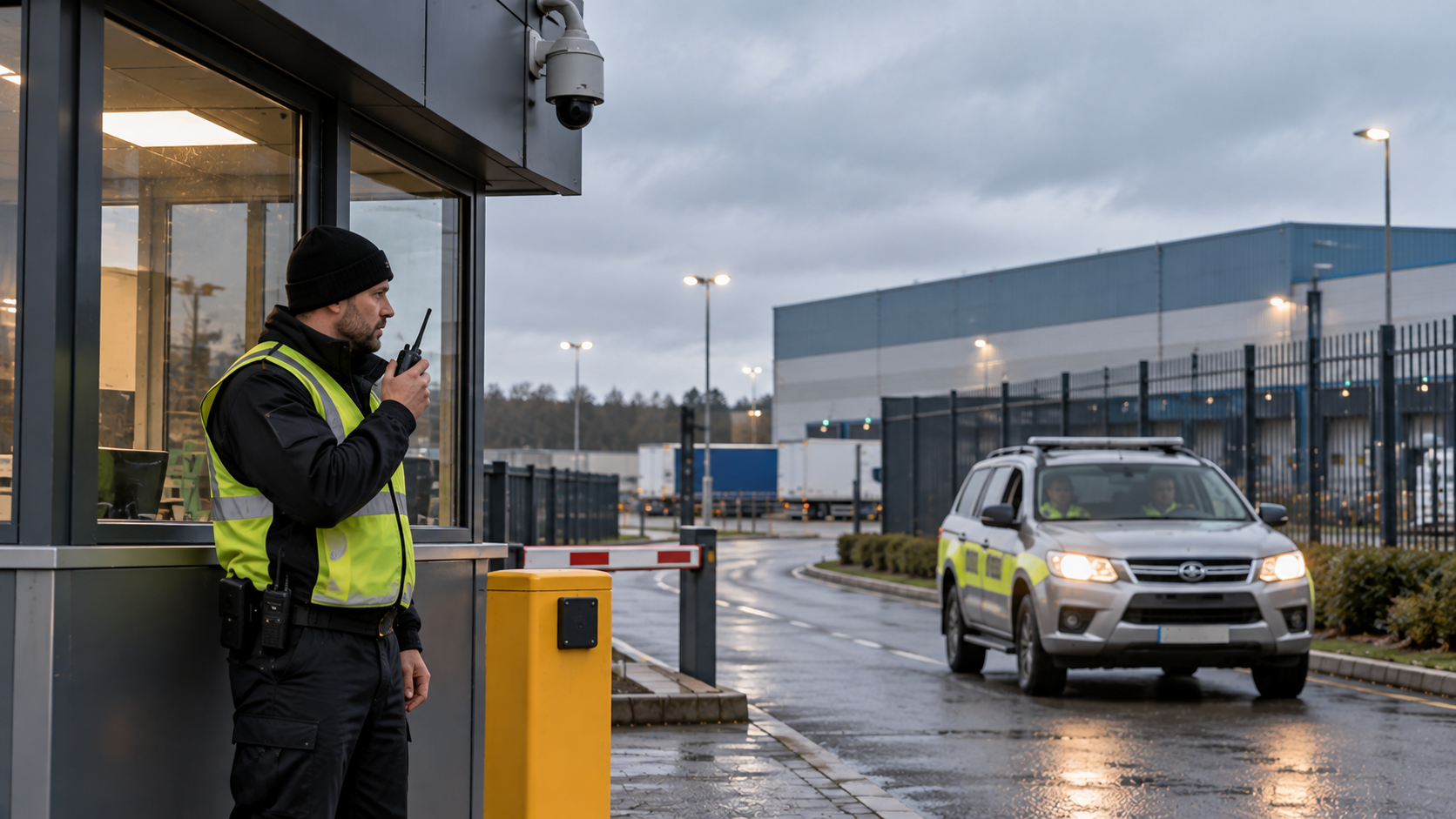
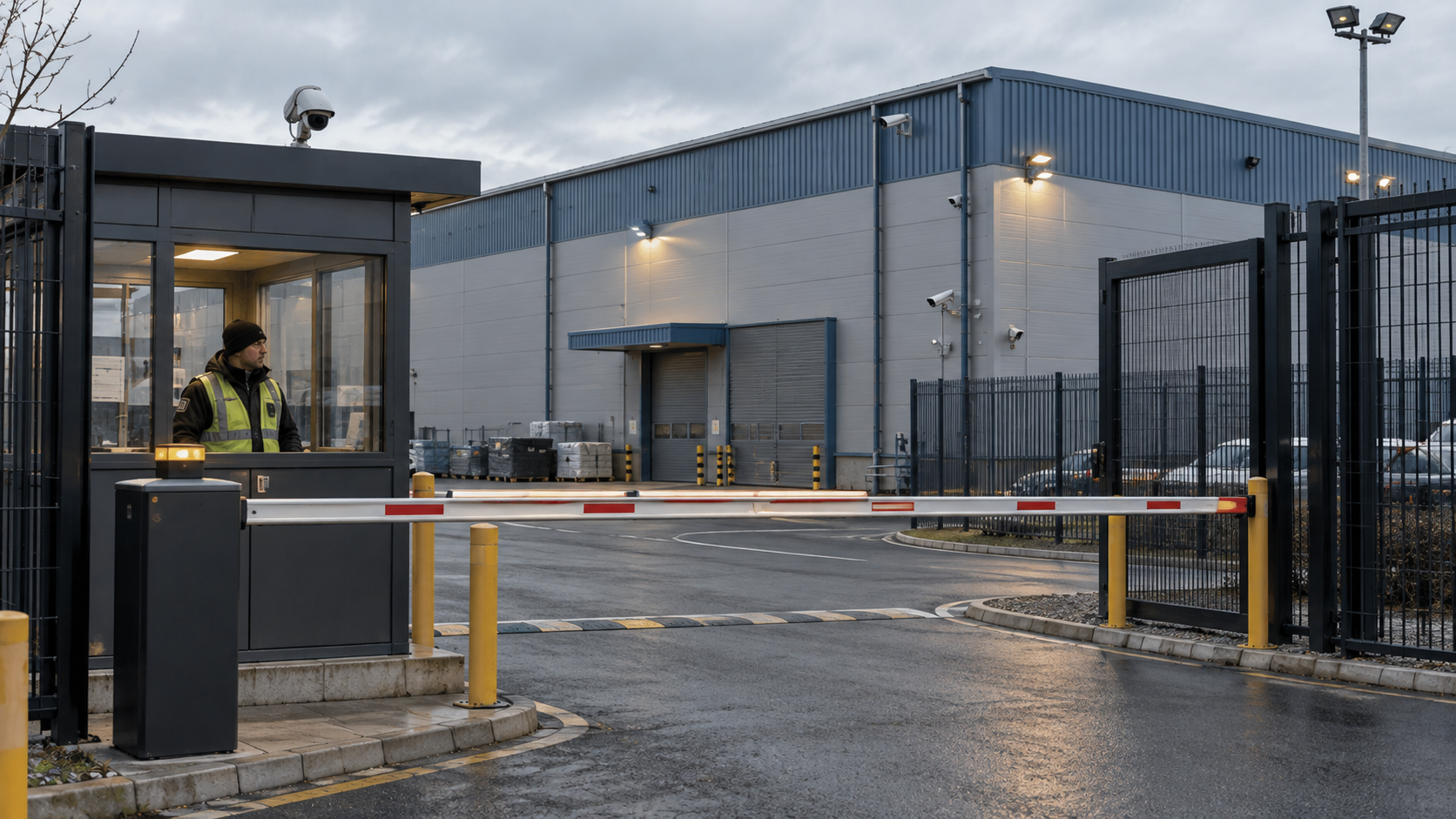
Cardiff is the political and civic centre of Wales. The city is home to the Senedd (Welsh Parliament), the Welsh Government estate, council buildings, courts, hospitals, museums, education sites, and a wide range of public‑facing venues.
These buildings must remain welcoming and accessible to the public. Yet they also need stronger protective planning, reliable visitor management, and trained people who can respond appropriately when something feels wrong.
This article provides a practical guide to Cardiff public‑building risk, protective security measures, Martyn’s Law compliance, personnel screening, and choosing the right security service provider.
Table of Contents
Why Cardiff’s Public Buildings Need a Different Security Approach
Cardiff is unique. It combines government, civic, cultural, transport, and visitor‑facing sites within a compact city centre. The Senedd and surrounding Cardiff Bay institutions carry symbolic, political, and public‑interest value that few other UK cities can match.
Public buildings must balance open access with controlled movement. A civic building may host public meetings, school visits, contractors, deliveries, and high‑profile events, sometimes all in the same week. The entrance that welcomes a family visiting a museum is the same entrance that a contractor uses to access a restricted area.
Senedd security sets a high standard. The Welsh Parliament operates airport‑style security at its entrance, with security and ushering staff on hand to assist visitors. Security Officers monitor CCTV, radio communications, and alarms. They are responsible for the safety of everyone who visits or works at the Senedd, from schoolchildren to ambassadors to the Royal Family.
But not every public building has the same resources. The challenge for many Cardiff public‑sector organisations is to adopt protective security measures that are proportionate to their specific risk profile, while maintaining the open, accessible character that defines public service.
From Public Access to Protected Access: The Cardiff Challenge
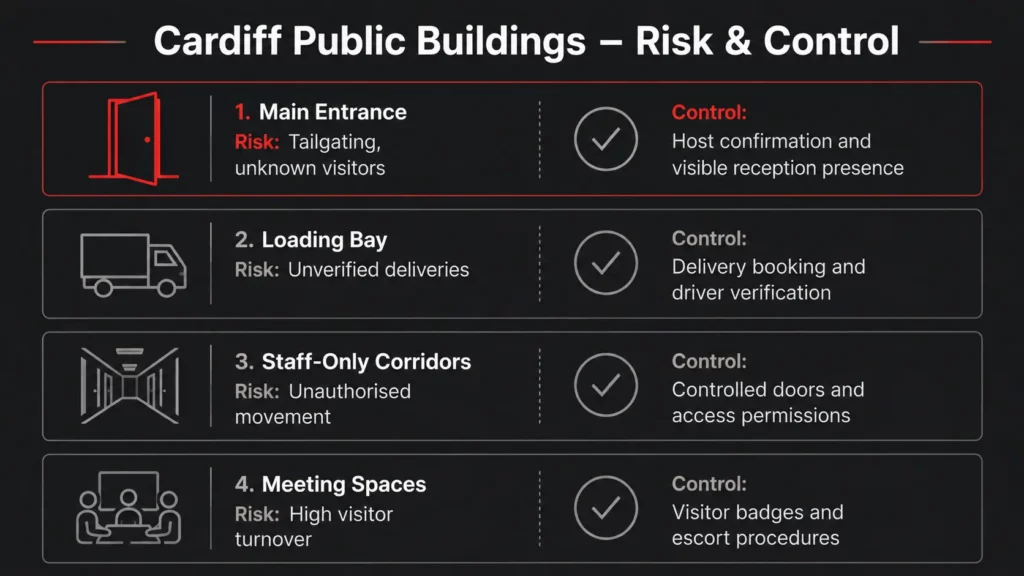
Public‑sector sites face daily operational pressure points. Understanding these pressure points is the first step toward effective protective security measures.
| Area | Typical Risk | Practical Control |
| Main entrance | Tailgating, unknown visitors | Host confirmation and visible reception presence |
| Loading bay | Unverified deliveries | Delivery booking and driver verification |
| Staff‑only corridors | Unauthorised movement | Controlled doors and access permissions |
| Meeting spaces | High visitor turnover | Visitor badges and escort procedures |
- Public entrances and reception desks are the front line. Every visitor, contractor, and delivery driver passes through. Without clear procedures, it becomes impossible to distinguish genuine visitors from those with no legitimate purpose.
- Demonstrations, public meetings, and high‑profile visits introduce unpredictable footfall and heightened tension. Security teams must be able to escalate calmly and professionally.
- Contractors, maintenance teams, and delivery drivers need access, but their access must be managed. Who are they? Who authorised them? Are they escorted? Do they have the right to be in restricted areas?
- Shared entrances and public/private zones create grey areas. A building that houses both public services and private offices may have conflicting security requirements.
- Out‑of‑hours access for cleaning, maintenance, and emergency work means the building is occupied when most staff are absent. Access credentials must be managed carefully.
The challenge is clear: public buildings must remain open and accessible. But open access does not mean uncontrolled access. Martyn’s Law compliance requires organisations to think through these pressure points and implement proportionate controls.
Senedd Security and the Importance of Visible, Professional Presence
High‑profile democratic institutions like the Senedd need security that is calm, professional, and proportionate.
Visible officers support visitor guidance, entry procedures, public reassurance, and incident escalation. They help distinguish genuine visitors from people attempting to bypass normal processes.
Security at the Senedd is not only about responding to threats. It is about helping staff and visitors understand procedures. A visitor who knows what to expect, bag checks, ID verification, and clear signage, is less likely to feel anxious and more likely to cooperate.
The Senedd Security Service sets a benchmark for other public buildings in Cardiff. Their officers are trained to handle a wide range of situations, from assisting a lost visitor to escalating a security concern. They operate and monitor CCTV, radio communications, and alarms. They are the visible, professional presence that reassures the public.
For other public‑sector buildings in Cardiff, the lesson is clear: Senedd security demonstrates that visible, professional security can coexist with open, accessible public services. Buildings that invest in trained, SIA‑licensed officers are better prepared for both routine visitor management and unexpected incidents.
BS7858 Security Screening: Why Vetting Matters in Public Buildings
Public buildings may involve sensitive information, controlled areas, vulnerable visitors, and high‑profile stakeholders. Vetting supports trust in staff who may hold keys, work alone, access restricted zones, or deal with visitors.
BS7858 security screening is a recognised screening standard for people in security roles. It covers identity verification, right‑to‑work checks, employment history for the past five years, basic criminal record checks, and financial background assessment.
BS7858 helps organisations reduce the risk of insider threats. It ensures that every security officer deployed to a public building has been thoroughly vetted to a recognised British Standard.
However, screening should not be viewed in isolation. It should form part of a wider recruitment, training, licensing, and supervision process. A vetted officer who is poorly trained or inadequately supervised is still a risk.
For Cardiff’s public‑sector organisations, working with a provider that conducts BS7858 security screening is essential. A trusted security officer will ensure that every officer assigned to your building has been vetted to the highest standard, giving you confidence, compliance, and peace of mind.
The Protective Security Measures That Make the Biggest Difference
Effective protective security is layered. It combines people, procedures, and physical/technical measures.
People
- SIA‑licensed officers: Trained, vetted, and licensed to work in security roles.
- Reception and visitor‑management support: The first point of contact for visitors and contractors.
- Staff briefings: Ensuring all employees understand security procedures.
- Escalation procedures: Clear steps for reporting concerns and requesting assistance.
Procedures
- Visitor booking: Pre‑registration and check‑in processes.
- Contractor sign‑in/out: Tracking who is on site and where they are working.
- Delivery protocols: Verifying deliveries before granting access.
- Evacuation, invacuation, lockdown, and communication plans: The four core public protection procedures required by Martyn’s Law.
Physical and Technical Measures
- CCTV coverage: Monitoring entry points, corridors, and public areas.
- Access‑controlled doors: Restricting movement to authorised personnel.
- Visitor badges: Clear identification for all visitors and contractors.
- Alarm response: Rapid investigation of triggered alarms.
- Secure key management: Controlling access to keys and credentials.
- Appropriate vehicle and perimeter controls: Where risk justifies them.
The right mix of measures depends on building use, occupancy, layout, public access, and risk assessment. A one‑size‑fits‑all approach does not work. Protective security measures must be tailored to each site.
For Cardiff’s public‑sector organisations, this means working with a security guarding in Cardiff that understands the local landscape and can recommend proportionate, effective measures.
Choosing a Service Provider in Cardiff for Public Sector Sites
Selecting the right security partner is critical. Procurement teams should assess providers against clear criteria.
What to Look For
| Criteria | Why It Matters |
| SIA licensing and Approved Contractor status | Ensures compliance with statutory requirements. |
| BS7858 security screening processes | Demonstrates commitment to vetting and quality. |
| Experience in public‑facing and high‑footfall buildings | Understanding of the specific challenges of public sector sites. |
| Ability to provide trained reception, static guarding, and mobile support | Flexibility to cover different roles and sites. |
| Clear incident reporting and audit trails | Accountability and transparency. |
| Training in de‑escalation, customer service, and emergency procedures | Officers who can handle both routine interactions and crises. |
| Capacity to scale coverage for public meetings, events, or heightened‑risk periods | Ability to respond to changing demand. |
| Understanding of local Cardiff operations | Knowledge of the local threat landscape and security context. |
Red Flags to Avoid
- Providers who cannot demonstrate SIA licensing for all officers.
- Providers who do not conduct BS7858 screening.
- Providers with no experience in public‑sector or high‑football buildings.
- Vague claims of “local expertise” without evidence.
Choosing a best security guarding service in Cardiff with proven public‑sector experience is essential. The right partner will help you identify gaps, implement protective security measures, and achieve Martyn’s Law compliance without undermining the public‑facing purpose of your building.
A 30‑Day Security Readiness Checklist for Cardiff Public Buildings
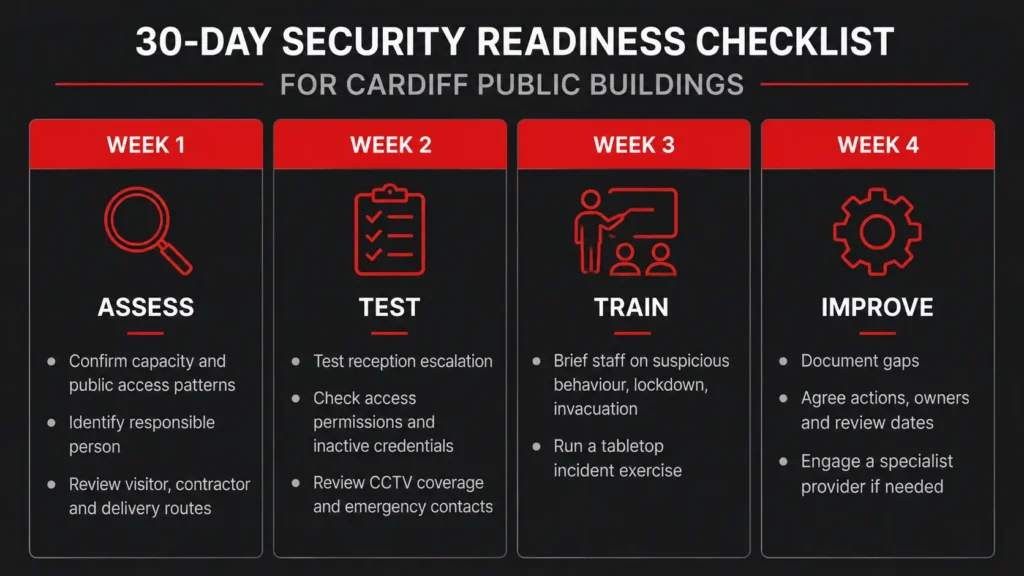
This practical checklist helps public‑sector organisations assess their current security posture and take action.
Week 1 – Assess:
- Confirm premises capacity and public access patterns.
- Identify the responsible person for security.
- Review visitor, contractor, and delivery routes.
- Map entry points, staff‑only areas, and public zones.
- Identify CCTV coverage and any blind spots.
Week 2 – Test:
- Test reception escalation procedures.
- Check access permissions and revoke inactive credentials.
- Review CCTV coverage and test emergency contacts.
- Conduct a walk‑through of evacuation routes.
Week 3 – Train:
- Brief staff on suspicious behaviour, lockdown, evacuation, and communication.
- Run a tabletop incident exercise with key staff.
- Distribute emergency contact cards and procedure summaries.
Week 4 – Improve:
- Document gaps and prioritise actions.
- Agree on actions, owners, and review dates.
- Engage a specialist provider where additional personnel or systems are required.
Martyn’s Law compliance requires a structured approach. This checklist provides a starting point for Cardiff’s public‑sector organisations to assess their current position and identify priorities. Professional protective security measures delivered by an experienced provider will help you close the gaps.
Frequently Asked Questions
1. What is Martyn’s Law and how does it affect public buildings in Cardiff?
Martyn’s Law (Terrorism (Protection of Premises) Act 2025) requires publicly accessible premises where 200+ people may be present to implement protective security measures. Cardiff’s public buildings, including the Senedd, civic centres, courts, and museums, are within scope. Standard tier (200–799) requires public protection procedures and staff training. Enhanced tier (800+) requires physical security measures, documented security plans, and a designated senior individual.
2. What is BS7858 security screening and why is it important?
BS7858 is the British Standard for security screening. It verifies identity, right to work, employment history, criminal record, and financial background for security personnel. For Cardiff’s public sector buildings, BS7858 screening ensures that every security officer deployed has been thoroughly vetted to a recognised national standard, reducing the risk of insider threats and demonstrating compliance.
3. What public buildings in Cardiff are affected by Martyn’s Law?
The Senedd (Welsh Parliament), Principality Stadium, Wales Millennium Centre, Cardiff Castle, Cardiff University buildings, government offices, courts, council-owned venues, and any publicly accessible premises where 200+ people may be present are all within scope.
4. How do I choose the right service provider in Cardiff for my public building?
Look for SIA Approved Contractor status, BS7858 security screening, public sector experience, and local knowledge of Cardiff’s threat landscape. Ensure the provider offers trained, vetted personnel, clear incident reporting, and scalable staffing for public meetings and events.
5. What are the penalties for non‑compliance with Martyn’s Law?
Penalties include fixed penalties, daily penalties of up to £50,000, fines of up to £18 million or 5% of worldwide revenue for enhanced tier breaches, and, in serious cases, criminal prosecution. The Security Industry Authority (SIA) is the regulator and has civil enforcement powers.
Keeping Cardiff’s Public Buildings Open and Prepared
Cardiff’s public buildings are the face of Welsh democracy, culture, and public service. They must remain open and accessible to the public. But they must also be prepared for the realities of the current threat environment.
Security must be proportionate, professional, and people‑focused. Martyn’s Law compliance is not a last‑minute paperwork task; it requires thoughtful planning, trained personnel, and ongoing review.
Screening, trained officers, visitor management, and rehearsed procedures work together. They create a layered defence that protects people without turning public buildings into fortresses.
A capable security company can help public‑sector teams identify gaps, implement protective security measures, and build a practical plan without undermining the public‑facing purpose of the building. Whether you are managing the Senedd, a council building, a museum, or a university campus, the right security partner makes all the difference.