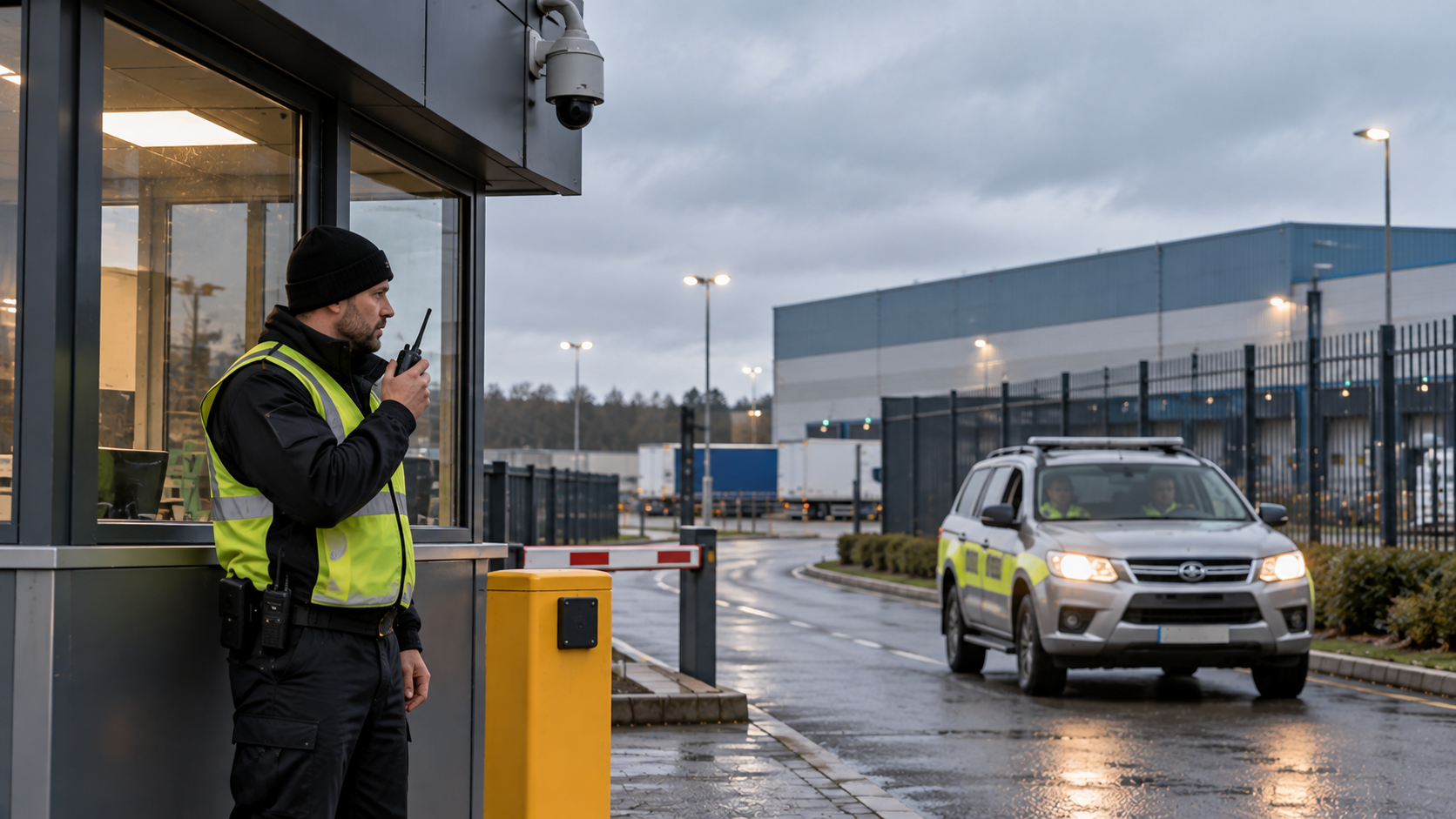
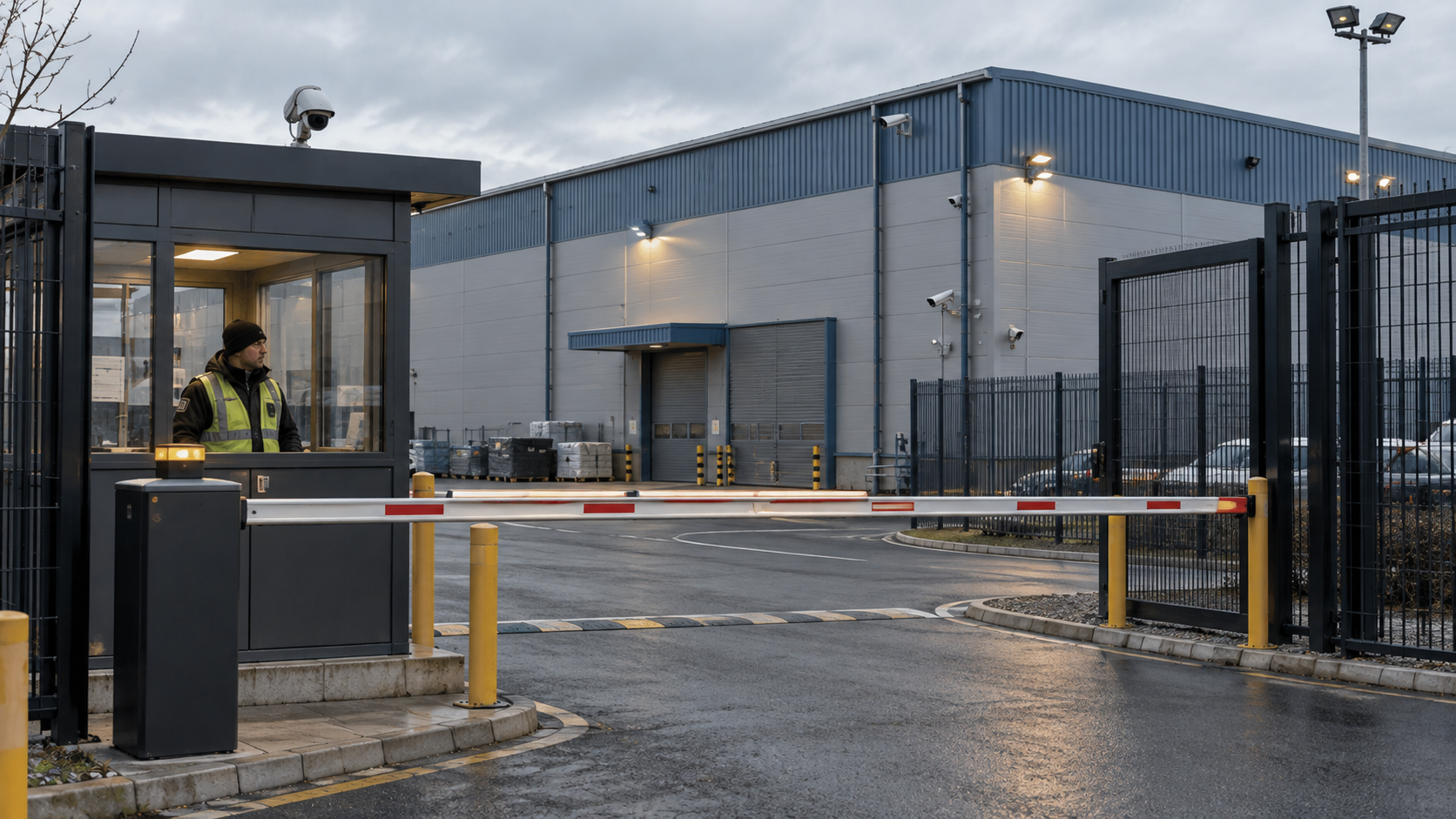
Every event organiser faces the same budget question: where should I invest my security spend? Two distinct functions compete for limited resources – crowd control (managing people flow, preventing surges, queue safety) and access control (ticket checks, bag searches, entry screening). Martyn’s Law now mandates physical measures for enhanced tier venues (800+), making both functions essential – but their importance varies by event type.
This article helps you decide which event security service to prioritise, answers “how many security guards for an event”, and provides a practical comparison. Use the decision framework, the guard‑ratio guide, and the scenario‑based advice to build a plan that fits your venue and risk profile.
Table of Contents
Quick Decision Flowchart
| Question | Yes → Focus on | No → Focus on |
| Is your venue capacity 800+? | Both (Martyn’s Law requires both) | Crowd control |
| Does your event have VIPs or restricted zones? | Access control | Crowd control |
| Is your event a standing (concert, festival)? | Crowd control | Access control |
| Are you selling tickets with assigned seating? | Access control | Crowd control |
Use this as a first‑pass filter. Then read the detailed sections below to refine your choice.
Crowd Control for Events: What It Is & When It Matters
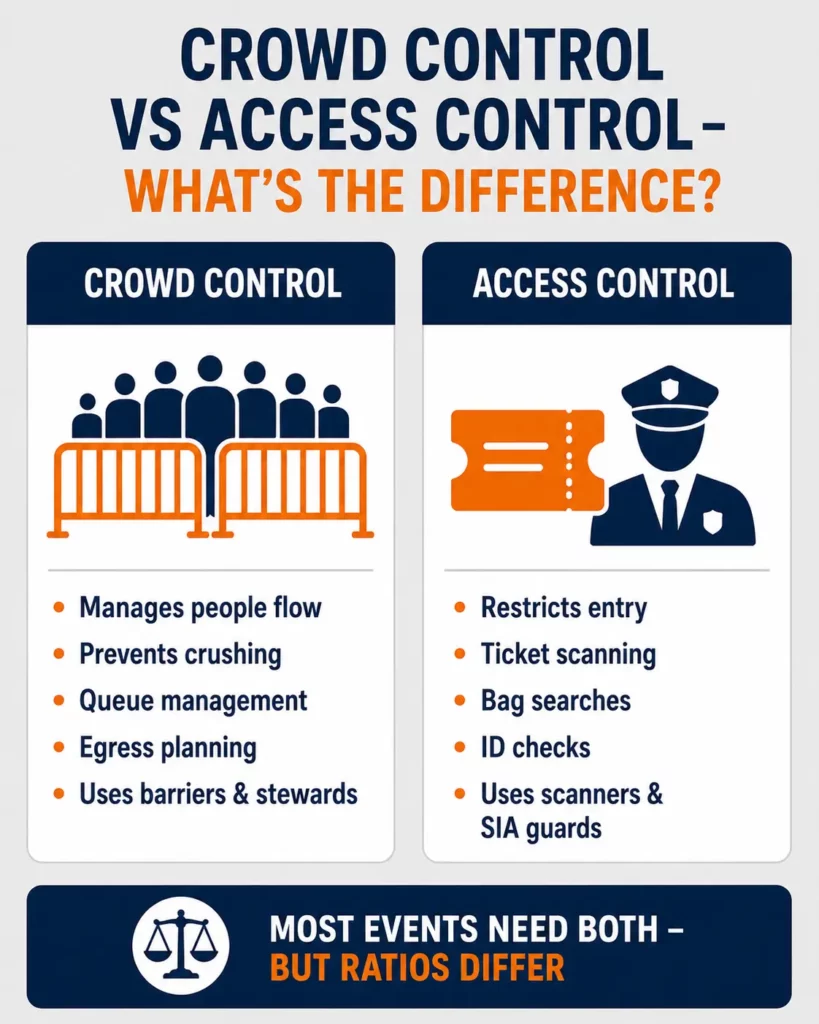
Crowd control for events focuses on managing the movement, density, and behaviour of people within a venue or queue. It is the discipline that prevents crushing, ensures smooth ingress and egress, and reduces the risk of disorder.
Key activities:
- Queue management (pre‑entry and at bars/toilets)
- Pinch point monitoring (stairs, doors, corridors)
- Crowd surge prevention
- Egress planning (getting people out quickly after the event)
When crowd control is critical:
- Standing concerts (risk of crushing near the stage)
- Football matches (spectator segregation, post‑match dispersal)
- Festivals (large‑scale queueing, multiple stages)
- Any event with free flow (no assigned seating)
Security measures used:
- Barriers and stanchions
- Stewards (who may or may not be SIA licensed)
- Radios for real‑time communication
- CCTV with crowd density analytics
Who delivers it: Often a mix of trained stewards and event guard security personnel. For high‑risk events, SIA‑licensed guards are essential to intervene if disorder breaks out.
Access Control for Events: What It Is & When It Matters
Event access control restricts entry to authorised persons based on tickets, credentials, or pre‑vetting. It is the first line of defence against ticket fraud, unauthorised entry, and the presence of prohibited items.
Key activities:
- Ticket scanning (QR codes, RFID, mobile)
- ID checks (age verification, press passes)
- Bag searches (prohibited items)
- VIP lane management
- Staff/contractor credentialling
When access control is critical:
- Conferences (protect exhibitor areas, VIP speakers)
- Corporate events (restrict access to sensitive sessions)
- Large concerts (prevent ticket fraud, unauthorised entry)
- Any event with tiered ticketing (VIP vs GA)
Security measures used:
- Hand‑held scanners or turnstiles
- Bag search tables
- Wristbands for different access levels
- Event security guards stationed at entry points
Venue access control becomes more sophisticated as venue size grows. Glasgow’s SEC Centre, for example, uses RFID badges for exhibitors and a separate wristband system for VIP areas.
Which One Does Your Event Need Most? (Comparison Table)
| Event Type | Primary Need | Secondary Need | Recommended Ratio |
| Standing concert (arena) | Crowd control | Access control | 70% crowd / 30% access |
| Seated concert (arena) | Access control | Crowd control | 60% access / 40% crowd |
| Conference (exhibition) | Access control | Minimal crowd control | 80% access / 20% crowd |
| Football match | Crowd control | Access control | 75% crowd / 25% access |
| Festival (outdoor) | Both equally | N/A | 50% / 50% |
| Corporate event | Access control | Minimal crowd control | 90% access / 10% crowd |
For events in London, the same logic applies, but with stricter scrutiny by local authorities. Professional event security services London providers know how to balance these ratios while meeting council licensing conditions.
How Many Security Guards for an Event? (Guard Ratio Guide)
This section answers two of the most common questions: how many security guards per person at an event and how many security guards for an event.
General industry guidelines (non‑statutory, based on SIA best practice):
| Event type | Guards per 1,000 attendees (minimum) | Additional for high‑risk |
| Low‑risk conference | 2–4 | +1 per 500 if VIPs present |
| Medium‑risk concert (seated) | 4–6 | +2 per 1,000 for alcohol service |
| High‑risk standing concert | 6–10 | +4 per 1,000 for crowd surge risk |
| Football match | 8–12 | +5 per 1,000 for high‑profile fixture |
| Festival (multi‑stage) | 10–15 | +5 per 1,000 overnight |
Factors that increase guard numbers:
- Alcohol sales
- Late finish times
- Known rival groups
- High VIP presence
- Open air (weather risks)
- Martyn’s Law enhanced tier (additional physical measures may reduce some guard requirements)
How to calculate for your event:
- Estimate peak attendance.
- Identify risk level (low/medium/high).
- Multiply by the appropriate guard ratio.
- Add supervisors (1 per 10–15 guards).
- Add dedicated access control staff (ticket scanners, bag searchers).
Example: A 5,000‑capacity standing concert (high risk) needs 30–50 guards (6–10 per 1,000), plus supervisors and entry screeners. That is the scale of professional event security services required for compliance and safety.
The SIA publishes best-practice guidance on crowd management and guard ratios, which many local authorities reference in licence applications.
Martyn’s Law Impact on Crowd vs Access Control
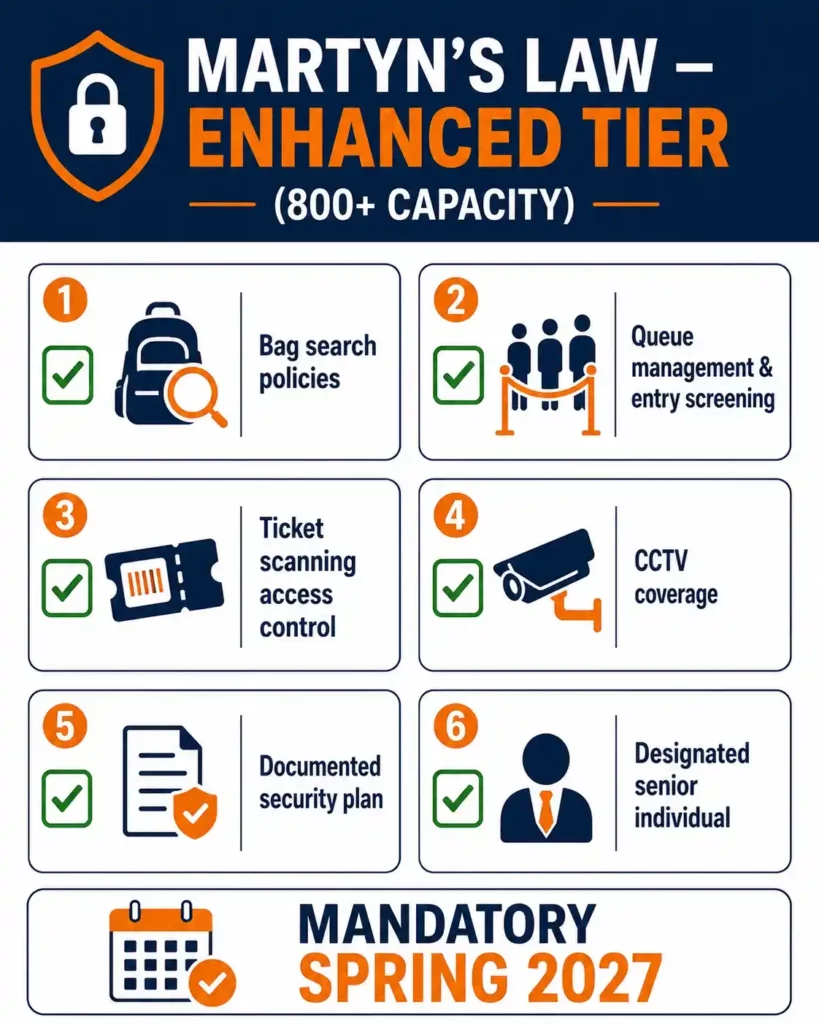
Martyn’s Law (the Terrorism (Protection of Premises) Act 2025) becomes mandatory in Spring 2027. For enhanced tier venues (800+ capacity), the law now mandates physical measures. That means both crowd control and access control are legally required, not optional.
What the law explicitly expects:
- Bag search policies (access control)
- Queue management and entry screening (crowd control)
- Documented security plans showing how both functions are delivered
- A designated senior individual responsible for both
For a security company in Glasgow working with the Hydro or the SEC Centre, this has meant integrating ticket scanning with queue-barrier systems to prevent dangerous bottlenecks caused by access control. The two functions must work together, not compete.
The enhanced tier requirements under Martyn’s Law include documented crowd flow models and entry screening protocols, which apply to any venue with a capacity of over 800.
Frequently Asked Questions: Event Security Ratios & Choices
1. How many security guards do I need for a 1,000‑capacity concert?
For a seated concert, 4–6 guards (low risk). For standing, 6–10 guards (high risk). Add access control staff separately.
2. What’s the difference between an SIA guard and a steward?
Stewards manage crowd flow and basic safety. SIA guards have legal powers to search, detain, and refuse entry. Most events need both.
3. How do I calculate guards for a multi‑day festival?
Use peak daily attendance. Higher ratios apply (10–15 per 1,000). Also, add overnight security for equipment and camping areas.
4. Can I use technology to reduce guard numbers?
Yes, RFID wristbands for access control and AI CCTV for crowd monitoring can reduce staff, but Martyn’s Law still requires human presence for bag searches and response.
5. What’s the penalty for understaffing security?
Under Martyn’s Law, fines up to £18 million or 5% global turnover. Also voided insurance and potential event shutdown.
6. Where can I find reliable event security services?
Use SIA-approved contractors with experience in your venue type. For London venues, look for providers who understand local licensing and Police liaison.
Conclusion
Crowd control and access control serve different purposes. One prevents injury from overcrowding; the other prevents unauthorised entry. Most events need both, but the ratio varies. Use the decision flowchart, the comparison table, and the guard ratio guide to build your security plan.
Professional event security service providers integrate both functions seamlessly, whether you are managing a conference in London or a concert in Glasgow. The right mix of venue access control and crowd control for events ensures safety, compliance, and a positive audience experience.