York is one of the UK’s most popular student cities. Over 24,000 students study here across two universities. The city consistently ranks as one of the safest places to be a student. Crime rates are well below the national average.
But safety isn’t automatic. It takes planning. It takes people. It takes the right systems.
This article looks at what student safety in York actually means. We’ll cover accommodation security, campus support, welfare services, and practical steps students can take to protect themselves.
Source: yorksj.ac.uk
Table of Contents
York’s Safety Reputation: What the Numbers Say
York is known as a safe city. The data back that up.
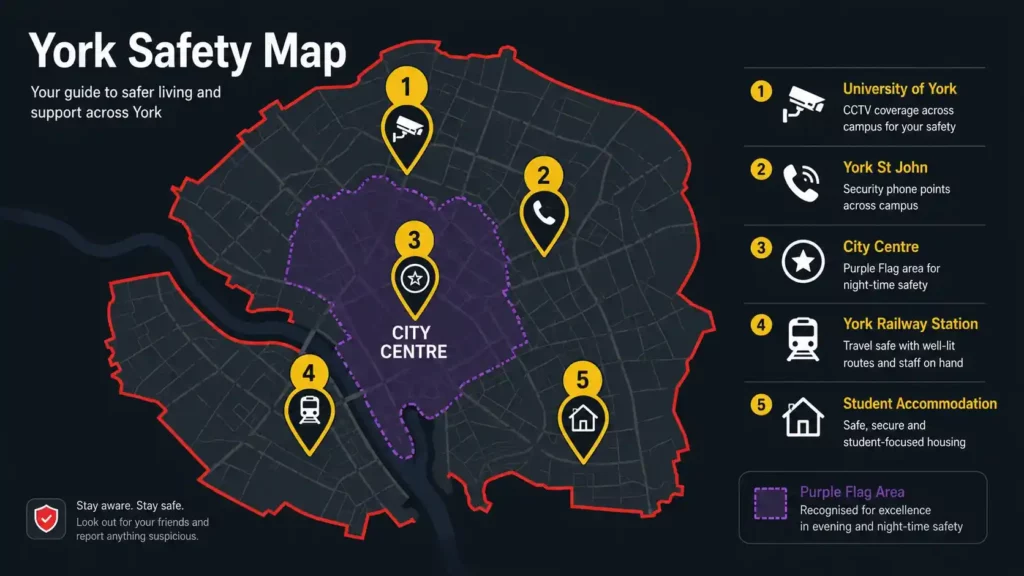
Violent crime rates are significantly lower than the UK average. Property theft happens far less often here than in other student cities. Night safety is rated “very good.” The streets are well‑lit. CCTV covers key areas. The community is compact and connected.
About one in ten people in York is a student. That’s roughly 20,000 students in a population of 200,000. Students aren’t an afterthought here; they’re part of the fabric. The city knows them, watches out for them, and responds to their needs.
Students say they feel safe here. That’s not accidental. It’s the result of consistent effort from the university, the council, and the community.
What Students Should Expect from University Campus Security
Every university should provide a baseline level of safety for its students. The specifics vary between institutions, but there are common features that students should look for and expect.
24/7 Security Presence
A visible, accessible security team should be available around the clock. This doesn’t mean a guard at every door it means trained professionals who can respond when needed. Students should know whom to contact and how. That number should be easy to find, stored in their phone, and displayed in accommodation and communal areas.
Look for universities that publish their security contact details clearly. Ask during open days. Check the student handbook. If you can’t find it, that’s a red flag.
Emergency Communication Systems
Students should have multiple ways to contact security:
- A dedicated phone number for security (not just the general switchboard)
- An app or digital platform for reporting incidents, requesting assistance, and receiving alerts
- Emergency phones or intercoms are located across campus
Some universities use apps like SafeZone. Others have their own systems. The key is that students can reach someone quickly and discreetly.
Campus Design and Lighting
Good campus design reduces risk. Well‑lit pathways. Clear signage. Open sightlines that minimise hiding spots. Universities should maintain lighting and review it regularly. If a path feels unsafe at night, it probably is.
Students should pay attention to this during open days and evening visits. It matters more than you might think.
College or Hall Receptions
Most universities have some form of front‑of‑house presence in accommodation blocks. This might be a dedicated reception desk, a security hub, or a concierge service. These staff manage access, hold lost property, and act as the first point of contact for students who need help.
If the accommodation doesn’t have this, students are left to manage access themselves. That’s not ideal.
Clear Safeguarding Procedures
Universities should publish their safeguarding policies. Students should know:
- How to report concerns
- Who to talk to if they feel unsafe
- What support is available after an incident
These procedures should cover a range of situations from harassment and assault to mental health crises and emergencies.
Mental Health and Welfare Support
Safety is about wellbeing, not just crime prevention. Security teams should be trained to recognise and respond to students in distress. Many universities train their security staff as Mental Health First Aiders. That’s a good sign.
Welfare support should be accessible, discreet, and available without long waits.
What This Means for Students
When choosing a university, students should evaluate campus security alongside academic reputation. Ask questions. Look for evidence. Don’t assume safety is someone else’s problem.
Good universities will be transparent about their security arrangements. They’ll welcome questions. They’ll have answers ready. If they don’t, that tells you something too.
What to Look For in Student Accommodation
Where a student lives makes a massive difference to how safe they feel. The security features available vary widely between university halls, private PBSA, and private rentals.
University Halls
The on‑campus halls come with:
- 24/7 security presence
- CCTV coverage across the site
- Controlled access systems
- Emergency response procedures
- On‑site support staff
Even during vacation periods, someone is there. If a receptionist isn’t available, students can use the phone in their college foyer to contact Campus Safety. For private accommodation, professional student accommodation security services provide an additional layer of protection.
Private PBSA
Private Purpose‑Built Student Accommodation in York often offers:
- Professional security teams
- Key card or fob access
- Secure bike storage
- CCTV monitoring
- Out‑of‑hours support
Many private providers market safety as a key feature. And they’re right to do so. Students notice it. Parents notice it. A building with a concierge desk and a secure entry system feels safer than one without. For students and accommodation providers alike, partnering with a professional security company York ensures that these standards are met and maintained.
What to Check Before You Sign
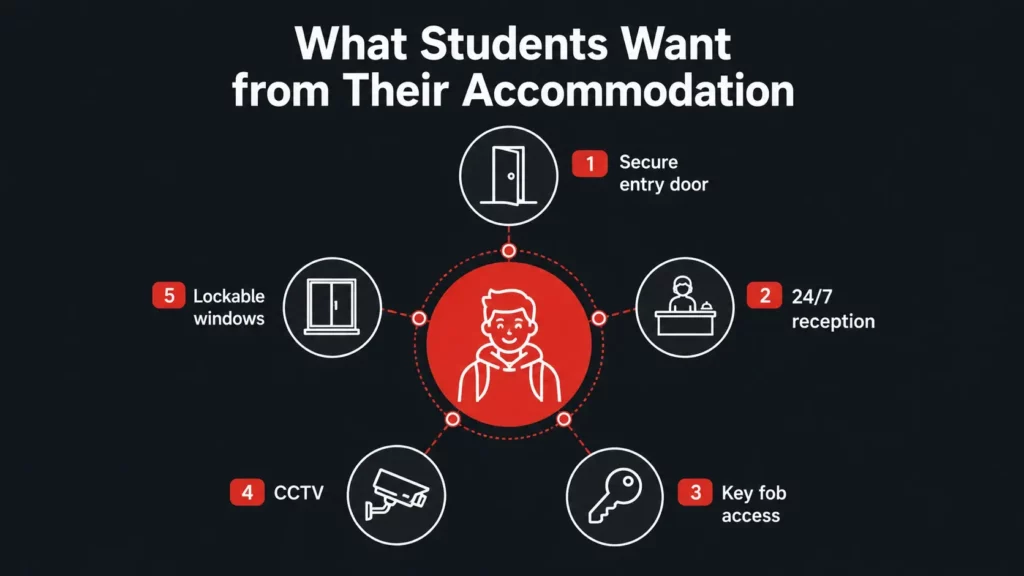
Students should ask these questions before choosing accommodation:
- Do the windows lock properly?
- Is the main entrance secure?
- Is there CCTV?
- Is there a receptionist or security presence?
- Does the building have clear emergency procedures?
These aren’t minor details. They’re the difference between feeling secure and feeling exposed.
Why Concierge Security Matters
A concierge team isn’t just about being friendly. It’s about keeping people safe.
Access Control and Visitor Management
Concierge staff control who enters the building. They check IDs. They log visitors. They make sure only authorised people get through the doors. That’s professional visitor management, the same principle used in corporate buildings and government sites. In fact, dedicated gatehouse security services operate on exactly this model, controlling access, verifying identities, and maintaining logs.
Without a concierge, things slip. Doors get propped open. Keys get shared. Visitors come and go unnoticed.
Student Welfare
Concierge staff are often the first people students talk to when something’s wrong. They can spot when someone is struggling. They can offer reassurance. They can escalate issues to the right teams.
That’s not just security. That’s student welfare. And it matters.
Visible Deterrence
A uniformed presence at the front desk puts people off. Criminals don’t target buildings where someone might challenge them. A visible concierge is a deterrent, simple as that.
Visitor Management: Controlling Campus Access
The University of York has clear policies for managing visitors on campus. Students are shown how to download the SafeZone app during induction. Campus security provides first response for everyone, students, staff, and visitors alike.
In student halls, overnight guests require notice. Students are encouraged to report anything suspicious. Security is available 24/7.
The university does not act in loco parentis. That means it doesn’t treat students like children. But it does have a broader duty of care to everyone on campus. That duty includes keeping people safe while respecting their independence.
Student Welfare: Beyond Basic Security
Safety is about wellbeing, not just crime prevention.
Mental Health Support
Security officers are part of the Mental Health First Contact network. They’re trained to recognise when a student might be struggling. They know how to respond.
Safeguarding Structure
The university has a clear safeguarding structure:
- Local Safeguarding Officers – first point of contact for advice
- Deputy Designated Safeguarding Leads – operational leads
- Designated Safeguarding Lead – strategic lead
Students can report concerns through the Safeguarding reporting form or directly to security.
International Students
International students may not be familiar with UK systems. They might not know how to report an incident or where to go for help. The university provides extra support to make sure they feel safe.
Practical Safety Tips for Students
Small habits make a big difference.
- Download SafeZone: It’s free. It works. It gives you access to security 24/7.
- Lock your doors and windows: Even when you’re in your room. Unlocked doors are an invitation.
- Don’t share access codes: Your fob and PIN are yours. If you share them, you lose control.
- Report suspicious activity: If something feels off, tell security.
- Walk with friends at night: There’s safety in numbers.
- Keep emergency contacts handy: Save Campus Safety numbers. Save SafeZone.
- Stick to well-lit routes: Avoid shortcuts through isolated areas.
Frequently Asked Questions
1. Is York safe for students?
Yes, York consistently ranks as one of the UK’s safest student cities. Crime rates are well below the national average, and night safety is rated “very good”.
2. What security features should I look for in student accommodation?
Look for lockable doors and windows, CCTV, secure entry systems, and on‑site support staff. PBSA properties often offer concierge security and visitor management.
3. What is the SafeZone app and how does it work?
SafeZone gives you 24/7 access to the University’s Campus Safety team. You can use it to call for help, report incidents, and receive critical notifications. It also has a torch function.
4. What student welfare support is available?
The University of York has a comprehensive safeguarding structure with Local Safeguarding Officers, Deputy Designated Safeguarding Leads, and a Designated Safeguarding Lead. Security officers are also part of the Mental Health First Contact network.
5. How do I choose safe student accommodation in York?
Check for secure entry systems, CCTV, lockable doors and windows, and on‑site support. University halls and private PBSA properties typically offer better security than private rentals.
Conclusion
York is one of the safest student cities in the UK. But that doesn’t mean safety is guaranteed. It requires good accommodation, active campus support, and a community that looks out for one another.
The University of York has a strong framework in place. Twenty‑four‑hour security. The SafeZone app. Clear safeguarding procedures. A commitment to student welfare. Students who choose accommodation with lockable doors, CCTV, secure entry, and concierge support are better protected.
Student safety in York depends on a partnership between the university, accommodation providers, security teams, and students themselves. By staying informed, reporting concerns, and choosing safe accommodation, students can enjoy everything York has to offer with confidence.