For many organisations in Buckinghamshire, security decisions don’t start with fear. They start with continuity. Keeping operations running. Protecting staff. Avoiding disruption that spills into contracts, insurance claims, or reputational damage. That’s often where the question Why Buckinghamshire businesses need manned guarding? first appears, raised quietly in planning meetings rather than during incidents.
Buckinghamshire presents a distinct mix of conditions. Modern business parks sit beside semi-rural estates. Warehouses line commuter routes. Retail centres experience uneven footfall depending on the hour and the season. These contrasts create pockets of exposure that technology alone doesn’t always manage well.
In environments like this, on-site presence becomes less about deterrence in theory and more about practical control. Knowing when something feels off. Responding before small issues grow. Understanding the site, the rhythms, and the people moving through it. That context shapes when guarding makes sense and when it doesn’t.
Manned Guarding Basics in Buckinghamshire
What Manned Guarding Means in Practice
Manned guarding is simple to describe, but easy to misunderstand. At its core, it means placing trained security personnel on-site to observe, deter, and respond when something changes. The difference from static-only or remote security lies in judgment. Cameras record. Sensors alert. Guards decide.
In Buckinghamshire, that distinction matters more than it first appears. Many sites operate with long, quiet periods punctuated by brief moments of pressure.
- A delivery arriving early
- A contractor turning up unannounced
- A vehicle is pausing where it shouldn’t.
These situations rarely trigger alarms, and they do require interpretation.
Static guarding tends to anchor a presence at one point. Remote monitoring extends visibility. This is often the point where teams step back and reassess, why Buckinghamshire businesses need manned guarding?
The goal is not to replace technology. It is to close the gap between alerts and action where timing and judgment matter.
Why Human Judgement Still Matters Locally
Buckinghamshire is not uniformly urban. Nor is it truly rural. Many commercial estates sit just far enough from town centres to lose natural surveillance after working hours. Office parks empty early. Industrial units operate through the night with minimal staffing. Construction projects move in phases, leaving gaps that are predictable once patterns are learned.
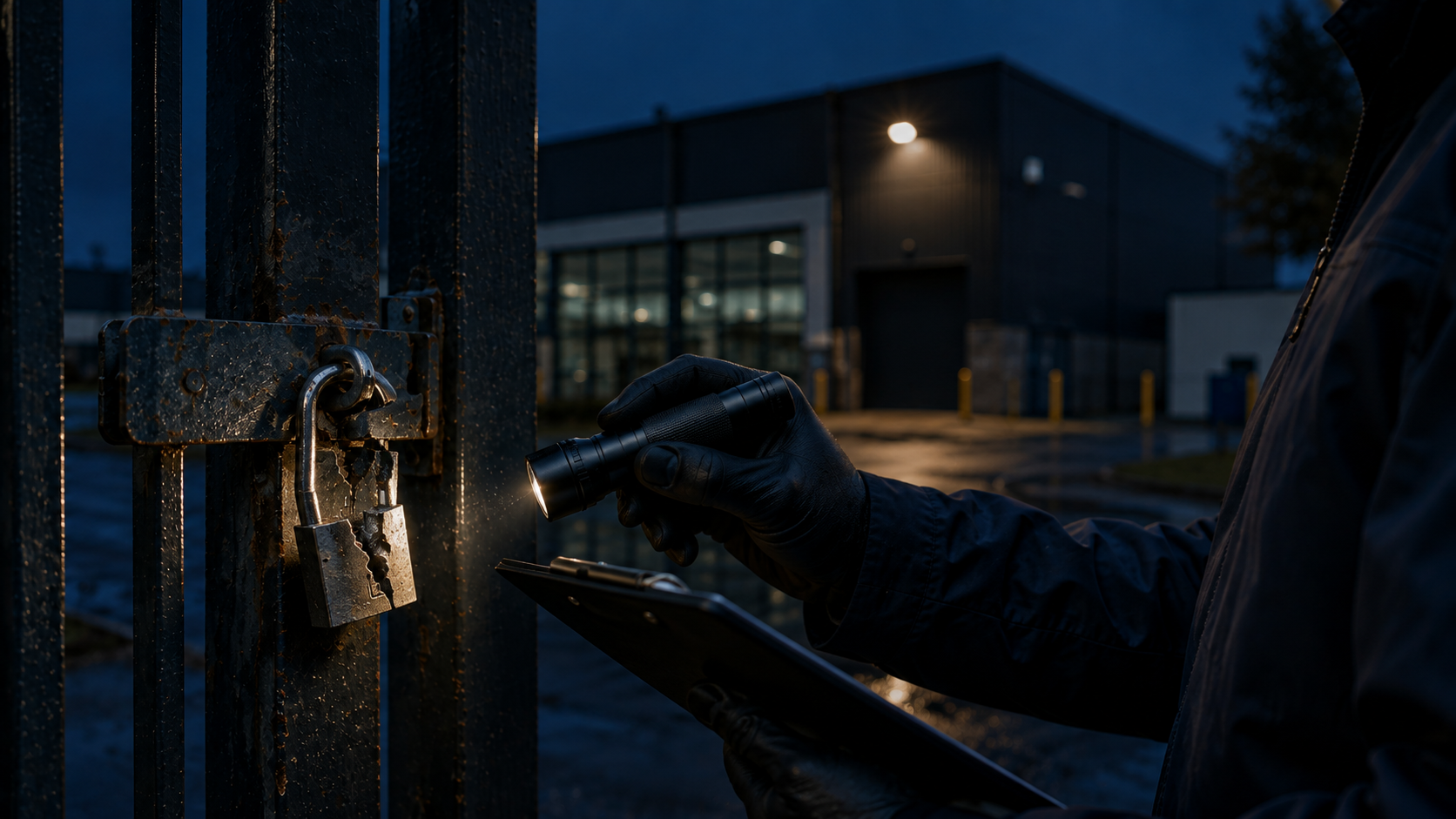
People change how a site behaves. A guard notices when a gate isn’t where it should be, when a vehicle reappears, or when someone lingers without purpose. These are not dramatic moments, but they are often the ones that prevent escalation.
Risk Patterns: Timing, Opportunity, Visibility
Crime patterns don’t need to be dramatic to be disruptive. In Buckinghamshire, risk is often shaped by timing rather than volume. Early evenings when offices clear out. Mid-morning lulls in retail parks. Overnight periods on estates with poor lighting.
Opportunity follows visibility. Sites with clear sightlines and regular movement tend to see fewer issues. Those with blind corners, isolated bays, or inconsistent access controls invite testing. This is where business security risk in Buckinghamshire becomes less about crime rates and more about exposure.
Sector-Specific Vulnerabilities Across the County
Not all sites face the same pressures, even within short distances.
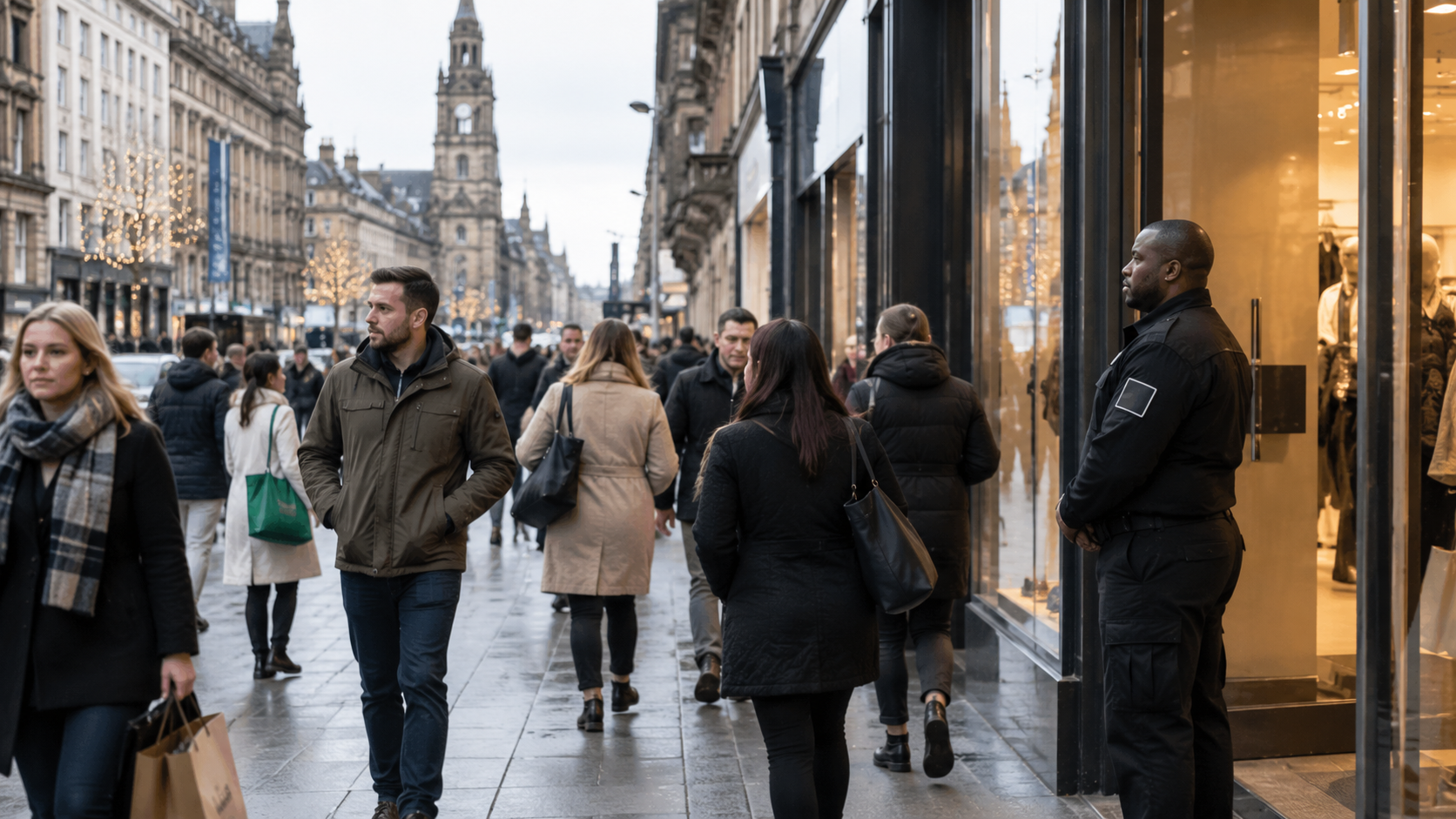
Retail parks on town edges face theft and disorder during opening hours. After closing, the risks shift to trespass and vehicle issues. Guards in these environments balance visibility with approachability.
Warehouses near motorway access face a different challenge. Speed matters. Goods are portable. Testing often happens quietly before a coordinated attempt. These factors define what effective night guarding looks like for Buckinghamshire sites.
Office parks, especially those with flexible or hybrid working, experience uneven occupancy. In Berkshire, many office estates lose activity earlier in the day. Reduced presence later increases exposure. Empty floors create blind spots. Evening vacancy increases the value of a roaming presence rather than fixed reception cover.
Construction sites evolve in pieces rather than stages. Guards provide value by tracking those small shifts in access, lighting, and fencing as they happen.
Day Versus Night: Different Objectives, Not Just Different Hours
Daytime guarding in Buckinghamshire often focuses on interaction. Managing access, supporting staff, and spotting behaviour that doesn’t belong all sit at the centre of the role. Night-time guarding shifts emphasis to perimeter integrity, detection, and escalation. Similar night-time risks appear across Oxfordshire, especially on quiet sites.
The mistake many businesses make is treating night cover as a simple extension of day cover. The objectives change. So does the pace. A visible presence during the day deters. At night, unpredictability does.
Seasonal and Event-Driven Pressure
Seasonality affects more than retail. Busy periods like year-end logistics, local events, and temporary sites raise short-term risk. Guarding is often needed for weeks, not long contracts.
Transport Links and Movement Corridors
Buckinghamshire’s accessibility is both an advantage and a risk factor. Strong transport links boost business while narrowing the window to respond to crime. Businesses near London corridors stay busy for long stretches. That movement can hide when sites are most open to risk.
Sites close to transport corridors experience more transient movement. In these areas, visibility often matters more than coverage volume. A guard seen regularly can deter activity more effectively than a camera that notices too late.
Legal & Compliance Requirements in Buckinghamshire
Manned guarding may feel like a practical decision on the surface, but it sits inside a strict legal and compliance framework. For Buckinghamshire businesses, getting this wrong isn’t just poor practice. This increases legal exposure, affects insurance cover, and complicates response when incidents occur.
Understanding these duties early helps guard the business instead of adding risk.
Sia Licensing and Legal Obligations
Across the UK, private security activity is regulated by the Security Industry Authority (SIA). A valid SIA licence is required for anyone guarding premises or managing access. This requirement applies in Buckinghamshire exactly as it does nationwide. There are no local exemptions.
For businesses, this is not a formality. SIA-licensed security guards in Buckinghamshire represent the legal baseline for on-site protection. Using unlicensed guards can lead to fines and prosecution for both sides. It can also undermine insurance cover if an incident occurs.
Licences must be current, appropriate to the role being performed, and worn while on duty unless a lawful exemption applies. Clients are entitled to verify this and should treat licence checks as routine governance, not a one-off step at contract start.
They sit within manned guarding rules meant to protect the public, the business, and the guard.
Vetting, DBS checks, and What Clients Should Expect
Licensing alone does not equal suitability. DBS checks form part of the SIA process, but businesses should understand how vetting works in practice. Due to data protection laws, clients will not see DBS certificates directly. What they should receive is written confirmation that appropriate checks have been completed.
In higher-risk environments, additional screening such as BS 7858 is often expected. This standard looks beyond criminal records to verify identity, employment history, and trustworthiness. The purpose is simple. Guards may control access, manage sensitive areas, or act as first responders. Confidence in their background matters.
For clients, the key question is not how vetting is conducted internally, but whether it has been completed correctly and can be evidenced if challenged.
Insurance, Liability, and Shared Responsibility
Manned guarding introduces shared exposure between the security provider and the client. Public liability and employer’s liability insurance are standard requirements. Insurers increasingly expect to see evidence of compliance before confirming cover.
Documentation plays a central role here. Incident logs, patrol records, training confirmations, and escalation procedures all demonstrate control. When incidents occur, insurers look for clarity. Poor records create doubt. Doubt delays claims.
This is why compliance is not a paperwork exercise. It directly affects how risk is transferred and how quickly issues are resolved.
CCTV, GDPR, and Human Oversight
When guarding operates alongside CCTV, data protection law applies in full.
- Clear signage must be in place
- The purpose for recording must be defined
- Footage must be stored securely
- Access must be restricted to authorised people
- Retention periods must be sensible and justified
Human oversight is often the weakest point. Guards may review footage, respond to alerts, or support investigations. Their actions must align with the on-site security compliance UK obligations. Mishandling footage, sharing access inappropriately, or retaining data longer than necessary exposes the client to regulatory scrutiny.
Clear policies matter. So does training. Compliance here protects the business as much as it protects individuals.
Council Conditions and Construction Planning
Local councils may require security measures as part of planning approval. These requirements vary by site and phase and are often overlooked until late in the process.
For Buckinghamshire businesses, early review of planning conditions avoids gaps later. Guarding requirements may be temporary, phased, or linked to working hours. Aligning security plans with council expectations reduces enforcement risk and project disruption.
Events, Venues, and Martyn’s Law
Protect Duty legislation, commonly known as Martyn’s Law, will raise expectations for venue security across the UK. Implementation is still catching up, but the direction is clear. Planning improves, procedures tighten, and documentation grows more robust.
For Buckinghamshire venues, guarding focuses on managing risk rather than crowd control. Guards will support vulnerability identification, escalation, and coordination with emergency services.
The practical impact is increased scrutiny. Businesses that understand compliance early adapt more easily.
Costs, Contracts & Deployment in Buckinghamshire
Cost is usually the point where discussions around manned guarding slow down. Not because businesses doubt its usefulness, but because the pricing rarely looks simple when reduced to a line on a spreadsheet. Buckinghamshire costs are driven by geography and site exposure, not just crime rates.
What Drives Guarding Costs Locally
A site near a busy road deals with constant movement, quick access, and short response windows. A quieter industrial estate faces different pressure, even if it sits only minutes away.
Retail parks on the edge of town behave nothing like semi-rural warehouses.
- Footfall changes.
- Visibility changes.
- Risk shifts with it.
These differences shape guard rates far more than crime totals ever do. The same pattern shows up in Kent, where access routes and site layout often matter more than headline figures when planning cover.
Risk profile comes into focus next. A calm office desk in daylight is not priced like a site moving freight through the night. Vehicles arrive. Bays open. Stock holds value.
What happens on site matters as much as when it happens. Round-the-clock cover often lowers the hourly rate, not because risk drops. But, because staffing stays steady and planning holds.
When businesses look at guarding costs for local businesses, the most common mistake is treating the rate as a commodity. Underpriced cover often reflects thin supervision, limited reporting, or inconsistent presence. These weaknesses don’t show up immediately. They surface later, usually when an incident exposes gaps that were never obvious on paper.
For many decision-makers, this is where the question comes back. Why Buckinghamshire businesses need manned guarding? Not as a theory. As a response to real exposure, tools, rules, and remote systems have not fully closed the gap.
Contract Structures and Flexibility
Buckinghamshire businesses tend to use a mix of contract models, depending on how stable their risk profile is. Short-term arrangements are common during construction phases, seasonal retail peaks, or following an incident that has highlighted weaknesses. These contracts cost more per hour, but they offer flexibility when circumstances are changing quickly.
Longer-term contracts, typically running between 12 and 36 months, suit sites with steady exposure. Working with an experienced security company in Buckinghamshire also makes it easier to align contract terms with local operating conditions, planning constraints, and insurer expectations.
They allow time for proper induction, consistent staffing, and meaningful performance monitoring. Notice periods usually sit between 30 and 90 days. That balance protects both sides from sudden disruption while allowing adjustments if site conditions change.
The key consideration is not contract length itself, but whether the structure reflects how the site actually operates.
Mobilisation and Deployment Timelines
How quickly guards can be deployed depends on complexity, not urgency alone. A single guard for a low-risk site can often be mobilised within days. Larger sites, regulated environments, or multi-guard deployments require more preparation.
Induction is a critical part of deployment. Guards need to understand site layout, access rules, escalation procedures, and reporting expectations. Rushing this stage often creates gaps that cost more to fix later. Businesses that allow time for proper mobilisation usually see smoother operations from the start.
Insurance Impact and Cost Offsets
One area often overlooked in cost discussions is insurance. Insurers assess risk based on structure and evidence. Sites with documented patrols, access logs, and clear escalation procedures are viewed differently from those relying solely on alarms or reactive responses.
Proper guarding doesn’t just reduce incidents; it prevents them. That reduction in perceived risk can support improved insurance terms over time, particularly for warehouses, construction sites, and retail environments. While guarding has an upfront cost, part of its value lies in stabilising wider risk exposure rather than simply responding to problems as they occur.
Training, Daily Operations & Guard Duties in Buckinghamshire
The effectiveness of manned guarding rarely depends on dramatic intervention. In most Buckinghamshire business environments, it’s the routine work that prevents incidents from developing in the first place. What guards do every day and how consistently those actions are carried out shape outcomes far more than any single response.
Training and operations matter because they turn presence into control.
Training Standards That Matter Locally
Different environments across Buckinghamshire place different demands on guards. A retail park requires a very different skill set from a semi-rural industrial estate or a mixed-use business park. Training reflects those differences.
In retail-facing settings, guards are expected to manage access calmly, spot early signs of theft or disorder, and deal with members of the public without escalating tension. Conflict awareness and safeguarding are central here, particularly where staff work alone or deal with vulnerable individuals.
Industrial, warehousing, and logistics sites place more emphasis on perimeter awareness, vehicle movements, and hazard recognition. Guards need to understand loading patterns, delivery schedules, and restricted zones. In these environments, awareness of what should be happening is what makes unusual activity stand out.
Across all site types, training is less about procedure and more about judgment. Guards are trained to notice what doesn’t fit the normal rhythm of a location. That awareness is what allows intervention before problems grow.
Shift Structure And Continuity
How a shift begins often determines its effectiveness. Good guarding relies on continuity rather than isolated actions.
- Clear handovers matter.
- Incoming guards need context, not just keys.
Handover notes typically flag unresolved issues, expected visitors, changes to access arrangements, or areas that require extra attention. This prevents assumptions from creeping in. When guards know what happened before they arrived, they’re less likely to miss early warning signs.
Routine checks at the start of a shift are not box-ticking. They help guards build a mental picture of the site as it is today, not as it was yesterday. That distinction matters on sites that change regularly, such as construction projects or estates with variable occupancy.
Patrol Logic and Visibility
Patrols are most effective when they are unpredictable. Fixed routes and predictable timing make testing easier. Randomised movement does the opposite. It increases uncertainty for anyone assessing a site’s weaknesses.
In Buckinghamshire’s quieter business parks and semi-rural locations, visibility often matters more than frequency. One well-timed patrol can deter activity more effectively than several that happen at the same time every hour.
Guards are trained to adjust patrol focus based on conditions. Lighting failures, weather changes, or temporary access points all influence where attention is needed. This adaptability is what turns patrols into risk management rather than routine movement.
Presence as Deterrence
Deterrence is not about intimidation. It’s about certainty. A visible, consistent presence signals that a site is monitored and that unusual behaviour will be noticed. This is particularly relevant during transitional periods such as
- Early evenings,
- Late mornings, or
- Shift changes when natural supervision drops away.
In these windows, a physical presence often reduces low-level incidents simply by being seen. It changes behaviour without confrontation.
Reporting and Documentation
Reporting is the backbone of effective manned guarding. Logs aren’t produced for their own sake. They exist to create a record of what was checked, what was observed, and how issues were handled.
For businesses, this documentation matters because it supports insurance claims, audits, and internal reviews. Clear reports show patterns over time. They highlight recurring issues, vulnerable areas, or changes in site behaviour that might otherwise go unnoticed.
This is where site-based security solutions in Buckinghamshire demonstrate their value. They don’t just provide coverage. They produce evidence which helps businesses understand risk, justify decisions, and respond quickly when something changes.
Why Operations Matter To Continuity
Well-run daily operations reduce the likelihood of escalation. Small issues are noticed early. Access problems are addressed before they turn into breaches. Maintenance faults are logged before they create an opportunity.
From a business perspective, this isn’t about how guards work. It’s about what their presence achieves. Consistent routines create stability that supports continuity. And continuity is what most organisations are trying to protect in the first place.
Performance, Risks & Operational Challenges
Performance in manned guarding isn’t measured by how often something goes wrong. In many Buckinghamshire sites, the opposite is true. When problems don’t occur, it’s usually because controls are working quietly in the background. The challenge for businesses is knowing whether that absence reflects effective guarding or simply good luck.
That’s where performance indicators and risk awareness come in.
KPIS that Matter to Businesses
A small number of metrics give a clear picture of guarding performance without drifting into operational micromanagement.
- Patrol completion is one of the most telling. Not just whether patrols happened, but whether there is verifiable proof they were completed at the right times and in the right areas. Gaps here often point to wider issues.
- Response time is another. When an alarm activates or an issue is raised, how quickly does a guard attend and assess the situation? Delays don’t always indicate poor effort. They often reflect unclear escalation routes or unrealistic coverage assumptions.
- Report quality rounds out the picture. Clear, factual reporting shows that guards understand what matters. Thin or vague entries usually indicate missed observations rather than quiet shifts.
Together, these indicators help businesses spot patterns before they turn into incidents.
Environmental and Site Conditions
Buckinghamshire’s geography introduces challenges that don’t always appear in urban-only environments.
- Weather affects visibility.
- Poor lighting increases blind spots.
- Semi-rural locations extend response times and reduce natural surveillance.
Guards document these conditions for a reason. Context matters. When incidents are reviewed by insurers or auditors, understanding what conditions were present at the time often explains why events unfolded the way they did. That documentation protects the client as much as it supports operational review.
Fatigue and Performance Risk
Long shifts, particularly overnight, affect concentration. The risk isn’t that guards stop working. It’s that reaction time slows and judgment dulls, especially during quiet periods.
From a business perspective, this is a performance issue, not a staffing one. Structured supervision, sensible shift patterns, and clear welfare checks reduce the likelihood of fatigue-related mistakes. These measures support reliability rather than addressing workforce management concerns.
Why Underpriced Guarding Fails
When guarding is priced too low, resilience is the first thing lost. What remains may look like coverage, but it no longer applies pressure where it’s needed.
These failures often surface only when an incident forces scrutiny. By then, correcting the problem is more expensive than addressing it properly from the start.
This is why many organisations choose local manned security support for Buckinghamshire companies that understand the realities of their sites. Familiarity with layout, access patterns, and local conditions reduces reliance on assumptions. It also improves consistency, which is what insurers and auditors tend to reward.
Managing Risk Without Overreach
The goal of performance monitoring isn’t perfection. It’s awareness. Knowing where guarding is working, where pressure points exist, and when adjustments are needed. Businesses that treat guarding as a living control, rather than a fixed cost, tend to avoid surprises.
In environments that change with seasons, occupancy, and operating hours, that adaptability is what keeps risk manageable over time.
Technology & Future Trends in Buckinghamshire Manned Guarding
Technology hasn’t replaced manned guarding in Buckinghamshire. It has changed how guards see risk, how quickly they respond, and how evidence is captured. The most effective sites now treat technology as a force multiplier, not a solution in its own right.
CCTV and Human Verification
CCTV remains a central part of most security setups, but cameras alone don’t make decisions. They detect movement. They record events. Guards interpret what those signals mean in context.
Human verification reduces false alarms and prevents unnecessary escalation. A guard who understands the site can distinguish between routine activity and something that needs intervention. This combination of visibility and judgement is now standard across many Buckinghamshire business parks, warehouses, and retail environments.
AI As A Support Layer, Not A Replacement
AI-driven analytics are increasingly used to highlight unusual patterns. Repeated loitering. Movement at distinctive times. Behaviour that doesn’t fit established routines.
What AI does well is narrow focus. It points guards toward areas that deserve attention. What it does not do is decide outcomes. Guards remain responsible for assessing intent, managing interaction, and escalating when needed. Used correctly, AI shortens response time without removing human judgment from the process.
Remote Monitoring and Hybrid Models
Hybrid models are becoming more common across larger or lower-density sites. Remote monitoring centres verify alarms and track multiple viewpoints. On-site guards respond, investigate, and secure areas.
For Buckinghamshire businesses with wide footprints or quiet overnight periods, this layered approach balances coverage and cost. It avoids over-reliance on either method alone and provides redundancy if one layer fails.
Drones and Large-Footprint Estates
Drone patrols are emerging on expansive sites such as logistics hubs, distribution centres, and remote industrial estates. They offer rapid visibility across areas that would take significant time to cover on foot.
Used responsibly, drones extend awareness rather than replace guards. Live feeds support faster decision-making, particularly at night or in poor weather, when ground-level visibility drops.
Predictive Analytics and Smarter Deployment
Historical incident data, time-of-day trends, weather patterns, and site usage now inform patrol planning. Instead of fixed routines, patrol frequency and focus adjust based on predicted risk.
This approach shifts guarding from reactive to proactive. Resources are placed where they are most likely to matter, rather than spread evenly for appearance’s sake.
Sustainability and Green Practices
Sustainability is becoming a procurement consideration rather than an afterthought. Electric patrol vehicles, digital reporting systems, and energy-efficient lighting reduce environmental impact while improving operational efficiency.
Paperless reporting also improves accuracy and accessibility, making it easier for businesses to review activity and maintain compliance records.
Conclusion
Buckinghamshire’s business landscape doesn’t fit a single security model. It stretches from busy retail corridors to quiet industrial estates, from office parks that empty early to warehouses that never sleep. In that mix, manned guarding remains relevant not because it’s traditional, but because it adapts.
The real question isn’t whether guarding is necessary everywhere. It’s understanding when it makes sense, where it adds control, and how it supports continuity. That’s why Buckinghamshire businesses need manned guarding? becomes a practical consideration rather than a theoretical one.
When exposure and compliance matter more than price alone, on-site guarding remains effective. It adjusts to real conditions instead of applying a fixed solution.
Contact us to secure your business.
Frequently Asked Questions
1. Do all security guards in Buckinghamshire need SIA licences?
Yes. Any guard performing licensable activities must hold a valid SIA licence. Using unlicensed personnel exposes both the guard and the client to legal penalties.
2. Are DBS checks required for manned guarding?
DBS checks form part of the licensing process. Clients won’t usually see certificates, but should receive confirmation that appropriate vetting has been completed.
3. How quickly can guards be deployed to Buckinghamshire sites?
For low-complexity sites, deployment can happen within days. Larger or regulated environments require more preparation and induction.
4. Does manned guarding reduce insurance premiums?
Often, yes. Insurers look favourably on documented patrols, access controls, and escalation procedures, which can influence risk assessment.
5. Is daytime guarding becoming more common locally?
Yes. Rising daytime theft and access issues have increased demand for visible presence during operating hours, not just overnight.
6. How does CCTV compliance affect guarding contracts?
Guards interacting with CCTV must follow data protection rules. Clear policies and training are essential to remain compliant.
7. What costs should Buckinghamshire businesses realistically expect?
Costs vary by site type, risk, and hours. The key is matching spend to exposure rather than chasing the lowest rate.
8. How will Martyn’s Law affect Buckinghamshire venues?
It will raise expectations for planning, training, and documentation. Manned guarding will often form part of compliant security strategies.