Introduction
Stirling’s business landscape is shaped by a mix of historic town-centre retail, public-facing institutions, light industrial estates, tourism-driven hospitality, and education-linked activity. This creates security risks that are uneven rather than constant. Footfall rises sharply at certain times of day and year, while other locations experience long quiet periods with limited natural surveillance.
For many local businesses, security concerns are less about persistent high crime and more about timing, opportunity, and exposure. Sites that feel low risk during trading hours can become vulnerable overnight, during off-season periods, or when staffing levels drop. Retail premises, construction projects, and mixed-use buildings are particularly affected by these shifts, where a lack of on-site presence can turn minor incidents into costly disruptions.
Police Scotland data consistently shows that property-related offences account for a significant proportion of recorded crime in the Stirling area each year, with theft and vandalism remaining common risks for commercial premises. What matters for businesses is not just the volume of incidents, but when and where they occur.
Manned guarding in Stirling is therefore not about visible security at all times. It is about having a proportionate, on-site presence when risk is highest. Guards provide immediate decision-making, deter opportunistic behaviour, manage access in public-facing spaces, and respond when police attendance may not be immediate. For business owners and operations teams, this turns security from a reactive measure into a controlled part of day-to-day risk management.

Manned Guarding Basics in Stirling
Manned guarding in Stirling refers to the use of licensed security officers on-site to manage access, deter opportunistic crime, and respond to incidents as they happen. Unlike static or remote-only security, it relies on human judgement rather than delayed alerts or recorded evidence alone. For businesses operating in environments with variable footfall, mixed public access, or limited natural surveillance, this distinction matters.
What Manned Guarding Looks Like in a Stirling Context
In Stirling, many business locations sit at the intersection of public access and quiet periods. Town-centre retail, hospitality near tourist attractions, university-linked buildings, and edge-of-town industrial estates all experience sharp contrasts between busy and low-activity hours. Manned guarding provides presence during those higher-risk windows, rather than blanket coverage throughout the day.
How Local Crime Patterns Shape Guarding Needs
Stirling does not experience constant high-density crime, but incidents tend to cluster around predictable conditions: late evenings, overnight periods, seasonal tourism peaks, and sites with limited visibility. Theft, vandalism, unauthorised access, and anti-social behaviour are more likely when staffing is reduced or premises are closed. Manned guarding is often used to manage these timing-based risks rather than respond after the fact.
High-Risk Sectors Across Stirling
Retail premises in and around the city centre face challenges linked to fluctuating footfall and public interaction, particularly during evenings and peak visitor periods. Construction sites are vulnerable due to temporary boundaries, valuable equipment, and overnight inactivity. Warehousing and light industrial sites on the outskirts of Stirling often face exposure during long quiet hours, where alarms alone offer limited deterrence. Night-time economy venues deal with different risks altogether, where guarding focuses on managing behaviour, protecting staff, and preventing incidents from escalating.
Daytime vs Night-Time Guarding Risks
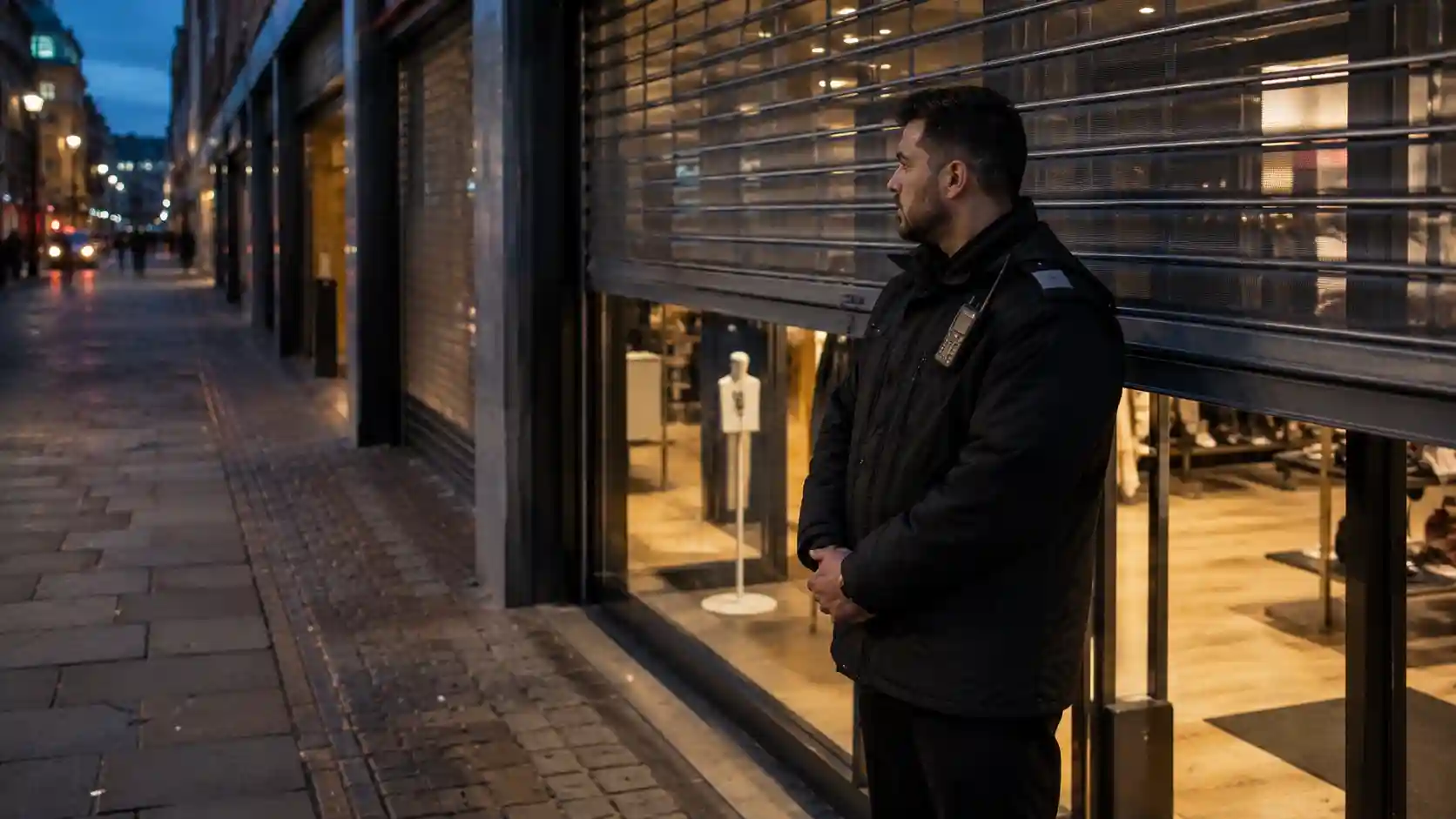
Daytime guarding in Stirling is often centred on access control, visibility, and managing interaction with the public. At night, the focus shifts. Reduced activity, poor lighting, and longer response times increase the impact of unauthorised access or damage. Businesses frequently deploy guards selectively during these higher-risk hours rather than maintaining constant coverage.
Seasonal Pressures and Event-Driven Risk
Tourism, university calendars, and local events create temporary spikes in activity across Stirling. These periods bring higher footfall and unfamiliar visitors, which can increase the likelihood of theft, disorder, or access issues. Manned guarding is commonly scaled during these times to manage short-term exposure without committing to permanent increases in security spend.
Transport Links and Access-Related Exposure
While Stirling does not face the scale of major metropolitan transport systems, proximity to rail stations, park-and-ride facilities, and arterial routes creates access-related risks for nearby businesses. Sites close to transport corridors often experience higher transient movement, making visible security presence more effective than remote monitoring alone.
Economic Activity and Industrial Growth
Business growth in and around Stirling has increased the number of mixed-use and edge-of-town commercial sites. As these locations expand operating hours or store higher-value assets, the case for manned guarding strengthens, particularly where infrastructure has not kept pace with exposure. Guards provide a practical layer of control while longer-term site improvements are planned.
Legal and Compliance Requirements for Manned Guarding in Stirling
Manned guarding in Stirling operates within UK-wide security legislation, but local authority expectations, event licensing conditions, and policing practices shape how those rules are applied in practice. For businesses, compliance is not a paperwork exercise. It directly affects liability, insurance protection, and the ability to continue operating after an incident.
SIA Licensing: The Legal Baseline for Guarding in Stirling
All individuals carrying out licensable manned guarding activities in Stirling must hold a valid Security Industry Authority (SIA) licence for the role they perform. This applies equally to static guards, mobile patrols, door supervision, and event security.
For businesses, the legal responsibility does not stop with the security provider. Allowing an unlicensed guard to operate on-site is a criminal offence. Enforcement action can include fines and prosecution, and responsibility can extend to the organisation that permitted the deployment, not just the individual or security firm.
The Risk of Using Unlicensed or Non-Compliant Guards
The consequences of non-compliance are often underestimated. Beyond legal penalties, insurers may challenge claims following theft, injury, or public incidents if guarding arrangements were unlawful or inappropriate. In Stirling, where many sites rely on guarding during limited high-risk hours, a single compliance failure can undermine the entire security strategy.
Vetting Standards: BS 7858 and DBS Expectations
BS 7858 is the recognised UK standard for vetting security personnel and is widely expected for manned guarding deployments in Stirling. It covers identity verification, employment history, right-to-work checks, and background screening over several years.
DBS checks are not legally required for every guarding role, but they are often expected where guards operate in environments involving vulnerable people, education settings, healthcare facilities, or public-facing venues. Many Stirling-based organisations now treat DBS screening as a baseline requirement during procurement, even where the law does not strictly mandate it.
Insurance Expectations When Hiring Manned Guards
Security providers supplying guards in Stirling are expected to hold appropriate public liability and employer’s liability insurance. From a client perspective, insurers look beyond policy certificates and assess whether the level and type of guarding are suitable for the site’s risk profile.
Where guarding is poorly specified or mismatched to the risk, insurance claims may be weakened. This is particularly relevant for construction sites, heritage buildings, and publicly accessible premises common across Stirling.
Data Protection and CCTV Integration
Where manned guarding operates alongside CCTV systems, UK data protection law applies in full. This includes lawful use of footage, controlled access to recordings, and clarity around who is responsible for data handling.
In practice, a security company in Stirling must ensure that guarding contracts clearly define how guards interact with CCTV, incident footage, and evidence handling. Ambiguity in this area increases compliance risk, particularly following complaints or investigations.
VAT Treatment of Manned Guarding Services
Manned guarding services are generally subject to VAT across the UK. For Stirling businesses, this has budgeting implications for long-term contracts, seasonal deployments, and multi-site coverage.
Understanding whether VAT is chargeable and recoverable helps finance teams assess true security costs rather than relying on headline rates alone.
Construction Sites and Local Authority Expectations in Stirling
Construction sites in and around Stirling face heightened scrutiny due to public safety risks, temporary site boundaries, and equipment theft. While national legislation applies, local authority conditions linked to planning permissions or site management plans can influence security expectations.
Manned guarding often supports compliance by controlling access, preventing unauthorised entry, and reducing the likelihood of incidents that could attract enforcement attention or delays.
Event Licensing and the Impact of Martyn’s Law
For events and publicly accessible venues in Stirling, manned guarding plays a direct role in meeting licensing conditions. Local authorities frequently require visible security presence as part of crowd management, public safety, and incident response planning.
Martyn’s Law is expected to formalise security expectations further for public venues. While still evolving, its direction is clear: greater emphasis on preparedness, proportionate guarding, and demonstrable planning. For Stirling venues hosting events or large gatherings, this is likely to increase the importance of structured guarding arrangements rather than informal cover.
Police Coordination and Local Intelligence
Private manned guarding in Stirling, as well as in cities such as Glasgow and Edinburgh, does not replace policing. Instead, effective deployments align with local crime patterns and police guidance. Collaboration typically takes place through agreed escalation protocols, consistent incident reporting practices, and coordinated responses during events or higher-risk periods.
Local crime data and incident trends inform when guarding is most effective, helping businesses deploy resources during genuine risk windows rather than relying on constant coverage.
Costs, Contracts, and Deployment of Manned Guarding in Stirling
The cost of manned guarding in Stirling is shaped by risk exposure, site type, and deployment pattern rather than a single standard hourly rate. For businesses, understanding what drives cost and how contracts are structured is essential for justifying spending, maintaining insurance cover, and avoiding service gaps.
What Drives the Cost of Manned Guarding in Stirling
Guarding costs in Stirling are influenced by where the site is located, how publicly accessible it is, and the level of responsibility placed on the guard. Sites with high footfall, public interaction, or mixed-use environments typically cost more than low-visibility or perimeter-focused locations.
Other cost drivers include operating hours, lone working requirements, supervision levels, and the experience needed to manage incidents calmly without escalation. In practice, the more decision-making a guard is expected to handle, the higher the cost tends to be.
Town Centre vs Suburban and Out-of-Town Guarding Costs
Stirling town centre locations often require guards who can manage multiple risks during a single shift. These may include retail theft, anti-social behaviour, public complaints, and safety incidents linked to tourism or evening economy activity. This complexity generally results in higher guarding costs.
By contrast, suburban business parks, industrial estates, and warehousing sites around Stirling usually face lower footfall but higher vulnerability during quiet hours. Guarding here is often structured around access control, patrols, and overnight presence, which can make costs more predictable and stable over time.
How Quickly Guards Can Be Deployed in Stirling
For planned guarding requirements, businesses in Stirling typically see mobilisation within one to three weeks. This allows time for site familiarisation, risk assessments, compliance checks, and coordination with insurers where required.
Short-notice or emergency cover can sometimes be arranged more quickly, but this often comes at a higher cost. From a risk perspective, rushed deployments also increase the likelihood of misaligned coverage if site requirements are not clearly defined from the outset.
Typical Contract Lengths for Manned Guarding
Most manned guarding contracts in Stirling fall within a 12 to 36-month range. Shorter contracts offer flexibility but usually come with higher hourly rates due to mobilisation and administrative costs being spread over a shorter period.
Longer contracts tend to stabilise pricing and allow guarding arrangements to settle. Over time, this can reduce incident frequency and operational disruption, which is often more valuable to businesses than marginal short-term savings.
Notice Periods and Contract Exit Terms
Standard notice periods for ending manned guarding contracts usually range from one to three months. These clauses protect service continuity but also matter from a client risk perspective.
Clear and balanced exit terms reduce the chance of sudden security gaps, which can affect insurance conditions, audit outcomes, and internal risk assessments. Poorly defined exit clauses can leave Stirling businesses exposed during transitions between providers.
Wage Pressures and Guarding Costs in 2025
Increases in wages across the UK security sector have had a direct impact on guarding costs in 2025. For businesses, the key issue is not the wage increase itself, but how transparently it is reflected in contract pricing.
Underpriced guarding often leads to service instability, inconsistent staffing, or reduced supervision. Over time, these issues increase operational and insurance risk rather than reducing overall cost.
Inflation and Long-Term Contract Pricing
Inflation affects guarding costs through fuel, equipment, supervision, and compliance overheads. In Stirling, many longer-term contracts now include review mechanisms that allow pricing to be adjusted periodically rather than renegotiated from scratch.
For finance teams, this predictability is often preferable to short-term savings that disappear after the first renewal or following unexpected cost increases.
How Manned Guarding Supports Insurance Outcomes
Insurers increasingly assess how risks are managed in practice, not just whether security is present. Well-structured manned guarding can reduce claim frequency by preventing incidents rather than simply recording them.
For Stirling businesses, this can support more favourable insurance terms over time, particularly for sites with previous losses, public access, or valuable assets held overnight.
Public Sector Contracts and Procurement Considerations
For public sector organisations in and around Stirling, procurement rules place strong emphasis on value, compliance history, and service quality rather than headline cost alone.
Guarding arrangements must be clearly justified, proportionate to risk, and capable of standing up to audit. Poorly specified guarding is no longer just inefficient; it creates procurement and reputational risk for public bodies.
Training, Operations, and Daily Duties of Manned Guarding in Stirling
Effective manned guarding depends as much on training and daily routines as it does on presence. For Stirling businesses, as well as those operating in Dundee, guard operations must be consistent, well-documented, and aligned with site risk, particularly where premises are unattended for long periods or exposed to public access.
Training Standards for Manned Guards in Stirling
Manned guards deployed in Stirling are expected to hold the appropriate SIA licence for their role. Beyond licensing, guards working in retail, public-facing, or mixed-use environments typically receive additional training in conflict management, customer interaction, and incident de-escalation.
For higher-risk environments such as industrial sites, construction projects, or car parks, training often focuses on access control, perimeter awareness, lone working safety, and emergency response. The relevance of training matters more than volume; poorly aligned training increases incident risk rather than reducing it.
Shift Start Procedures and Site Familiarisation
When a guard starts a shift, the first priority is situational awareness. This includes reviewing handover notes, understanding any unresolved incidents, and confirming the current status of the site.
In Stirling, where sites often transition between busy daytime use and quiet overnight conditions, guards must understand how risk changes by time of day. Early checks typically focus on access points, alarm status, and any vulnerabilities identified during the previous shift.
Shift Handovers and Continuity of Coverage
Effective shift handovers are critical for maintaining consistent security. Guards rely on written logs and verbal briefings to understand what occurred earlier, what risks are active, and what requires follow-up.
For businesses, this continuity reduces blind spots. Missed handovers often lead to repeated incidents, delayed responses, or inconsistent enforcement of site rules, all of which can weaken insurance and audit positions.
Patrol Routines and Perimeter Checks
Patrol routines in Stirling are usually risk-led rather than fixed by the clock. High-risk periods, such as overnight hours or seasonal closures, often require more frequent checks.
Perimeter inspections typically focus on fencing, gates, doors, lighting, and signs of tampering. In industrial and semi-rural areas around Stirling, early detection of access breaches is particularly important due to longer police response times compared to larger cities.
Access Control and Visitor Management
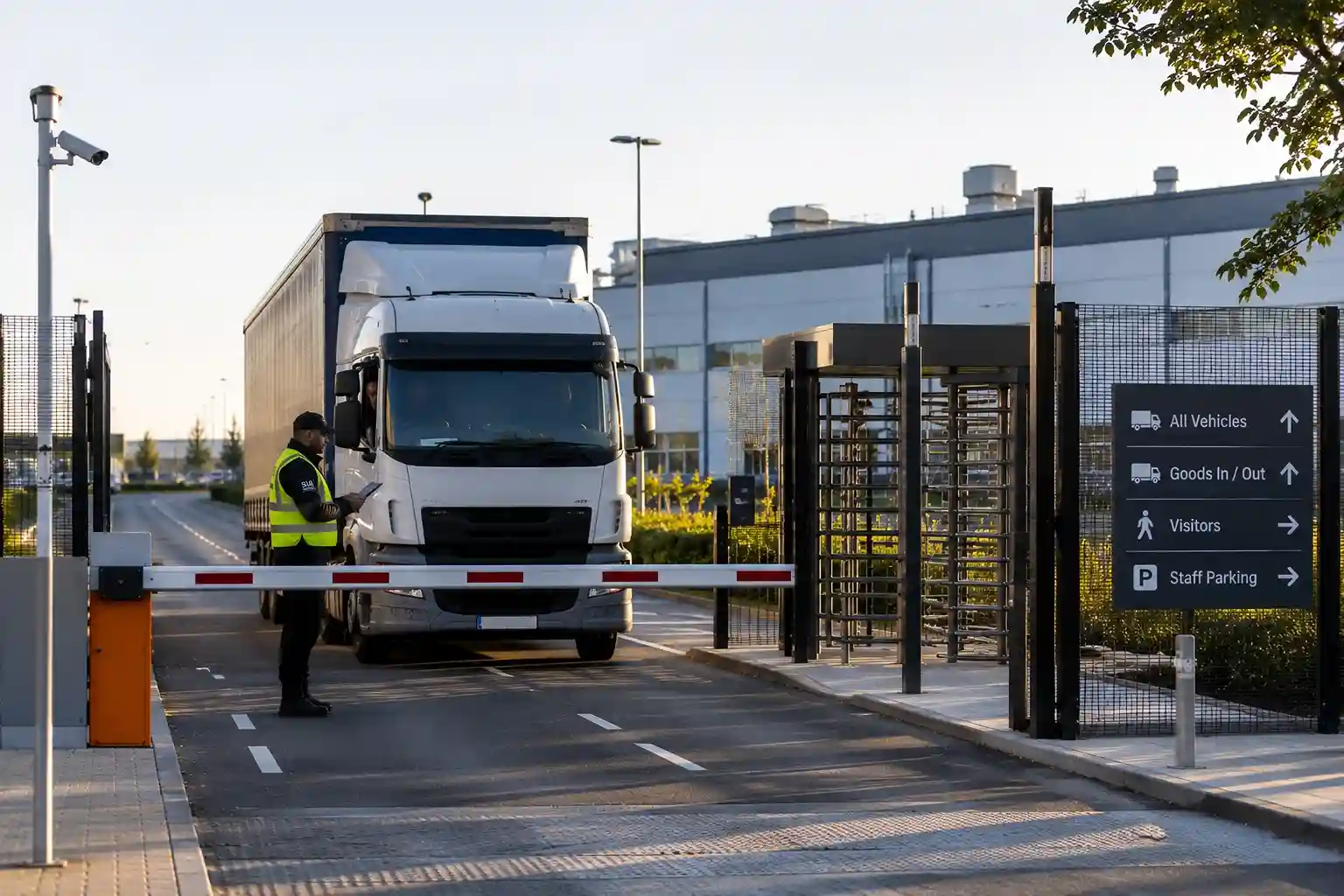
Access control is a core duty for many Stirling sites, especially business parks, construction locations, and mixed-use premises. Guards verify permissions, manage visitor logs, and ensure access rules are applied consistently.
This process is not just administrative. Accurate visitor records support incident investigations, insurance claims, and compliance reviews if issues arise later.
Equipment and System Checks
At the start of duty, guards confirm that key equipment is operational. This may include radios, body-worn devices, access systems, alarms, and lighting.
Where guarding is integrated with CCTV, guards ensure systems are functioning and understand escalation procedures if faults are identified. Equipment failures that go unnoticed can leave sites exposed for entire shifts.
Incident Response and Alarm Handling
When alarms activate, guards follow predefined response protocols. Early-shift activations often require confirmation checks to rule out false alarms, while genuine incidents demand controlled escalation.
In Stirling, where some sites are remote or lightly staffed, on-site response from a guard can prevent incidents from escalating before external responders arrive.
Fire Safety and Environmental Checks
Fire safety checks form part of routine guarding duties. Guards monitor fire exits, signage, obstruction risks, and basic alarm indicators as part of daily operations.
For car parks and outdoor areas, lighting inspections are particularly important. Poor lighting increases safety risks and creates opportunities for theft or vandalism, especially during winter months.
Reporting, Logbooks, and Documentation
Accurate reporting underpins effective manned guarding. Guards maintain logbooks detailing patrols, incidents, faults, and unusual activity.
For businesses, these records provide evidence of due diligence. In the event of a claim, investigation, or audit, consistent documentation demonstrates that risks were actively managed rather than passively observed.
Supervision and Communication During Night Shifts
During night shifts, guards typically report to supervisors at set intervals. This ensures welfare monitoring and confirms that patrols and checks are being completed as planned.
From a client perspective, this oversight reduces lone working risk and helps maintain service quality during low-visibility hours.
End-of-Shift Secure-Down Procedures
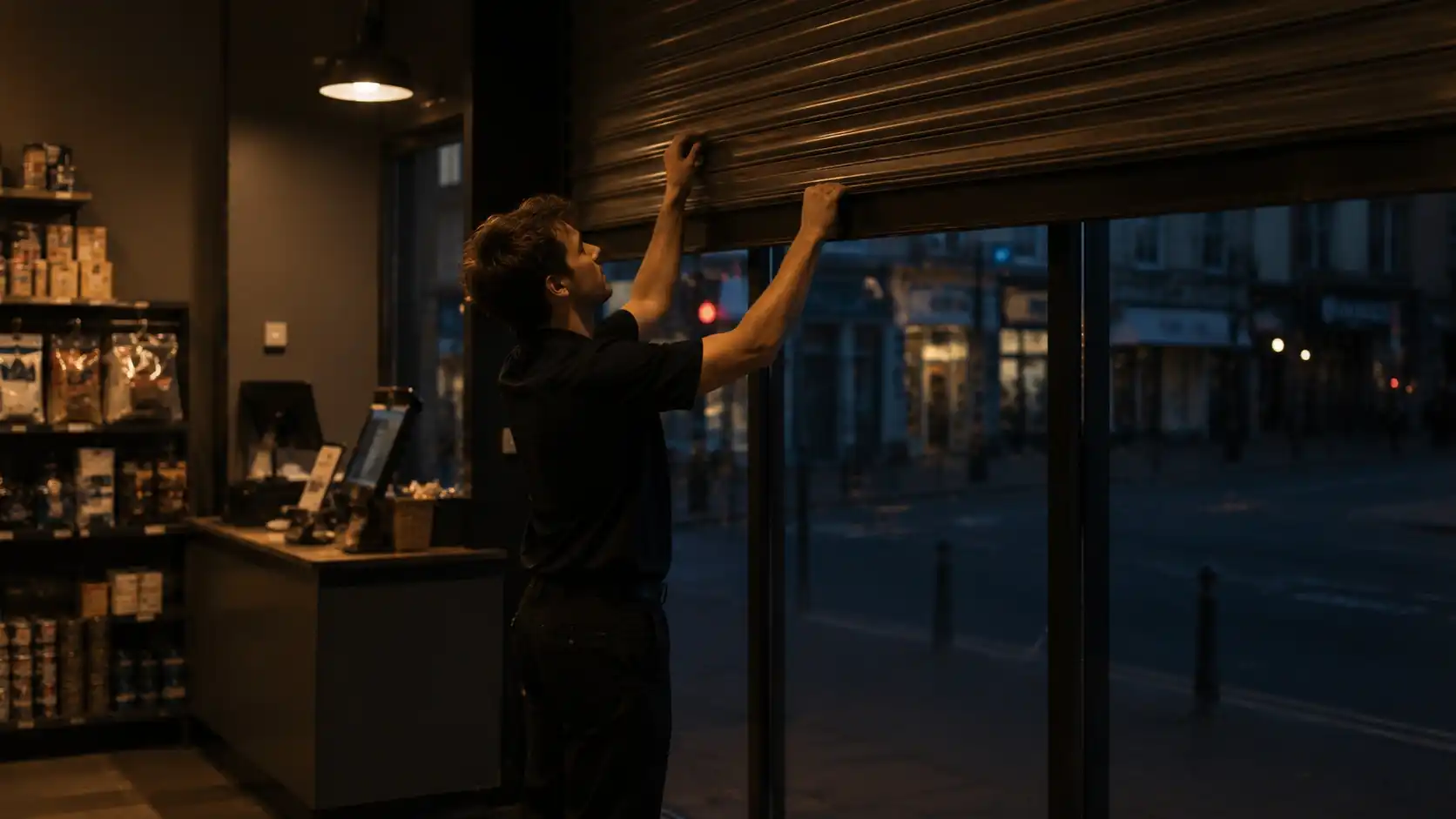
At the end of a shift, guards confirm that the site is left secure. This includes locking access points, setting alarms, updating logs, and recording any unresolved issues for the next shift.
Clear secure-down procedures are especially important for Stirling sites that remain unoccupied for extended periods, where small oversights can lead to significant losses.
Shift Patterns and 24/7 Coverage
For sites requiring continuous protection, shift patterns are designed to maintain alertness and consistency. Well-structured rotations reduce fatigue-related errors and ensure that guards remain effective throughout the coverage period.
Businesses benefit most when coverage patterns reflect actual risk timing rather than being applied uniformly.
Emergency Response Expectations
While guards are not emergency services, they are expected to respond immediately within the site. This includes isolating risk, protecting people and assets, and escalating appropriately.
In and around Stirling, where response times can vary by location and time, the guard’s initial actions often determine whether an incident is contained or escalates.
Performance, Risks, and Operational Challenges of Manned Guarding in Stirling
Manned guarding only delivers value when performance is measurable, risks are understood, and operational pressures are acknowledged realistically. For Stirling businesses, this means looking beyond presence alone and focusing on whether guarding is actually reducing exposure, supporting compliance, and standing up to scrutiny from insurers or regulators.
Key Performance Indicators That Matter to Businesses
The most meaningful KPIs for manned guarding are outcome-focused rather than activity-heavy. Security company in Stirling typically track incident frequency, response times, and the consistency of patrol coverage during higher-risk periods.
Equally important is reporting quality. Clear, timely incident logs and handover notes provide evidence that risks are being actively managed. Poor reporting often signals wider performance issues, even if guards are visibly present.
The Impact of Weather on Guarding Effectiveness
Stirling’s weather plays a direct role in guarding performance, particularly for outdoor and semi-rural sites. Heavy rain, wind, ice, and reduced daylight during winter months can limit visibility, slow patrols, and increase slip or access risks.
From a business perspective, this affects not only guard effectiveness but also site vulnerability. Poor weather often coincides with quieter conditions, creating opportunities for theft or vandalism if patrol strategies are not adjusted accordingly.
Documenting Weather-Related Conditions
Guards are expected to record weather conditions that affect patrols, access routes, or visibility. These notes are more than operational detail; they provide context for delayed patrols, altered routines, or access restrictions.
For Stirling businesses, such documentation can be valuable during post-incident reviews or insurance discussions, particularly where environmental factors contributed to an event.
Long Shifts and Performance Risk
Extended shifts can affect alertness, decision-making, and response speed. While shift structuring is the provider’s responsibility, the impact is felt by the client if performance drops during critical hours.
From a risk standpoint, fatigue-related errors tend to surface during overnight or early-morning periods. Recognising this pattern helps businesses align coverage levels with real exposure rather than assuming uniform effectiveness across all hours.
Mental Health Considerations for Night Coverage
Night-time guarding brings isolation, reduced interaction, and increased responsibility during low-support hours. While internal support systems sit with the provider, businesses should understand that night-shift effectiveness relies on clear procedures, regular check-ins, and defined escalation routes.
Where these controls are weak, incident response can slow, and reporting quality often deteriorates.
Environmental and Outdoor Patrol Constraints
Outdoor patrols must operate within health, safety, and environmental regulations. In Stirling, this includes managing risks linked to low temperatures, poor lighting, uneven ground, and weather exposure.
These factors influence how frequently patrols can be completed and which areas receive priority attention. Guarding plans that ignore environmental constraints often look adequate on paper but underperform in practice.
Reporting, Oversight, and Performance Visibility
Regular reporting is the primary way businesses maintain visibility over guarding performance. This includes patrol confirmations, incident summaries, and records of unresolved issues.
Without this oversight, manned guarding becomes difficult to justify internally, particularly when reviewing costs against risk reduction. Consistent reporting supports accountability and informed decision-making.
Labour Market Pressures and Service Stability
Wider labour pressures affect guarding indirectly through pricing and continuity. For Stirling businesses, the relevance is not how guards are retained, but how service stability is maintained.
Underpriced or poorly specified guarding contracts are more likely to experience disruption, inconsistent coverage, or frequent personnel changes, all of which increase operational risk rather than reducing it.
Balancing Cost, Coverage, and Risk
The central challenge for businesses is balancing cost control with effective risk management. Reducing coverage hours, stretching patrol routes, or accepting minimal supervision may lower short-term spend but often increases exposure over time.
Well-performing manned guarding aligns coverage with actual risk patterns, adapts to environmental conditions, and provides evidence that security is doing more than simply occupying space.
Technology and Future Trends in Stirling Manned Guarding
Technology has not replaced manned guarding in Stirling, but it has changed how guarding is planned, delivered, and evaluated. For businesses, the shift is less about new gadgets and more about using technology to close gaps that physical presence alone cannot always cover, particularly across mixed urban, rural, and semi-remote environments.
How Technology Has Changed Manned Guarding in Stirling
Modern manned guarding in Stirling is increasingly supported by integrated systems rather than standalone patrols. Guards now operate with better visibility, clearer escalation pathways, and stronger evidence capture.
This matters most in locations where footfall fluctuates, visibility changes with daylight and weather, and sites sit close to public access points. Technology allows guarding to adapt to these conditions rather than relying on fixed routines that may no longer match real risk.
Post-COVID Changes to Guarding Protocols
Post-COVID, guarding responsibilities expanded beyond traditional security tasks. Guards are now more commonly involved in managing access flows, monitoring occupancy limits, and supporting incident response where public safety overlaps with operational continuity.
In Stirling, this is particularly relevant for hospitality venues, public buildings, and education-linked sites where visitor patterns are less predictable than before. Guarding protocols now place greater emphasis on situational awareness and communication rather than enforcement alone.
The Role of AI Surveillance Alongside Guards
AI-enabled CCTV systems are increasingly used to support guards rather than replace them. These systems help identify unusual movement, loitering, or access attempts that may otherwise be missed during quiet periods.
For Stirling businesses, the value lies in prioritisation. AI alerts allow guards to focus attention where risk is emerging, instead of spreading effort evenly across low-risk areas. Human judgement remains critical, particularly where public interaction or contextual decision-making is required.
Remote Monitoring as a Support Layer
Remote monitoring has become a common complement to on-site guarding, especially for sites that operate overnight or across large footprints. Monitoring centres can track alarms, camera feeds, and access events while on-site guards respond physically when intervention is needed.
This layered approach is particularly effective in semi-rural or edge-of-town Stirling locations, where immediate police response may not always be guaranteed and on-site visibility is limited.
The Use of Drones in Site Security
Drone use in security remains limited and tightly regulated, but it is emerging as a supplementary tool on large or temporary sites. In Stirling, this is most relevant for construction projects, estates, or infrastructure sites with wide perimeters.
Where permitted, drones can support periodic aerial checks, reducing blind spots and supporting planning rather than replacing ground-level guarding.
Predictive Analytics and Risk Assessment
Predictive analytics tools are increasingly used at the planning stage rather than during live operations. These tools analyse historical incident data, access patterns, and timing trends to help businesses decide when and where guarding is genuinely needed.
For Stirling organisations, this supports more proportionate guarding models. Instead of defaulting to constant coverage, businesses can align security spend with actual exposure, improving both cost control and effectiveness.
Upskilling and Guard Competency Expectations
While training delivery sits with providers, businesses benefit from guards who are competent in operating modern systems. Familiarity with digital reporting tools, CCTV interaction, and incident documentation is now expected rather than exceptional.
This shift supports better accountability and clearer audit trails, which are increasingly important for insurers and public sector oversight.
Green Security Practices and Environmental Awareness
Environmental considerations are beginning to influence how guarding is delivered, particularly for outdoor patrols. In Stirling, this includes reducing unnecessary vehicle patrols, using energy-efficient lighting alongside guarding, and designing patrol routes that balance visibility with environmental impact.
Green practices do not replace guarding, but they help align security operations with wider sustainability objectives without increasing risk.
The Future Impact of Martyn’s Law
Martyn’s Law is expected to formalise security expectations for publicly accessible locations. For Stirling venues, this will likely place greater emphasis on planning, visible deterrence, and preparedness rather than reactive cover.
Manned guarding will remain central under this framework, not as a symbolic presence, but as part of a structured, documented approach to managing public risk. Technology will support this by providing evidence, visibility, and coordination rather than acting as a substitute for trained personnel.
Conclusion: Making Informed Security Decisions in Stirling
For Stirling businesses, manned guarding is rarely about reacting to crime headlines. It is about understanding how risk actually appears on site often quietly, at predictable times, and in ways that technology alone cannot manage.
Stirling’s mix of town-centre retail, heritage properties, education-linked sites, tourism-driven footfall, and semi-rural commercial estates creates uneven exposure. Some locations face pressure during busy visitor periods. Others become vulnerable when activity drops away. In these conditions, manned guarding provides something cameras and alarms cannot: judgment, presence, and immediate response.
The value of guarding lies in proportion and planning. When deployed with a clear understanding of timing, legal responsibility, insurance expectations, and site layout, it supports safer operations, reduces disruption, and helps businesses demonstrate that risks are being managed responsibly.
For decision-makers, the question is not whether manned guarding is always required, but whether current security arrangements genuinely reflect how and when risk occurs. In Stirling, where environments shift quickly and exposure is often situational, that assessment matters more than ever.
Frequently Asked Questions
Do all Stirling businesses need manned guarding?
No. Manned guarding is most appropriate where risk cannot be managed through remote systems alone such as sites with public access, valuable assets, extended opening hours, or limited natural surveillance.
Is manned guarding only useful at night?
Not necessarily. While overnight cover is common, many Stirling businesses use daytime guarding to manage theft, anti-social behaviour, access control, and public interaction during peak periods.
How does manned guarding differ from static security systems?
Static systems record events. Manned guarding prevents escalation. Guards can intervene, challenge, respond, and adapt to changing situations in real time.
Are security guards in Stirling legally regulated?
Yes. Guards must hold valid SIA licences, and businesses are legally exposed if unlicensed personnel are used, even through third-party providers.
Do insurers expect manned guarding?
Insurers increasingly look at how risks are managed, not just whether alarms or CCTV exist. For higher-risk sites, manned guarding can support claims defensibility and, over time, influence premiums.
Is technology replacing manned guards?
No. Technology supports guards by improving visibility and reporting. Human presence remains essential where judgment, communication, and accountability are required.
How do I know if my site is under- or over-protected?
A good indicator is mismatch: frequent incidents despite security, or high spend with little relevance to actual risk timing. Reviewing when, where, and how incidents occur is usually the first step.