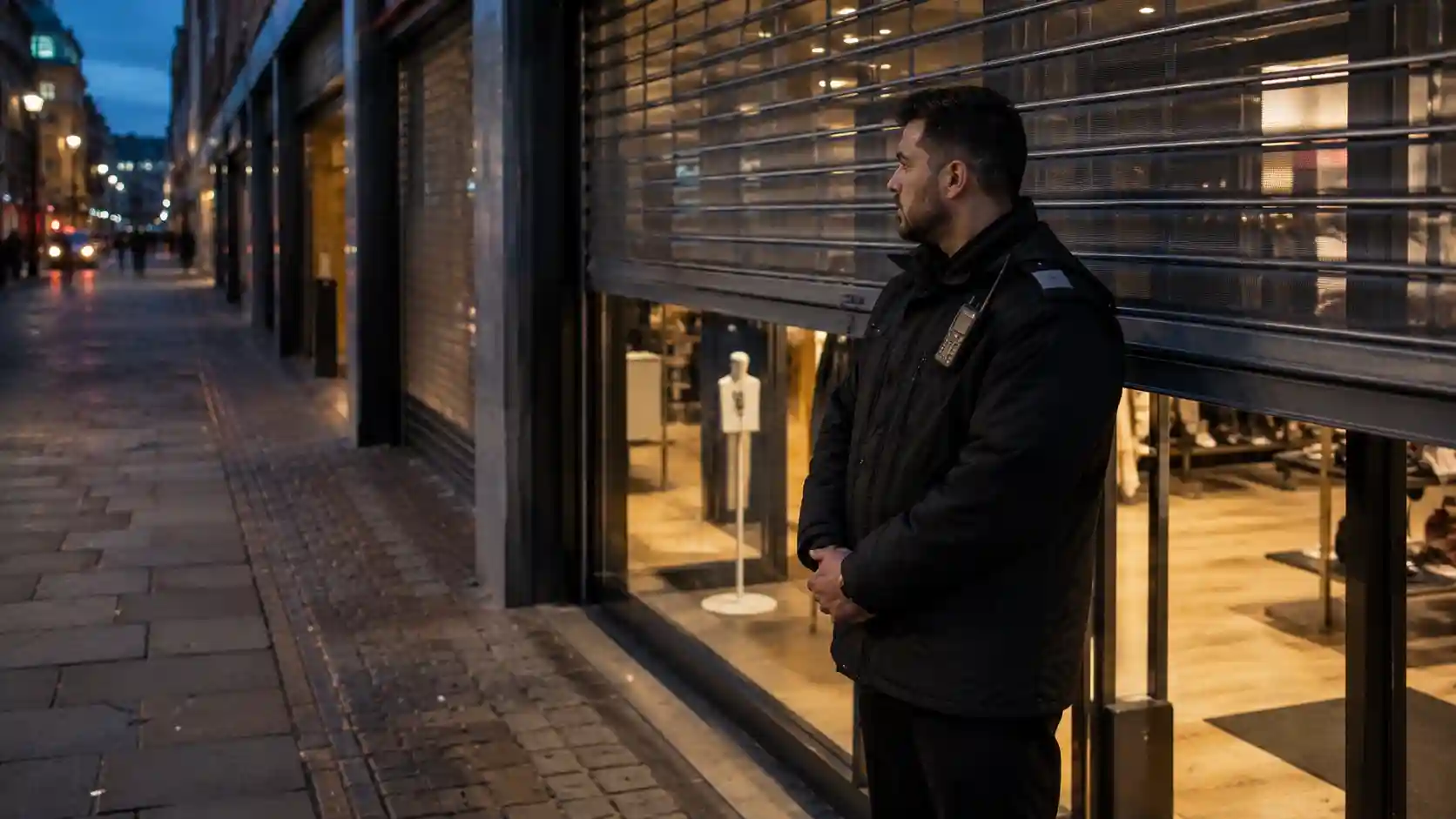
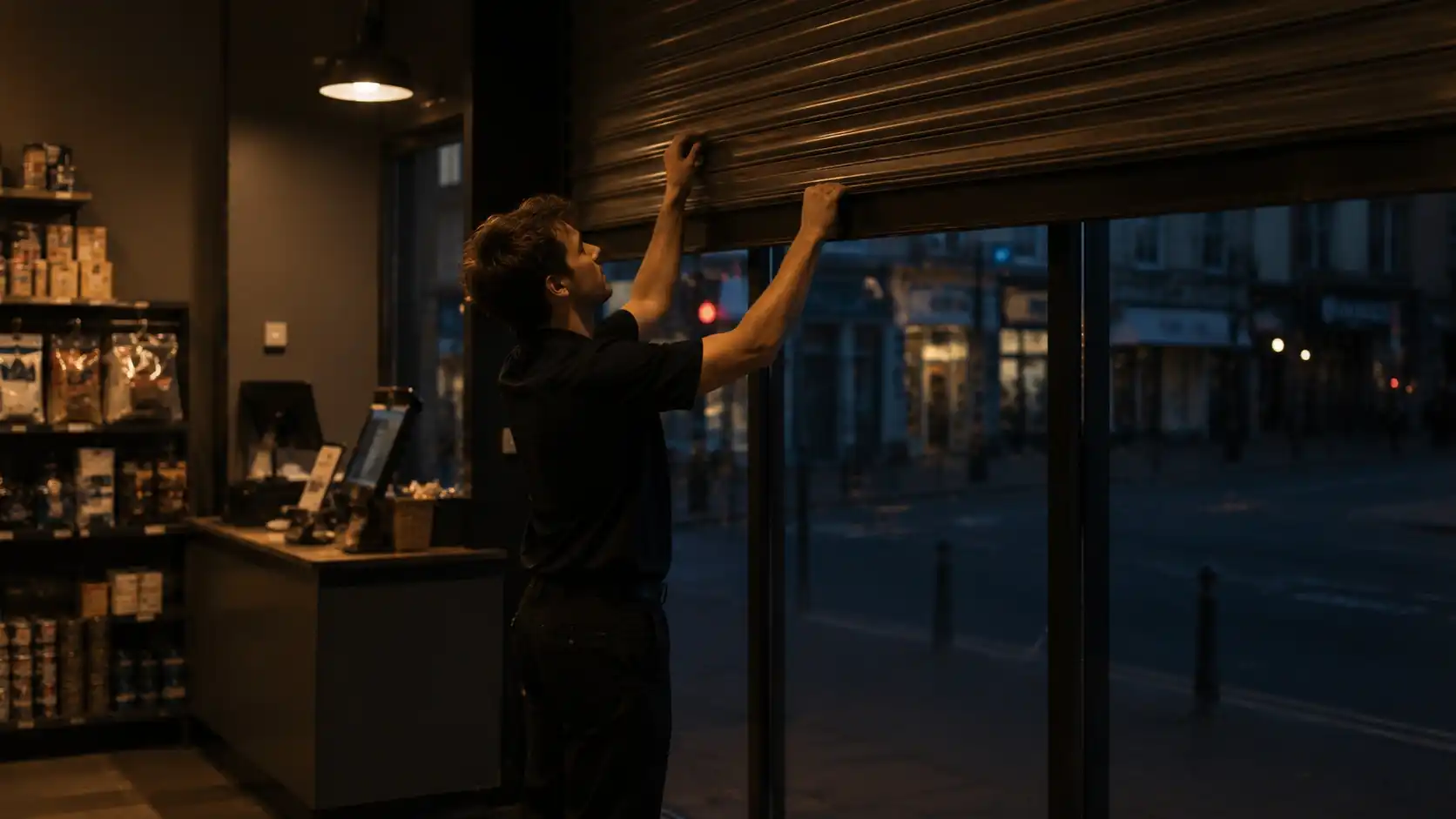
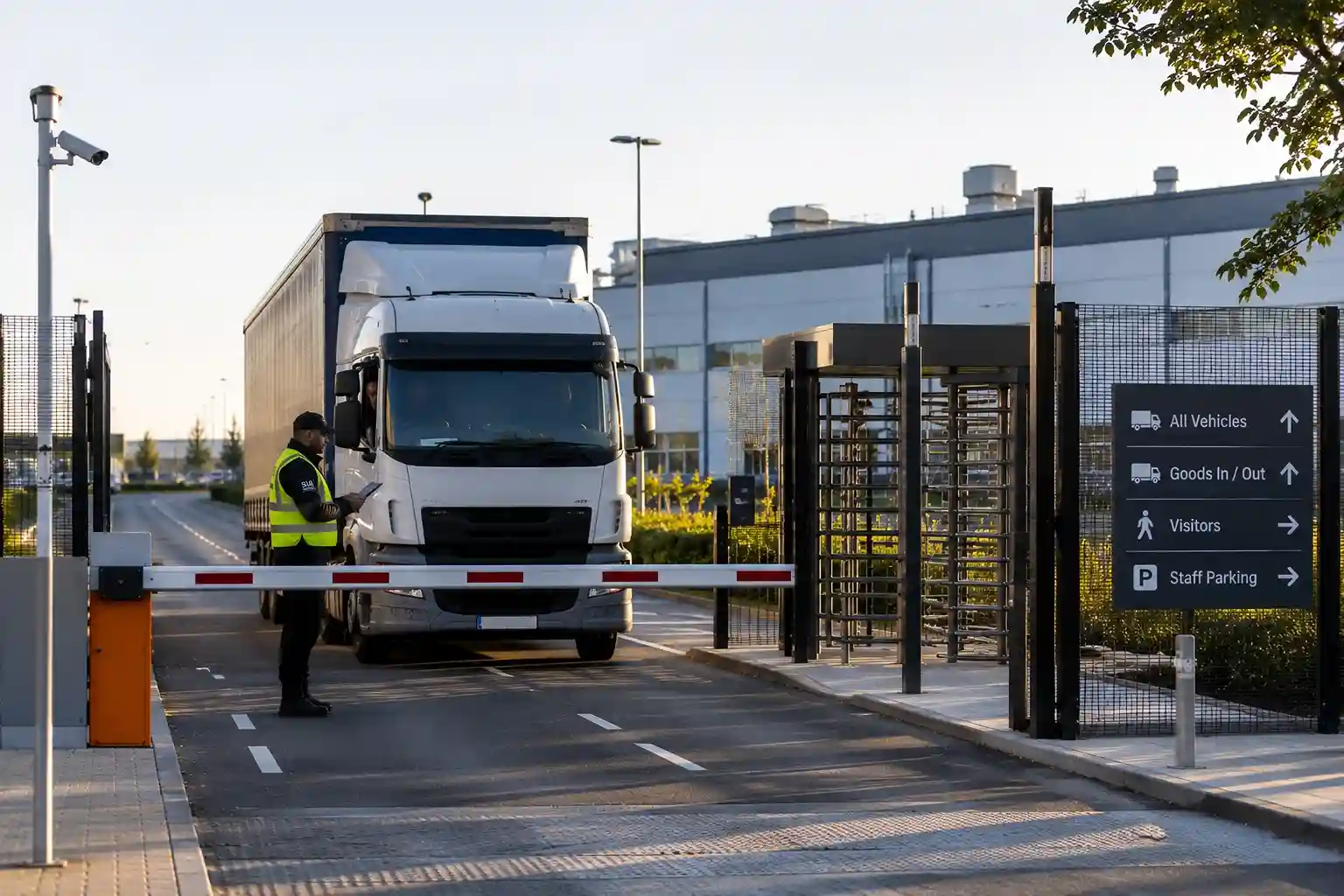
Spend a working day moving through Newport, and a pattern becomes clear. Retail units sit beside service roads. Industrial estates connect directly to residential areas. Logistics traffic overlaps with public access. The city functions because these spaces are close together, but that same layout creates security pressure points that are easy to overlook.
This is the practical context behind why Newport businesses need manned guarding. Risk here is rarely dramatic. It grows from timing, movement, and shared space. Deliveries arrive while customers browse. Contractors pass through mixed-access zones. Sites feel controlled during the day and quietly exposed as activity drops.
Manned guarding exists to manage those transitions. Technology records and alerts, but people interpret intent. An on-site presence notices when behaviour shifts, challenges access early, and closes gaps before they harden into incidents. In Newport’s commercial environment, that judgment often matters more than any system alone.

Manned Guarding Basics in Newport
Manned guarding sounds straightforward. In reality, it sits between people, place, and time. It means trained security staff are physically present on site. They are not watching remotely or reacting after the fact.
That presence matters in Newport because sites change shape throughout the day. A loading area that feels controlled in the morning can be open by early evening. A retail entrance that works fine at lunch can draw the wrong attention after closing. These changes are normal. They are not planning failures. They are the result of mixed-use spaces doing what they are meant to do.
An on-site security presence responds to those shifts as they happen. Not after an alert. Not after a report. In the moment.
Where Technology Stops, and Judgment Begins
Security systems are good at spotting activity. They record movement, detect openings, and log who went where, but they cannot judge intent.
A system cannot tell whether someone is late for a delivery or testing a door. It cannot read tone. It cannot sense hesitation or escalation. That gap still belongs to people.
This is why manned guarding in Newport rarely looks dramatic. Most of the work is quiet. Someone pauses too long and then leaves. A conversation ends sooner than it might have. Access is questioned before it becomes assumed.
Those small corrections support wider access control and patrol coverage without friction. They also allow security to adjust hour by hour. Busy periods call for visibility and interaction. Quiet periods call for boundary awareness and isolation checks. Fixed models struggle with that shift, but people do not.
Why Static Or Remote-Only Security Leaves Gaps
Static guarding has its place. So does remote monitoring. Each does one job well.
The problem appears when a site behaves differently from the assumption on which it was built.
Many business premises in Newport share roads, car parks, or service routes with other users. Others sit near public paths where responsibility is unclear. Risk in these spaces rarely arrives all at once. Risk builds over time. Repeated trespass, quiet perimeter testing, and lingering that stops just short of a breach.
Remote systems often record these signs without acting. Static posts may never see them. A mobile, on-site presence fills that space. This is one of the practical reasons why Newport businesses need manned guarding as part of a broader security provision for Newport commercial properties. The role is not to replace systems, but to add context and act on what they detect.
How Newport’s Business Mix Shapes Guarding Needs
Security needs in Newport are shaped less by labels and more by use.
Retail sites deal with behaviour, pressure, disputes, and busy hours that stretch staff attention. In warehousing and logistics, the challenge is access, vehicle traffic, and mobile stock. Construction sites face constant adjustment. Boundaries move, and layouts never settle into routine.
A small unit operating overnight can face more risk than a large office closed by six. A retail park with shared parking may carry more exposure than a single high-street shop. This is why risk-based security planning looks at patterns, not size.
Manned guarding support for Newport sites adapts to those patterns.
- Patrol routes change as sites change.
- Presence increases when movement peaks.
- Focus shifts as conditions shift.
These adjustments are hard to automate. They are natural for people who know the site.
Hybrid Models, Without the Language
The most effective setups combine people and systems, not as rivals, but as partners.
Technology extends reach. People add judgment. Together, they create hybrid security models that hold up under pressure because they can bend without breaking.
For businesses weighing options, the real question is not people versus technology. It is where judgment is needed and how fast it must be applied. In Newport’s compact, mixed-use commercial environment, that answer often points back to someone on site who understands how the place actually behaves.
Legal & Compliance Requirements for Manned Guarding in Newport
Legal compliance is not a side issue in security planning. It sits at the centre of exposure. When guarding is specified incorrectly, the risk does not stay with the provider. It transfers directly to the business that made the appointment. In Newport, as across the UK, the rules themselves are well established. What tends to be underestimated is how quickly small misunderstandings can turn into serious liability.
These requirements apply consistently across Wales. Businesses in Newport operate under the same regulatory framework as any other commercial centre in the region.
Sia Licensing as a Client Responsibility
Anyone carrying out licensable guarding activity must hold a valid licence from the Security Industry Authority (SIA). This is not a formality. It confirms that the individual has met minimum training standards, passed identity and background checks, and is authorised to work in a role that involves protecting people or property.
What is often overlooked is where the responsibility sits. If an unlicensed guard is placed on site, the issue does not stop with the supplier. The client may face enforcement action, insurance complications, and reputational harm. From a governance perspective, SIA licensing is a client risk issue. It deserves the same attention as contractor accreditation, health and safety compliance, or insurance verification during procurement.
For that reason, many businesses rely on confirmation from a security company in Newport that understands local deployment, licensing obligations, and audit expectations rather than treating compliance as a paper exercise.
What Happens When Unlicensed Guarding is Discovered
Unlicensed guarding is rarely uncovered without a trigger. It usually follows an incident, an inspection, or an insurance review. Once raised, the questions come quickly.
- Was the guard licensed at the time?
- Was the activity classed as licensable?
- Who checked, and when?
Outcomes vary. Penalties can include fines, contract termination, and, in more serious cases, prosecution. More commonly, the longer-term damage shows up through insurance. Policies may be challenged or restricted if guarding arrangements were unlawful at the time of a claim. This is why many businesses now verify licences at the start of a contract and revisit that confirmation during audits or renewals, rather than assuming compliance remains unchanged.
DBS Checks and Vetting: What Businesses Should Expect
All SIA-licensed guards undergo criminal background checks as part of the licensing process. Many providers also apply additional screening under recognised standards such as BS 7858. For clients, the key is knowing what assurance is reasonable to ask for.
Businesses should not request to see individual DBS certificates. Data protection law limits access to that information. What they should expect is written confirmation that appropriate checks have been completed, are current, and meet industry standards. Clear statements of compliance provide assurance without crossing privacy boundaries.
This balance matters. It protects both the organisation and the individuals involved while keeping the business on the right side of data protection law.
Insurance Expectations that Shape Guarding Standards
Insurers tend to look past labels and focus on evidence. The focus is on who was present and when patrols occurred. It also covers incident handling and whether escalation was applied consistently.
Clear logs, structured handovers, and documented presence all reduce perceived risk. Over time, this can influence premiums, excess levels, and coverage terms. There are no guarantees, and insurers rarely make explicit promises, but well-documented on-site security is widely recognised as a mitigating factor. This is especially true for warehousing, construction, and retail environments.
CCTV, Data Protection, and Human Oversight
Many Newport sites operate with both guards and CCTV. When managed properly, this combination works well. Data protection law requires clear signage, a defined purpose for recording, controlled access to footage, and sensible retention periods.
Guards often interact with CCTV as part of their role. They may verify alarms, review footage after incidents, or support investigations. This makes alignment between training, policy, and technology essential. Human oversight must sit within the same governance framework as the systems themselves. Hybrid security models succeed or fail here, not because of equipment choice, but because of how people and systems are managed together.
VAT and Budget Planning
Manned guarding services are standard-rated for VAT in the UK. There are no special exemptions. For finance teams, this means budgets should account for VAT from the outset rather than treating it as an adjustment later. Clear planning avoids friction during contract discussions and renewal periods.
Local Authority Conditions and Event Licensing
Local authority requirements can shape guarding expectations, particularly on construction sites or during events. Planning conditions may specify access control, patrol coverage, or site supervision. Event licences often require defined security arrangements as part of approval.
In these situations, guards form part of a wider compliance plan rather than an optional layer. Understanding these obligations early helps businesses avoid rushed decisions and unexpected costs.
Labour Law Considerations
Guards are subject to the same employment laws as other workers. Working time limits, rest periods, and right-to-work checks apply. Post-Brexit changes have added complexity to documentation for some workers, and errors here can affect both provider and client.
From a client perspective, the priority is assurance. Providers should be able to confirm compliance without hesitation. Weak record-keeping in this area creates risk that has nothing to do with daily security performance but can still carry serious consequences.
Taken together, these legal and compliance requirements define how manned guarding should be specified in Newport. They are not obstacles to work around. They are the framework that makes on-site security defensible, auditable, and fit for purpose.
Costs & Contracts in Newport
Costs are often the first thing people ask about when manned guarding is raised, but they are rarely the best place to start. In Newport, pricing only makes sense once risk, layout, and operating hours are understood. Two sites a mile apart can carry very different exposures, and the cost reflects that difference more than any standard rate.
Why Guarding Costs Vary Across Newport
Location plays a role, but not in the way many expect. Costs are usually higher in city-centre locations. Access challenges, heavy footfall, and the need for visible coverage during peak times all contribute. Industrial estates on the edge of the city may appear cheaper at first glance, yet isolation, longer response times, and nighttime risk can push requirements up.
When comparing Newport with nearby centres like Cardiff, similar cost patterns emerge. Guarding requirements are driven more by access complexity and footfall than by proximity.
What really shapes cost is how a site behaves. Shared access roads, multiple entry points, late deliveries, and extended operating hours all increase the need for on-site oversight. A quiet office with predictable hours will be priced differently from a logistics unit that never truly closes. This is why cost comparisons only work when the underlying risk profile is similar.
Inflation, Wages, and Predictable Movement
Guarding is a labour-led service, so pricing moves gradually with wider economic conditions.
- Wage floors rise.
- Training expectations grow.
- Compliance costs increase.
- None of this tends to spike overnight, but it does move steadily.
For most Newport businesses, the key point is predictability. Costs are unlikely to fall sharply, but they are also unlikely to jump without warning. Many longer-term contracts now include agreed review mechanisms linked to inflation indices. This allows budgets to adjust in small steps rather than absorbing sudden increases at renewal.
Chasing the lowest short-term rate often creates instability. Underpriced guarding tends to show strain elsewhere.
- High turnover.
- Missed patrols.
- Thin reporting.
These issues rarely appear on day one, but they surface over time and usually cost more to fix later.
Contract Length and Structure
Manned guarding contracts in Newport tend to fall into three broad categories. Short-term arrangements cover temporary needs, such as construction start-ups or post-incident cover. These are flexible but usually cost more per hour because mobilisation is compressed.
Medium-term contracts, often six or twelve months, are common for retail parks, industrial units, and multi-tenant sites. They balance stability with review points. Longer contracts, typically two to three years, are used where continuity matters most. These often include structured performance reviews and planned cost adjustments.
Notice periods are important. Limited notice increases risk for everyone. Clients lose consistency, and providers find it harder to replace skilled staff. Clear notice terms safeguard quality as well as budgets.
Deployment Timelines and Mobilisation Reality
Urgent cover can sometimes be arranged quickly, especially where providers already operate nearby. That said, proper deployment still takes time. Vetting must be current. Site inductions need to happen. Guards must understand layouts, access rules, and escalation procedures.
Rushed deployment increases risk. Guards unfamiliar with a site miss patterns. Reporting suffers. For planned coverage, allowing a mobilisation window of one to three weeks is common and sensible. It gives space for training, scheduling, and site-specific preparation.
Insurance Considerations
Well-structured guarding can influence how insurers view a site. Regular patrols, clear logs, and documented escalation all demonstrate control. Over time, this can support discussions around premiums, excess levels, or coverage conditions.
There are no guarantees, and insurers rarely make direct promises, but poorly specified guarding almost always raises questions during a claim. From a risk perspective, the quality and structure of the contract often matter more than the hourly rate.
Choosing Structure Over Shortcuts
In Newport, the most stable guarding arrangements tend to share a few traits. When the scope is clear and the pricing is realistic, contracts can allow review without disruption. That structure keeps guarding predictably, not reactively.
Cost, in that context, is not just a number. It is a reflection of how much uncertainty a business is willing to manage.
Training, Daily Operations & Guard Duties
Training is often discussed as a compliance requirement, but for businesses, it serves a different purpose. It shapes judgment. A well-trained guard does not just follow instructions. They notice small changes, understand why routines exist, and know when to act without waiting for direction. That difference matters on sites where risk develops quietly rather than all at once.
In Newport, commercial environments remain fluid. Access points change while activity rises and falls through the day. Contractors rotate, and visitors arrive without warning. Training prepares guards to work within uncertainty rather than relying on fixed assumptions.
Why Training Standards Matter to Clients
From a client’s point of view, training quality shows up in outcomes, not certificates. It affects how confidently guards challenge access. It also shapes how calmly they handle confrontation and how clearly incidents are documented. Guards who understand the purpose behind procedures are more likely to apply them consistently, even when conditions change.
This matters for audit trails and insurance reviews. Reports written by someone who understands context carry more weight than generic entries. Escalations handled early reduce disruption. Training, in that sense, becomes a risk control rather than an internal process.
Similar adaptive methods are used in mixed-use coastal and industrial areas. Locations like Swansea face operating conditions that change day by day.
The First Minutes of a Shift
The start of a shift often determines how the rest of it unfolds. Experienced guards use those first minutes to build situational awareness. They review handover notes and scan the site visually. They notice what feels different from the previous shift.
This is not about ticking boxes. It is about orientation to small changes like a gate left ajar, a failed light, or a vehicle parked out of place. These details rarely trigger alarms, yet they often explain later incidents. Early awareness allows guards to correct issues before they escalate.
Daily Movement and Patrol Design
Patrols are not about walking the same route at the same time. Predictability creates blind spots. Effective patrol design changes with risk. During busy periods, visibility and interaction take priority. During quieter windows, attention shifts to boundaries, isolated corners, and areas that feel neglected.
In Newport, where sites often share access or sit close to public routes, patrols also act as reassurance. They signal presence without confrontation. Over time, this presence discourages low-level testing and reduces the chance of escalation.
Access Control In Practice
Access control is rarely just about doors and gates. It is about expectation. Who belongs here? Who does not? Guards manage this through observation and conversation as much as through rules.
Visitors may arrive early. Contractors may turn up without notice. Deliveries may run late. Training helps guards make proportionate decisions. They know when to verify, when to delay, and when to escalate. This judgement reduces friction while maintaining control.
Reporting, Logs, And Evidence
Daily reporting is the backbone of on-site security. Logs record patrol times, observations, and interactions. Over time, patterns emerge. Repeated issues in the same location. Regular after-hours activity. Equipment faults that never quite get fixed.
For businesses, these records matter because they become evidence. Insurers rely on them. Auditors review them. They explain not just what happened, but what was noticed and acted upon. Clear, consistent reporting shows that risk is being managed rather than ignored.
Alarm Response And Early-Hour Decisions
Alarms often trigger during low-activity periods, when noise stands out, and context is thin. Guards responding at these times rely heavily on judgment. They assess the cause. They secure the area. They decide whether escalation is needed.
False alarms still matter. They reveal weak points. A sensor triggered by wind may indicate a loose panel. Repeated alerts in the same zone suggest a design flaw. Training helps guards treat these moments as information rather than an inconvenience.
Supervisor Oversight And Continuity
Supervision plays a quiet but important role. Regular check-ins confirm presence and support welfare. They also provide another layer of review. Patterns missed on site are often spotted through logs and conversations with supervisors.
Continuity matters too. Guards who stay on the same site build familiarity. They notice when behaviour changes. They recognise regular visitors. This site’s knowledge reduces reliance on rigid rules and improves judgment.
End-Of-Shift Responsibility
A shift does not end when a guard leaves the site. Secure-down checks, final patrols, and clear handovers protect continuity. Issues unresolved are noted. Faults are flagged. The incoming guard starts informed rather than guessing.
For businesses, this continuity reduces gaps. It ensures that risk does not reset with every shift change.
Impact Over Instruction
Training and daily routines are not about perfection. They are about reducing uncertainty. Guards who understand why they do what they do are more effective than those following instructions without context.
In Newport’s mixed commercial environment, where sites change character through the day, that understanding is what keeps guarding proportionate, consistent, and defensible.
Performance, Risks & Operational Challenges
Performance in manned guarding is rarely about dramatic interventions. Most of the time, it shows up in quieter ways. The result is fewer incidents, shorter disruptions, and problems noticed early and dealt with before they spread. For businesses in Newport, the challenge is knowing what to look for and how to judge whether guarding is actually doing its job.
The Measures that Matter
Many sites track activity because it is easy to count. Patrols completed. Hours covered. Checkpoints scanned. Those figures have value, but they do not tell the whole story.
- What matters more is the outcome?
- Did patrols lead to issues being identified and fixed?
- Were response times appropriate to the situation?
- Were the reports clear enough to explain decisions later?
Good performance shows up in consistency. Logs that make sense when read back. Patterns that are recognised and acted on. Fewer repeat problems in the same locations. When these elements are present, guarding tends to feel uneventful. That is usually a good sign.
Environmental and Weather-Related Risk
Weather changes behaviour. Heavy rain reduces visibility and alters movement. Strong winds affect fencing, signage, and temporary structures. Cold conditions push people toward shelter and shared spaces.
Guards who note these conditions in their reports provide useful context. If a gate failed during high winds or a patrol route changed due to flooding, that detail matters later. It explains decisions and protects the business if questions are raised. Environmental awareness is not about comfort. It is about accountability.
Fatigue and Concentration
Long shifts and quiet periods can dull attention. This is a reality, not a criticism. Concentration drops when stimulation is low, particularly during overnight hours. For clients, the risk is not the shift length itself but what happens when fatigue is ignored.
Structured routines help. Task rotation. Regular check-ins. Clear expectations about reporting. These measures support alertness without turning guarding into a mechanical exercise. When concentration is maintained, judgment stays sharper. That reduces errors and delayed responses.
Health, Safety, and Exposure
Guards operate at the edge of business activity. They encounter conflict, isolation, and sometimes distressing situations. While staffing welfare is not a client management issue, its impact is. Guards who feel supported tend to communicate better and report more accurately. Guards under strain withdraw and simplify.
From a risk perspective, this affects documentation quality and escalation decisions. Businesses benefit when providers take welfare seriously, even if it is never visible day to day.
The Quiet Failure of Underpriced Guarding
One of the most common risks does not arrive with an incident. It arrives slowly. Underpriced guarding rarely collapses outright. Instead, it degrades.
Patrols speed up and reporting thins out as familiar guards rotate away. Issues get logged but not resolved, and exposure increases over time.
When an incident finally does occur, the gaps become clear. Missing context. Incomplete logs. Unclear decisions. These weaknesses often cost more than the savings that created them.
Reviewing Performance Without Disruption
An effective review does not require constant change. Periodic audits. Spot checks of reports. Conversations about patterns rather than isolated events. These steps keep guarding aligned with risk without destabilising the service.
In Newport’s mixed commercial landscape, where conditions change quietly and often, performance is best judged by how well guarding adapts. When the work looks calm and controlled, it is usually because the foundations are sound.
Technology & Future Trends in Newport Manned Guarding
Technology has changed how guarding works, but it has not changed why people are still needed on site. In Newport, the most effective use of technology is not about replacement. It is about direction. Tools point attention. People decide what to do with it.
Technology As Guidance, Not Authority
Modern systems are good at highlighting unusual activity. Movement where there should be none. Repeated presence at the same boundary. Changes that fall outside normal patterns. What they do not provide is judgment.
Guards remain the decision-makers. They assess whether an alert reflects risk, error, or routine variation. This balance matters because over-reliance on systems can create noise. Too many alerts dull response. Human interpretation filters what truly needs action.
Data-led deployment models are increasingly used in regional hubs. In places such as Wrexham, historical patterns help shape patrol timing without increasing on-site headcount.
Remote Monitoring As Oversight
Remote monitoring is now common on larger or more dispersed sites. Used well, it adds a layer of oversight rather than replacing on-site presence. Monitoring centres confirm alarms, guide guards to exact locations, and maintain visibility across areas a single person cannot watch at once.
For lone-worker patrols, this oversight improves safety and response time. It also creates a record. Calls logged. Instructions given. Actions taken. From a governance point of view, this trail supports accountability without removing local judgement.
Drones On Large Or Isolated Sites
Drone use is still selective, but it is growing. In Newport, drones tend to appear on large industrial or semi-isolated sites where ground patrols take time. They provide quick visibility over wide areas, particularly at night.
They do not replace foot patrols. They cannot challenge access or secure a breach. Their value lies in speed. A fast sweep can confirm whether a perimeter issue is real or environmental. That information helps guards prioritise without unnecessary exposure.
Predictive Tools And Smarter Deployment
Some organisations now use data to shape deployment. Past incidents. Time-of-day patterns. Seasonal changes. Even weather correlations. This information helps decide when patrol frequency should increase and where attention should focus.
The aim is not prediction in a dramatic sense. It is resource alignment. Guards spend more time where risk has historically gathered. Less time where nothing changes. When done well, this approach feels invisible. Sites simply feel better covered at the right times.
Sustainability And Operational Pressure
Sustainability has moved from a “nice to have” to a procurement consideration. Electric patrol vehicles, energy-efficient lighting, and digital reporting reduce environmental impact while also lowering running costs.
For businesses, this trend influences specification rather than daily operations. Providers increasingly need to show how guarding fits broader environmental goals without compromising effectiveness.
Martyn’s Law And Rising Expectations
Martyn’s Law will raise expectations for protective security at public-facing venues. While not every Newport site will fall under its scope, the direction of travel is clear. Better planning. Clearer roles. Stronger documentation.
Manned guarding will remain central to this shift. Guards are the link between plans on paper and reality on site. Technology will support them, but responsibility will still rest with people who understand the environment and can act when it changes.
Conclusion: Making a Proportionate Security Decision in Newport
Deciding whether to use on-site security is rarely about adding another layer of protection. It is about understanding how a place actually works. In Newport, risk does not usually arrive as a single event. It grows from movement, shared access, changing activity levels, and the quiet gaps that appear between systems.
That context explains why Newport businesses need manned guarding in some environments and not in others. An on-site presence adds judgment where technology reaches its limit. It adapts as conditions shift. It provides continuity, evidence, and early intervention without turning security into disruption.
The most effective decisions begin with a clear view of layout, operating hours, and duty of care. When those factors are understood, manned guarding becomes a proportionate response rather than a default choice, supporting control without creating unnecessary complexity.
Contact us for more information.
Frequently Asked Questions
1. Do all manned guards in Newport need SIA licences?
Yes. Any guard doing licensable work must hold a valid SIA licence. Using unlicensed guards can create legal and insurance risks for the business.
2. How quickly can manned guarding be deployed in Newport?
Urgent cover may be possible within days. Planned cover takes longer to allow for vetting and site induction.
3. Is manned guarding necessary for industrial estates in Newport?
Not always. It is more relevant where sites are isolated, operate at night, or have multiple access points.
4. Can manned guarding reduce insurance premiums?
There are no guarantees. Insurers look for evidence of control, such as patrol logs and incident records.
5. How does CCTV compliance work alongside guards?
Guards may verify alarms or review footage. Data protection rules still apply, including signage and controlled access.
6. Are daytime patrols more important for retail sites now?
Often, yes. Daytime risk usually comes from behaviour and crowd pressure, not forced entry.
7. What documentation should businesses expect?
Clear patrol logs, incident reports, and handover notes that show what was seen and acted on.
8. How will Martyn’s Law affect sites using guards?
It will raise expectations for planning, clarity of roles, and on-site readiness at public-facing venues.