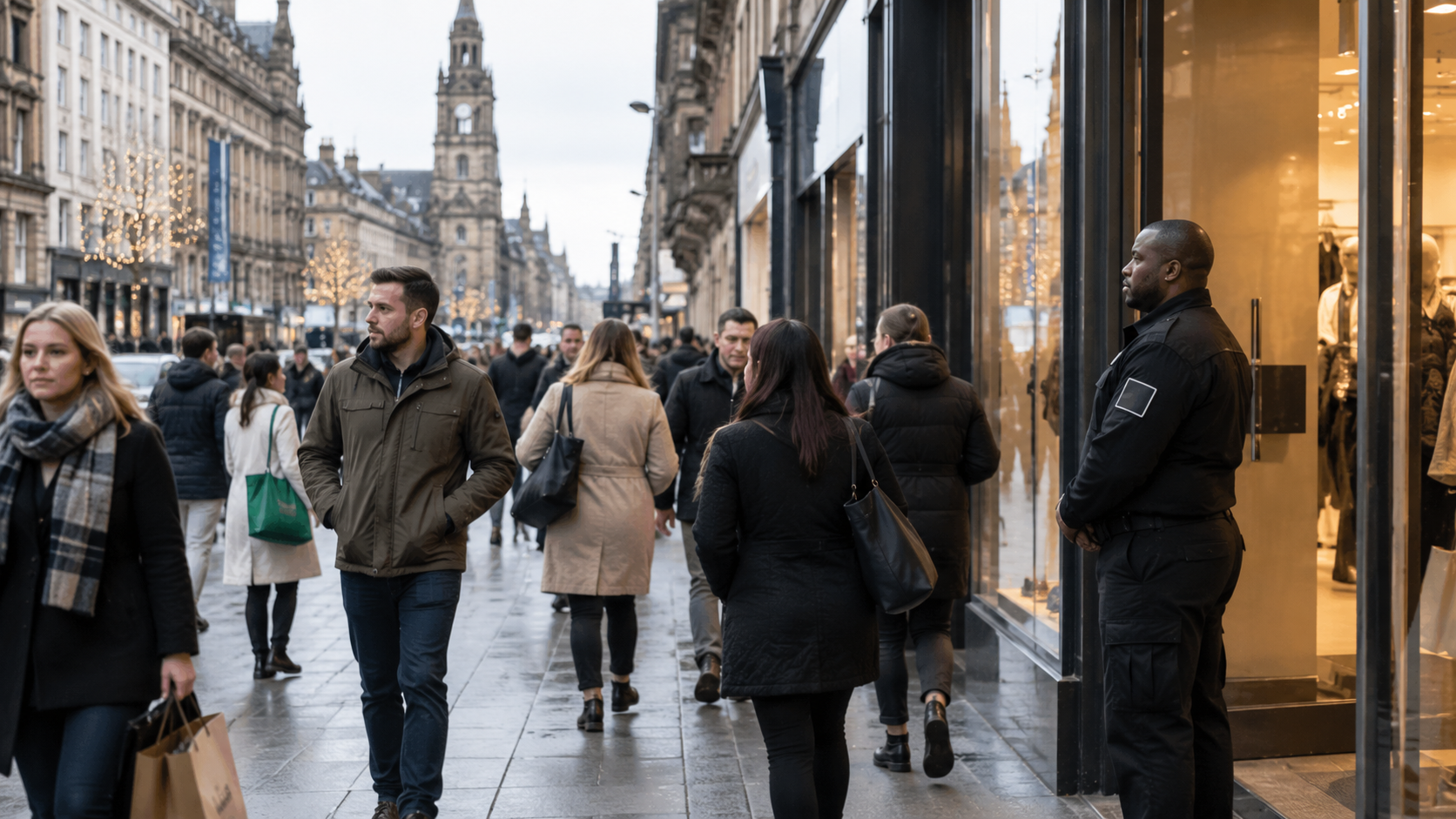
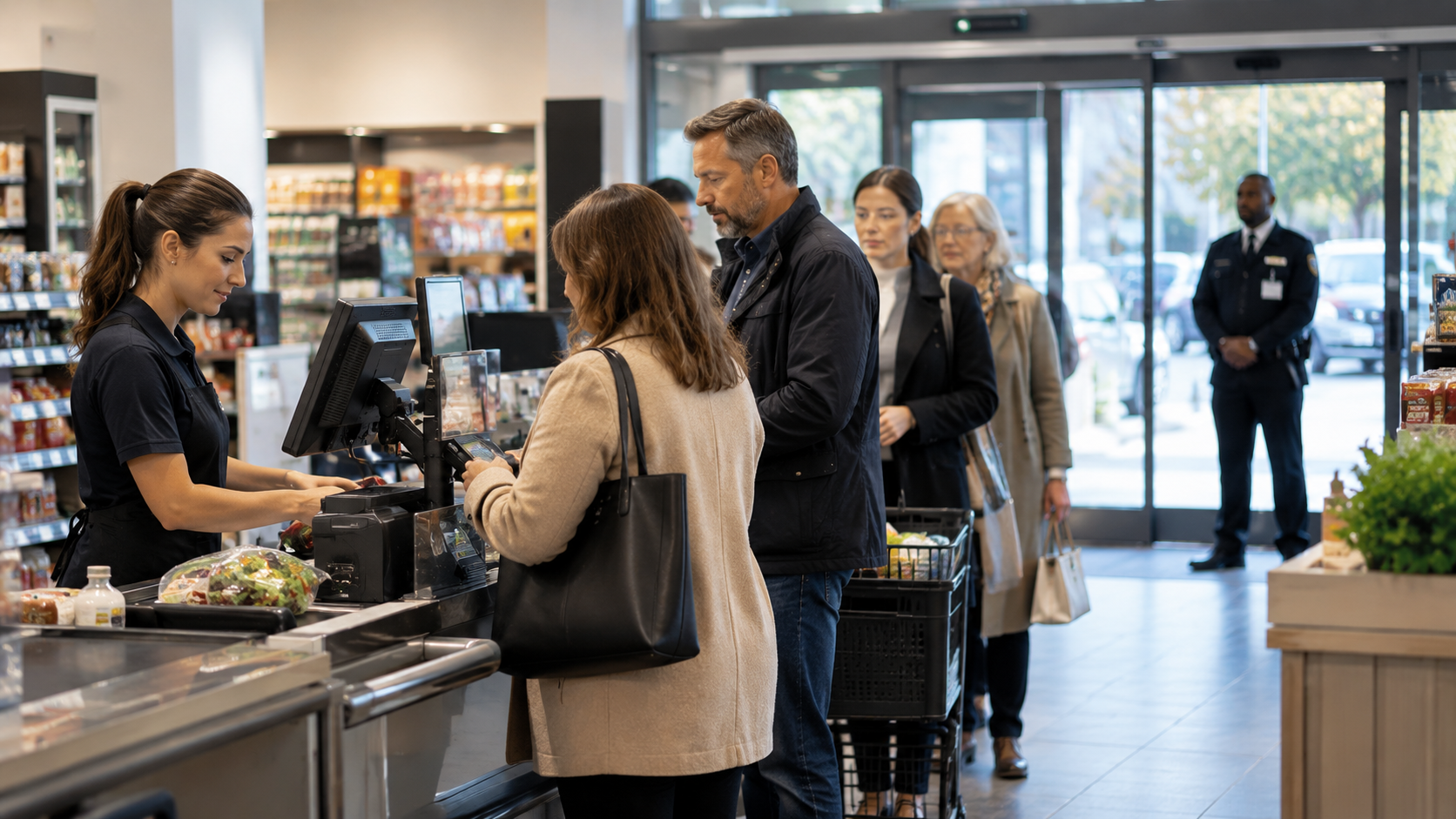
Retail businesses in Bury operate in a diverse environment that includes busy town-centre shops, shopping precincts, retail parks, and independent high-street stores. With steady footfall, seasonal shopping peaks, and strong links to the wider Greater Manchester area, local retailers face ongoing risks such as shoplifting, anti-social behaviour, staff abuse, and organised retail theft. UK retail crime surveys estimate that retailers lose over £2.2 billion in 2023 – 2024 to theft and retail-related crime, and town centres across Greater Manchester are among the most affected making professional retail security an essential safeguard rather than an optional expense.
Retail security in Bury is not just about deterring crime, it plays a vital role in protecting staff, safeguarding stock, maintaining a safe shopping environment, and ensuring business continuity. While CCTV and alarms are useful, they cannot actively intervene, assess behaviour in real time, or de-escalate incidents. This is where trained retail security guards make a measurable difference.

Retail Security Basics in Bury
Retail businesses in Bury operate in busy, open-access environments where high footfall, visible stock, and extended trading hours create ongoing security risks. From independent high-street shops to supermarkets and retail parks, businesses face challenges such as shoplifting, organised retail theft, anti-social behaviour, and staff safety concerns, patterns commonly seen across retail locations throughout the North West.
Unlike generic security approaches, retail security is designed specifically around customer-facing environments, balancing loss prevention with positive customer interaction.
What Retail Security Means for Bury Businesses
Retail security involves a combination of on-site security presence, theft prevention measures, staff support, and incident management, all tailored to retail settings. The primary goal is to reduce losses while ensuring the safety of employees and customers. For Bury retailers, this targeted approach helps protect revenue and staff wellbeing. Retail security typically focuses on:
- Preventing shoplifting and theft
- Deterring repeat offenders
- Monitoring high-risk areas such as entrances and self-checkout zones
- Managing disruptive or aggressive behaviour
- Supporting staff during difficult situations
Retail Security vs Remote and Technology-Only Solutions
Technology such as CCTV, alarms, and remote monitoring plays an important role in retail security, but it has limitations when used alone. Retail security adds a human, preventative element, allowing potential issues to be identified and managed before losses occur. In Bury’s high-footfall retail areas, this proactive approach is far more effective than relying solely on cameras or alarms. Technology-only solutions:
- Record incidents after they happen
- Rely on delayed response
- Do not actively deter offenders
Local Retail Crime Patterns in Bury
Retail crime in Bury mirrors wider trends across Greater Manchester. Town-centre locations and retail parks are particularly exposed due to easy access and consistent footfall. Common issues include:
- Opportunistic shoplifting during busy trading hours
- Organised theft targeting high-value items
- Anti-social behaviour affecting staff and customers
- Repeat offenders returning to familiar stores
High-Risk Retail Environments in Bury
Certain retail environments face higher security risks because of their layout, stock type, and customer volume. These businesses often require enhanced retail security measures to reduce shrinkage and disruption. High-risk settings include:
- Supermarkets and convenience stores
- Clothing and footwear retailers
- Electronics and mobile phone shops
- Alcohol, tobacco, and vape retailers
Peak Risk Periods for Retail Security Incidents
Retail security risks increase at specific times of the day and year. During these times, retailers in Bury experience increased footfall, making theft and disorder more likely. Higher-risk periods typically include:
- Late afternoons and evenings
- Weekends
- School holidays
- Seasonal sales and promotional events
Managing Anti-Social Behaviour in Retail Spaces
Anti-social behaviour can have a serious impact on staff morale and customer experience. This is especially important in shared retail parks and town-centre locations across Bury. Retail security helps by:
- Addressing loitering and intimidation
- De-escalating confrontations calmly and professionally
- Supporting staff facing verbal abuse
- Maintaining a safe and welcoming environment
Daytime Retail Security and Loss Prevention
Retail theft increasingly occurs during normal trading hours rather than overnight. Many Bury retailers now prioritise daytime coverage as part of their loss-prevention strategy. Daytime retail security focuses on:
- Visible deterrence on the shop floor
- Monitoring entrances and exits
- Reducing theft at self-checkout areas
- Supporting staff in theft prevention
Daytime and Night-Time Retail Security Risks
Retail security requirements differ depending on the time of day. Effective retail security strategies address both operational and after-hours risks.
Daytime risks include:
- Shoplifting
- Customer disputes
- Crowding and disorder
Night-time risks include:
- Break-ins
- Vandalism
- Unauthorised access
Seasonal and Sales-Driven Retail Security Pressures
Peak trading periods such as Christmas, Black Friday, and clearance sales significantly increase theft risk. Temporary retail security measures during these times help maintain control, reduce losses, and protect staff.
Economic Pressures and Retail Crime in Bury
Economic uncertainty and rising living costs often contribute to increased retail theft. As pressures on households grow, retailers in Bury are seeing greater demand for proactive retail security to protect profit margins.
How Retail Security Supports Business Stability
For retail businesses in Bury, effective retail security is not just a protective measure, it is a vital part of sustainable operations. Retail security plays a critical role in long-term business success by:
- Reducing stock losses and shrinkage
- Improving staff confidence and retention
- Enhancing customer trust and safety
- Protecting brand reputation
Legal and Compliance Requirements for Retail Security in Bury
Retail security in Bury must operate within a strict legal and regulatory framework designed to protect businesses, staff, customers, and personal data. Compliance is not optional failure to meet legal standards can result in fines, prosecution, reputational damage, and insurance issues. Understanding these requirements helps retailers choose compliant security providers and reduce operational risk.
SIA Licensing Requirements for Retail Security Personnel
All frontline retail security staff operating in Bury must hold a valid SIA (Security Industry Authority) licence appropriate to their role. This licensing confirms that the individual has met national standards for training, identity checks, and criminal record screening.
Retailers are legally responsible for ensuring that any security personnel deployed on their premises are properly licensed. Employing unlicensed security staff is a criminal offence under UK law.
Penalties for Using Unlicensed Security Personnel
Using unlicensed security staff exposes retail businesses to serious legal consequences. Penalties may include:
- Significant financial fines
- Criminal prosecution
- Loss of insurance cover
- Reputational damage
BS 7858 Vetting and DBS Expectations
While not all roles legally require enhanced DBS checks, many retail environments expect appropriate DBS screening, particularly where staff interact closely with the public. In addition to SIA licensing, reputable retail security providers follow BS 7858 vetting standards, which cover:
- Identity verification
- Employment history checks
- Criminal record screening
- Right-to-work validation
Security Company Licensing and Approved Contractor Status
While individual licensing is mandatory, security companies may also hold SIA Approved Contractor Scheme (ACS) status. This demonstrates higher standards in areas such as:
- Staff training
- Operational management
- Financial compliance
- Customer service
Insurance Requirements for Retail Security Services
These policies protect retailers in the event of injury, property damage, or claims involving security personnel. Retailers should always request proof of insurance before engagement. Retail security providers must carry appropriate insurance, including:
- Public liability insurance
- Employer’s liability insurance
Data Protection and CCTV Compliance
Retail security operations often work alongside CCTV systems. Any use of CCTV must comply with UK GDPR and Data Protection Act requirements, including:
- Lawful data collection
- Secure storage of footage
- Controlled access to recordings
- Clear signage informing the public
VAT and Financial Compliance for Retail Security Services
Retail security services in the UK are subject to VAT at the standard rate. Businesses should ensure:
- Invoices are VAT-compliant
- Providers are properly registered
- Pricing is transparent
Local Authority and Council Considerations
While Bury does not impose unique licensing for everyday retail security, certain environments such as large retail parks, late-night venues, or temporary retail events may be subject to additional local authority conditions. Security arrangements must align with council guidance and licensing conditions where applicable.
Event Licensing and Martyn’s Law Considerations
Retail venues hosting large public events, seasonal markets, or promotional activities must consider event licensing requirements. Emerging legislation such as Martyn’s Law places greater emphasis on public safety, risk assessment, and preparedness in crowded places, affecting how retail security is planned and deployed.
Employment Law and Working Time Compliance
Retailers should ensure security staff are legally employed and properly managed to avoid indirect liability.Retail security providers must comply with UK employment laws, including:
- Working Time Regulations
- Overtime and rest break rules
- Fair wage compliance
Post-Brexit Right-to-Work Compliance
Security personnel working in retail environments must have verified right-to-work status in the UK. Post-Brexit rules have increased scrutiny on documentation, making compliance checks essential for all retail security providers operating in Bury.
Police Collaboration and Information Sharing
Retail security often works in coordination with Greater Manchester Police through reporting, incident escalation, and crime prevention initiatives. This cooperation supports safer retail environments and faster response to serious incidents.
Business Crime Reduction Partnership (BCRP) Participation
Many retailers benefit from participation in local Business Crime Reduction Partnerships, which promote information sharing between retailers, security teams, and law enforcement. These partnerships help identify repeat offenders and improve coordinated responses to retail crime in Bury.
Documentation and Compliance Evidence
This documentation provides assurance that retail security services meet legal and regulatory standards. Retailers should expect security providers to supply:
- SIA licence verification
- Vetting and screening records
- Insurance certificates
- Training documentation
- Compliance history
Why Legal Compliance Matters for Bury Retailers
For retail businesses in Bury, compliant retail security is not just a regulatory requirement, it is a foundation for safe, professional, and sustainable operations. Legal and compliance adherence protects retailers from:
- Financial penalties
- Legal disputes
- Insurance invalidation
- Operational disruption
Costs, Contracts, and Deployment of Retail Security in Bury
Retail security costs and contract structures in Bury vary depending on location, risk level, operating hours, and the scale of the retail environment. Similar pricing dynamics are seen in neighbouring retail areas such as Trafford and Salford, where footfall intensity, evening trading, and proximity to transport hubs influence coverage requirements.
Key Cost Drivers for Retail Security in Bury
Retail security pricing is influenced by several operational factors rather than a flat rate. Retailers with high customer volumes or high-value stock typically require more intensive security coverage. The most common cost drivers include:
- Store size and layout
- Daily footfall levels
- Value and type of stock
- Trading hours, including evenings and weekends
- Risk profile based on location and previous incidents
Town Centre vs Suburban Retail Security Costs
Retail security costs in Bury town centre are generally higher than in suburban locations. Town-centre retailers face increased risks due to:
- Higher footfall
- Greater anonymity for offenders
- Proximity to transport links
Impact of Wage Pressures on Retail Security Pricing
These factors contribute to gradual increases in retail security rates, particularly for long-term contracts. Retail security pricing reflects industry-wide wage pressures, including:
- National Minimum Wage increases
- Holiday pay and pension contributions
- Training and licensing costs
Inflation and Long-Term Retail Security Contracts
Economic inflation affects fuel, uniforms, training, and operational overheads. These measures help ensure continuity of service while managing rising operational costs. Many retail security contracts now include:
- Annual rate reviews
- Inflation-linked adjustments
- Wage escalation clauses
Retail Security Contract Lengths
Longer contracts often provide better rate stability and service consistency. Retail security contracts in Bury typically range from:
- Short-term agreements for seasonal or temporary needs
- Medium-term contracts covering 6–12 months
- Long-term contracts extending beyond one year
Notice Periods and Contract Flexibility
Standard notice periods for retail security contracts usually range between 30 and 90 days. Clear notice terms help avoid service disruption and unexpected costs. Flexible contracts allow retailers to:
- Scale coverage during busy periods
- Adjust hours based on trading needs
- Respond to changing risk levels
Mobilisation Times for Retail Security Deployment
Retail security deployment timelines depend on urgency and complexity. Typical mobilisation includes:
- Site risk assessment
- Staff allocation and vetting
- Scheduling and induction
Deployment Planning for Bury Retail Environments
Tailored deployment ensures security coverage matches real-world risks. Effective retail security deployment considers:
- Store layout and entry points
- High-risk zones such as self-checkout areas
- Peak footfall times
- Staff interaction requirements
Retail Security and Insurance Risk Reduction
While premium reductions are not guaranteed, insurers often view robust security arrangements favourably. Professional retail security can contribute to lower insurance risk by:
- Reducing theft and vandalism
- Demonstrating proactive risk management
- Supporting claims with incident records
Public Sector and Procurement Considerations
Retailers operating within publicly owned or managed retail spaces may be subject to additional procurement requirements. The Procurement Act 2023 has increased emphasis on:
- Transparency
- Supplier compliance
- Value for money
Balancing Cost, Coverage, and Risk in Bury
For Bury retailers, investing in the right level of retail security helps prevent losses, protect staff, and maintain operational continuity. Retail security decisions should balance:
- Budget constraints
- Risk exposure
- Customer experience
- Long-term business protection
Training, Operations, and Daily Duties in Retail Security
Effective retail security in Bury relies on trained personnel, clear operational procedures, and consistent daily routines. Retail security teams are expected to protect stock, support staff, and maintain a safe shopping environment while operating within legal and professional standards.
Training Standards for Retail Security Personnel
Retail security personnel must meet recognised training standards to operate effectively in customer-facing environments. This ensures security staff can manage incidents professionally without disrupting the retail experience. Training typically covers:
- Conflict management and de-escalation
- Theft prevention and loss control techniques
- Customer interaction and communication skills
- Emergency response and incident handling
- Legal awareness and use-of-force limitations
Site Induction and Shift Commencement Procedures
At the start of each shift, retail security personnel complete a structured site induction. This process ensures continuity and situational awareness. This includes:
- Reviewing site-specific instructions
- Understanding store layout and high-risk areas
- Confirming escalation and reporting procedures
- Reviewing any incidents from previous shifts
Initial Safety and Security Checks
Retail security staff carry out immediate checks upon arrival to confirm the site is secure. These early checks help identify risks before trading begins. These checks commonly include:
- Inspecting entrances and exits
- Checking locks, shutters, and access controls
- Confirming emergency exits are unobstructed
- Assessing overall store condition
Equipment and System Functionality Checks
Security personnel verify that all security-related equipment is operational at the start of the shift. Faults are logged and escalated promptly to prevent security gaps. This may include:
- Radios or communication devices
- Panic alarms
- Access control systems
- CCTV monitors (where applicable)
Patrolling and Visible Presence on the Shop Floor
Regular patrols form a core part of retail security operations. Patrol frequency may increase during peak trading hours. Patrol routines are designed to:
- Deter shoplifting through visibility
- Monitor high-risk areas such as self-checkouts
- Observe customer behaviour patterns
- Identify safety hazards
Access Control and Visitor Management
Retail security teams help manage access to restricted areas such as stockrooms and offices. Responsibilities include:
- Monitoring staff-only entrances
- Verifying authorised access
- Logging contractor or delivery visits
- Preventing unauthorised entry
Incident Monitoring and Response
Retail security personnel respond to incidents in line with site procedures. Responses focus on de-escalation, staff support, and accurate reporting. Common scenarios include:
- Suspected shoplifting
- Customer disputes
- Anti-social behaviour
- Medical or safety incidents
Fire Safety and Emergency Preparedness
Retail security staff support fire safety compliance by:
- Checking fire exits and escape routes
- Identifying blocked or damaged safety equipment
- Assisting with evacuation procedures
- Supporting fire drills and emergency planning
Lighting and Safety Inspections
In larger retail parks or car park areas, security personnel monitor lighting and general safety conditions. Poor lighting is reported promptly due to its impact on customer safety and theft risk.
Communication and Supervisor Reporting
Retail security teams maintain regular communication with supervisors or control rooms. This includes:
- Reporting incidents
- Escalating concerns
- Receiving updates or instructions
Documentation and Daily Record-Keeping
Accurate documentation is essential for retail security operations. Common records include:
- Daily activity logs
- Incident reports
- Equipment fault logs
- Access and visitor records
Shift Handover and Continuity
At the end of each shift, retail security personnel complete a structured handover. This includes:
- Briefing incoming staff on incidents or concerns
- Highlighting unresolved issues
- Confirming site status
End-of-Day and Secure-Down Procedures
These steps help protect the premises outside trading hours. For closing shifts, retail security supports secure-down processes such as:
- Confirming doors and shutters are locked
- Ensuring alarms are set
- Checking stockrooms and back-of-house areas
- Recording final site status
Shift Patterns and Coverage Planning
Shift patterns are planned around footfall, risk levels, and operational needs. Retail security company in Bury may operate on:
- Daytime coverage
- Evening and late trading hours
- 24/7 coverage for larger retail sites
Emergency Response and Local Coordination
Retail security teams follow predefined emergency response procedures and coordinate with local emergency services when required. Familiarity with site-specific emergency plans ensures quick and effective action.
Why Training and Daily Operations Matter for Bury Retailers
For retailers in Bury, structured training and consistent operations are essential for effective retail security. Well-trained retail security personnel with clear daily procedures help:
- Reduce theft and shrinkage
- Improve staff confidence
- Maintain a safe shopping environment
- Support business continuity
Performance, Risks, and Challenges in Retail Security
Retail security performance in Bury must balance loss prevention, customer experience, staff wellbeing, and operational efficiency. Measuring effectiveness, managing risks, and addressing ongoing challenges helps retailers maintain consistent security standards while adapting to local conditions.
Key Performance Indicators for Retail Security Effectiveness
Retail security performance is commonly measured using clear, outcome-based metrics rather than presence alone. Key indicators include:
- Reduction in theft and shrinkage levels
- Frequency and severity of incidents
- Staff feedback on safety and support
- Customer complaints related to security issues
- Accuracy and completeness of incident reporting
These KPIs help Bury retailers evaluate whether their security strategy is delivering measurable value.
Impact of Local Weather on Retail Security Operations
Weather conditions in and around Bury can influence retail security operations, particularly in open-front stores, retail parks, and car parks. Poor weather may:
- Increase slip, trip, and fall risks
- Reduce visibility in outdoor areas
- Change customer behaviour and footfall patterns
Recording Environmental and Operational Conditions
Retail security personnel maintain clear records when environmental factors affect operations. Logs may note:
- Weather-related hazards
- Temporary access restrictions
- Changes to patrol frequency
- Safety concerns raised during shifts
Fatigue and Long Shift Risks in Retail Security
Extended shifts and peak trading periods can affect alertness and decision-making. Retail security providers manage these risks through structured shift planning and appropriate rest periods. Fatigue-related risks include:
- Reduced observation accuracy
- Slower incident response
- Increased error rates in reporting
Mental Wellbeing and Stress Management
Retail security roles can involve dealing with confrontation, theft, and abusive behaviour. Ongoing exposure to these situations may impact mental well-being. Best practices include:
- Access to wellbeing support
- Clear escalation procedures
- Supervisor check-ins
- Training in conflict de-escalation
Environmental and Safety Compliance Challenges
Retail security operations must align with environmental and safety regulations, particularly in outdoor retail environments. Compliance areas include:
- Safe use of lighting and equipment
- Waste management in shared retail spaces
- Reducing unnecessary energy use
Labour Market Pressures and Staff Retention
Retail security providers in Bury face wider industry challenges such as labour shortages and rising employment costs. Retention strategies often focus on:
- Fair pay and predictable schedules
- Ongoing training and career development
- Supportive management structures
- Safe working environments
Balancing Security Presence with Customer Experience
Retail security must deter crime without creating an unwelcoming atmosphere. Challenges include:
- Maintaining professionalism during busy periods
- Avoiding unnecessary confrontation
- Supporting staff discreetly
Adapting to Changing Retail Crime Trends
Retail crime patterns evolve, requiring ongoing adjustments to security strategies. Regular performance reviews help identify:
- Emerging theft methods
- Repeat offender patterns
- High-risk time periods
Why Performance Monitoring Matters for Bury Retailers
Retail security is most effective when performance, risks, and challenges are actively monitored and addressed. Consistent performance tracking and risk management allow retailers in Bury to:
- Reduce losses
- Protect staff wellbeing
- Improve customer confidence
- Demonstrate responsible business practices
Technology and Future Trends in Retail Security (Bury)
Retail security in Bury is evolving as technology, regulation, and customer expectations change. Modern retail environments increasingly combine human oversight with digital systems to improve prevention, response, and efficiency while maintaining a positive customer experience.
Technology-Driven Changes in Retail Security Operations
Advances in security technology have reshaped how retail security operates. Digital tools now support real-time monitoring, faster response, and better data collection. These changes allow retail security teams to focus on prevention rather than reactive incident handling.
Post-Pandemic Shifts in Retail Security Practices
Retail security in Bury now places greater emphasis on visibility, reassurance, and adaptability. Since the COVID-19 period, retail security has expanded beyond theft prevention to include:
- Managing customer flow during busy periods
- Supporting staff during conflict situations
- Monitoring compliance with store safety procedures
Use of AI-Supported Surveillance in Retail Environments
AI supports retail security by improving situational awareness, while human judgement remains essential for decision-making. AI-enabled CCTV systems are increasingly used in retail settings to:
- Identify suspicious behaviour patterns
- Detect repeat offenders
- Monitor high-risk areas such as self-checkout zones
Remote Monitoring and Retail Security Integration
This layered approach improves coverage without relying solely on physical presence. Remote monitoring centres complement on-site retail security by:
- Providing out-of-hours oversight
- Alerting on-site teams to potential incidents
- Supporting evidence collection
Emerging Use of Drones and Advanced Monitoring
While still limited, drone and elevated camera technology is beginning to support retail parks and large commercial areas. Their role in Bury remains supplementary and subject to strict legal controls. These tools assist with:
- Perimeter monitoring
- Car park surveillance
- After-hours site checks
Predictive Analytics and Risk Forecasting
Retail security strategies increasingly use data analysis to predict risk. This data-led approach improves efficiency and reduces unnecessary costs. Analytics tools help:
- Identify peak theft periods
- Highlight high-risk store zones
- Inform staffing and coverage decisions
Upskilling and Professional Development Trends
Ongoing training ensures teams remain effective as retail environments evolve. Retail security personnel now require broader skill sets, including:
- Advanced conflict management
- Legal awareness and compliance
- Technology system operation
- Customer-focused communication
Sustainable and Green Retail Security Practices
Environmental considerations are influencing retail security operations. Emerging practices include:
- Energy-efficient lighting
- Reduced vehicle use through smarter patrol planning
- Environmentally responsible equipment
Impact of Martyn’s Law on Retail Security Planning
Proposed legislation, such as Martyn’s Law, places increased responsibility on public-facing venues to assess and mitigate security risks. For larger retail spaces and events in Bury, this may lead to:
- Enhanced risk assessments
- Clearer emergency procedures
- Greater coordination between security and management
The Future Direction of Retail Security in Bury
For retailers in Bury, staying aligned with these trends helps protect assets, support staff, and adapt to future risks. Retail security is moving toward a blended model that combines:
- Skilled personnel
- Smart technology
- Data-driven decision-making
- Strong compliance frameworks
Conclusion: Why Retail Security Matters for Bury Businesses
Retail security in Bury is no longer just about preventing theft; it is about protecting staff, safeguarding customers, reducing financial losses, and supporting long-term business stability. With rising shoplifting, evolving crime patterns, and increasing legal and compliance expectations, retailers must take a structured and proactive approach to security.
By investing in the right mix of trained personnel, compliant practices, smart technology, and data-driven planning, Bury retailers can reduce risk, improve staff confidence, and maintain a safe and welcoming shopping environment. Effective retail security is not an added cost; it is a strategic safeguard that protects reputation, revenue, and continuity.
Frequently Asked Questions
What is retail security and how does it differ from general security services?
Retail security is specifically designed for customer-facing environments. It focuses on theft prevention, staff safety, customer interaction, and loss control, rather than purely perimeter or asset protection.
Is retail security legally required for shops in Bury?
Retail security is not mandatory for all businesses, but retailers have a legal duty of care to protect staff and customers. In higher-risk environments, professional security helps meet health, safety, and insurance expectations.
Do retail security staff need to be SIA licensed?
Yes. Any frontline retail security personnel performing licensable activities must hold a valid SIA licence. Retailers should always verify licensing before engagement.
How much does retail security typically cost in Bury?
Costs vary depending on location, store size, footfall, operating hours, and risk level. Town-centre and high-footfall locations usually require higher investment than suburban sites.
Can retail security help reduce insurance risks or claims?
Professional retail security demonstrates proactive risk management and can support theft reduction, incident documentation, and safer operations, which insurers often view favourably.
When do Bury retailers most need retail security coverage?
Higher-risk periods include weekends, evenings, school holidays, seasonal sales, and busy promotional events. Many retailers prioritise daytime coverage due to increased shoplifting during trading hours.
How is retail security adapting to future risks?
Retail security is increasingly combining trained personnel, AI-supported surveillance, remote monitoring, and predictive analytics. Future-focused strategies also account for legislation such as Martyn’s Law and sustainability requirements.