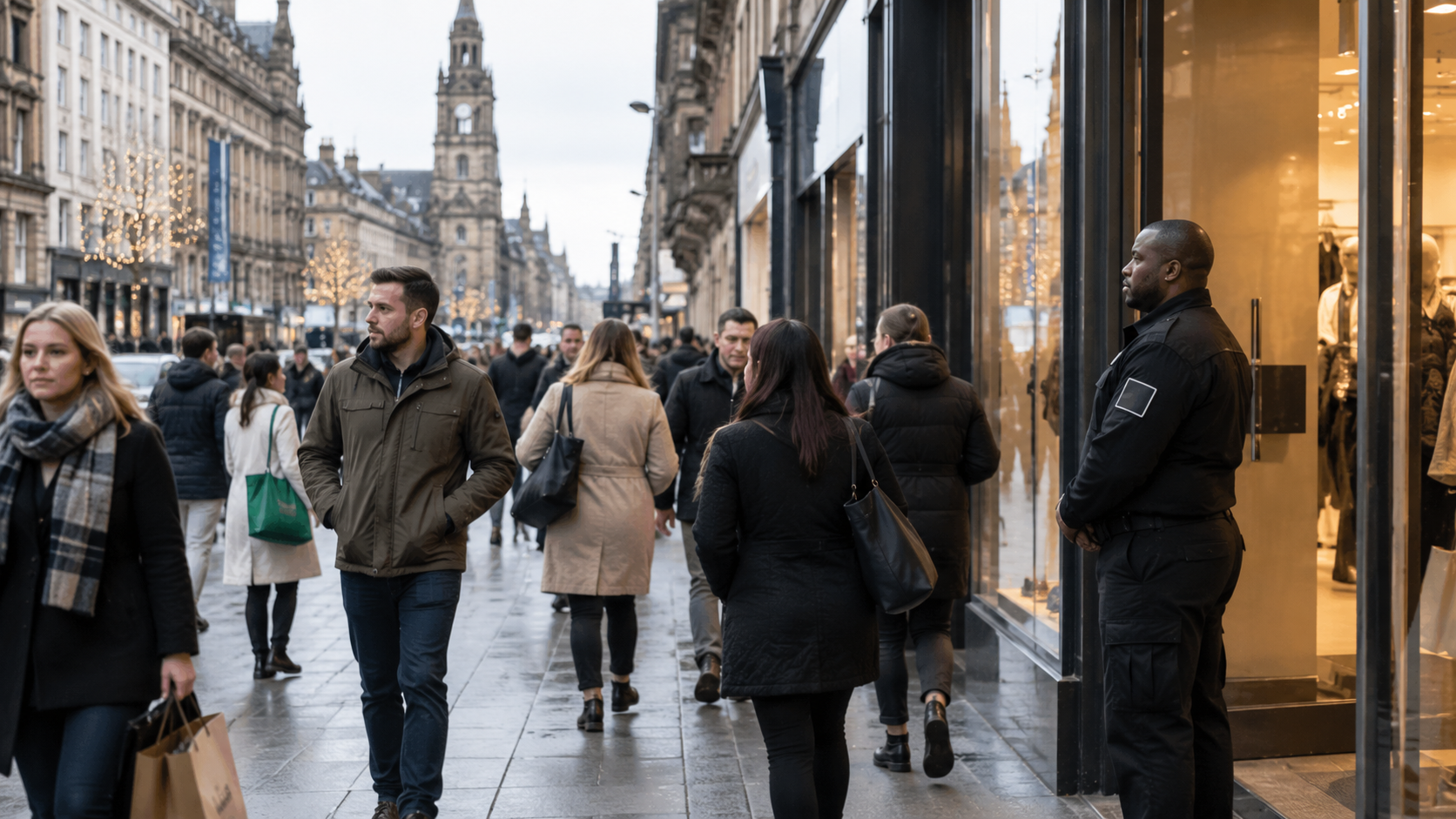
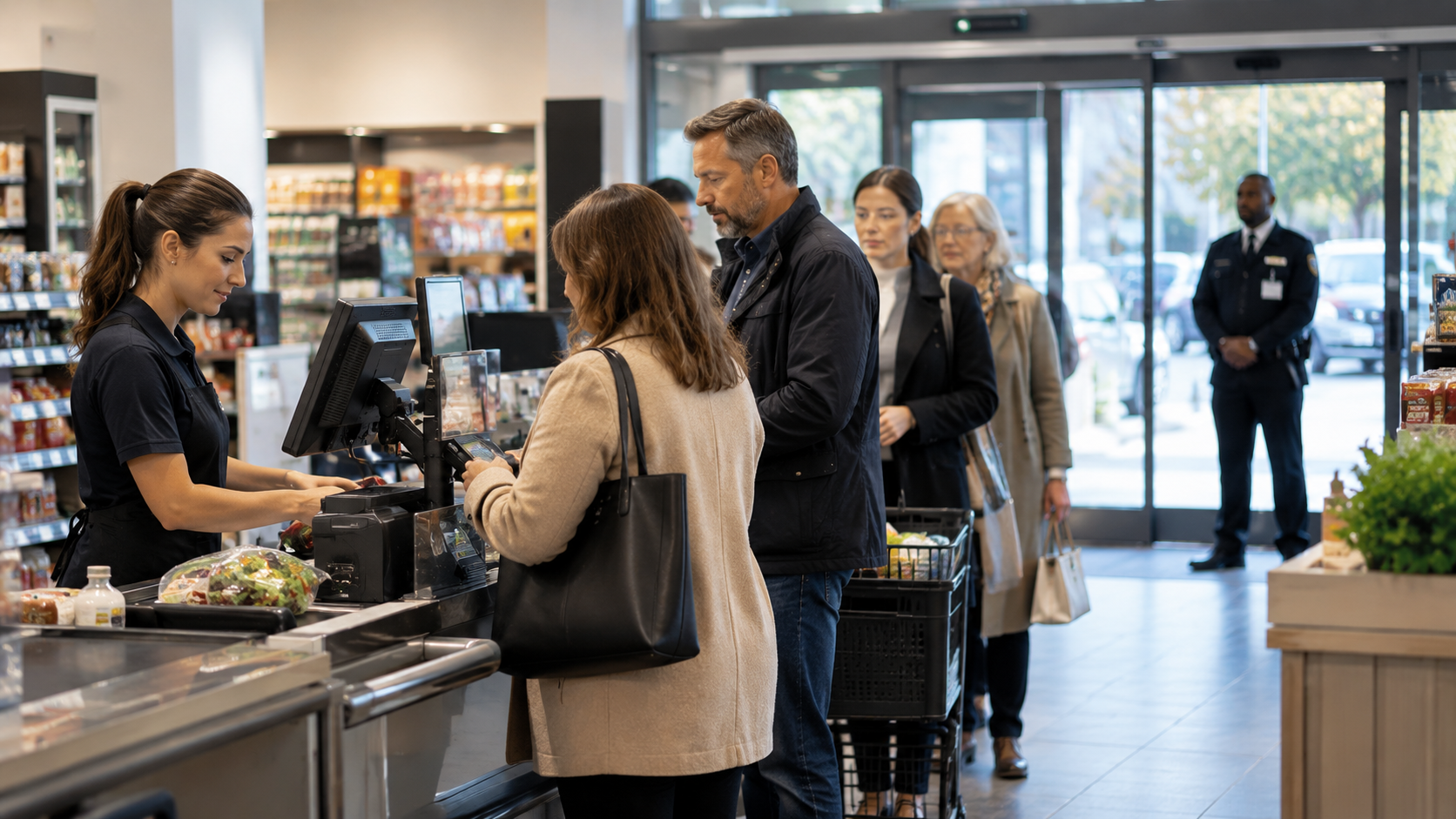
Retail trade in Bootle runs on tight margins and busy hours. Footfall rises and falls with train times. Local shops sit close to homes. Retail parks stay open and are easy to enter. These small details change risk every day.
The question of why Bootle businesses need Retail Security comes from daily reality, not theory. Theft often peaks at set times. Anti-social behaviour follows transport routes and evening movement. Staff face pressure when stores are full, shelves are busy, and exits stay open. A clear retail security presence can calm situations before loss or harm occurs.
Retail security in Bootle is not only about stopping crime. It helps stores trade safely, protects staff on the floor, and supports insurance and legal duties. When planned well, it fits into daily routines without slowing business down.

Understanding Retail Security in Bootle: Local Risks, Real Trading Conditions, and Daily Exposure
What Is Retail Security?
Retail security focuses on live trading spaces. It blends people, routines, and judgment. Guards move, observe, and engage when needed. This is different from static guarding, which suits fixed sites with limited public access.
In retail:
- Doors stay open
- Customers move freely
- Behaviour changes by hour
- Staff are exposed on the shop floor
A visible presence helps shape behaviour before loss occurs.
Why Static Guarding Falls Short in Retail Spaces
Static guarding works well in offices or depots. Retail needs flexibility.
Key differences include:
- Movement over fixed posts
- Early intervention, not reaction
- Staff-facing support during busy hours
- Deterrence through visibility, not barriers
Retail security adapts to flow. Static guarding waits for issues to arrive.
Local Crime Pressure and Why It Matters
Retail crime across Merseyside has become harder to ignore. The British Independent Retailers Association has warned that urgent action is needed to protect both staff and customers as pressure on shops continues to rise.
Official figures back this up. Office for National Statistics data shows 8,347 shoplifting offences were recorded by Merseyside Police in 2023. These numbers matter less as totals and more as signals. They point to repeated theft, fast exits, and rising confidence among offenders. For Bootle retailers, this changes planning.
When Theft Is Most Likely to Happen
Loss is rarely random. In Bootle, patterns tend to follow movement.
Common high-risk periods include:
- Late morning, when staffing is lighter
- Mid-afternoon, linked to school travel and buses
- Early evening, when commuter flow increases
- Short gaps between staff changes
Retail security planning focuses on these windows, not full-day coverage alone.
Retail Formats and Uneven Risk
Not all stores face the same exposure.
High-risk formats often include:
- Open high street units with quick exits
- Convenience retail near housing
- Retail parks with shared walkways
- Discount stores with high stock turnover
Each format changes how theft happens. Security presence adjusts based on layout, sightlines, and entry points.
Managing Anti-Social Behaviour in Retail Parks
Retail parks around Bootle often face issues that start outside the store. Loitering, noise, and disputes can drift toward entrances. Retail security helps by setting clear boundaries early.
Effective approaches include:
- Calm, visible positioning
- Short, respectful engagement
- Clear escalation points
- Consistent routines
The goal is to reduce disruption without creating tension.
Daytime vs Evening Risk in Bootle Stores
Daytime loss is often quiet, while evenings bring a different challenge.
Key differences:
- Daytime: speed, distraction, repeat visits
- Evening: lower footfall, higher tension, safety focus
Retail security shifts role as trading hours change. Planning for this reduces pressure on staff.
Seasonal Pressure and Temporary Risk
Sales periods, holidays, and winter trading stretch routines. Stores stay busy longer. Teams tire faster. New staff may not know the layouts well.
Retail security supports stability during these periods by:
- Maintaining routine
- Supporting closing procedures
- Reducing staff stress during peaks
Transport Flow and Retail Exposure
Bootle’s links to Liverpool mean footfall can rise fast. Bus stops and rail routes feed directly into shopping areas. Movement creates opportunity. Retail security planning accounts for these flows instead of treating stores as isolated spaces.
Retail Security Laws and Compliance in Bootle
SIA Rules and What They Mean for Bootle Stores
Retail security staff who carry out guarding, patrols, or loss prevention must hold a valid SIA licence. This is not optional. Licensing confirms that the individual meets training, identity, and conduct standards required for public-facing security work.
For Bootle retailers, this matters because guards often:
- Engage directly with the public
- Support staff during incidents
- Act as witnesses after theft or disorder
If licensing is missing or expired, liability shifts quickly toward the business using the service.
Penalties for Using Unlicensed Security
Using unlicensed personnel exposes retailers to more than fines. Enforcement action can include:
- Financial penalties
- Contract disputes
- Insurance complications
- Reputational damage
In serious cases, responsibility can extend to managers who approved the arrangement. For local chains operating across Merseyside, this risk mirrors concerns raised in areas like St Helens and Southport, where retail sites face similar exposure.
DBS Checks in Retail Settings
Not every retail security role requires a DBS check. Stores selling age-restricted items, operating late hours, or working close to vulnerable groups may face higher expectations.
DBS checks support:
- Safer staff interaction
- Stronger insurance positioning
- Clear incident accountability
Retailers should understand when checks apply rather than assume one rule fits all.
Insurance Expectations
Insurers look closely at security arrangements after a claim. They often ask:
- Were guards properly licensed?
- Was vetting completed to recognised standards?
- Were incidents recorded correctly?
Strong compliance supports claims defensibility. Weak compliance can reduce payouts or delay resolution. Retail security planning should align with insurance terms, not work around them.
GDPR and CCTV Use in Retail
Cameras are common in Bootle stores, but compliance is not automatic. GDPR rules apply to how footage is collected, stored, and shared.
Key principles include:
- Clear signage for customers
- Limited access to recordings
- Defined retention periods
- Secure handling of evidence
When retail security teams use body-worn cameras or support incident recording, procedures must match data protection rules. Poor handling can create new risks instead of reducing them.
VAT and Retail Security Services
Retail security services are subject to VAT in the UK. This affects budgeting and contract value, especially for multi-site operators.
Retailers should account for:
- VAT treatment in contracts
- Clear invoicing structure
- Consistency across locations
Misunderstanding VAT does not remove responsibility. Clear documentation avoids later disputes.
Local Authority Expectations and Shared Spaces
While Bootle does not sit under Manchester council rules, shared retail environments still face local authority oversight. Shopping centres, late openings, and seasonal events may trigger additional conditions.
Retailers operating across regions often see similar expectations applied in different forms. Planning with consistency helps avoid gaps when moving between areas.
Documents That Show Compliance
Retail businesses should expect to review and retain key documents. These often include:
- Proof of SIA licensing
- Vetting confirmation
- Insurance certificates
- Incident reporting frameworks
- Data protection policies
These documents support audits, insurance discussions, and internal reviews.
Licensing Changes and Deployment Planning
SIA requirements do change. Renewal cycles, training updates, and role definitions evolve over time. Retailers benefit from understanding how changes affect coverage, especially during busy periods.
Failure to plan around licensing updates can lead to sudden gaps in service.
Martyn’s Law and Retail Environments
Martyn’s Law is expected to place clearer duties on publicly accessible venues. Larger shopping centres and busy retail destinations will feel the impact first.
For retailers, this means:
- Stronger focus on preparedness
- Clearer responsibility lines
- Better incident planning
Legal and compliance requirements in Bootle retail security are not paperwork exercises. They shape how well a business is protected when pressure rises. When understood early, they support safer trading and stronger decision-making across the store.
Costs, Contracts, and Deployment in Bootle: Planning Retail Security Without Guesswork
Retail security costs in Bootle are shaped by how stores trade, not by fixed price lists. Location, opening hours, layout, and risk timing all influence spend.
Costs also vary by setting. A high street unit near transport routes faces different pressure than a retail park or a small parade. City centres often carry higher rates due to footfall and late trading. Suburban areas tend to see steadier patterns but longer exposure windows. Bootle sits between these models, which makes planning more nuanced.
What Drives Retail Security Costs in Bootle
Several factors shape pricing at a local level:
- Store size and layout
- Trading hours and late openings
- Daytime versus evening risk
- Footfall linked to transport
- History of incidents or loss
For many retailers, the cost of retail security in Bootle becomes clearer when broken down by time of risk rather than total hours. Short, targeted coverage during peak loss periods often delivers better value than blanket cover.
Deployment Timelines for New Stores
Speed matters during new openings. Empty shelves, unfamiliar staff, and early footfall attract attention. In Bootle, deployment timelines depend on planning rather than urgency alone.
Well-prepared sites can secure coverage within days. Delays often come from missing documents, unclear roles, or last-minute changes. Early engagement allows guards to understand layout, routines, and escalation points before doors open.
Contract Lengths and Why They Matter
Retail security contracts are rarely one-size-fits-all. Short-term agreements suit seasonal trade, refits, or trial periods. Longer contracts support stability and cost control.
Common contract approaches include:
- Rolling monthly terms for flexibility
- Fixed-term agreements for budget certainty
- Seasonal extensions during peak periods
Clear terms reduce disruption and support service continuity.
Notice Periods and Exit Planning
Notice periods protect both sides. Retailers benefit from knowing how quickly coverage can change if trading patterns shift.
Short notice offers flexibility but may affect pricing. Longer notice supports smoother transitions and avoids gaps. The right balance depends on how predictable the store’s risk profile is.
Wage Pressure and Pricing in 2025
Rising wages affect security pricing, but not always in obvious ways. In 2025, the focus is on stability rather than sudden jumps. Underpriced contracts often fail first during wage pressure, leading to missed shifts or inconsistent cover.
Retailers planning ahead avoid this risk by setting realistic budgets tied to coverage quality, not headline rates.
Inflation and Long-Term Planning
Inflation touches every part of retail operations. Security is no exception. Multi-year planning helps spread cost changes and avoids sharp increases.
Retailers who review contracts annually, rather than react mid-term, stay in control. This approach supports better forecasting and steadier service.
Insurance Support and Cost Justification
Security plays a quiet role in insurance discussions. Insurers look at risk control, not just incident totals. Clear coverage plans, reporting, and compliance can strengthen negotiations.
Using SIA licensed retail guards in Bootle supports this position. It shows due care and reduces questions after claims. Over time, this can influence premiums and excess terms.
Procurement Rules and Retail Security
The Procurement Act 2023 has changed how public and large organisations approach contracts. While many retailers fall outside the direct scope, the principles still apply.
Transparency, value, and compliance now carry more weight. Retailers working with structured procurement benefit from clear documentation and defined outcomes.
High Street and Local Deployment Considerations
Bootle’s high street environment brings unique challenges. Open access, repeat visitors, and shared space increase exposure. Retail security for high street stores Bootle often focuses on visibility and timing rather than force.
Deployment works best when aligned with:
- Opening routines
- Staff shift changes
- Known peak hours
- Closing procedures
Security that fits these patterns feels supportive, not intrusive.
Linking Cost to Prevention
Spending on security only makes sense when it reduces loss. Strong retail loss prevention strategies UK focus on early deterrence, calm presence, and clear reporting. These reduce repeat incidents and protect staff confidence.
Retail security planning in Bootle works best when cost, contracts, and deployment are considered together. When decisions are based on how stores actually trade, security becomes predictable, defensible, and easier to manage over time.
Training, Operations, and Daily Duties in Bootle Retail Security
Training That Fits Retail Spaces, Not Offices
Retail environments need practical training. Guards must read behaviour, not just follow rules. Training focuses on awareness, communication, and lawful response. It covers conflict management, observation skills, and how to support staff during pressure points. This matters in areas with mixed footfall and open access, where quick judgment prevents small issues from growing.
Training also links to compliance. Guards learn how to act within the law, protect evidence, and avoid actions that increase liability. In Bootle, where stores often face repeat visits, consistency matters more than force.
What Happens at the Start of a Shift
A retail security shift begins with context. Guards review the day’s layout, staffing levels, and any known risks. Promotions, deliveries, or local events change exposure. This short briefing sets priorities and reduces guesswork.
Early visibility on the floor establishes presence. This visible retail security presence influences behaviour before problems appear.
Managing Handovers Between Shifts
Retail rarely stops cleanly. Handovers bridge busy periods and quiet hours. Clear communication prevents gaps.
Guards pass on:
- Known individuals or patterns
- Areas needing attention
- Any unresolved issues
Good handovers keep coverage steady and reduce repeat loss. Poor ones create blind spots.
Patrols in Larger Retail Spaces
Patrols are not about fixed timing. They follow movement. In larger stores and retail parks, guards vary routes to avoid predictability. This approach supports shoplifting prevention in Bootle by reducing opportunity.
Patrol frequency changes by time of day. Peak hours need more visibility. Quieter periods focus on stock areas and exits. The aim is deterrence, not disruption.
Stockrooms and Loading Areas
Back-of-house spaces carry quiet risk. Stockrooms, delivery bays, and loading areas often see less supervision. Checks focus on access control, unusual movement, and delivery timing.
Guards support staff by:
- Monitoring shared access points
- Watching for tailgating
- Keeping routines consistent
This reduces internal loss and protects stock flow.
Daily Reporting and Evidence
Reporting supports accountability. Retail security teams record incidents, observations, and near misses. These records matter for insurance, compliance, and internal reviews.
Clear reports help businesses understand patterns linked to retail crime risk in Merseyside. Over time, this data supports better planning and resource use.
Responding During Peak Theft Hours
Peak periods demand a calm response. Theft during busy hours often relies on distraction. Guards focus on presence and early engagement. Intervention stays proportionate and lawful.
Escalation thresholds are clear. Guards support staff, protect customers, and avoid actions that increase risk. This approach keeps trading calm and controlled.
Closing and Secure-Down Routines
Closing time brings change. Customers leave, and staff count stock. Guards support this transition by managing exits, monitoring movement, and staying alert to late attempts.
Secure-down routines reduce end-of-day loss and protect staff during quieter moments.
24/7 Coverage in Retail Parks and Supermarkets
Round-the-clock sites operate differently. Retail parks face wider areas and shared access. Supermarkets see steady footfall across long hours.
Key differences include:
- Night-time focus on safety and access
- Early-morning delivery oversight
- Reduced staffing levels
Coverage adapts to these patterns rather than applying a single routine.
Why Operations Matter Locally
Retail security in Bootle works best when routines reflect how stores trade. Local retail security planning links training, patrols, and reporting into one flow. Guards become part of daily operations, not outsiders.
When done well, retail security supports staff confidence, protects stock, and keeps stores trading smoothly. It reduces loss quietly, without changing the customer experience.
Performance, Risks, and Daily Pressure in Bootle Retail Security
Retail security performance in Bootle is measured by fewer incidents, calmer stores, and staff who feel supported. The challenge is proving that value without disrupting trade or adding friction to daily routines.
Good planning focuses on outcomes, not appearances.
Measuring What Matters on the Shop Floor
Retailers often ask how to know if security is working. The answer is not one number. It is a small set of indicators that reflect real trading conditions.
Useful measures include:
- Frequency of theft attempts, not just confirmed loss
- Repeat incidents at the same time or location
- Speed of response when issues arise
- Staff confidence during busy periods
- Quality and consistency of incident reports
These indicators help link security presence to calmer trading, which supports wider retail loss prevention strategies UK without turning stores into controlled spaces.
Why KPIs Must Fit Bootle Trading Patterns
Bootle stores trade differently from enclosed centres. High streets, parades, and open retail parks create movement. KPIs should reflect that.
For example:
- A drop in confrontations during peak hours
- Fewer staff complaints during evenings
- Reduced shrinkage during short risk windows
These outcomes matter more than raw arrest figures or visible interventions.
Weather, Footfall, and Outdoor Exposure
Coastal weather affects retail behaviour. Rain, wind, and darker afternoons change how long people stay and how they move between stores. Outdoor retail areas feel this first.
Poor weather can:
- Reduce staff visibility
- Increase loitering under cover
- Create blind spots near entrances
Security performance must adapt. Presence shifts closer to access points. Patrols shorten but increase in frequency. These small changes reduce risk without extra hours.
Staff Fatigue and Incident Response
Long trading hours take a toll. Fatigue affects judgement, reaction time, and communication. This applies to both store staff and security teams.
When fatigue sets in:
- Small issues escalate faster
- Response becomes reactive
- Reporting quality drops
Good planning accounts for this by matching coverage to pressure points, not just opening hours. This also helps justify the cost of retail security in Bootle by aligning spend with actual need.
Health and Safety During Extended Trading
Retail environments bring shared responsibility. Long hours, lone working, and busy floors increase health and safety exposure.
Key considerations include:
- Safe intervention limits
- Clear escalation routes
- Protection for staff during closing routines
- Awareness of slip, trip, and crowd risks
Security teams support these duties by maintaining calm and visibility, not by taking control away from store managers.
High Street Risk and Liability Exposure
Open access creates opportunity. Retail security for high street stores in Bootle must manage fast entry, quick exits, and repeat visits. Poor planning here increases liability.
Common risks include:
- Unclear roles during incidents
- Gaps during staff changes
- Inconsistent coverage across the week
Licensing, Compliance, and Accountability
Using SIA licensed retail guards Bootle supports accountability when incidents escalate. Licensing shows that guards meet recognised standards and act within defined limits.
This matters when:
- Police review incidents
- Insurers assess claims
- Complaints are raised
Compliance with retail security legal requirements UK protects the business as much as the people on site.
Turning Performance Into Stability
Strong retail security performance in Bootle is quiet. It reduces pressure without changing the customer experience. It supports staff, protects stock, and limits exposure.
When risks are understood and measured properly, security becomes a steady part of operations. Not a reaction or burden. Just another system working in the background to keep the store trading safely.
Technology and Future Trends in Bootle Retail Security
Retail security in Bootle is evolving in quiet, useful ways. Technology no longer sits apart from people on the floor. It supports them. The change is less about replacing presence and more about helping teams see risk earlier and respond with confidence.
This matters in Merseyside, where retail spaces are open, shared, and shaped by constant movement. Tools must fit how stores trade, not how systems look on paper.
From Cameras Alone to Joined-Up Protection
Early retail security relied on cameras as witnesses. Today, they act as partners. When systems are integrated, security teams gain context. They see where movement builds, where exits stay busy, and where blind spots appear.
This approach supports retail security in Bootle by linking live awareness with human judgment. Guards stay focused on behaviour, not screens.
Post-COVID Behaviour and New Risk Patterns
Shopping habits changed after COVID. Visits became shorter. Peak times compressed. Customers move with purpose. This increases speed-based theft and pressure at entrances.
Security planning now adapts by:
- Focusing on short risk windows
- Adjusting coverage around delivery peaks
- Supporting staff during quick surges
Technology helps teams adapt without adding friction.
AI as Support
AI tools now assist with pattern recognition. They flag repeat movement, queue build-up, or unusual behaviour. They do not make decisions, but guards do.
Used well, AI supports shoplifting prevention in Bootle by:
- Highlighting risk early
- Reducing guesswork
- Allowing guards to stay present on the floor
Overselling AI creates gaps. Balanced use strengthens control.
Remote Monitoring as a Support Layer
Remote monitoring adds depth, not distance. It supports on-site teams by watching wider areas, shared spaces, and quieter periods. Alerts guide attention without pulling guards away from customers.
This model works best when paired with local presence and clear escalation paths.
Drones and Large Retail Parks
Drones attract interest, but relevance depends on scale. In Bootle, they suit larger retail parks with wide perimeters. They are less useful for high streets or enclosed sites.
Their value lies in:
- After-hours checks
- Perimeter review
- Event-based monitoring
They supplement, not replace, routine coverage.
Predictive Tools and Smarter Planning
Predictive analytics help retailers plan ahead. By reviewing past incidents, footfall data, and seasonal trends, teams adjust coverage before loss appears.
This supports local retail security planning by:
- Matching presence to timing
- Reducing reactive spending
- Improving consistency
Planning beats reaction every time.
Martyn’s Law and What Comes Next
Martyn’s Law will place clearer duties on publicly accessible venues. Retail destinations will need stronger preparedness, clearer roles, and better coordination.
Technology supports this by improving:
- Incident awareness
- Communication
- Evidence handling
Preparation does not mean alarm. It means readiness.
Choosing the Right Partner for the Future
Technology only works when managed well. A trusted security service in Bootle understands how tools fit real trading. They choose systems that support people, not distract them.
Across Bootle, the future of retail security is balanced. Human presence stays central. Technology strengthens it. When both work together, stores stay calm, compliant, and ready for what comes next.
Conclusion: Practical Way for Retail Businesses in Bootle
Understanding why Bootle businesses need Retail Security comes down to daily reality. Open layouts, shifting footfall, and transport links create exposure that changes by the hour. Loss, staff safety, and compliance risks rarely appear all at once. They build quietly when planning falls behind how stores actually trade.
Retail security works best when it supports people on the floor, fits local movement, and meets legal duties without adding friction. When planned well, it protects staff, reduces loss, and strengthens insurance and compliance positions at the same time.
If you are reviewing risk, adjusting coverage, or planning ahead, Region Security Guarding provides retail-focused support shaped around local trading conditions. Contact us to discuss retail security in Bootle with clarity, not pressure.
Frequently Asked Questions
1. Why is retail security important for stores in Bootle?
Retail security in Bootle helps manage open access, repeat footfall, and time-based risk. It protects staff, reduces loss, and supports safer trading without disrupting customers.
2. How does shoplifting prevention work in Bootle retail areas?
Shoplifting prevention in Bootle focuses on visibility, timing, and calm intervention. A clear presence often stops theft before it starts, especially during peak movement hours.
3. Are retail crime risks in Merseyside affecting small shops?
Yes. Retail crime risk in Merseyside impacts both large and small stores. Smaller sites often face repeat visits, making early deterrence more important than reaction.
4. What type of retail security works best for high street stores in Bootle?
Retail security for high street stores in Bootle works best when guards stay visible, mobile, and aware of entrances, exits, and nearby transport routes.
5. How much does retail security usually cost in Bootle?
The cost of retail security in Bootle depends on timing, coverage hours, and layout. Targeted daytime or evening coverage often delivers better value than full-day coverage.
6. Do retail security guards need special licences in the UK?
Yes. Retail security legal requirements in the UK include valid SIA licensing. Using licensed guards supports compliance, insurance claims, and incident handling.
7. How does visible security help retail staff?
A visible retail security presence reduces pressure on staff, limits confrontation, and improves confidence during busy or late trading periods.
8. How does retail security support long-term loss reduction?
Strong retail loss prevention strategies in the UK focus on early deterrence, consistent routines, and clear reporting. This reduces repeat loss and improves control over time.