Retail security in Barrow-in-Furness doesn’t follow the same patterns seen in larger cities. The risks are quieter, more familiar, and often more persistent. That’s precisely why they’re easy to underestimate.
Smaller coastal towns tend to experience repeat retail crime, not because crime rates are necessarily higher, but because opportunities are predictable. Stores trade to regular hours. Footfall peaks and drops are well known.
Offenders don’t need to test dozens of locations. They return to the same shops, often multiple times a week, sometimes on the same day. Over time, small losses stack up, staff confidence erodes, and incidents stop being reported because they feel “normal”.
There’s also the issue of community familiarity. In Barrow-in-Furness, many customers are known faces. That familiarity can soften boundaries. Suspicious behaviour is easier to excuse.
Staff hesitate to challenge someone they recognise, or someone who appears connected locally. For offenders, that hesitation becomes a shield. It allows theft, intimidation, or anti-social behaviour to blend into everyday trading.
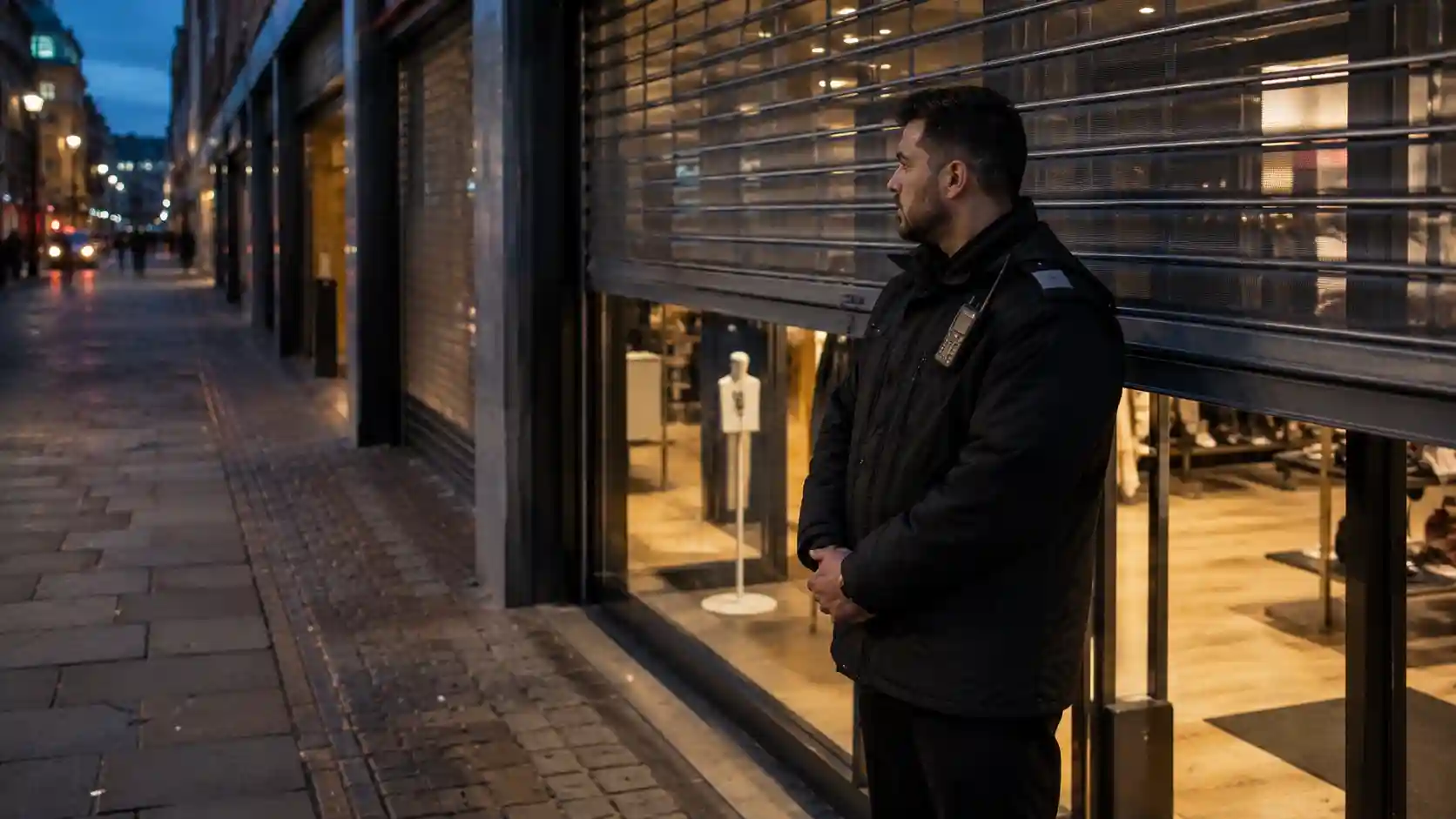
Retail security, in this context, isn’t about turning shops into high-control environments. It’s about restoring balance. Providing a visible, consistent presence that supports staff decisions, discourages repeat behaviour, and introduces accountability where informality has quietly increased exposure.
For local retailers, the question isn’t whether serious incidents will happen. It’s how long low-level issues are allowed to continue before they become costly, disruptive, or harder to manage.
Table of Contents
Retail Security Basics In Barrow-in-Furness
What Retail Security Means For Local Businesses
In Barrow-in-Furness, retail security is not usually about serious incidents. It is about control and consistency. It is also about protecting profits that are already under pressure.
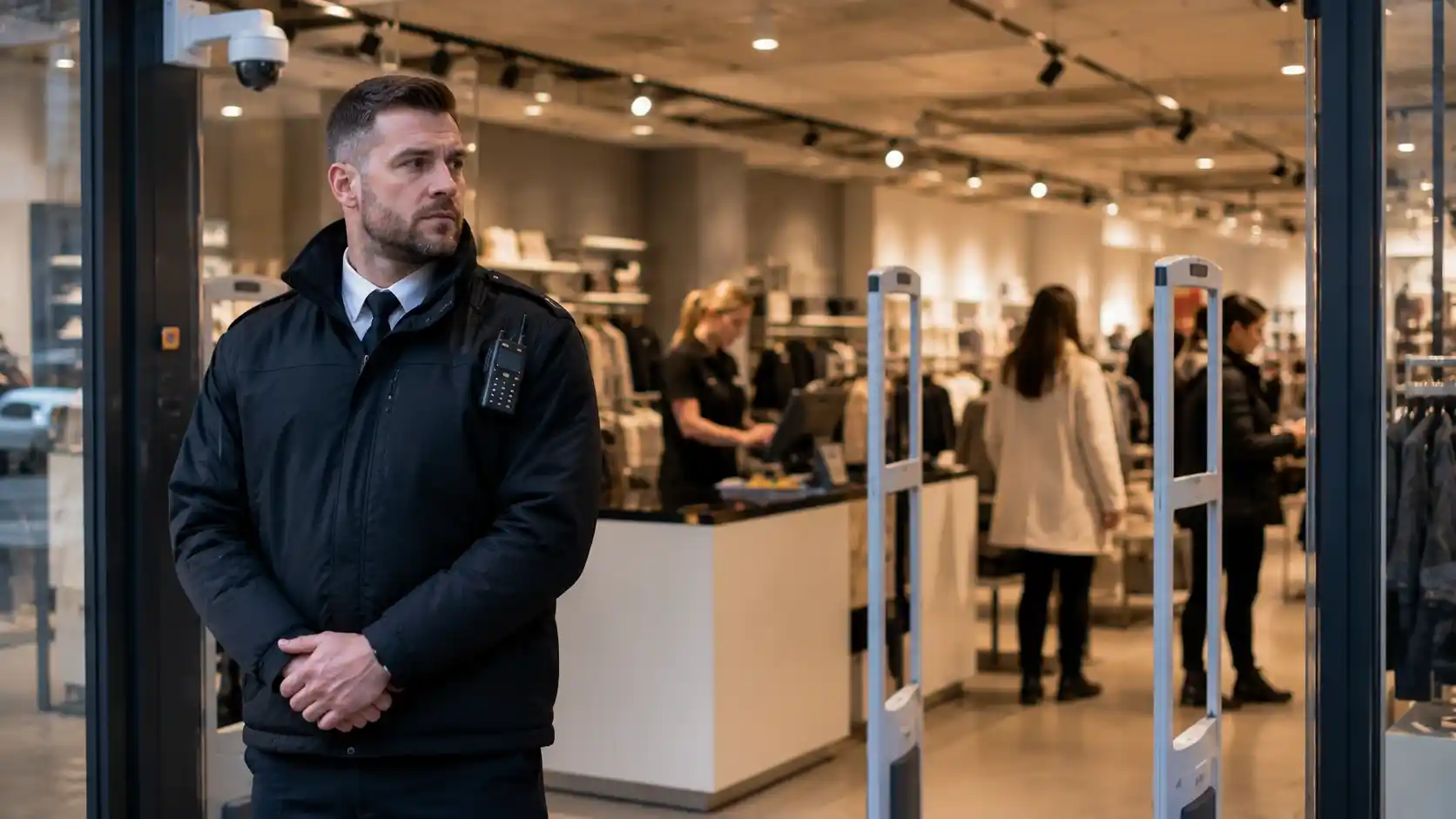
In simple terms, retail security means having a visible and responsible presence in the store. Someone who supports staff, puts off repeat problems, and steps in early when something feels wrong. This helps stop small issues from turning into loss or conflict.
This is different from static guarding or remote-only monitoring. A guard who stands still may reassure people, but their impact is limited. Remote systems can see problems, but they cannot act.
Retail security sits between the two. It is active and human. It moves with customers. It understands busy times and normal behaviour. It knows the difference between someone browsing and someone pushing limits.
Retail security works best when it fits naturally into daily trading, not when it feels added on at the last minute.
How Barrow-in-Furness Crime Patterns Influence Retail Security Needs
Local crime behaviour shapes security decisions more than headline statistics ever will. In smaller retail zones like Barrow-in-Furness, offences are often repeat-led. The same individuals return because the environment feels familiar and predictable. There’s less anonymity than in Liverpool or Manchester, but paradoxically, that familiarity can lower resistance.
Repeat offences are more common because:
- Store layouts don’t change often
- Staffing patterns are visible
- Response feels slower or informal
- Low-value theft is tolerated until it accumulates
Retailers in towns such as Preston, Blackburn, or Burnley often report similar patterns. Once behaviour goes unchallenged, it embeds. Security decisions, therefore, are less about deterring “unknown threats” and more about breaking routines that offenders rely on.
Peak Retail Crime Hours In Barrow-in-Furness
Most shops are most vulnerable when they are busiest, not when they are closed. Late morning to mid-afternoon consistently sees higher theft and anti-social behaviour. That window overlaps with school hours, lunch breaks, and short commuter visits. Staff are distracted. Floors are busy. Oversight slips.
School dismissal times are particularly sensitive. Younger groups moving through town, waiting for transport, or congregating near retail parks can unintentionally increase risk. The behaviour isn’t always criminal, but it creates cover. Retailers across Wigan, Bolton, and Stockport see the same pattern.
Security that aligns with these hours, rather than blanket coverage, is usually more effective and easier to justify operationally.
Retail Theft And Shoplifting Risks In Barrow-in-Furness
Retail theft locally has shifted. Opportunistic, low-value, daytime theft now drives demand more than nighttime break-ins. Items are taken quickly, often openly, relying on staff’s reluctance to challenge.
Several factors explain this change:
- Reduced tolerance for confrontation by shop staff
- Faster resale through informal channels
- Familiarity with store routines
For many retailers, losses are small per incident but frequent. That frequency is what makes security relevant, not as a reaction, but as a stabiliser.
Differences Between Daytime And Night-Time Retail Security Risks
During trading hours, risks are human. Confrontation, intimidation, distraction, theft, and staff vulnerability dominate. After hours, risks become structural: forced entry, vandalism, or opportunistic damage.
Daytime security focuses on presence and intervention. Night-time security focuses on detection and response. Treating them the same is a common mistake, especially in smaller towns where budgets are tight.
Seasonal And Event-Driven Retail Security Pressures
Summer tourism, school holidays, and local events increase footfall without increasing staff capacity. That imbalance creates risk.
Seasonal trade in coastal areas amplifies this effect, even if Barrow-in-Furness is not a traditional tourist hub like Southport. Temporary spikes still matter. Short-term visibility often prevents long-term problems.
Anti-Social Behaviour In Retail Parks And Town-Centre Shops
Retail security reduces anti-social behaviour by introducing certainty. Not force, certainty. People behave differently when boundaries are clear and consistently enforced.
In Barrow-in-Furness retail parks, visible security works because it disrupts lingering and loitering patterns. In town centres, it supports staff confidence. The effect is subtle but cumulative.
Economic Factors Shaping Retail Security Demand
Cost-of-living pressure doesn’t reduce retail crime. It changes it. Theft becomes more targeted, more frequent, and more rationalised.
Retailers across Rochdale, Oldham, Bury, and the wider North West see the same trend. Economic downturns don’t remove risk; they reshape it. Security decisions that recognise this reality tend to be more resilient and more defensible when budgets are reviewed.
Legal And Compliance Requirements For Retail Security In Barrow-in-Furness
SIA Licensing Requirements For Retail Security Personnel
Retail security in Barrow-in-Furness sits within a clearly defined legal framework. Anyone doing licensable security work must have a valid SIA licence. This includes guarding shops, stopping theft, or controlling access. There are no exceptions. This applies to small shops, family-run stores, and temporary cover during busy periods.
Using unlicensed personnel exposes the retailer, not just the contractor. If an incident occurs, enforcement bodies look beyond intent and focus on compliance. In practice, this means retailers must verify licences, not assume they exist. The same rules apply whether the business operates solely in Barrow-in-Furness.
If unlicensed personnel are used, consequences can include:
- Criminal liability for both the individual and the business
- Immediate contract termination
- Insurance invalidation
- Increased scrutiny during future inspections
This is one area where “we didn’t realise” carries little weight.
Legal Penalties For Non-Compliant Retail Security Arrangements
Non-compliance rarely surfaces quietly. It usually appears after something goes wrong. It includes injury, an allegation, and a claim. At that point, documentation and licensing history are examined in detail.
Retailers can face:
- Fines for using unlicensed guards
- Civil liability if staff or customers are harmed
- Difficulty defending insurance claims
Insurers, particularly those covering multiple sites across areas like Liverpool, Preston, or Stockport, routinely request proof of compliant security arrangements. If gaps are found, claims may be delayed, reduced, or refused altogether.
DBS And Vetting Expectations For Retail Security Staff
Not every retail security role requires a DBS check, but vetting is still expected. The standard most insurers and auditors look for is BS 7858 screening. This covers employment history, identity, and right-to-work verification.
Where security staff interact closely with vulnerable individuals, handle incidents involving minors, or operate in sensitive retail environments, enhanced checks may be required. Vetting protects retailers in two ways. Legally, it demonstrates due diligence. Reputationally, it reduces the risk of avoidable incidents that damage trust.
Insurance Requirements When Hiring Retail Security
Retail security is often scrutinised through an insurance lens. Insurers expect:
- Valid SIA licensing
- Appropriate public liability cover
- Employers’ liability insurance
- Clear scope of duties
Insurers look at several things when they assess risk. These include location, footfall, past incidents, and opening hours. A town-centre shop in Barrow-in-Furness may be seen differently from a retail park in Trafford or a busy store in Birkenhead. But the rules around compliance are the same.
Security plans that match the level of risk are easier to explain. Clear records also help. When premiums are reviewed, well-documented security is easier to defend.
Retail Security, CCTV, And Data Protection Compliance
CCTV and retail security often operate together, which brings GDPR obligations into play. The presence of security staff does not remove the retailer’s responsibility as the data controller.
Key compliance points include:
- Clear signage informing customers of CCTV use
- Lawful purpose for monitoring
- Secure handling and storage of footage
- Defined access controls
If guards use CCTV systems, responsibility for data handling must be contractually clear. Ambiguity here is a common failure point during audits, particularly for retailers operating across multiple sites in places like Rochdale, Oldham, or Wigan.
VAT Rules For Retail Security Services
Retail security services are subject to VAT at the standard rate. Confusion often arises when businesses compare security costs with VAT-exempt services, leading to budgeting errors.
VAT misunderstandings can:
- Distort cost comparisons
- Cause procurement delays
- Trigger accounting discrepancies
For retailers with multiple locations across the North West, consistency in VAT treatment matters, especially when contracts are centrally managed.
Local Authority Expectations For Retail Security
Local authorities do not usually mandate retail security outright, but expectations exist. These may surface during licensing applications, planning discussions, or after repeated incidents.
Inspections or enforcement issues tend to arise when:
- Anti-social behaviour impacts public areas
- Security arrangements appear inadequate
- Complaints escalate
Retailers in Barrow-in-Furness face similar expectations to those in St Helens or Burnley: show that risks are understood and proportionately managed.
Proving Retail Security Compliance To Insurers And Auditors
After an incident, paperwork matters. Insurers and auditors look for evidence, not explanations.
Useful documentation includes:
- Licence verification records
- Incident logs
- Training confirmations
- Patrol or attendance records
Well-kept records demonstrate consistency. Without them, even compliant arrangements can be questioned.
Security Company Licensing And Client Liability
Retailers often assume liability sits entirely with the security provider. It doesn’t. If a contractor operates without proper licensing, responsibility can transfer to the client.
This is why security company licensing matters. Failures upstream quickly become downstream problems for retailers, especially those managing multiple sites across Wirral, Southport, or Blackburn.
How SIA Regulation Changes Affect Retail Security Hiring
Regulatory changes affect availability, cost, and continuity. Licence delays, renewals, or rule changes can disrupt coverage if planning is weak.
Compliance affects continuity because:
- Non-compliant staff cannot legally work
- Replacement takes time
- Short-notice gaps increase risk
Retailers who understand this are better prepared to absorb change without disruption.
Labour Law And Overtime Considerations In Retail Security
Working-time regulations affect how security is deployed. Excessive overtime increases fatigue, risk, and liability.
Misuse of overtime creates compliance issues that can surface during disputes or investigations. Retailers benefit when shift structures are lawful, realistic, and documented.
Post-Brexit Workforce Rules And Retail Security Continuity
Workforce changes since Brexit have affected security provision nationwide. Retailers cannot control this, but they can plan for continuity.
Understanding right-to-work checks and contingency planning is now part of responsible retail security management.
Retail Security And Event Licensing Obligations
Retail premises hosting promotions, late trading, or public events may fall under additional licensing rules. Security arrangements often form part of approval.
Clear planning helps prevent last-minute refusals or conditions.
Police Collaboration And Retail Security Deployment
Local police intelligence often shapes effective retail security. Patterns, timings, and known behaviours inform patrol positioning.
Collaboration doesn’t mean dependence. It means alignment. Retailers who engage early tend to deploy security more effectively, not more heavily.
Costs, Contracts, And Deployment Of Retail Security In Barrow-in-Furness
Typical Retail Security Costs In Town-Centre Locations
Retail security costs in Barrow-in-Furness town centre usually sit in the middle of the North West range. Prices are not as high as in busy areas in Liverpool or Manchester. But the area is not low risk either.
Footfall is focused on a small number of streets. Opening hours are predictable. The same issues often happen again and again. All of this affects how security is priced.
Visibility also matters. Having a guard clearly seen during busy hours costs more. This is because the role needs focus, good judgment, and steady presence.
Stores with long opening hours or late evening trading usually pay more. Retailers in places like Preston, Blackburn, and Burnley see similar pricing patterns, even though their town centres are of different sizes.
Retail Security Costs In Suburban And Out-Of-Town Areas
Costs outside the town centre can be misleading. Suburban stores or out-of-town retail parks may appear calmer, but isolation increases exposure. Fewer staff, limited passive surveillance, and slower response times all factor in.
Security costs in these areas often reflect:
- Longer lone-working periods
- Reduced natural footfall deterrence
- Higher reliance on a single guard
Retail parks in places like Wirral, Southport, or Trafford face comparable challenges. Lower footfall does not automatically mean lower risk, and pricing adjusts accordingly.
Deployment Timelines For Retail Security Services
Deployment is rarely instant. In Barrow-in-Furness, initial deployment can take anywhere from a few days to several weeks, depending on availability, licensing checks, and contract scope.
Delays are more common in smaller towns due to:
- Limited local guard availability
- Licence verification processes
- Short-notice requests during busy periods
Retailers who wait until incidents escalate often wait longer for coverage than those who plan ahead.
Contract Length Options For Retail Businesses
Retail environments favour stability. Short contracts may seem flexible, but they introduce risk. Guards unfamiliar with a site take time to become effective.
Longer contract support:
- Consistency of presence
- Better understanding of store routines
- Fewer gaps during holidays or sickness
Retailers operating across Greater Manchester, including Bolton, Oldham, and Stockport, often standardise contract terms to reduce disruption and maintain continuity.
Notice Periods And Service Continuity Risks
Abrupt contract endings create exposure. When notice periods are unclear or ignored, coverage gaps appear quickly.
Notice periods matter because:
- Replacement services take time to arrange
- Temporary gaps increase incident likelihood
- Insurers may question continuity
Even a short lapse can undermine months of stable operation.
Wage Pressure, Inflation, And Retail Security Pricing
Wage increases and inflation feed directly into security pricing. Guards are frontline staff, and costs cannot be absorbed indefinitely.
Underpriced contracts often fail because:
- Staffing becomes inconsistent
- Fatigue increases
- Service quality declines
Retailers across Merseyside and Lancashire have seen the impact of unrealistic pricing models play out in service disruption rather than savings.
Insurance Premium Reductions Through Retail Security
Retail security can support insurance discussions, but reductions are not automatic. Insurers look for evidence.
Commonly requested proof includes:
- Incident logs
- Consistent coverage records
- Licensing and compliance documentation
Security reduces risk. It does not eliminate it.
Public Sector Procurement Rules And Retail Security
Retailers operating within public-sector-linked sites must consider procurement rules. The Procurement Act places emphasis on transparency, compliance, and value.
For tenders or shared sites, non-compliant security arrangements can disqualify bids. Retailers in Salford, Tameside, and Bury face similar scrutiny, making compliance a commercial necessity rather than a formality.
Training, Operations, And Daily Retail Security Duties
Training Standards For Retail Security Environments
Retail security training starts with the obvious: licensing, legal awareness, and conflict management, but that’s only the foundation. What actually matters on a busy shop floor is judgment. Knowing when to step in, when to observe, and when to let staff handle a situation themselves.
Retail-facing roles demand different skills from warehouse or construction guarding. Guards must read body language, understand customer flow, and communicate calmly under pressure. In towns like Barrow-in-Furness, where faces become familiar, that skill matters even more. Over-assertive behaviour damages trust. Passive behaviour invites repeat loss.
Across Lancashire, Merseyside, and Greater Manchester, whether in Preston, Bootle, or Stockport, retailers see better outcomes when training focuses on:
- De-escalation over confrontation
- Situational awareness during peak trade
- Legal boundaries around detention and use of force
Good training reduces incidents not by force, but by timing.
Start-Of-Shift Procedures In Retail Security
The first fifteen minutes of a shift quietly set the tone for everything that follows. Miss something early, and it tends to resurface later, usually at the worst moment.
Key checks at the start of a retail security shift include:
- Reviewing previous incident notes
- Identifying known repeat issues or individuals
- Checking vulnerable areas of the store
- Aligning with store management on the day’s trading patterns
Early errors, miscommunication, missed briefings, and unclear priorities often explain why incidents repeat. This is true whether the store is in Barrow-in-Furness or a high-footfall unit in Liverpool city centre.
Shift Handovers And Incident Continuity
Retail crime is rarely isolated. Most issues build over time. Handovers are where continuity either survives or collapses.
Effective handovers reduce repeat incidents by passing on:
- Known behavioural patterns
- Recent near-misses
- Times and locations of concern
- Staff observations that didn’t escalate
Without this, each shift starts blind. Retailers in Bolton, Rochdale, and Oldham often discover that repeat theft wasn’t clever; it was simply forgotten.
Patrol Frequency And Visibility During Trading Hours
There’s no perfect patrol schedule. Predictability invites exploitation. Too frequent, and the presence fades into the background. Too rare, and an opportunity opens up.
Effective retail patrols are irregular by design. Short passes. Longer pauses. Changes in direction. The aim is subtle uncertainty. Customers feel reassured. Offenders feel watched. Unpredictability works because theft often relies on timing, not courage.
Alarm Response And Early-Shift Incidents
Alarm activations early in the day are often dismissed as faults. Sometimes they are. Sometimes they’re test runs.
Retail security responses focus on speed and judgment. Arriving too slowly, and damage is done. Overreact, and normal trade is disrupted. In retail parks across Trafford or Wirral, response timing often determines whether an incident stays minor or escalates into police involvement.
Early-shift incidents matter because they shape behaviour for the rest of the day.
Daily Reporting And Documentation Requirements
Reporting isn’t paperwork for its own sake. It’s protection. For the retailer.
Daily records typically include:
- Incident summaries
- Interventions made
- Observations of suspicious behaviour
- Times, locations, and outcomes
These records protect businesses legally, especially when claims or disputes arise. Retailers in Burnley or St Helens often only realise their value after an insurer asks for evidence.
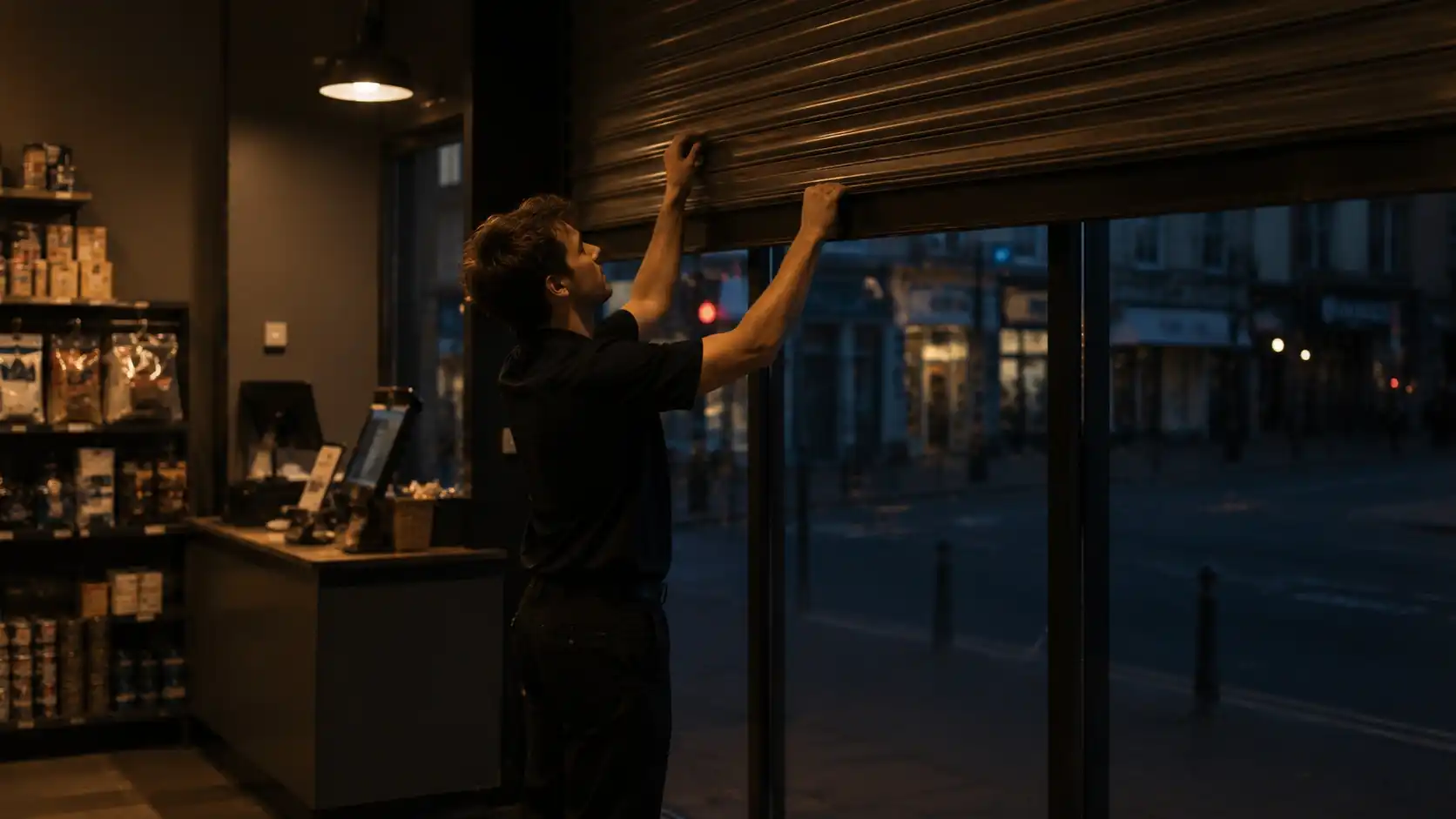
End-Of-Day Secure-Down Procedures
Store closing is a vulnerable moment. Staff are tired. Routines loosen. Attention shifts to leaving, not observing.
Secure-down procedures reduce overnight incidents by:
- Confirming doors, shutters, and access points
- Managing lingering customers
- Deterring opportunistic behaviour during cashing up
Many overnight incidents begin in the final minutes of trade, not after the store is empty.
Shift Patterns For Extended Retail Coverage
Extended hours and late trading introduce fatigue risk. Poor scheduling increases mistakes, slow reactions, and inconsistent behaviour.
Well-planned shift patterns balance coverage with alertness. Poor ones create visible gaps. Retailers across Bury, Tameside, and Southport consistently see better outcomes when shifts are realistic, not stretched.
In retail security, effectiveness rarely comes from doing more. It comes from doing the right things, at the right moments, consistently.
Performance, Risks, And Operational Challenges In Retail Security
Retail Security Performance Indicators
Measuring retail security performance is rarely straightforward. Many retailers default to a single question: Have there been incidents? The problem is that the absence of incidents doesn’t always mean effective security. Sometimes it simply means problems are going unreported, unmanaged, or displaced to quieter moments.
The KPIs that matter most to retailers tend to be practical rather than numerical. They focus on control, confidence, and consistency:
- Reduction in repeat theft or anti-social behaviour
- Improved staff confidence in challenging behaviour
- Faster resolution of low-level incidents
- Clear, usable reporting after events
Retailers in Barrow-in-Furness often share a similar experience to those in Preston or Blackburn: performance improves when security is assessed on pattern disruption, not perfection. One quiet week proves very little. Six months without repeat issues in the same areas proves much more.
Weather And Environmental Impacts On Retail Security
Coastal weather changes how retail security works day to day. Wind and rain affect how guards move. Poor visibility makes it harder to spot problems. Even a guard’s presence can be less noticeable in bad weather.
Bad weather also increases easy, low-level crime. Fewer people hang around. Natural watchfulness drops. Staff focus more on staying warm and dry than on what’s happening around them. Retailers in Barrow-in-Furness see the same patterns as exposed areas in Merseyside and the Wirral during winter.
Security works best when it adapts. Shorter patrol routes help. Spending more time indoors during heavy rain makes sense. Staying in close contact with store staff matters more in poor conditions. When security ignores the weather, it slowly becomes less effective.
Health And Fatigue Impacts On Retail Security Effectiveness
Fatigue is one of the least discussed risks in retail security, yet one of the most damaging. Long shifts, irregular hours, and constant low-level vigilance take a toll.
As fatigue increases:
- Reaction times slow
- Judgment becomes inconsistent
- Communication with customers deteriorates
In customer-facing environments, this matters. A tired guard is more likely to escalate a minor issue or miss a developing one entirely. Retailers across Greater Manchester, including Salford, Bury, and Trafford, often see performance dip not because guards lack skill, but because schedules stretch too far.
Well-managed security recognises human limits. Poorly managed security ignores them and pays later through incidents or complaints.
Mental Strain And Night-Shift Challenges
Night retail security carries a different type of pressure. Fewer interactions. Longer quiet periods. Sudden spikes of activity. Without oversight, performance can drift.
Night shifts require:
- Clear task focus
- Regular check-ins
- Structured routines without monotony
Without these controls, vigilance drops. This pattern appears across smaller towns and larger centres alike, from Burnley to Liverpool. The risk isn’t constant danger. It’s complacency creeping in unnoticed.
Retailers who treat night security as a distinct operational challenge, not just an extension of daytime coverage, tend to avoid this decline.
Environmental And Safety Regulations Affecting Retail Patrols
Retail patrols, particularly outdoors, must comply with health and safety requirements. Slips, trips, uneven surfaces, and poor lighting all carry liability.
Regulations affecting patrols typically include:
- Safe access routes
- Adequate lighting levels
- Weather-appropriate risk assessments
- Clear lone-working procedures
Breaches don’t just endanger security staff. They expose retailers to liability if an injury occurs. Inspections following incidents often examine whether risks were known and ignored.
Retailers operating across Lancashire, from Wigan to Rochdale, frequently encounter this issue after the fact. The lesson is consistent: compliance isn’t paperwork. It’s protection.
Managing Risk Without Over-Control
The biggest operational challenge in retail security is balance. Too much control disrupts trade. Too little invites repeat issues. Effective performance sits between the two.
Security works best when it:
- Supports staff without replacing them
- Adapts to environment and timing
- Recognises human limits
- Measures success by stability, not silence
Retailers who understand this tend to experience fewer surprises. Not because nothing ever happens, but because when it does, it’s anticipated, contained, and easier to manage.
Technology And Future Trends In Barrow-in-Furness Retail Security
Integrating Retail Security With CCTV Systems
CCTV and retail security work best when they’re treated as one system, not two separate tools. Cameras provide coverage and hindsight. Guards provide judgment and immediate response. One without the other leaves gaps.
In practical terms, CCTV helps guards see patterns they might otherwise miss, repeat movements, quiet corners, and changing behaviour at peak times. Guards, in turn, give CCTV context.
They can decide whether something flagged on screen is harmless or needs intervention. Retailers often find that incidents reduce not because cameras are added, but because footage is actively used to guide presence on the floor.
Technology alone is insufficient because it doesn’t intervene. Cameras don’t reassure staff. They don’t de-escalate conflict. They don’t change behaviour in the moment. That’s where human presence still matters.
AI Surveillance As A Support Tool In Retail Security
AI surveillance has become more realistic, and more limited at the same time. It can flag unusual movement, repeated visits, or dwell time in sensitive areas. That’s useful. It saves attention. It highlights patterns.
What it cannot do is understand intent. A parent distracted by a child can look identical to someone preparing to steal. Human judgement remains critical at the decision point: when to approach, when to observe, when to step back.
Retailers across Greater Manchester, including Salford and Stockport, increasingly treat AI as an early-warning system rather than an authority. Used that way, it improves outcomes without creating friction.
Remote Monitoring And Retail Security Coordination
Remote monitoring adds value when it’s connected to on-site action. Alone, it’s slow. Combined with a visible presence, it becomes a force multiplier.
It’s most effective during:
- Early mornings and late evenings
- Quiet trading periods
- Multi-site oversight across regions like Lancashire or Merseyside
Remote teams can flag developing issues while on-site security handles the response. That division of labour works best when communication is clear, and responsibilities are defined.
Drone Use And Retail Security Limitations
Drones attract attention, but their role in retail security is narrow. They are occasionally useful for large retail parks or perimeter checks after hours. They are rarely suitable for active trading environments.
Legal restrictions, privacy concerns, and airspace rules limit their use. Operationally, they add complexity without solving core retail problems. Most retailers in Barrow-in-Furness, Wigan, or St Helens find drones interesting, but impractical for day-to-day risk.
Predictive Analytics In Retail Security Planning
Predictive analytics doesn’t predict crime. It highlights probability. By analysing incident timing, location, and frequency, retailers can deploy security where it’s most likely to matter.
This supports better planning by:
- Aligning coverage with known risk windows
- Reducing wasted presence during low-risk periods
- Supporting budget discussions with evidence
Retailers across Rochdale, Oldham, and Burnley increasingly use data to explain why security is deployed, not just where.
Upskilling And Certification Trends In Retail Security
As retail environments become more complex, expectations rise. Beyond licensing, skills in communication, data awareness, and conflict management are becoming essential.
Certifications linked to:
- Counter-terror awareness
- Mental health and vulnerability recognition
- Data protection awareness
These skills affect outcomes because better judgment reduces escalation. Retail security isn’t becoming more technical. It’s becoming more nuanced.
Sustainable And Green Retail Security Practices
Sustainability in retail security is quiet but growing. It shows up in route planning that reduces travel, energy-efficient monitoring systems, and longer-term staffing stability.
Green practices align with compliance by:
- Reducing unnecessary movement
- Supporting safer working conditions
- Demonstrating responsible operations
Retailers in Trafford, Wirral, and Southport increasingly factor this into procurement decisions.
Martyn’s Law And Future Retail Security Obligations
Martyn’s Law will not turn retail into a high-security environment, but it will raise expectations around preparedness. Larger venues, shopping centres, and high-footfall sites will need to demonstrate proportionate risk planning.
Businesses that should prepare now include:
- Multi-unit retail centres
- Stores hosting regular events or late trading
- Locations with sustained high footfall
Preparation doesn’t mean panic. It means understanding risk, documenting decisions, and ensuring security arrangements are defensible. Retailers who approach it early tend to adapt with less disruption and lower cost.
Conclusion: Making Informed Retail Security Decisions In Barrow-in-Furness
Retail security works best when it’s treated as a business decision, not a reaction to the last incident. In Barrow-in-Furness, many problems don’t arrive suddenly. They build slowly. A repeat shoplifter who becomes bolder. Anti-social behaviour that starts as a nuisance and ends as lost trade. Staff who stop reporting issues because nothing seems to change.
Planned retail security interrupts that slide early. It puts clear rules back in place where things have become too casual. It also brings consistency where responses have slowly drifted. Most importantly, it gives retailers a clear position they can explain to insurers, landlords, auditors, and internal teams, without having to defend rushed decisions made under pressure.
The question Why Barrow-in-Furness businesses need Retail Security is not really about crime numbers or worst-case events. It is about control. It means knowing when risk is rising. Knowing where problems are likely to appear. And knowing how to respond without getting in the way of normal trading.
Reactive security is almost always more expensive. It’s rushed, harder to staff properly, and more likely to leave gaps. Planned security, by contrast, is quieter. Less visible in the balance sheet. More visible in staff confidence, reduced repeat incidents, and smoother operations.
For retailers in Barrow-in-Furness, the most resilient approach is rarely the heaviest one. It’s the one that’s thought through early, reviewed honestly, and adjusted before problems become routine.
Frequently Asked Questions
How much does retail security cost in Barrow-in-Furness?
Costs vary. Expect to pay more for visible daytime coverage during peak hours and for stores with long opening times. Isolation, shift patterns and extra duties push prices up, so plan by risk window, not a flat daily rate.
Do small retail businesses need security guards?
Not always. A short, targeted presence at peak risk times often prevents repeat loss more effectively than permanent cover, and it’s cheaper too.
What are the retail security requirements for UK shops?
Guards doing licensable work must hold valid SIA licences; vetting and basic training are standard. Retailers remain responsible for compliance when they outsource.
When should retail security be deployed in Barrow-in-Furness?
Match cover to trading patterns: busy late-mornings, school dismissal, seasonal peaks and event days. Think timing, not just totals.
Can visible security reduce shoplifting without affecting customers?
Yes, when staff are trained to be approachable, and interventions are low-key. Visibility reassures most shoppers; it only becomes off-putting when done heavy-handedly.
Is CCTV alone enough for retail theft prevention?
No. Cameras provide evidence and patterns, but they don’t deter or de-escalate in the moment. Best results come from CCTV plus human response.
How does retail security support insurance claims?
Good records, such as incident logs, licence checks, and patrol reports, show due diligence. That’s the paperwork insurers want to see after a loss.
What is the best retail security setup for high-footfall stores?
A balanced mix: visible trained staff, camera coverage, and data-driven deployment (use incident history to target hours and areas).