Retail risk in Birkenhead rarely announces itself. There are no sudden waves or obvious turning points. Most changes happen slowly, in the background. A longer trading day here. Higher footfall there. A new retail unit opening alongside housing or leisure space. Each shift seems minor on its own. Together, they reshape exposure.
Birkenhead’s retail landscape is varied. Traditional town-centre streets operate alongside retail parks, convenience stores, and regeneration-led developments close to transport routes and the waterfront. That mix brings opportunity, but it also brings complexity. More people are moving through shared spaces. Less clarity over who is responsible for what and when.
This is where the question of why Birkenhead businesses need Retail Security starts to matter, not as a reaction to fear, but as a planning issue. Many retailers still rely on CCTV and alarms as their primary controls. Those tools record and alert. They do not judge behaviour, step in early, or support staff when situations turn uncomfortable.
The focus is on retail security as it applies to Birkenhead. That means local risk patterns, legal responsibilities, and realistic cost considerations. It also explains how costs are shaped and what practical security looks like on the shop floor.
Table of Contents
Retail Security Basics In Birkenhead
Retail security is often spoken about in general terms, but its effectiveness depends on how well it fits the environment it is meant to protect. In Birkenhead, that environment is mixed, busy, and rarely static for long.
What Retail Security Means in Practice for Birkenhead Businesses
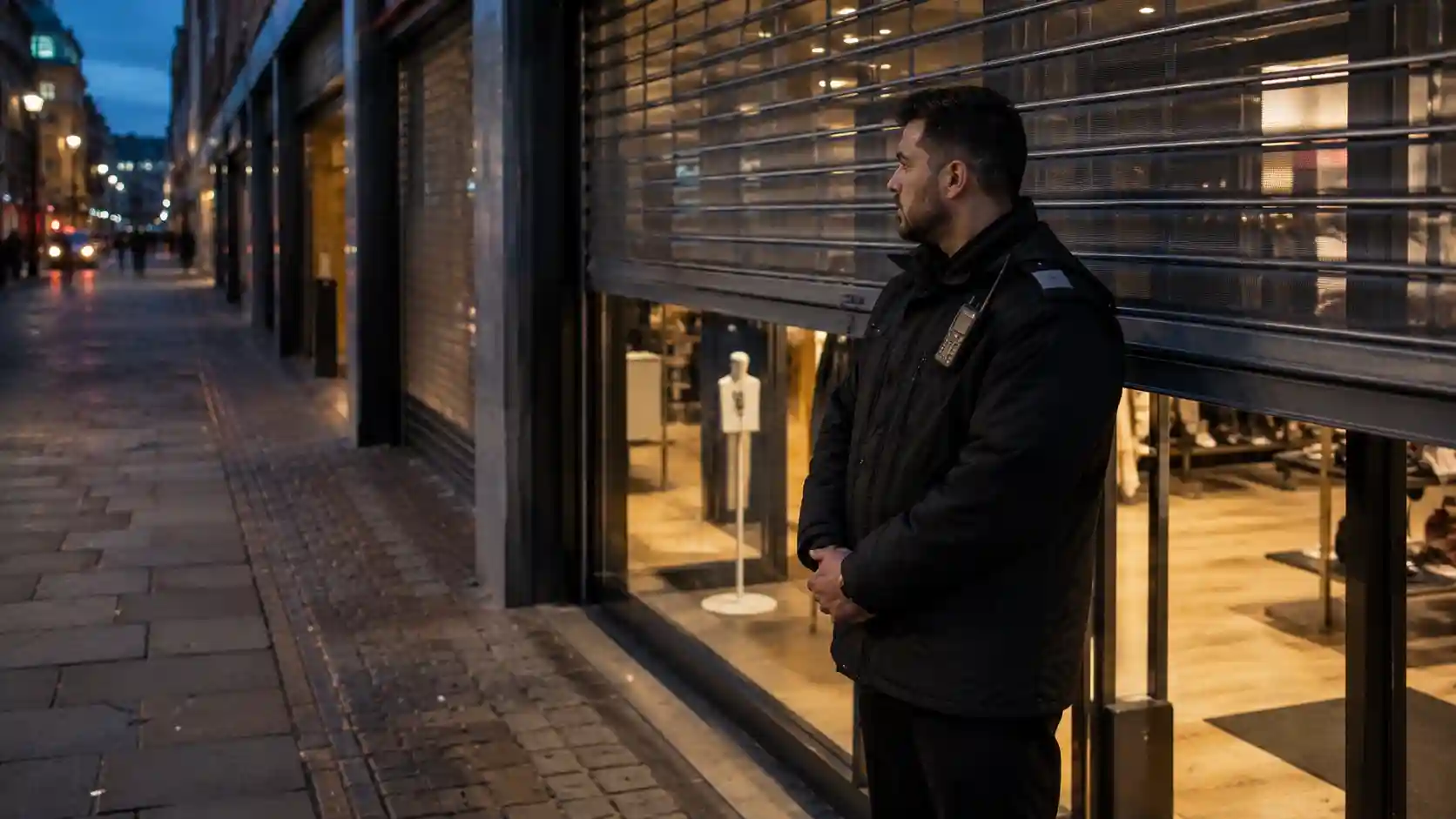
At a practical level, retail security is about controlling space and behaviour while trade is happening. It focuses on presence, observation, and timely intervention. The aim is not confrontation. It is prevention, support, and early correction.
This is where in-person retail security for Birkenhead locations differs from static or remote-only measures. Static security is fixed to one point. Remote systems rely on alerts after something has already occurred. Neither can adapt moment by moment.
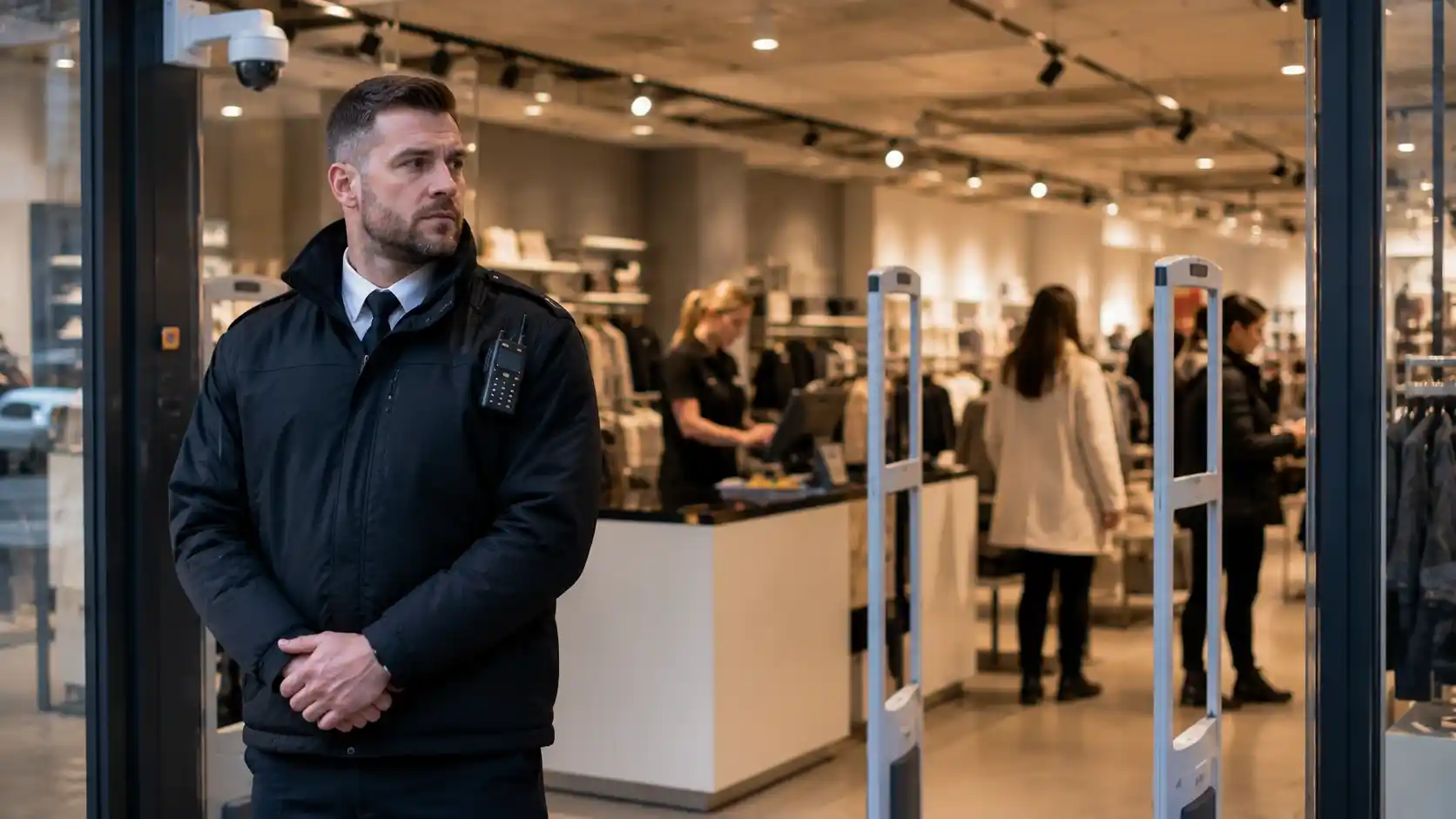
A trained security presence on site can read changes in behaviour, approach someone before an incident escalates, or support staff who feel exposed. That human judgment is the part that technology cannot replicate.
How Birkenhead’s Retail Crime Patterns Shape Security Needs
Retail crime in Birkenhead follows patterns that are familiar across the UK, but the way those patterns appear locally matters more than headline figures. Shoplifting remains common, often opportunistic rather than organised. Push-out thefts tend to happen when staff are distracted. Abuse toward staff usually follows refusal of service or a challenge.
Retail layouts play a role. Narrow aisles, shared entrances, and limited back-of-house separation create opportunities. High footfall hides intent. Staffing gaps create moments where no one feels fully in control.
This is why retail theft prevention in Birkenhead is an operational issue, not a theoretical one. What matters is when and where opportunity appears, not how many offences are recorded after the fact. Comparable patterns have already shaped retail security planning in parts of Greater Manchester, particularly where footfall remains high throughout the day.
Peak Risk Hours for Birkenhead Retail Sites
Risk does not peak at the same time for every business. In many Birkenhead retail settings, daytime pressure now rivals evening exposure.
Lunch periods bring crowding and reduced awareness. School dismissal times introduce unpredictable movement. Late afternoons combine fatigue with higher transaction volume. These are moments when theft and confrontation are more likely to slip through unnoticed.
Evenings bring different issues. Lower staffing levels. Fewer customers acting as witnesses. In some areas, spill-over from nearby leisure or transport activity.
Because of this, daytime and evening retail security coverage has become far more balanced than it once was. Security that only appears late misses much of the real risk window.
Retail Parks Vs Town-Centre Shops: Different Risks, Different Pressures
Retail parks and town-centre shops face very different challenges in Birkenhead.
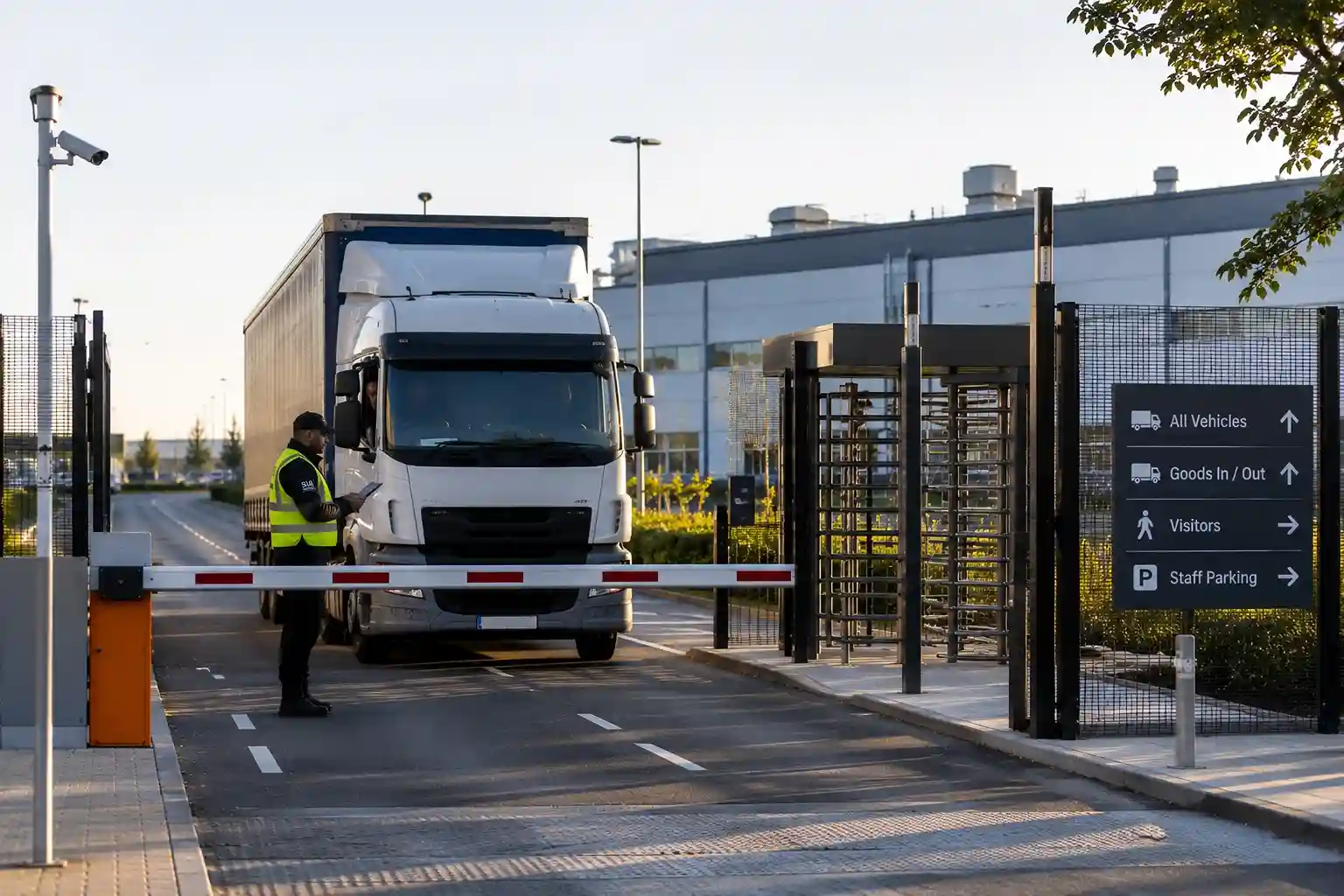
Retail parks are open by design. Wide access points and large car parks make movement easy for customers and offenders alike. Vehicle-linked theft, loitering, and after-hours misuse are common. Visibility drops quickly once natural footfall thins. This contrast mirrors challenges seen in Bolton, where town-centre density and edge-of-town access create very different security demands.
Town-centre shops deal with density rather than distance. When footfall is high, theft becomes easier to attempt. At the same time, staff are exposed, working close to customers in very public settings.
This is why security cover for town-centre and retail-park sites cannot be treated as interchangeable. The presence may look similar, but the positioning, patrol logic, and engagement style must differ.
Seasonal Pressure Points Unique To Birkenhead
Retail risk in Birkenhead is rarely constant across the year. Short trading peaks bring unfamiliar working patterns, altered layouts, and extended opening hours. Small adjustments made for convenience can unintentionally reduce oversight. These windows are temporary, but they matter because they coincide with moments when staff are stretched and response time slows.
These spikes expose the limits of static security measures. Cameras do not adapt because the town is busier than usual. A visible, calm presence can.
That visible presence acts as a visible deterrence in retail environments, but more importantly, it reassures staff and customers. Behaviour changes when someone is clearly responsible for the space.
For many retailers, these seasonal moments change the conversation. Planning with a security company in Birkenhead becomes practical, not theoretical.
Legal and Compliance Requirements for Retail Security in Birkenhead
Retail security decisions usually start with day-to-day concerns. Theft levels, staff confidence, and opening hours tend to drive decisions first. Legal concerns usually follow, often after an incident has already occurred.
That delay is where problems begin.
In Birkenhead, retail security does not operate in a grey area. It sits inside a defined legal framework. Most of the time, nothing goes wrong. The risk shows itself after an incident, when insurers ask how the site was covered, or when responsibility is challenged. Retail operators in Oldham have faced similar post-incident scrutiny where legal responsibilities were not fully documented.
SIA Licensing: The Line that Cannot be Crossed
Anyone carrying out licensable security work must hold a valid Security Industry Authority licence. In retail settings, that covers guarding premises, controlling access, and stepping in during incidents involving the public.
This is not a formality. It is a legal threshold.
If an unlicensed individual is allowed to operate on site, liability does not stop with them. The retailer carries exposure as well. Enforcement action can follow even where there was no intent to cut corners.
This is one of the clearest legal requirements for retail security in Birkenhead, yet it is also one of the most assumed. A visible SIA badge during duty is not optional. It is the simplest proof that the activity is lawful.
Vetting Beyond the Licence
An SIA licence confirms training and eligibility. It does not confirm trust.
That is where BS 7858 vetting comes in. It reviews identity, employment history, and criminal records over a defined period. In retail environments, this matters more than it first appears.
Security staff are often present during sensitive situations. They may handle evidence and may control keys or restricted areas. When something is disputed later, its reliability matters. Retail sites in Stockport have increasingly been asked to confirm vetting standards during insurance renewals.
Retailers do not need to inspect vetting records line by line. What they should expect is confirmation that screening is current and complete. Insurers increasingly expect that confirmation as a baseline, not an upgrade.
DBS Checks: What To Ask for, and What Not To
DBS checks form part of the wider screening process, but they are often misunderstood by clients.
Retailers do not need direct access to DBS certificates. In most cases, they should not ask for them. Doing so can create data protection issues without adding real protection.
What matters is assurance. A compliant provider confirms that all personnel deployed meet DBS and licensing standards. That confirmation is enough for audits and insurance reviews.
Going beyond that usually causes friction, not clarity.
Company-Level Compliance and Why It Matters
Compliance does not end with individual guards. Security providers themselves are subject to regulation and oversight. That includes licensing, supervision, and internal controls.
From a retail perspective, this affects risk transfer. A provider with weak systems increases the chance that something will fail quietly. Inconsistent oversight shows up quickly through expired licences and poor record-keeping.
Those issues rarely surface during normal trading. They surface after incidents, when scrutiny is highest.
Reputable suppliers should be able to show compliance history without hesitation. Delays or vague answers are often a warning sign.
CCTV, Data Protection, and Retail Reality
Most Birkenhead retailers already use CCTV. Problems tend to arise not from having cameras but from how footage is handled.
The rules themselves are straightforward.
- Cameras must have a clear purpose.
- Signage must be visible.
- Footage must be stored securely, accessed only when justified, and kept only for defined periods.
Problems start when responsibility is unclear. Footage gets shared informally, access is granted without records, and evidence is handled too casually.
That matters because CCTV is often relied upon months later, when memories fade, and documentation becomes the only defence.
VAT and Budgeting Clarity
Retail security services are standard-rated for VAT. There are no special rates or exceptions.
It sounds minor. It is not. Misunderstanding VAT treatment can distort budgets and create friction later in the year. All cost comparisons should be made on a like-for-like basis.
Local Authority Conditions in Birkenhead
Council requirements can influence retail security more than many businesses expect. Late trading approvals, extended hours, or event-linked permissions sometimes carry expectations around supervision and safety.
These conditions are not universal, but they are enforceable. Retailers should review planning and licensing documents carefully rather than assume existing arrangements remain acceptable.
Martyn’s Law and Retail-Adjacent Spaces
Martyn’s Law will raise expectations around protective security in publicly accessible places. For retail, the impact will be strongest in larger stores, shopping centres, and mixed-use developments.
The focus is not on visible enforcement. It is on readiness, clear risk assessments, proper training, and documented procedures.
Retail security will form part of that framework, especially where stores operate within shared public environments.
Police Collaboration and Local Context
Retail crime rarely happens in isolation. In Merseyside, information sharing between retailers, police, and local partnerships helps identify patterns over time.
This is where professionally managed retail guarding in Birkenhead shows its value. Not through confrontation, but through consistency, clear records, and reliable escalation.
Legal compliance, in practice, is not about ticking boxes. It is about being defensible. When decisions are reviewed later, the question is simple.
Costs, Contracts, and Deployment Of Retail Security In Birkenhead
Cost is usually the point where retail security decisions slow down. Not because businesses don’t see the value, but because pricing often feels opaque. One quote feels fair, another feels high, and a third looks cheap enough to tempt.
The reality is simpler than it first appears. Retail security costs in Birkenhead are shaped by a small number of practical factors. Once those are understood, the numbers make more sense.
What Actually Drives Retail Security Costs Locally
The strongest cost driver is location. A town-centre shop with steady footfall presents a different risk profile to an out-of-town retail park with open access and vehicle movement. The second usually costs more to secure, not because the guard is “better”, but because the exposure is broader and harder to control.
Trading hours matter just as much. Longer opening times increase cost in a linear way. Late trading pushes costs further due to lower natural surveillance and higher incident risk.
Risk profile is another factor. A quiet specialist retailer is priced differently from a high-volume store experiencing repeat theft or staff abuse. Security pricing reflects expected intervention, not just presence.
Skill requirements also play a role. Retail environments that need calm conflict handling, safeguarding awareness, or customer-facing engagement usually sit at a higher rate than low-interaction sites.
These drivers explain most variation in retail security costs for shops in Birkenhead, without needing complex formulas.
Town-Centre Sites Versus Retail Parks
Town-centre retail security is shaped by density. More people, more interaction, and more public scrutiny. Incidents are usually visible and require careful handling.
Retail parks present a different challenge.
Wider areas.
- Fewer witnesses.
- Easier exits.
- Vehicle-linked theft and after-hours misuse increase exposure.
- Patrol-based coverage is more common, which changes the cost structure.
This is why pricing often differs even when hours look similar on paper. The environment, not the postcode, does the work.
Deployment Timelines: How Quickly Can Cover Be Arranged
Speed depends on context. Urgent cover after an incident can often be arranged within a few days, sometimes sooner if the provider already operates nearby.
Planned deployments take longer. Induction, site familiarisation, scheduling, and uniforming all matter. For most Birkenhead retailers, a realistic mobilisation window sits between one and three weeks.
Shortcuts here usually show later. Guards who do not understand the site take longer to respond and record incidents less accurately.
Contract Lengths and Notice Periods
Retail security contracts are rarely one-size-fits-all. Short-term agreements are common after incidents or during trading peaks. They cost more per hour because staffing is less efficient.
Six- or twelve-month contracts are more stable. They allow routines to settle and documentation to build. Longer contracts often include review clauses rather than fixed pricing, which helps avoid sharp increases later.
Notice periods protect both sides. Very short notice may feel flexible, but it often leads to rushed transitions and coverage gaps.
Inflation, Pricing Stability, and Predictability
Retail security pricing has moved steadily in recent years. Not sharply, but consistently. Wage levels, compliance expectations, and operating costs all feed into that movement.
The key issue for retailers is predictability. Gradual, transparent increases are easier to plan for than sudden jumps at renewal. Contracts that allow structured reviews tend to hold up better over time.
This matters when considering why Birkenhead businesses need Retail Security as a long-term planning decision rather than a short-term fix.
Insurance Impact and Cost Offset
One area often overlooked is insurance. Insurers pay attention to documented security measures. Patrol logs. Incident reports. Proof-of-presence.
Where retail security is structured and consistent, insurers often view risk as reduced. That does not always lead to immediate premium cuts, but it can influence terms and claims outcomes.
Public-Sector Influence on Retail Expectations
Public-sector procurement standards have tightened in recent years. While many retailers are not directly affected, those standards tend to spill outward.
Higher expectations around documentation, compliance, and audit trails quietly become normal. Retailers working near public-sector tenants often feel this shift first.
The takeaway is plain: choosing on cost alone misses what really matters. Underpriced retail security usually fails quietly, through missed patrols, weak reporting, or slow response. Those failures cost far more than the hourly rate ever suggests.
Training, Daily Operations, and Retail Guard Duties in Birkenhead
Training and daily routines are where retail security either earns its value or quietly fails. The difference is rarely dramatic. It shows up in small decisions in how a guard reads a situation. How quickly context is understood. Whether an incident is handled early or allowed to drift.
For Birkenhead retailers, this matters because most security issues do not begin as offences. They begin as signals.
Retail-Specific Training Expectations
Retail environments demand a different skill set from industrial or office sites. Guards working in shops are not there to enforce rules. They are there to manage behaviour without escalating it.
That starts with de-escalation. Calm tone, clear boundaries, and knowing when to step in and when to stay visible but distant. Poor handling turns minor disputes into formal incidents, while good handling often prevents them from being recorded at all.
Safeguarding awareness also matters. Retail staff may include younger workers, lone employees, or people dealing with the public for long hours. A trained presence reduces pressure on staff, particularly during refusals or confrontations.
Customer interaction is part of the role, whether businesses plan for it or not. Guards who understand this tend to stabilise environments rather than dominate them.
How a Retail Security Shift Begins in Birkenhead
The first few minutes of a shift often shape everything that follows. Experienced guards do not arrive and wait for something to happen. They orient themselves.
That means understanding what has already occurred.
- Any incidents earlier in the day?
- Any patterns that are repeating?
- Any changes to layout, stock placement, or staffing that could affect movement?
This context allows quicker judgment later. Without it, guards are always reacting, never anticipating.
Patrol Logic and Presence Timing
Patrols are not about ticking boxes. They are about timing and unpredictability.
Predictable routines are easy to test. Once offenders learn when presence appears, they adjust. This is why spacing and variation matter more than frequency alone.
In retail settings, patrols also serve another purpose. They reassure staff. A visible presence at the right moments often changes behaviour without a word being spoken. This is one of the most effective ways of reducing shoplifting and retail crime risks without confrontation.
Reporting, Logging, and Evidence Trails
Documentation is not busywork. It is the site’s memory.
Clear logs record what happened, when it happened, and what response followed. Over time, patterns emerge. Patterns repeat, time windows open up, and layouts sometimes create blind spots.
Insurers and investigators rely on this information. So do managers review whether controls are working? Consistency matters more than volume. A short, accurate entry is more useful than a long, vague one.
This is why Birkenhead businesses need Retail Security, which often becomes clearer in hindsight. Good records show what was prevented as much as what occurred.
Alarm Response and Early-Hours Incidents
Alarm activations rarely happen at convenient times. Early mornings and quiet periods are common. These moments test judgment.
A structured response matters. Attend with care, assess the cause, and document what happened. Escalation stays measured, because repeat alarms often highlight weak areas.
Overreacting causes disruption, while underreacting leaves exposure. The balance comes from experience and training, not rigid scripts.
Supporting Staff Without Replacing Them
Retail security works best when it supports staff rather than overrides them. Guards are not managers. They are not there to enforce store policy beyond safety and legality.
Clear role boundaries prevent friction. Staff know when to call for support; however, guards know when to step in. That clarity reduces confusion during incidents and speeds up resolution.
End-Of-Shift Continuity
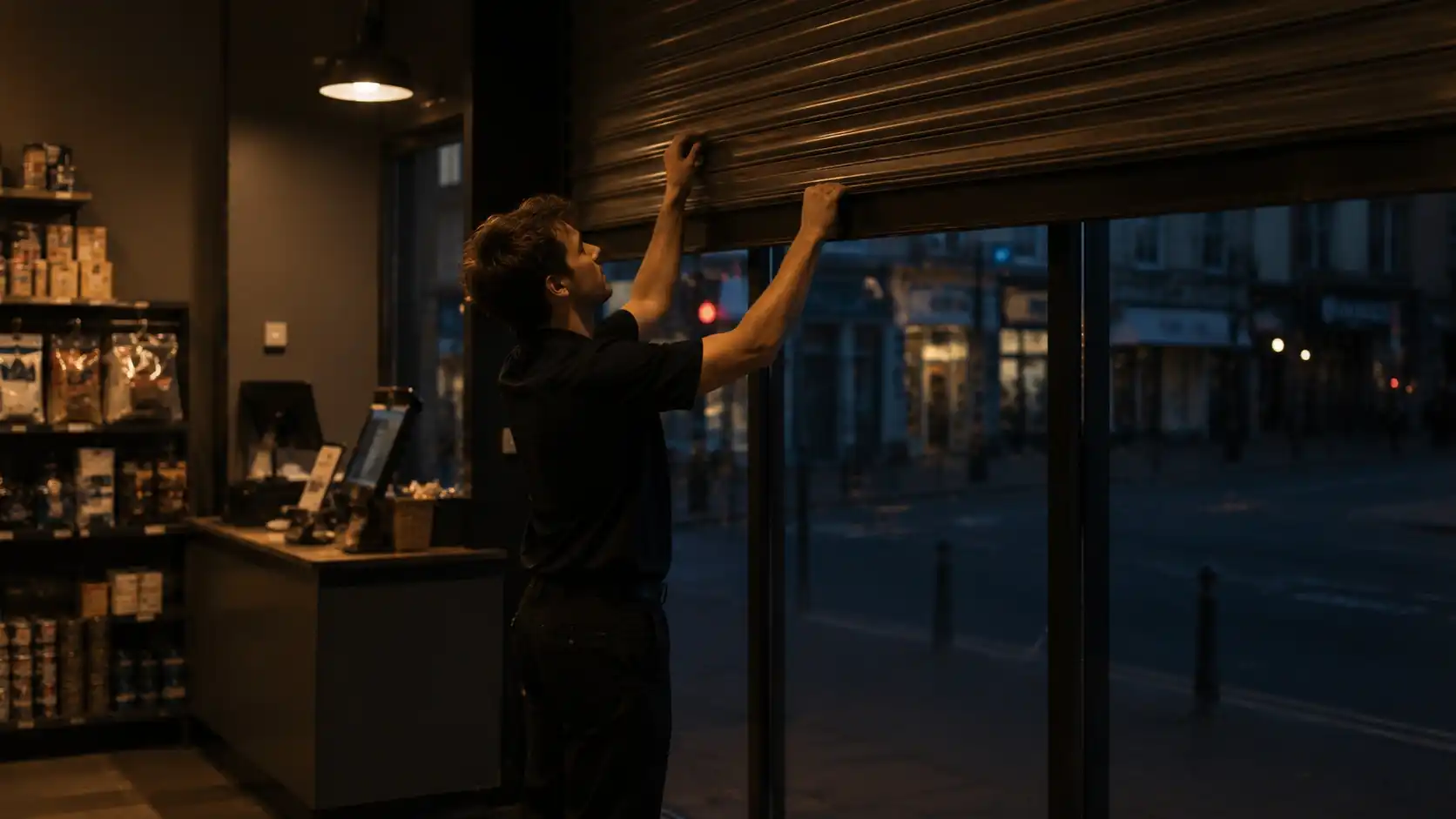
What happens at the end of a shift matters just as much as the start. Secure-down checks, unresolved issues, and handover notes maintain continuity.
Missed information creates blind spots. Repeated incidents go unconnected. Small problems become patterns only after they cause loss.
Well-run retail security treats each shift as part of a longer story, not an isolated task.
Why Routine Quality Matters More Than Visibility
It is easy to focus on visible presence, like uniforms, positioning, and patrols, but that is only part of the picture.
The real value of retail security lies in judgment, timing, and follow-through. When routines are sound, incidents reduce quietly, staff confidence rises, and environments feel steadier.
That outcome does not come from doing more. It comes from doing the right things at the right moments, consistently, across the trading day.
Performance, risks, and operational challenges in Birkenhead retail security
Retail security performance is easy to misunderstand. Many businesses look for visible activity and assume that activity equals effectiveness. In practice, performance shows up in quieter ways. What matters most is not how busy security looks, but whether risk is actually reduced.
What Retailers Should Measure, and Why
Not every metric is useful. Some look impressive and tell you very little.
Patrol completion matters, but only when combined with timing. A patrol that always happens at the same time teaches offenders when to avoid the area. Variation is what keeps presence effective.
Response time matters more than volume of intervention. How quickly does someone attend when staff feel uncomfortable? How fast is a situation stabilised before it spreads?
Report quality often reveals more than incident count. Clear, factual logs show that situations are being understood properly. Vague reports usually point to weak oversight or poor situational awareness.
Staff interaction is another indicator. When retail teams feel supported, they escalate earlier. When they do not, issues go unreported until they become unavoidable.
Environmental Factors That Quietly Raise Risk
Retail environments change with the weather and the built environment around them. Poor lighting, especially in car parks or rear access areas, reduces visibility and confidence. Rain and wind push people into sheltered areas, increasing congestion near entrances.
These conditions do not cause incidents on their own. They lower the threshold at which behaviour shifts. Good security teams note these changes and adjust presence accordingly. That adjustment often prevents issues before they appear in incident logs.
Fatigue, Long Shifts, and Decision Quality
Long shifts affect judgment. Not suddenly, but gradually.
- Attention narrows.
- Reaction slows.
- Decision-making becomes cautious or delayed.
This matters because retail security relies on early intervention. Miss the early signal, and the situation becomes harder to manage later. The risk here is not staff welfare in isolation. It is operational effectiveness.
Retailers rarely see this directly. They feel it through slower response or inconsistent handling. Recognising fatigue as a risk factor helps explain why some incidents escalate while others dissolve quickly.
Why Underpriced Retail Security Fails Quietly
Underpriced retail security rarely collapses in obvious ways. It erodes.
When routines slip, patrols start to repeat and reporting thins out. Minor issues are ignored, and gaps slowly grow.
- Documentation is often the first casualty.
- Missed entries.
- Incomplete logs.
- Delayed reporting.
These gaps matter when insurers review claims or when repeated incidents raise questions about the adequacy of cover.
This is where decisions around why Birkenhead businesses need Retail Security become clearer in hindsight. Price-driven choices tend to transfer risk rather than reduce it.
Balancing Presence With Proportion
Effective retail security is proportional. Too little presence invites testing. Too much can disrupt normal trade.
Finding that balance depends on local awareness, including footfall patterns, store layout, and trading hours. What works in one Birkenhead retail site may fail in another.
When security aligns with actual risk, performance improves without drawing attention to itself. That is usually the sign that things are working.
Technology and future trends in Birkenhead retail security
Technology has changed retail security, but not in the way many people expected. Guards have not been replaced. The work has shifted away from guesswork and toward direction. Clearer evidence is available when something goes wrong.
In Birkenhead retail settings, technology works best when it supports human judgment rather than tries to automate it.
CCTV and In-Person Security Working Together
CCTV remains a core tool, but its value increases when someone on site can act on what it shows. Cameras spot movement, but people interpret intent.
A live presence can respond immediately with the following factors:
- Check an area.
- Speak to someone.
- Secure a door.
Without that link, footage often becomes historical evidence rather than a preventative tool. This combination improves accuracy and reduces overreaction.
AI Analytics As Decision Support
AI-assisted systems now flag unusual behaviour.
- Loitering.
- Repeat movement.
- Access at odd times.
These tools do not decide what to do next. They point attention in the right direction.
Used properly, AI reduces time spent watching empty screens and increases time spent managing real risk. Used poorly, it creates noise and false confidence.
The difference lies in how alerts are interpreted, not how advanced the software looks.
Remote Monitoring and Hybrid Models
Remote monitoring works well for confirmation.
- Alarm checks.
- Out-of-hours oversight.
- Lone-worker support.
It works less well where incidents involve people rather than property. Retail disputes, refusals, or antisocial behaviour still require someone present to calm situations early.
Most effective setups now combine remote oversight with on-site response, rather than choosing one over the other.
Drones and Perimeter Visibility
Drones remain limited in retail use, but they are appearing in large retail parks with wide perimeters. Their role is observation, not enforcement. Rapid checks, thermal scans after hours, and shared visibility for on-site staff.
They extend sightlines, but they do not replace patrols.
Predictive Planning and Smarter Scheduling
Data is increasingly used to adjust coverage.
- Time-of-day patterns.
- Seasonal shifts.
- Repeat incidents.
This helps avoid blanket coverage and focus resources where they matter. Planning becomes responsive instead of static.
Conclusion
Retail security works best when it is planned, not rushed. In Birkenhead, the question is rarely whether risk exists. It is where it appears, when it surfaces, and how quickly it can be controlled.
That is why Birkenhead businesses need Retail Security, it is not about fear or worst-case scenarios. It is about judgment. Presence. And having someone on site who understands the space well enough to act early.
Good retail security is quiet. It reduces friction. It supports staff without disrupting trade. It leaves behind clear records that make sense weeks or months later, when questions are asked.
For local businesses, the starting point is simple. Look at how your site behaves during busy periods, quieter hours, and unexpected moments. That pattern usually tells you more than any headline statistic ever will.
Contact us for additional information.
Frequently Asked Questions
1. When do Birkenhead retailers need manned security guards?
Usually, when incidents repeat, staff feel exposed, or opening hours are extended. Many businesses now see the need during busy daytime trading as well as evenings.
2. How do retail security costs for shops in Birkenhead typically break down?
Costs depend on location, hours, and risk level. Town-centre shops and open retail parks are priced differently because the exposure is different.
3. What legal checks should retailers verify before hiring security?
Valid SIA licences, proper vetting, and insurance cover. Written confirmation is normally enough.
4. Can retail security actually reduce insurance risk?
Yes, especially when patrols and incidents are documented properly. Insurers look for consistency more than presence alone.
5. Is daytime retail security now as important as evening cover?
In many cases, yes. Busy trading periods often create more opportunities than late-night hours.
6. How does retail security reduce theft and incidents in Birkenhead?
Mainly through visible presence and early intervention. Most issues are stopped before they escalate.
7. What’s the best retail security approach for Birkenhead town centre shops?
A balanced one. Enough presence to deter issues without disrupting normal trade.
8. How will Martyn’s Law affect larger retail spaces?
It will raise expectations around planning, training, and documentation. Retail security will support preparedness rather than enforcement.