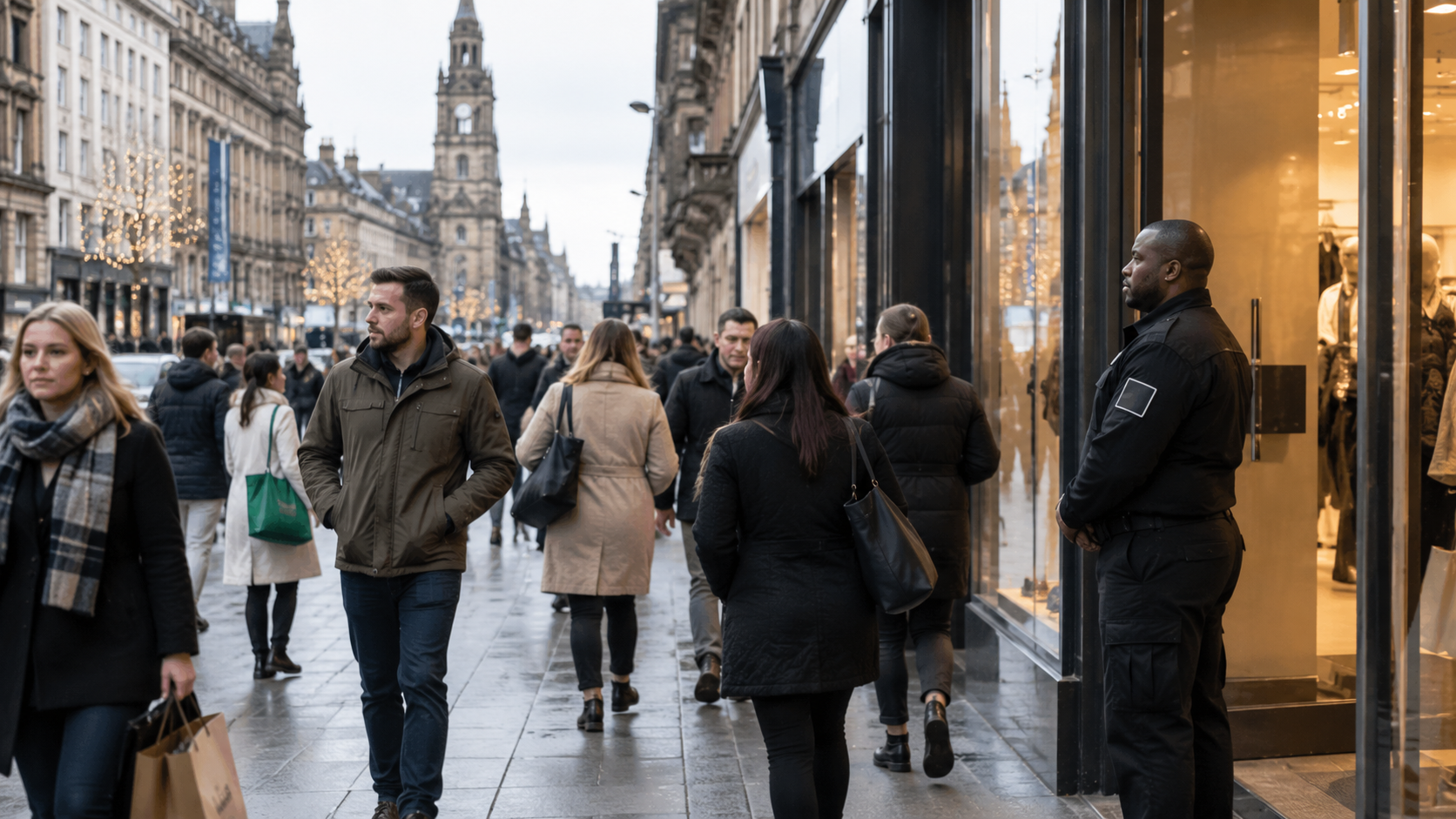
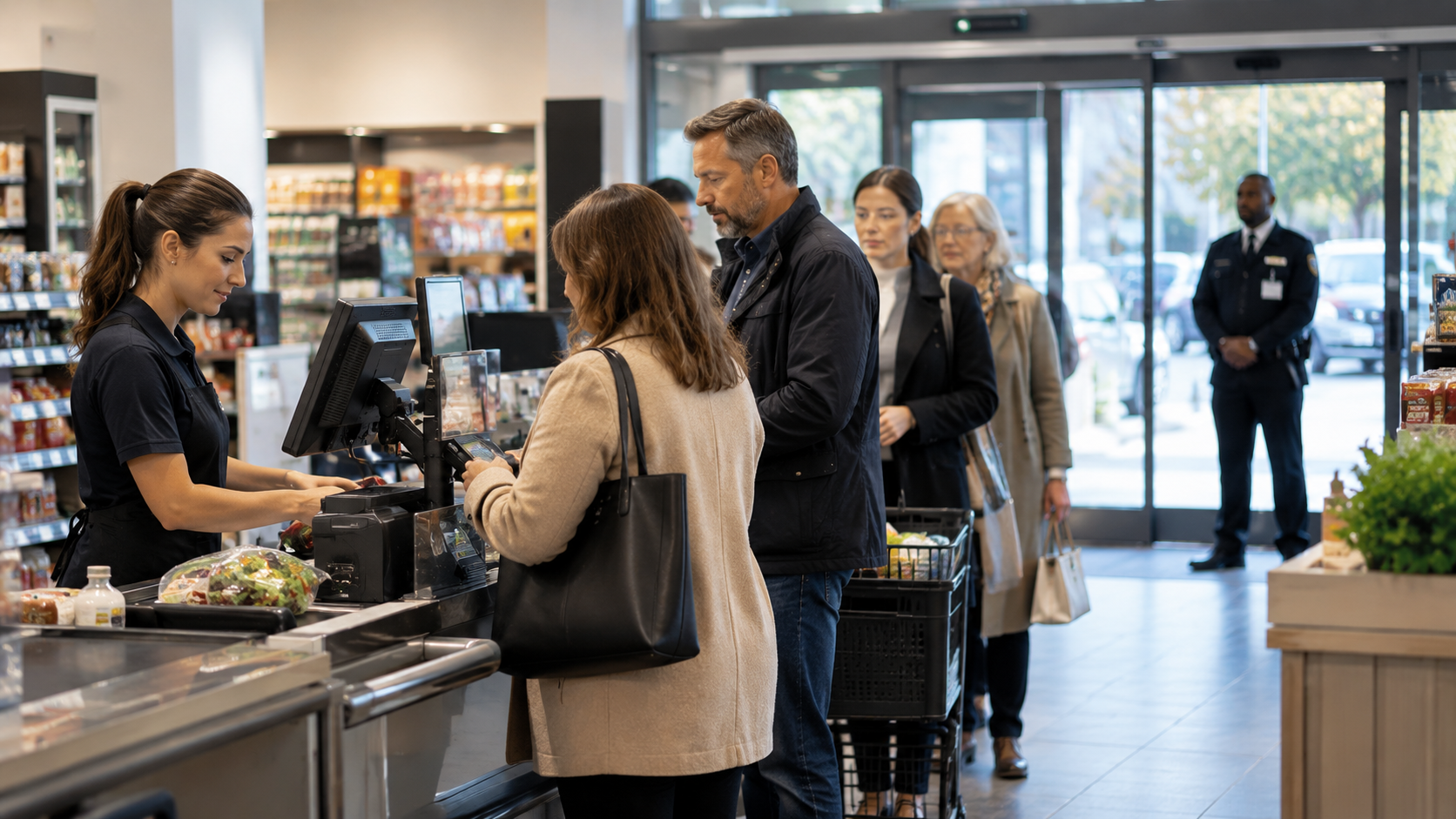
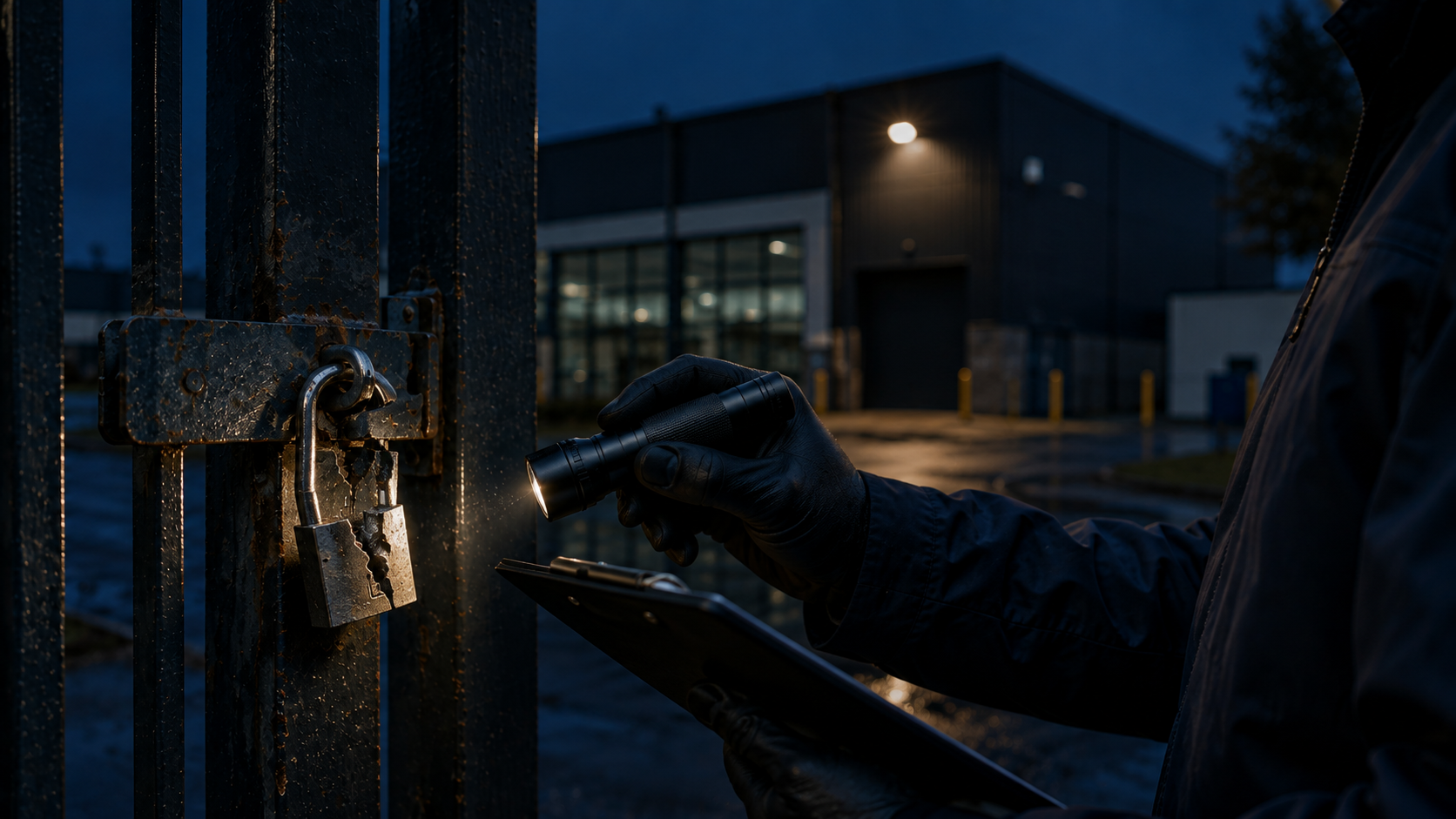
Retail in Oxfordshire has changed in recent years. Historic town centres in Oxford now sit alongside busy retail parks in Banbury and large shopping destinations near Bicester. These places attract steady footfall every day. More people mean more sales, but they also bring new risks. Shoplifting is no longer rare. Some stores face repeat theft, group activity, and open abuse toward staff. For many teams, anti-social behaviour is part of the working day.
Across the South East, retailers feel pressure to keep stores safe while staying open and welcoming. In the North East, crime often rises late at night. In Oxfordshire, risk is constant throughout the day. This is why Oxfordshire businesses need Retail Security. It is no longer optional. It protects staff, reduces loss, and helps businesses stay insured and trusted.
Retail Security Basics in Oxfordshire
The Role of On-Site Retail Security in Oxfordshire Stores
Retail security in Oxfordshire is built around presence. It is not just about watching screens or locking doors at night. It is about having trained people inside retail spaces who can see, hear, and respond in real time. A retail guard notices behaviour before it turns into loss. They read movement, body language, and tension on the shop floor.
This is very different from static or remote-only protection. CCTV records what happens, but it does not step in. Mobile patrols pass through, but they are not there when a problem starts. On-site retail security stays put. Guards speak to customers, support staff, and step in early when something feels wrong. In busy Oxfordshire stores, that difference matters more than most retailers expect.
Oxfordshire’s Retail Crime Profile and Why It Matters
Retail crime in Oxfordshire is not loud all the time. Much of it happens during the day. Theft often blends into normal shopping hours, when stores are full, and staff are busy. Items disappear quietly. Staff may not notice until stock counts fall short.
As the day moves on, behaviour changes. Evenings bring different risks. Groups gather outside stores. Noise rises. Arguments start. Retail parks feel more exposed after dark. This pattern is not the same as in some South East city centres like Surrey or Kent, where nightlife drives late incidents. Oxfordshire sees steady pressure instead. That steady pressure is harder to spot and easier to ignore, which is why retail security planning must match local behaviour, not national averages.
Peak Crime Hours for Oxfordshire Retailers
Most retail incidents in Oxfordshire follow the clock. Lunch hours are a key risk window. Stores are busy, staff are stretched, and thieves use distraction to their advantage. A bag lifted here, a jacket slipped there. It looks small, but it adds up fast.
Late afternoons bring another shift. School finishing times often increase footfall in certain areas. Young people gather, sometimes just to pass the time. Most cause no trouble, but some push boundaries. Evenings create a final risk layer. Retail parks and edge-of-town stores face lower visibility and slower response times. These hours are where visible retail security changes behaviour simply by being there.
High-Risk Retail Locations in Oxfordshire
Not all retail spaces carry the same risk. High streets face constant foot traffic, which makes theft easier to hide. Smaller stores feel this pressure most, especially where staffing is tight.
Retail parks bring different challenges. Large entrances, car parks, and open layouts make control harder. Guards must watch movement, not just doors. Tourist-heavy shopping zones add another layer. Visitors are unfamiliar with layouts, which criminals use as cover. These risks are common across the South East, while in parts of the North East, the focus often shifts toward night-time disorder instead. Oxfordshire retailers deal with exposure all day long.
How Retail Security Reduces Anti-Social Behaviour
Retail security works best before trouble starts. A visible guard changes how people act. It signals boundaries without words. For staff, this presence matters. Employees feel supported, not left to manage abuse alone. That confidence changes how teams work and how they speak to customers.
For shoppers, security creates calm. Parents feel safer. Older customers stay longer. Problems that might grow loud often fade early because someone is watching and ready to step in. This quiet control is one of the strongest reasons why Oxfordshire businesses need Retail Security, even when crime is not headline news.
Seasonal Retail Risk Patterns
Retail risk in Oxfordshire moves with the year. Christmas brings pressure, crowds, and higher theft levels. Summer tourism increases footfall and confusion, especially near popular destinations. University terms shift behaviour again, adding busy cycles to certain towns.
Local events also change the picture. Pop-up markets, sales periods, and festivals stretch store teams thin. Without planning, small gaps turn into losses. Retail security helps smooth these spikes. It gives retailers consistency when everything else feels rushed.
Legal and Compliance Requirements for Retail Security in Oxfordshire
SIA Licensing Rules for Retail Security Guards
Retail security in Oxfordshire starts with licensing. Any guard working in a shop, retail park, or shopping centre must hold a valid Security Industry Authority (SIA) licence for their role. This licence shows that the guard has met training, identity, and background standards. Without it, the guard should not be on site.
There is also the Approved Contractor Scheme. This applies to the security company rather than the individual guard. Retailers often overlook this, but it matters. An approved contractor is checked on training, pay, supervision, and record keeping. Across the South East, including areas like Buckinghamshire, retailers increasingly ask for this status because it lowers risk and improves consistency on the shop floor.
Penalties for Using Unlicensed Guards in Oxfordshire
Using an unlicensed guard creates problems fast. Fines can be issued to both the business and the security provider. These are not small penalties, and they often arrive after an incident has already caused damage.
Insurance is another issue. If a theft, injury, or claim happens while an unlicensed guard is working, insurers may refuse to pay out. This leaves the retailer exposed. Beyond money, there is reputation. Word spreads quickly when a store is seen to cut corners on safety. In places like Berkshire, where retail competition is high, that loss of trust can hurt long after the fine is paid.
DBS Checks and Vetting Expectations
Retail guards work close to people. They speak to the staff. They deal with customers. Sometimes they handle sensitive situations. Because of this, DBS checks matter, even when they are not always legally required for every role.
Retail-specific risks include handling cash areas, managing disputes, and working near vulnerable people. Good vetting reduces the chance of internal issues later. Across Surrey, many retailers now treat DBS checks as standard practice rather than an extra step. In Oxfordshire, the same approach helps protect staff and reduce complaints before they start.
Insurance Requirements for Retail Security Services
Retail security is tied closely to insurance. Guards should be covered by public liability insurance in case someone is injured during an incident. Employer’s liability insurance is also required for the guards themselves.
From the retailer’s side, security helps shift risk. When trained guards are present, insurers often see the site as lower risk. This can support claims handling and sometimes reduce premiums. In Kent, large retail parks often link security cover directly to their insurance terms. Oxfordshire retailers face similar expectations, even if they are on smaller sites.
Data Protection and CCTV Integration in Retail Settings
Many retail guards work alongside CCTV systems. This brings data protection into daily operations. Guards must understand what they can view, record, and share. UK GDPR rules apply, even during fast-moving incidents.
Evidence handling is a common weak point. Footage must be stored properly and shared only when allowed. Clear logs and controlled access protect both the retailer and the guard. Across Sussex, poor CCTV handling has caused problems during investigations. Oxfordshire retailers benefit when guards are trained to treat footage with care, not urgency alone.
VAT Rules on Retail Security Services
VAT is often overlooked during cost planning. Retail security services are usually subject to VAT, which affects budgeting and contract comparisons. A cheaper hourly rate can become misleading once tax is added.
Clear invoices help retailers plan ahead. This matters more for multi-site retailers across the South East, where costs vary by location and contract length. Understanding VAT early avoids disputes later, especially during audits or financial reviews.
Local Authority Expectations for Retail Premises
Local authorities expect retail sites to manage safety actively. Shopping centres often require written security plans. Retail parks may need visible patrols during peak hours. Temporary retail events, such as pop-up markets, bring extra scrutiny.
In Oxfordshire, councils look closely at crowd management and emergency access. This mirrors approaches seen in other regions, though the focus may differ. In parts of the North East, for example, evening disorder drives planning, while Oxfordshire tends to focus on daytime control and steady footfall.
Martyn’s Law and Its Impact on Oxfordshire Retail Venues
Martyn’s Law is changing how public spaces think about safety. Retail venues will need to show that they have considered terrorism risks, even if the likelihood feels low. This does not mean heavy security everywhere, but it does mean planning.
For Oxfordshire retailers, this often involves training guards to spot unusual behaviour and knowing how to escalate concerns. Duty of care is becoming clearer. Retailers are expected to act, not assume risk belongs elsewhere.
Police Collaboration and Information Sharing
Retail security works best when it connects with local policing. Many Oxfordshire retailers already share incident trends with Thames Valley Police. This helps guards understand what to watch for and when to be alert.
In other parts of the country, structured partnerships have shown value. North East retail zones have used shared reporting systems to reduce repeat theft. While Oxfordshire faces different patterns, the lesson is the same. Clear communication improves response and builds trust between private security and public service
Retail Security Costs, Contracts, and Deployment in Oxfordshire
Typical Retail Security Costs in Oxfordshire
Retail security costs in Oxfordshire depend less on size and more on setting. A small shop on a busy high street often needs steady daytime cover. A retail park on the edge of town may need fewer hours, but stronger visibility during evenings. These differences shape pricing.
Town centres usually cost more per hour. Footfall is higher, incidents are more frequent, and guards are expected to manage people as much as property. Retail parks can cost less during the day, but night cover changes that balance. Once stores close, risks shift toward vandalism and break-ins. Night cover often comes with a higher rate because response expectations are tighter and staff availability is lower.
How Wage Increases Affect Retail Guard Pricing
Retail security pricing changes when base costs change. One of the biggest drivers is pay regulation. In 2025, cost pressure across the South East continues to shape contract rates. When wages rise, security providers must reflect this in pricing or reduce service quality. There is little middle ground.
The National Living Wage has a direct effect. Each increase raises the minimum cost of providing on-site cover. If prices are held too low, corners appear elsewhere. Shift continuity suffers. Site knowledge drops. Incident response becomes slower. For retailers in areas such as Buckinghamshire, these effects are already visible in underpriced contracts.
For Oxfordshire businesses, realistic pricing supports consistent cover. It reduces disruption and protects service standards. In the long run, stable pricing lowers operational risk and supports better insurance outcomes.
Contract Lengths and Notice Periods
Retail security contracts come in two main forms. Short-term contracts suit seasonal cover, refits, or temporary risk spikes. They are flexible, but they often cost more per hour. Long-term contracts offer stability. Guards learn the site, staff feel supported, and costs are easier to forecast.
Notice periods matter more than many retailers expect. Ending a contract too quickly can create gaps in cover. Clear notice terms protect both sides. In Berkshire, larger retail chains often favour longer contracts to avoid disruption. Oxfordshire businesses benefit from the same approach when budgets allow.
Mobilisation Timelines for Retail Security Deployment
Deployment speed depends on preparation. Emergency cover can sometimes be arranged within hours, but options are limited. The guard may not know the site, and support systems may not be fully set up. This is useful during sudden incidents, but it is not ideal for long stretches.
Planned openings are different. When retailers plan ahead, guards can be briefed, uniforms issued, and routines agreed upon before day one. In Surrey, new retail developments often include security planning early in the build phase. Oxfordshire retailers who follow this model usually see fewer early incidents and smoother openings.
How Retail Security Supports Insurance Premium Reductions
Insurance providers look closely at loss history. Retail security helps reduce claims by lowering theft, managing incidents early, and providing clear records. When guards log events properly, insurers can see patterns and improvements.
Incident evidence matters. Reports, statements, and CCTV coordination help claims move faster. In Kent, some retailers have used consistent security reporting to negotiate better insurance terms over time. Oxfordshire retailers can achieve similar outcomes when security is treated as part of risk management, not just a cost line.
Procurement Act 2023 and Public-Facing Retail Sites
The Procurement Act 2023 affects how public-facing retail assets are managed. Council-owned shopping areas, markets, and mixed-use sites must meet clearer compliance standards when appointing security providers. Transparency, fair pay, and proper vetting are no longer optional.
This affects contracts tied to local authorities. In Sussex, several councils now require proof of compliance history before approving security services. Oxfordshire sites linked to public ownership face the same expectations. Retailers operating in these spaces must align with approved processes or risk delays and contract issues.
Training, Daily Operations, and Guard Duties in Retail Environments
Retail-Specific Security Training Standards
Retail security training starts with people skills. Guards are trained to manage conflict before it turns loud or physical. This means knowing when to speak, when to step back, and when to call for support. Most incidents in shops begin as small moments. A raised voice. A refusal to leave. Training focuses on calming these early.
Customer interaction is just as important. Guards are visible to shoppers all day. They give directions. They reassure staff. They are often the first person noticed when something feels off. In Oxfordshire, this balance matters because stores rely on repeat customers. Similar training approaches are now common in parts of Buckinghamshire, where retail parks mix family footfall with higher theft risk.
Start-of-Shift Procedures for Oxfordshire Retail Guards
Each shift starts with shared awareness. Guards review notes from the previous shift before taking over. These notes flag recent theft attempts, disputes, damaged areas, or unusual behaviour. This helps patterns carry forward instead of being lost between shifts.
A short briefing follows. Even small updates matter. A known problem area. A faulty sensor. A concern raised by store staff. This early context shapes how the shift is managed. In Oxfordshire, where retail risk is spread across the day, this continuity helps prevent repeat incidents. Similar approaches are used in Berkshire, where retailers value clear handovers because they reduce missed warning signs and support stronger incident records.
Patrol Routines in Retail Stores and Parks
Patrol routines are steady, not rushed. Guards move through stores and common areas at set times, but they vary their routes. Predictable movement invites problems. Good patrols feel normal to customers while still covering key zones.
High-risk areas get more attention. Entrances, exits, fitting rooms, and stock-heavy aisles are watched closely. In retail parks, car parks and delivery areas matter just as much. In Surrey, where large retail sites are spread out over wide spaces, patrol frequency is often adjusted to match footfall changes. Oxfordshire sites benefit from the same flexible thinking.
CCTV and Alarm Response Checks
Guards check equipment early. Screens, cameras, radios, and alarms are tested at the start of the shift. If something fails later, response slows. Early checks prevent that.
Alarm responses during early hours are common. Doors may trigger alerts during opening routines. Guards investigate calmly and log outcomes. In Kent, where some retail sites operate extended hours, these checks are part of daily discipline. Oxfordshire guards follow similar steps to keep systems reliable rather than reactive.
Visitor and Contractor Logging
Retail spaces see constant movement behind the scenes. Deliveries arrive. Contractors fix displays or systems. Guards manage these entries carefully. Names are logged. Times are recorded. Access areas are limited.
Out-of-hours access needs extra control. A single unlocked door creates risk. Guards confirm permission before allowing entry. In Sussex, where mixed-use retail sites share access with offices, this process has reduced internal theft. Oxfordshire retailers see the same benefit when logging is done consistently.
Incident Logging and Evidence Handling
Every incident is recorded, even small ones. Theft attempts, staff abuse, and accidents all go into logs. Details matter. Time. Location. People involved. What was said and done.
Evidence handling follows clear steps. CCTV clips are noted, not copied casually. Reports are written while events are fresh. This protects guards and retailers later. In regions outside the South East, such as parts of the North East, structured logging has helped police link repeat offenders. Oxfordshire retailers gain similar value when records are kept clean and simple.
Emergency Response and Escalation
Guards are trained to know their limits. They do not replace police or medical teams. When situations escalate, they call early. Clear information helps responders arrive prepared.
Police support is used for theft, violence, or refusal to leave. Medical services are called for injuries or sudden illness. Guards stay with people until help arrives. This calm presence reduces panic. Retailers across the South East rely on this approach because delays often cause bigger problems than the original incident.
End-of-Shift Secure-Down Procedures
Closing routines protect stock and space. Guards check doors, shutters, and alarm settings. They confirm that vulnerable areas are locked and clear. Any damage is logged before the site is handed over.
Store closure protocols vary by site. Some require escorting staff to exits. Others focus on car park sweeps. In Oxfordshire, where many stores sit away from busy streets, this final check matters. Retailers in other counties, including Sussex, use similar procedures to reduce overnight loss.
Performance Metrics, Risks, and Retail Staffing Challenges
KPIs for Retail Security Performance
Retail security performance in Oxfordshire is not measured by presence alone. What matters is change. Fewer thefts. Fewer repeat incidents. Calmer stores. Incident reduction is the first sign that security is working. It shows that behaviour is shifting, not just being recorded.
Response time is the next signal. How fast a guard notices an issue. How quickly they move. How soon should support be called if needed? In retail, minutes matter. A slow response turns small problems into big ones. Some retailers in Buckinghamshire track response times closely because they see a direct link between speed and staff confidence. Oxfordshire stores benefit from the same focus when performance is reviewed regularly, not only after losses appear.
Weather and Environmental Impacts on Retail Guarding
Weather changes how retail sites behave. Outdoor retail parks feel different in the rain, cold, or heat. Footfall drops or rushes without warning. Guards spend more time outside, which affects alertness and movement.
Car parks bring extra risk during poor weather. Visibility drops. Slips increase. Tempers shorten. Guards must watch people and ground conditions at the same time. In Kent, where large open retail parks are common, weather planning is part of daily security routines. Oxfordshire sites with similar layouts face the same challenge, even if they appear quieter on the surface.
Guard Health, Fatigue, and Shift Length Risks
Long shifts wear people down. Day shifts bring constant interaction and noise. Night shifts bring isolation and long, quiet hours that suddenly turn tense. Both affect focus in different ways.
Fatigue increases mistakes. Missed signs. Slower reactions. Short tempers. Retail security works best when guards are alert, not just present. In Surrey, some retailers have adjusted shift lengths to reduce burnout. Oxfordshire businesses that follow similar patterns often see better consistency and fewer errors over time.
Mental Health Support for Retail Guards
Retail guards face abuse more often than many expect. Verbal attacks. Threats. Being blamed for rules they did not create. Over time, this pressure builds. Lone working makes it harder. Without support, guards disengage or leave.
Mental health support does not need to be complex. Regular check-ins. Clear reporting routes. Knowing someone will listen. In Berkshire, some retail operators now include wellbeing reviews as part of security contracts. Oxfordshire retailers who take the same approach often keep experienced guards longer, which improves stability on site.
Retention Strategies Amid Retail Security Labour Shortages
Finding retail guards is harder than it used to be. Keeping them is harder still. Training investment helps. Guards who feel skilled stay longer. They take pride in their role and understand the site better with time.
Pay stability matters just as much. Fair, predictable wages reduce churn. In Sussex, retail security providers who focused on stable pay saw lower turnover even during labour shortages. Oxfordshire retailers benefit when retention is treated as a risk control, not just a staffing issue.
Technology and the Future of Retail Security in Oxfordshire
CCTV and Retail Analytics Integration
CCTV in Oxfordshire has moved beyond watching screens. Cameras now help retailers understand patterns. Guards and managers look at where theft happens, not just when. Certain aisles. Certain times. Certain layouts.
Retail analytics turn footage into insight. If losses repeat near one entrance, patrols change. If fitting rooms attract theft, staffing shifts. This is not about constant watching. It is about learning. Retailers in Buckinghamshire have used this approach to adjust store layouts rather than add more guards. Oxfordshire sites benefit when technology supports decisions instead of replacing people.
AI Surveillance Supporting Retail Guards
AI surveillance helps guards notice what the eye might miss. Behaviour detection looks for movement that does not match normal shopping. Loitering. Repeated visits without purchase. Sudden crowd changes.
This support matters during busy hours. Guards still decide what to do. AI only flags patterns. In Berkshire, some retailers found that AI reduced false alarms by focusing attention where it mattered most. In Oxfordshire, this kind of support helps guards stay calm and focused rather than overwhelmed by noise and movement.
Remote Monitoring for Retail Chains
Remote monitoring links sites together. For retailers with more than one store, this creates oversight without crowding the floor. A central team watches trends while on-site guards handle real interactions.
This setup works well for chains spread across regions. In Surrey, multi-site retailers use remote monitoring to spot repeat offenders moving between locations. Oxfordshire retailers with growing footprints find this useful as stores expand without increasing local management pressure.
Body-Worn Cameras in Retail Security
Body-worn cameras change behaviour. When guards wear them, incidents often stay calmer. People think twice before acting out. For guards, cameras provide protection as well as evidence.
Evidence quality improves. Footage shows what happened, not just what was reported. This helps during disputes and investigations. In Kent, retailers have seen faster case resolution after adopting body cameras. Oxfordshire sites see similar value when footage is handled properly and shared only when needed.
Predictive Analytics for Retail Risk Forecasting
Retail risk follows patterns. Predictive analytics looks at past incidents to plan ahead. Busy seasons. Sale periods. Tourist peaks. This helps retailers prepare rather than react.
Seasonal demand shifts are easier to manage when risks are expected. Extra cover can be planned. Patrols can be adjusted. In Sussex, some retailers use forecasting to schedule guards around summer footfall spikes. Oxfordshire businesses gain the same advantage when data informs staffing decisions.
Green and Sustainable Retail Security Practices
Sustainability now reaches security. Low-impact patrols reduce fuel use. Smarter scheduling cuts wasted movement. Digital reporting replaces paper logs.
These changes seem small, but they add up. Guards spend more time where they are needed. Retailers reduce costs and environmental impact. Across the South East, sustainability expectations are growing. Oxfordshire retailers who adapt early often find security becomes more efficient, not less.
How Martyn’s Law Will Reshape Retail Security Planning
Martyn’s Law will change planning, even for everyday retail. Stores will need to show awareness of wider risks, not just theft. Guards will be trained to spot unusual behaviour and understand escalation routes.
Future compliance will focus on preparation, not fear. Clear roles. Simple plans. Regular review. In Oxfordshire, this means retail security becomes part of safety culture, not a separate service. Other regions have already started this shift. Oxfordshire retailers who prepare early will find compliance easier and disruption lower.
Conclusion
Retail in Oxfordshire is growing, but so are the pressures that come with it. Busier stores, mixed footfall, and changing behaviour mean risk now shows up in quiet ways, not just obvious ones. This is why Oxfordshire businesses need Retail Security as part of everyday operations, not as a last resort after loss.
Costs matter, but unmanaged loss costs more. Compliance matters because one mistake can affect insurance, reputation, and trust. Daily operations matter most of all, because guards shape how safe staff and customers feel every single day. When retail security is planned well, incidents are reduced, staff stay longer, and stores run smoothly.
Reactive protection only responds after damage is done. Proactive security prevents it from happening in the first place. As Oxfordshire retail continues to evolve, professional guarding standards will define which businesses stay resilient. Those who invest early protect more than stock. They protect people, continuity, and long-term confidence.
Frequently Asked Questions
Why do Oxfordshire businesses rely more on retail security now?
Retail spaces in Oxfordshire are busier than before. More visitors mean more pressure on staff. Theft, abuse, and disorder often happen in small moments. Retail security helps manage these daily risks before they grow into losses.
How much does retail security cost in Oxfordshire?
Costs vary by location, hours, and risk level. A town centre store often pays more than a quiet retail park. Night cover usually costs more than daytime cover. There is no single rate that fits every site.
Do all retail security guards need SIA licences?
Yes. Any guard working in a retail environment must hold the correct SIA licence. Without it, the guard should not be on site. Using unlicensed guards can lead to fines and insurance problems.
Can retail security reduce insurance premiums?
In some cases, yes. Insurers look at risk history. Trained guards, clear incident logs, and visible control can reduce claims. This helps insurers see the site as lower risk over time.
What risks do Oxfordshire retail parks face most often?
Retail parks often face theft, vandalism, and evening anti-social behaviour. Car parks and delivery areas are common weak points. These risks increase after dark when footfall drops.
How quickly can retail security be deployed?
Emergency cover can sometimes be arranged within hours. Planned cover takes longer but works better. Guards who are briefed and prepared reduce risk more effectively than rushed deployments.
Is CCTV alone enough for retail protection?
CCTV records incidents, but it does not prevent them. Cameras cannot speak to people or step in early. Retail security works best when CCTV supports on-site guards, not replaces them.
How will Martyn’s Law affect retail stores in Oxfordshire?
Martyn’s Law will require more planning for public safety. Retailers will need to show awareness of wider risks and clear response plans. Trained security guards will play a key role in meeting these expectations.