Honestly? A simple lock and key just doesn’t cut it anymore.
You’ve got to think about the bigger picture: how people actually move around your site, where the sneaky weak points are, what happens after 6 PM, and most importantly, how quickly you can react when something goes wrong.
Key takeaway for Burton site managers:
Security risks vary wildly between industrial estates, retail spots, offices, and building sites. The smartest approach? Go layered. Think controlled access, decent lighting, regular site checks, good CCTV coverage, and where it counts, a physical security presence that people can actually see.
Analysing Burton Commercial Security Risks: What Site Managers Need to Know
Burton’s commercial scene is wonderfully mixed. You’ve got massive logistics hubs buzzing near major transport routes, busy high streets packed with shoppers, and new developments popping up left and right.
That variety matters because the risks hitting one business might barely touch another.
Here’s a simple way I like to think about it: it’s a bit like following a trail from temptation to disaster:
High-value assets → vulnerable access point → unauthorised entry → theft, damage, or operational chaos.
The scary part? You don’t need a sophisticated criminal mastermind to cause serious damage. Often, it’s the boring stuff that gets you: an unsecured gate left swinging in the wind, a flickering light that’s been broken for weeks, or a loading bay that nobody checks after lunch.
Warehousing and Logistics Hubs: A38 Corridor & Centrum 100
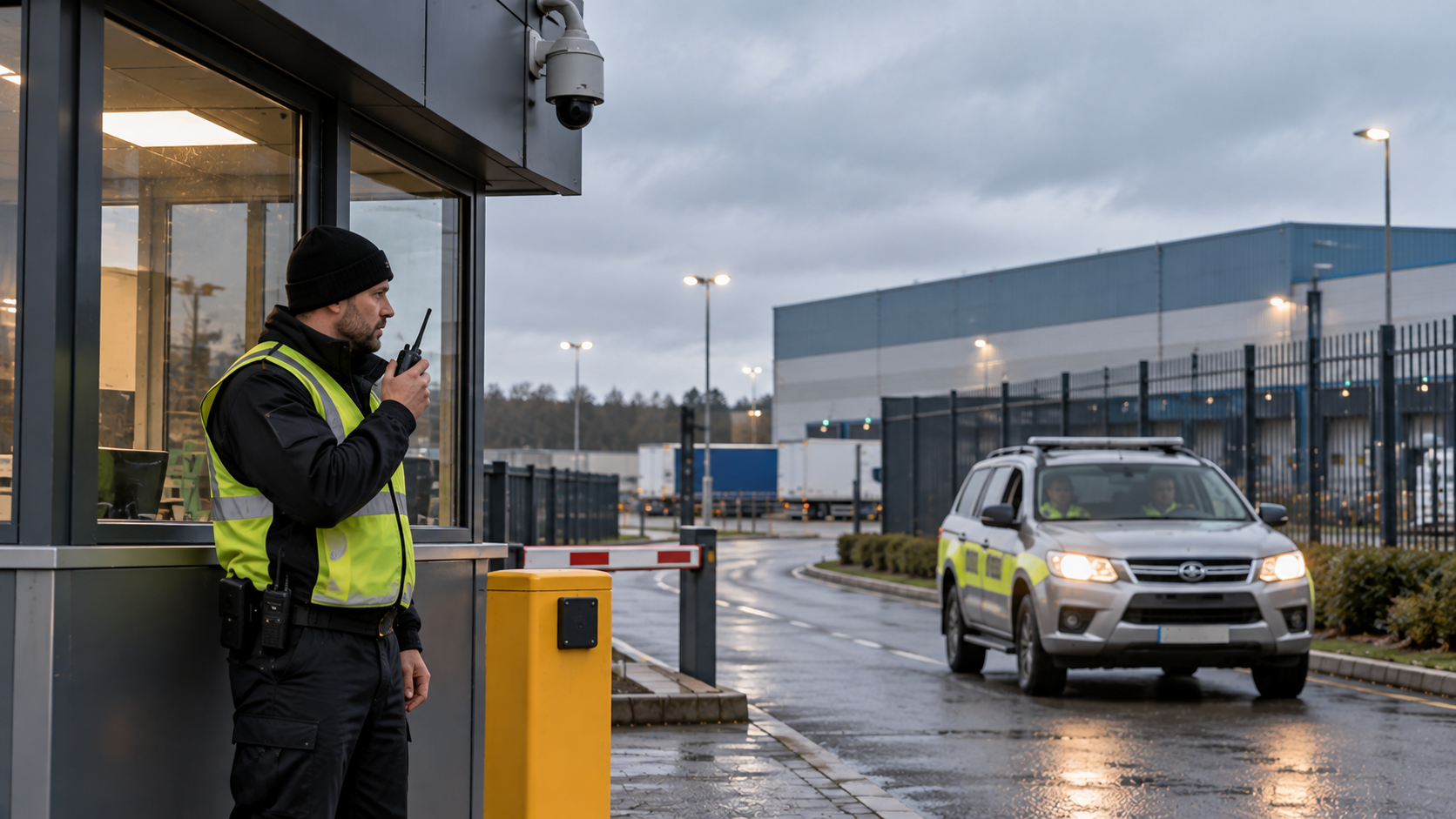
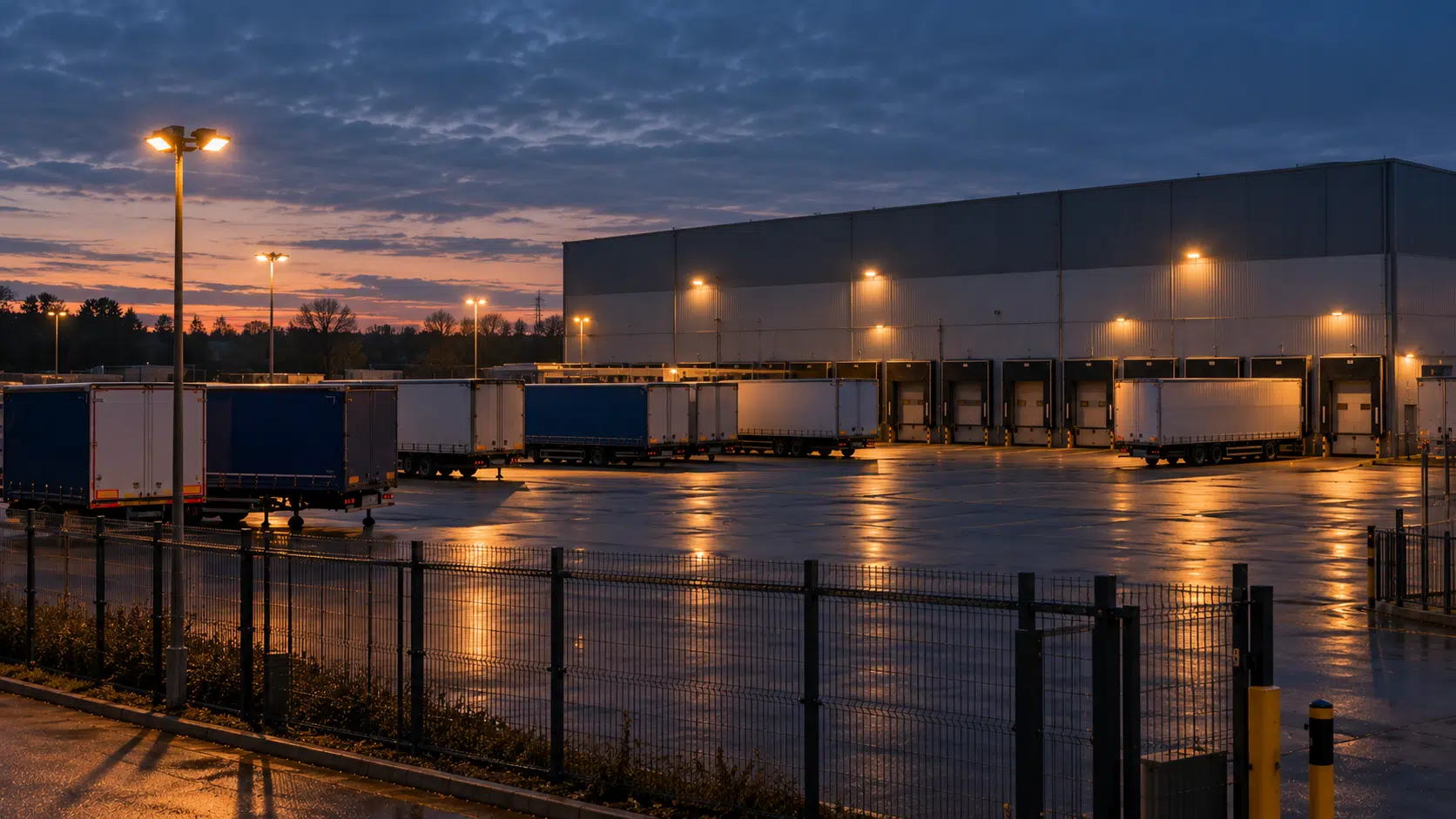
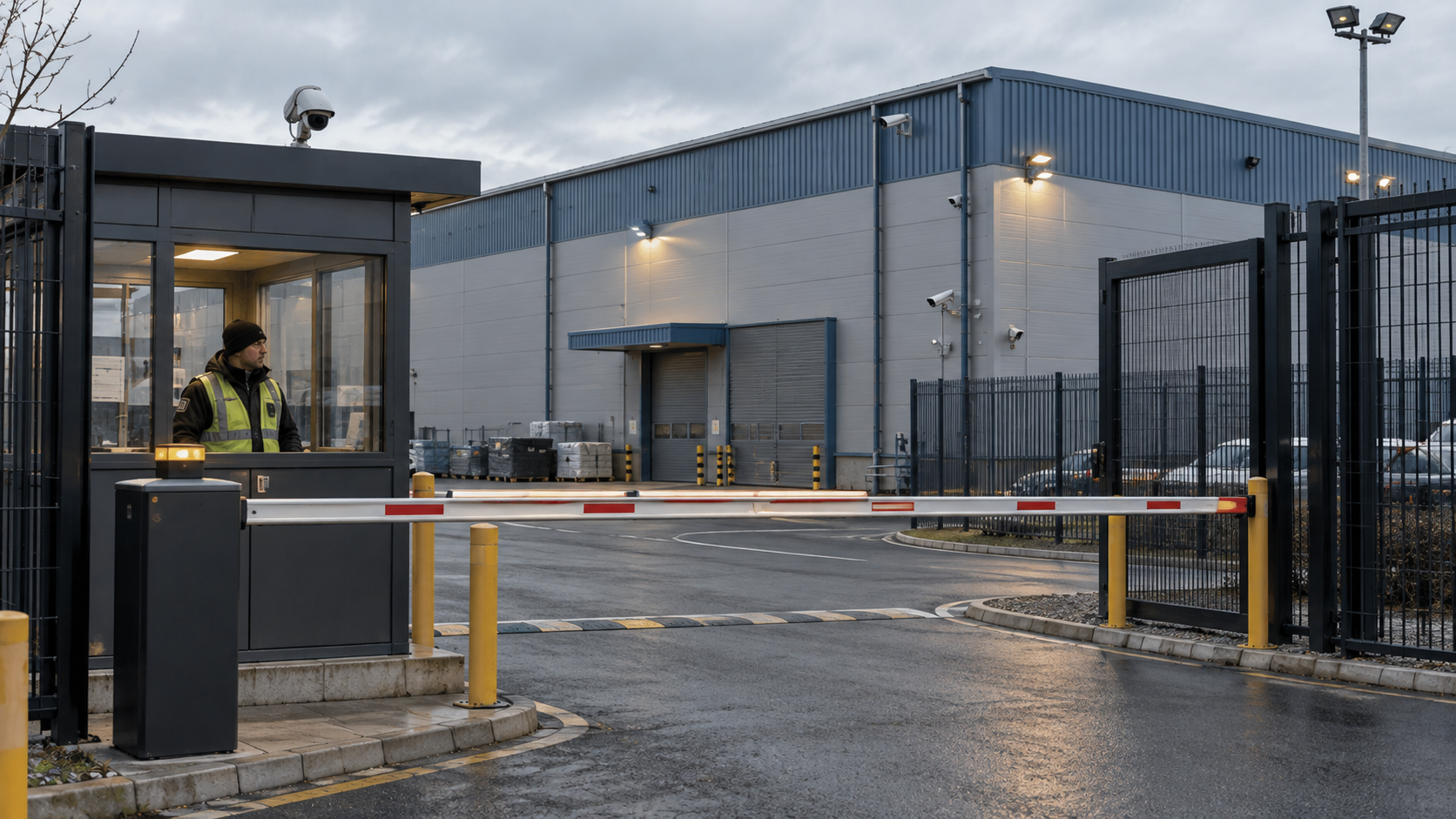
Let’s talk logistics. If you’re running a distribution hub around Burton Gateway or Centrum 100, you’re handling vehicles, expensive equipment, fuel, and goods worth a small fortune. Managing site access isn’t just a box-ticking exercise; it’s survival.
The wider freight industry is dealing with a significant theft problem too. NaVCIS Freight recorded 3,424 freight crime notifications in 2025, with an estimated £65 million in cost-price losses. Those figures cover the UK freight sector rather than Burton specifically, but they show why vehicle access, trailer security and cargo protection deserve serious attention.
You have to think about your loading bays, the trailer yards, staff entrances, and those big vehicle gates. All of them need to work together as part of a wider security picture.
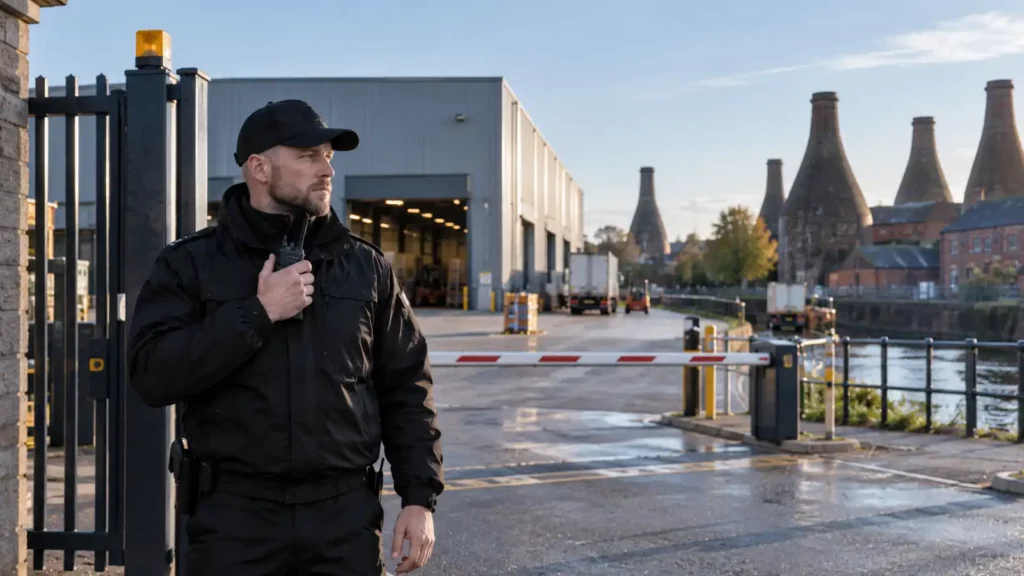
CCTV is brilliant for gathering evidence after the fact, but let’s be real, it won’t physically stop someone walking in. That’s where access control, routine checks, and a visible guard presence actually shine.
Whenever I walk a site with a manager, I always tell them: pay attention to the boring stuff. That rear gate nobody uses? The fence line with terrible visibility? The pallets stacked so high they practically create a staircase over the perimeter? Those are the cracks criminals look for.
Retail and High Street Vulnerabilities
If you’re a retailer around Station Street, the Octagon Centre, or Coopers Square, your pressures are completely different.
Yes, shoplifting is the obvious headache. But it’s not just about stock loss. Your staff are on the front line dealing with aggressive customers, anti-social behaviour, and situations that escalate fast when the store gets packed.
Visible security does more than just deter thieves; it gives your team confidence. When your staff know there’s a procedure, and someone has their back, they feel safer. And when customers feel safe, they stick around longer and spend more.
Good retail security isn’t just about protecting products. More importantly, it’s about creating an environment where your employees actually want to come to work, and your customers actually enjoy being there.
East Staffordshire Commercial Threat Matrix
Here’s a quick cheat sheet for how the risks stack up across different sectors in East Staffordshire. Keep this handy:
|
Business sector |
Common vulnerabilities |
Potential risks |
Useful protective measures |
|
Manufacturing & industrial |
Open yards, machinery, tools and storage areas |
Theft, unauthorised access, vandalism |
Static guarding, patrols, controlled access |
|
Logistics & warehousing |
Freight bays, vehicle yards, fuel and valuable cargo |
Cargo theft, fuel theft, unauthorised vehicle entry |
Gatehouse checks, barrier systems, vehicle logs |
|
Retail & high street |
Busy public areas, stock, cash handling |
Shoplifting, intimidation, anti-social behaviour |
Visible guards, clear staff procedures, access controls |
|
Construction & development |
Tools, materials, plant and incomplete buildings |
Theft, trespassing, vandalism and damage |
K9 support, guarding, lighting and CCTV |
|
Hospitality & offices |
Lone working and late departures |
Conflict, harassment and unauthorised access |
Concierge support, access control and response arrangements |
Addressing After-Hours Risks and Implementing Professional Support
Let’s be honest, security problems don’t clock off at 5 PM. In fact, that’s usually when things get interesting.
Once the car parks empty and the office lights go off, there are fewer eyes on the ground. Those rear access points, the dark corners of the loading area, and the far end of the car park suddenly become prime targets.
This is also why I cringe when I hear a business say, “We’ll just call Dave if the alarm goes off.” Expecting an employee to drive to a dark, empty property late at night isn’t just impractical; it can be genuinely unsafe.
A proper professional response arrangement gives you a clear escalation plan. It takes the pressure off your staff and makes sure someone trained handles the situation quickly and safely.
If you’re reviewing your current setup, having a proper chat with a security company in Burton upon Trent can be a game-changer. They’ll spot the practical gaps you’ve probably overlooked and help you figure out exactly what level of protection actually makes sense for your patch.
If you’ve got sites spread across different locations, it’s also worth looking into security support across the West Midlands. It helps you maintain a consistent standard and ensures you’re getting consistent reporting across the board.
A Four-Layer Risk Audit (That Actually Makes Sense)
When I do a site assessment, I don’t just wander around with a clipboard. I break the whole place down into four simple layers. Here’s what I look for:
- Outer boundary: Fencing, gates, lighting, and anywhere someone could slip in unnoticed.
- Access points: Doors, shutters, vehicle entrances, staff passes, and contractor access. Who’s got a key, and do they still work here?
- Internal assets: Where are your crown jewels? Valuable goods, equipment, fuel, sensitive documents where are they kept?
- Response arrangements: Be honest: what actually happens when the alarm goes off? Who gets the call? What do they do next?
Working through these layers helps you spot the holes before someone else does.
Essential Physical Security Protocols for Site Managers
You don’t need a massive budget to start tightening things up. Professional security works best when it’s backed up by rock-solid, everyday habits.
Here are a few simple routines worth getting into:
- Check perimeter blind spots regularly: Keep the weeds and bushes under control, and for heaven’s sake, don’t stack goods right against the boundary fence.
- Keep access permissions fresh: If a contractor finished their job three months ago, revoke their keycard and codes immediately.
- Light up the dark zones: Good lighting around loading bays, rear entrances, fire exits, and parking areas removes hiding spots. Criminals hate light.
- Verify before you let them in: Make sure drivers, contractors, and delivery crews are actually checked before they roll through the gate, especially on those big logistics sites.
These measures sound basic because they are. But consistency is the magic ingredient. Do them every day, and they become second nature.
Why a Layered Security Approach Makes Sense
There’s no magic bullet for commercial security. CCTV is great for watching and reviewing. Access control is brilliant for keeping the wrong people out. Lighting improves visibility. Alarms give you an early warning.
But physical security, putting actual people on the ground, adds a whole new dimension. A guard can observe, challenge, report, and react in real-time. A camera just watches.
For a warehouse, that might mean controlled vehicle access and frequent perimeter walks. For a retail store, it might mean a visible presence on the shop floor during busy hours. For a construction site? It could mean regular patrols or even K9 support where the site is just too big and exposed to monitor effectively.
The right combination depends entirely on your site, your assets, and the specific risks we dig up during the assessment.
Conclusion
Burton upon Trent isn’t a cookie-cutter town, and your security shouldn’t be either. A logistics site along the A38 has wildly different priorities compared to a retailer in the town centre or a construction project in Branston or Stretton.
The best starting point is always the same: get to know your property inside out. Understand how it really operates, find its weak spots, and think about what could realistically happen if those weak spots got exploited.
From perimeter checks and access controls to guarding, patrols, and reliable alarm response, layered security reduces avoidable risks and gives your staff genuine peace of mind.
Build your security around the reality of your site and its day-to-day challenges. Don’t just rely on a generic checklist someone found online.